

Balsamic Mustard Vinaigrette: Recipe and Tips
You can make this dressing in about 5 minutes with a simple 3:1 oil-to-vinegar ratio. I’d use 3 tablespoons olive oil, 1 tablespoon balsamic vinegar, 1 teaspoon Dijon mustard, and 1/2 to 1 teaspoon honey or maple syrup, then add salt and pepper to taste.
Here’s the short version:
- Mustard helps hold the dressing together
- Balsamic adds both tang and sweetness
- Olive oil softens the sharp edge
- Aged balsamic often needs less sweetener
- If it separates, just shake or whisk again
- It keeps in the fridge for 1 to 2 weeks
- If it has garlic or shallot, use it within 1 week
If the dressing tastes too sharp, I’d add a bit more oil or a small amount of sweetener. If it tastes flat, I’d add a pinch of salt or a little more mustard. And I’d always taste it on lettuce, cucumber, or bread - not from a spoon - because that gives a much better read on the final flavor.
This guide covers the base formula, how I’d mix it, how I’d fix texture or balance issues, and where I’d use it, from salads to grain bowls, roasted vegetables, chicken, or steak.
Balsamic Mustard Vinaigrette | It's Only Food w/ Chef John Politte
sbb-itb-4066b8e
Base Recipe: Balsamic Mustard Vinaigrette
Start with a 3:1 oil-to-vinegar ratio, then tweak the sweetness and acidity to taste. It’s a simple base, but each ingredient changes the final balance. Begin here, then fine-tune from there.
Ingredients and Measurements
| Ingredient | Amount | Role |
|---|---|---|
| Extra-virgin olive oil | 3 tablespoons | Gives the dressing richness and body |
| Balsamic vinegar | 1 tablespoon | Brings depth, acidity, and sweetness |
| Dijon mustard | 1 teaspoon | Helps emulsify and adds a little bite |
| Honey or maple syrup | 1/2 to 1 teaspoon | Softens the vinegar’s acidity |
| Kosher salt | To taste | Sharpens and brightens the flavors |
| Black pepper | To taste | Adds a light, spicy finish |
Honey brings a floral sweetness, while maple syrup gives the dressing a deeper note and keeps it vegan-friendly. If you want a bit more depth, add minced garlic, minced shallot, or a pinch of dried oregano.
Choosing Ingredients for Better Flavor
With a simple vinaigrette, the olive oil and balsamic vinegar do most of the heavy lifting when it comes to flavor.
Pick a fresh, balanced extra-virgin olive oil, such as Big Horn Olive Oil's Estate Reserve Ultra Premium EVOO.
For the balsamic, Big Horn Olive Oil's Traditional 18-Year Aged Dark Balsamic Vinegar from Modena, Italy has a thicker texture and a sweeter profile, so you’ll want less added sweetener.
For the mustard, smooth Dijon gives you a silkier finish. Whole grain Dijon adds texture and a sharper bite. Both work well, so it mostly comes down to personal taste.
Once you’ve chosen the ingredients, the next move is dialing in the texture and balance.
How to Make It: Mixing, Emulsifying, and Adjusting Texture
Once you’ve picked your ingredients, the mixing order matters more than most people think. Start by whisking the balsamic vinegar, Dijon mustard, honey or maple syrup, salt, and pepper in a small bowl. Then drizzle in the olive oil slowly while whisking the whole time. That slow pour is what helps the dressing emulsify and turn smooth instead of split and oily.
Whisk Method vs. Mason Jar Method
Both methods work. It just depends on what you want.
Whisking gives you more control over the texture. When you add the oil little by little, it’s easier to build a thicker emulsion.
The mason jar method is the fast option. Just add everything to a jar and shake until fully blended.
How to Fix Separation or a Dressing That Is Too Thick
Homemade vinaigrette separates all the time, so don’t sweat it. If it happens, whisk or shake it again right before serving.
If the dressing gets too thick, let it sit at room temperature for 10–15 minutes. Then shake or whisk again. If it still doesn’t look right, use one of these simple fixes:
| Problem | Fix |
|---|---|
| Dressing has separated | Re-whisk or shake vigorously until fully blended. |
| Dressing is too thick | Let it sit at room temperature for 10–15 minutes, then whisk or shake again. |
| Too thin or too acidic | Add a little more honey or maple syrup, or add more oil. |
How to Balance Acidity and Sweetness
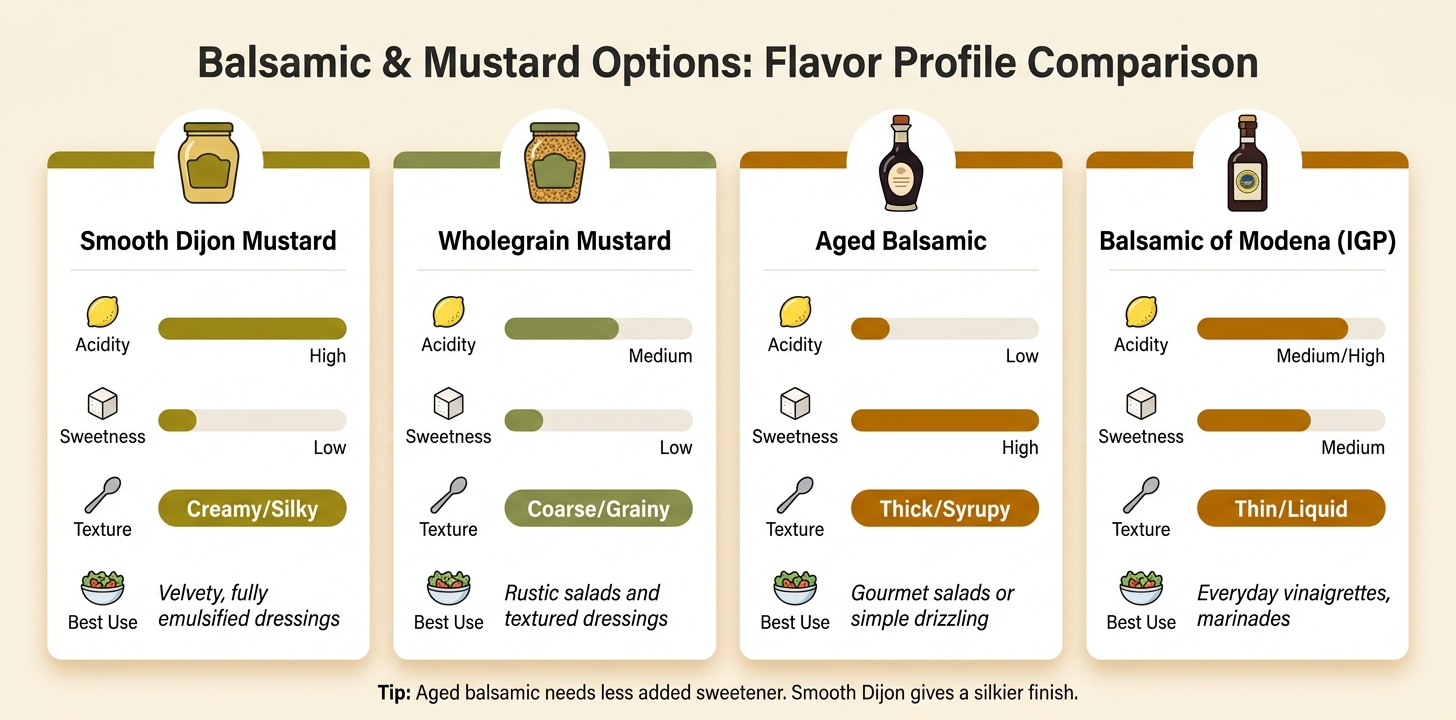
Balsamic & Mustard Options: Flavor Profile Comparison Chart
Start with your base ratio, then fine-tune the dressing until the vinegar, mustard, and sweetener feel in sync. In most cases, you’re balancing two things: the bite from the vinegar and the softer, rounder feel that comes from the oil and sweetener.
Balsamic Vinegar of Modena (IGP) is lighter and sharper, so it often needs a bit more sweetener. An aged balsamic is thicker and naturally sweeter, so you can usually use less. Mustard also plays a big part here. It adds some sharpness, and it helps keep the dressing blended.
A Simple Taste-and-Adjust Method
Always taste the vinaigrette on a piece of lettuce, cucumber, or a small torn piece of bread - not straight from a spoon. Taste it on lettuce, cucumber, or bread for a better read on the final flavor.
Then make small changes. Add sweetener ½ teaspoon at a time, and add oil or vinegar 1 teaspoon at a time.
If the dressing tastes too sharp or acidic, add a little more extra virgin olive oil to soften it, or a touch more honey. If it tastes flat, add a pinch of salt or an extra teaspoon of mustard to wake it up. If it’s too sweet, add a little more balsamic vinegar or a pinch of salt.
Balsamic and Mustard Options for Different Flavor Profiles
Your balsamic and mustard choices shape the flavor from the start. Smooth Dijon gives you a silkier finish, while wholegrain mustard leans rougher and more rustic. So before you adjust anything, these two ingredients already push the dressing in a certain direction.
| Ingredient Option | Acidity | Sweetness | Texture | Best Use |
|---|---|---|---|---|
| Smooth Dijon Mustard | High | Low | Creamy/Silky | Velvety, fully emulsified dressings |
| Wholegrain Mustard | Medium | Low | Coarse/Grainy | Rustic salads and textured dressings |
| Aged Balsamic | Low | High | Thick/Syrupy | Gourmet salads or simple drizzling |
| Balsamic of Modena (IGP) | Medium/High | Medium | Thin/Liquid | Everyday vinaigrettes, marinades |
For everyday use, pick the balsamic based on the result you want: a sharper one for more brightness, or an older, thicker one for more sweetness. And if you want a smoother finish, go with a smoother mustard. Once the flavor feels balanced, the vinaigrette is ready for storing or serving.
Storage, Serving Ideas, and Key Takeaways
Once the dressing tastes balanced, don’t let it sit out. Pour the vinaigrette into a sealed jar and refrigerate it. It will keep for 1 to 2 weeks.
How to Store and Reuse Homemade Vinaigrette
Olive oil can firm up in the fridge, so don’t panic if the dressing looks cloudy or thick. Let the jar sit at room temperature for 10 to 15 minutes, then shake it well or whisk it to bring it back together.
If your vinaigrette has fresh garlic or shallots, store it in the fridge and use it within one week.
Where to Use It and What to Remember
After it comes back together, it’s ready to use. Spoon it over leafy salads, Caprese, Greek, or roasted beet salads. It also works well drizzled over roasted Brussels sprouts, quinoa bowls, grilled chicken, or steak.
The big things to keep in mind are simple: keep the ratio, emulsify slowly, and taste before serving.
FAQs
Can I make it without mustard?
Yes, mustard matters here.
It works as an emulsifier, which means it helps the balsamic vinegar and olive oil come together into a smooth dressing that doesn't split as fast.
Without mustard, the vinaigrette will usually separate pretty fast, so you'll need to whisk or shake it before each use. It can still taste good, but the texture will be lighter, thinner, and less creamy.
Which balsamic works best for this vinaigrette?
For the best flavor, use a high-quality balsamic vinegar from Modena, Italy. A younger balsamic works well for everyday dressings because it brings bright, balanced acidity without taking over the whole dish.
If you want more depth and a naturally tangy sweetness, go with a well-aged dark balsamic like 12-year or 18-year. It’s thicker, richer, and has more layers of flavor.
Can I use this as a marinade too?
Yes. This balsamic mustard vinaigrette also works well as a marinade for chicken, fish, or lamb. The oil and balsamic vinegar bring bold, rich flavor and help tenderize the meat at the same time.
It also works well for coating vegetables before roasting, which gives them more flavor as they cook. For the best balance, use a 3:1 oil-to-vinegar ratio in the marinade.