

5 Barrel Types Used for Balsamic Vinegar
When making balsamic vinegar, the type of wood used for barrels plays a big role in shaping its flavor, aroma, and texture. Five key barrel types are commonly used: chestnut, oak, cherry, juniper, and mulberry. Each wood contributes distinct characteristics:
- Chestnut: Adds bitterness, dark color, and supports early evaporation.
- Oak: Infuses vanilla and spice notes, ideal for final aging stages.
- Cherry: Provides fruity sweetness and balances bold flavors.
- Juniper: Intensifies with resinous, spicy aromas, perfect for robust profiles.
- Mulberry: Boosts acidification and introduces vibrant fruity flavors.
Barrels are arranged in a sequence of decreasing sizes (batteria) and placed in lofts to age for at least 12 years, with temperature shifts aiding the process. This method creates a dense, flavorful vinegar with layers of complexity.
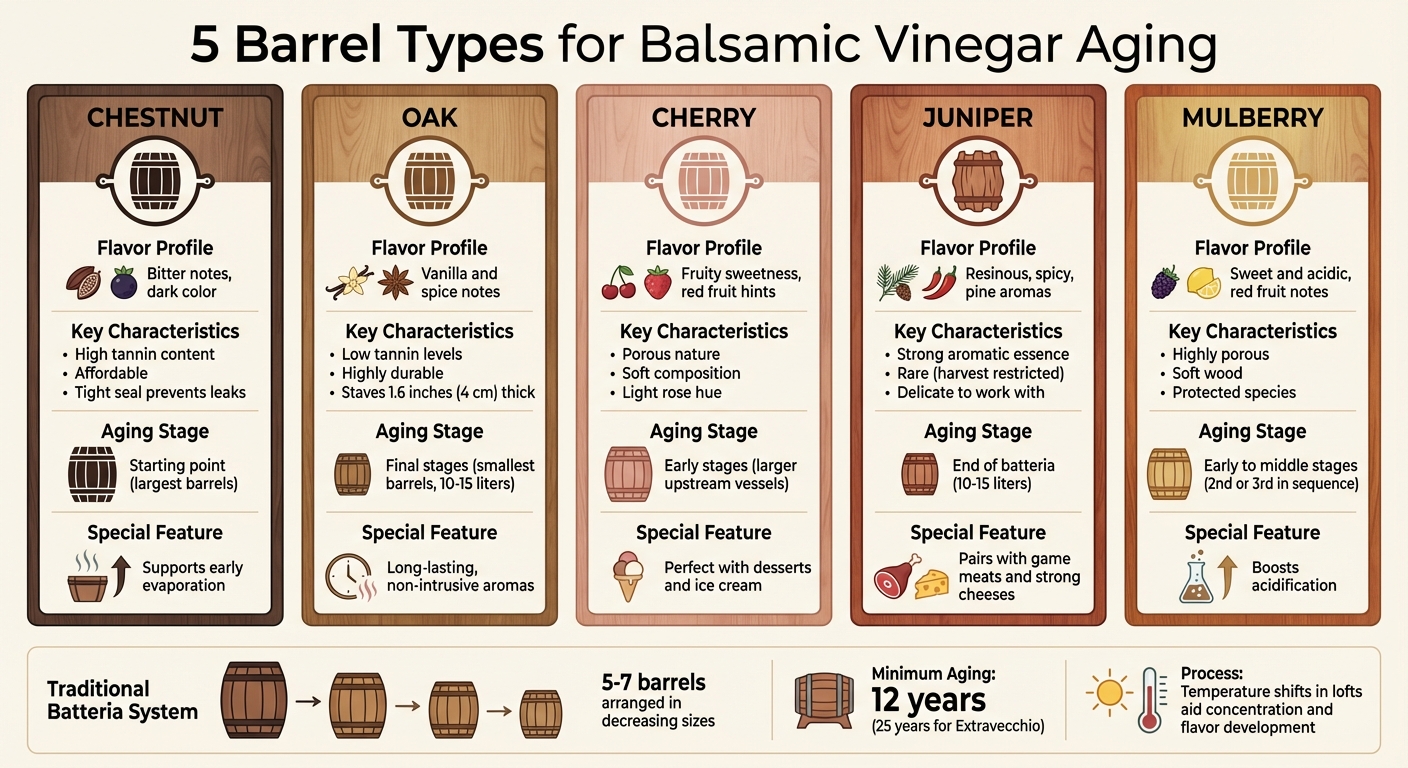
5 Barrel Types Used in Balsamic Vinegar Aging: Flavor Profiles and Characteristics
1. Chestnut Barrels
Flavor Profile Contribution
Chestnut barrels are known for introducing bitter notes to balsamic vinegar, which helps balance the natural sweetness of the grape must. This unique bitterness comes from the wood's high tannin content, a defining feature that distinguishes chestnut from other woods used in the aging process.
These tannins also play a key role in giving the vinegar its intense, dark color - almost black in appearance. Acetaia Malpighi highlights that the tannins in chestnut wood contribute significantly to the vinegar's rich pigmentation. This combination of color and flavor makes chestnut barrels essential in shaping the vinegar's character during aging.
Wood Characteristics
Chestnut wood is highly valued for its ability to create a tight seal, preventing leaks throughout the lengthy aging process. Interestingly, the wood starts out white but gradually darkens as it ages alongside the vinegar.
Another advantage of chestnut is its affordability compared to more uncommon woods like juniper or mulberry, making it a popular choice in Modena's acetaias. However, before new chestnut barrels can be used, they must undergo a preparation process called "acetification." This involves washing the barrels with boiling water and salt, then filling them with premium wine vinegars for a year to ready the wood for the grape must.
Impact on Aging Process
Chestnut barrels typically serve as the starting point in the aging sequence within the batteria. As the larger vessels in the traditional setup, these barrels play a foundational role in the vinegar's journey. Their porous nature supports early evaporation and acetification, which are critical for concentrating the vinegar. The Associazione Esperti Degustatori Aceto Balsamico Tradizionale di Modena explains:
The general procedure regarding the wood types is to begin with porous woods to let the evaporation ad acetification process take place (for example chestnut wood).
sbb-itb-4066b8e
Wood: Balsamic Vinegar's Secret Ingredient
2. Oak Barrels
After chestnut barrels add bold character, oak barrels step in to refine the vinegar with more delicate layers of flavor.
Flavor Profile Contribution
Often referred to as "vanilla woods", oak barrels introduce subtle hints of vanilla and spice, complementing the vinegar's inherent sweetness. Unlike chestnut, which is rich in tannins, oak provides a smoother aromatic profile. Slavonian oak, in particular, is celebrated for its ability to add depth and complexity without overpowering the vinegar. Its low tannin levels also help avoid excessive bitterness and prevent darkening during the final stages of aging. As Acetaia Giusti describes:
Oak's "long-lasting and non-intrusive aromas" make it ideal for housing the most mature balsamic vinegar.
This balance of subtle flavors and structural benefits makes oak barrels indispensable for the vinegar's prolonged aging process.
Wood Characteristics
Oak is highly valued for its strength and resilience. According to Acetaia Malpighi, its durability ensures it can withstand the challenges of aging, even in acetaie where summer temperatures can soar above 86°F (30°C). To endure such conditions, oak barrel staves are crafted to be at least 1.6 inches (4 cm) thick. The wood's dense fibers create a tight seal, minimizing interaction with external elements and preserving the vinegar's unique qualities over time. Like other barrels in the batteria, oak barrels are carefully prepared for the acetification process.
Impact on Aging Process
Oak barrels shine in the final aging stages, where their subtle flavor contributions and sturdy build take center stage. Typically, the smallest barrels in a traditional batteria - holding about 10–15 liters - are made of oak, providing a resting place for the most concentrated vinegar. The wood's hardness ensures the vinegar matures gracefully without introducing harsh flavors. For Balsamic Vinegar of Modena PGI, larger oak vats, some exceeding 264 gallons (1,000 liters), are also employed to refine the vinegar during its production.
3. Cherry Barrels
Cherry barrels bring a gentle, sweet touch to balsamic vinegar, balancing the boldness of chestnut and the elegance of oak. They introduce a softer, fruit-forward element that stands out for its unique contribution to the vinegar's flavor.
Flavor Profile Contribution
The influence of cherry wood is unmistakable, adding a delicate fruity sweetness with hints of red fruits. As Acetaia Malpighi describes, cherry wood "fills its 'host' with soft, delicate and, at the same time, persistent aromas typical of the fruit itself". Similarly, La Vecchia Dispensa highlights its ability to create a consistent fruity aroma. This natural sweetness develops without any additives, blending harmoniously with the concentrated grape sugars. It's a flavor profile that works beautifully with desserts. Elisa Mazzini from Travel Emilia Romagna notes, "Vinegar aged in cherry is perfect with a dessert or an ice cream". The wood's unique properties enhance this fruity character, giving the vinegar a distinctive charm.
Wood Characteristics
Cherry wood stands out for its porous nature, which promotes oxygen exchange and speeds up both evaporation and flavor concentration. However, its softer composition makes it prone to warping, which can lead to a less secure seal compared to sturdier woods like chestnut or oak. Its light rose hue and pliability require careful handling to avoid leaks during the aging process.
Impact on Aging Process
Cherry barrels are particularly effective in the early stages of a traditional batteria. Their porous structure allows them to transfer fruity aromas quickly, making them ideal for initiating flavor development. Producers often use cherry barrels as larger, upstream vessels to kickstart the concentration process. For example, artisanal makers like Papa Vince age their balsamic vinegar in cherry barrels for 8 years, achieving a rich and layered flavor profile.
4. Juniper Barrels
Juniper barrels are a unique option in balsamic vinegar production, celebrated for their bold, resinous character and the powerful, spicy aromas they impart.
Flavor Profile Contribution
Juniper wood brings a strong, resinous aroma with hints of spice and pine, leaving a slightly astringent aftertaste. As Acetaia Malpighi notes:
Juniper has a strong aromatic essence that penetrates deep into the product giving it a very special, very tasty fragrance.
Scientific studies highlight elevated levels of ethyl benzoate in juniper-aged balsamic, a compound that shapes its aromatic intensity. This makes it an excellent match for robust flavors like game meats, venison, and strong cheeses, where its distinctive profile can shine.
Wood Characteristics
Juniper wood, while sturdy, is delicate to work with and requires skilled handling. Its harvest is now restricted due to strict environmental regulations, making it increasingly rare. This scarcity is reflected in the fact that some master coopers, such as Mastro Bottaio Renzi, crafted their final juniper barrel back in 1980. This rarity enhances its reputation as a special material in vinegar aging.
Impact on the Aging Process
Juniper barrels are typically used in the smallest sizes (10–15 liters) and placed at the end of the batteria. This strategic positioning ensures that the intense aromatics of the wood refine the vinegar without overpowering the complex flavors developed in earlier stages of aging.
5. Mulberry Barrels
Mulberry barrels have a long history in balsamic vinegar production. Originally, mulberry trees were grown for the silk industry, and their wood found a second life as material for barrel-making. In fact, a 1327 law from the Modena Republic required the planting of these trees, earning them the nickname "Golden-Haired Tree".
Flavor Profile Contribution
Mulberry wood brings a distinctive sweet and acidic flavor to balsamic vinegar, reminiscent of white mulberries. As Acetaia del Cristo describes:
The Traditional Balsamic Vinegar of Modena DOP aged in Mulberry barrels reflects the taste of white mulberries, sweet and acidic, giving extreme freshness to the taste as well as strong fruity sensations.
This wood also adds pronounced red fruit notes, giving the vinegar a vibrant and lively character.
Wood Characteristics
Mulberry wood is soft and highly porous, with large spring circles that facilitate oxygen exchange. Its natural straw-yellow color darkens to a reddish-brown over time due to oxidation. While its porosity accelerates evaporation, the wood’s softness makes it less durable than hardwoods like oak. This softness also increases the risk of exudation, and because mulberry trees are now protected, sourcing new barrels has become increasingly challenging.
Impact on the Aging Process
The porous nature of mulberry wood enhances acidification, making it ideal for the early to middle stages of aging. La Vecchia Dispensa suggests placing mulberry barrels as the second or third in a traditional batteria sequence to speed up concentration through rapid evaporation. Some producers, such as Acetaia del Cristo, even create single-wood batteries using only mulberry barrels to fully showcase its unique qualities. This approach not only accelerates the aging process but also deepens the vinegar’s complex flavor profile.
Conclusion
The type of barrel used plays a huge role in shaping the flavor, color, and aging process of balsamic vinegar. Chestnut barrels enhance the dark hue and add bitter, tannic notes. Oak barrels bring vanilla-like aromas and provide the durability needed for extended aging. Cherry barrels lend a soft sweetness with hints of red fruit, while juniper barrels add bold, spicy, and resinous characteristics. Lastly, mulberry barrels boost oxygen exchange, aiding acidification and contributing lively red fruit flavors.
In Modena, the traditional aging process involves a "battery" system - 5 to 7 barrels that gradually decrease in size. Over at least 12 years (or 25 years for Extravecchio), this method, combined with the natural temperature changes in vinegar lofts, creates a rich and aromatic vinegar. This slow transformation turns grape must into a dense, flavorful condiment.
The synergy of these wood types is what gives authentic balsamic vinegar its unique character. For a true taste of tradition, look for producers who adhere to these time-honored methods. Big Horn Olive Oil offers Traditional Balsamic Vinegars, including an 18-Year Aged Dark Balsamic and a 25-Year Aged option, crafted with care and respect for Modena's legacy.
Whether you're drizzling balsamic over strawberries, finishing a risotto, or pairing it with Parmigiano-Reggiano, knowing the role of each barrel type deepens your appreciation for every drop. Explore the selection at Big Horn Olive Oil and taste the difference that traditional barrel-aging brings.
FAQs
How does each wood type change balsamic vinegar flavor?
Different types of wood used for barrels play a significant role in shaping the flavor, aroma, and color of balsamic vinegar. Hardwoods such as oak, chestnut, and locust bring bold, tannic qualities, with chestnut also introducing subtle vanilla undertones and a richer, darker color. Juniper lends a distinctive, aromatic fragrance, while more porous woods like mulberry help intensify the vinegar's concentration, adding fruity or sweet accents. Oak, known for its strength, allows the vinegar to develop deeper, more intricate flavors as it ages.
What is a batteria of barrels?
A batteria of barrels refers to a sequence of wooden barrels used in the traditional production of balsamic vinegar. The vinegar matures by being gradually moved through barrels made from different types of wood and decreasing in size. This careful process develops the vinegar's flavor and depth over the years.
Why does traditional balsamic need 12+ years to age?
Traditional balsamic vinegar takes more than 12 years to age, and there's a good reason for that. The extended time in barrels allows its flavor, aroma, and texture to deepen and evolve. Over the years, natural evaporation and contact with the wood make the vinegar thicker and give it a richer, more layered taste. This careful aging process is what gives traditional balsamic vinegar its renowned quality.