

Why Certification Matters for EVOO
If you want real extra virgin olive oil, the label alone is not enough. I’d look for three things first: a third-party seal, a harvest date from the last 12–18 months, and a clear origin.
Here’s the short version:
- Fraud is common: in 2023, 62% of olive oil fraud cases involved mixing EVOO with cheaper oils, 15% involved false labeling, and 10% involved selling lower-grade oil as extra virgin.
- Certification checks the oil in two ways: lab tests and blind taste tests.
- Lab tests can flag oxidation, refining, and mixing with seed oils.
- Taste panels check that the oil has no defects like rancid or musty notes.
- Some programs also test PPP and DAGs, which can show if an oil is old even when the bottle still looks okay.
- In the U.S., seals and voluntary standards often matter more because federal rules are limited.
So when I see a bottle with a known seal, a named place of origin, and a recent harvest date, I have a much better shot at getting olive oil that matches the claim on the front.
A simple rule: skip vague labels, check the date, and look for proof that someone outside the brand tested the oil.
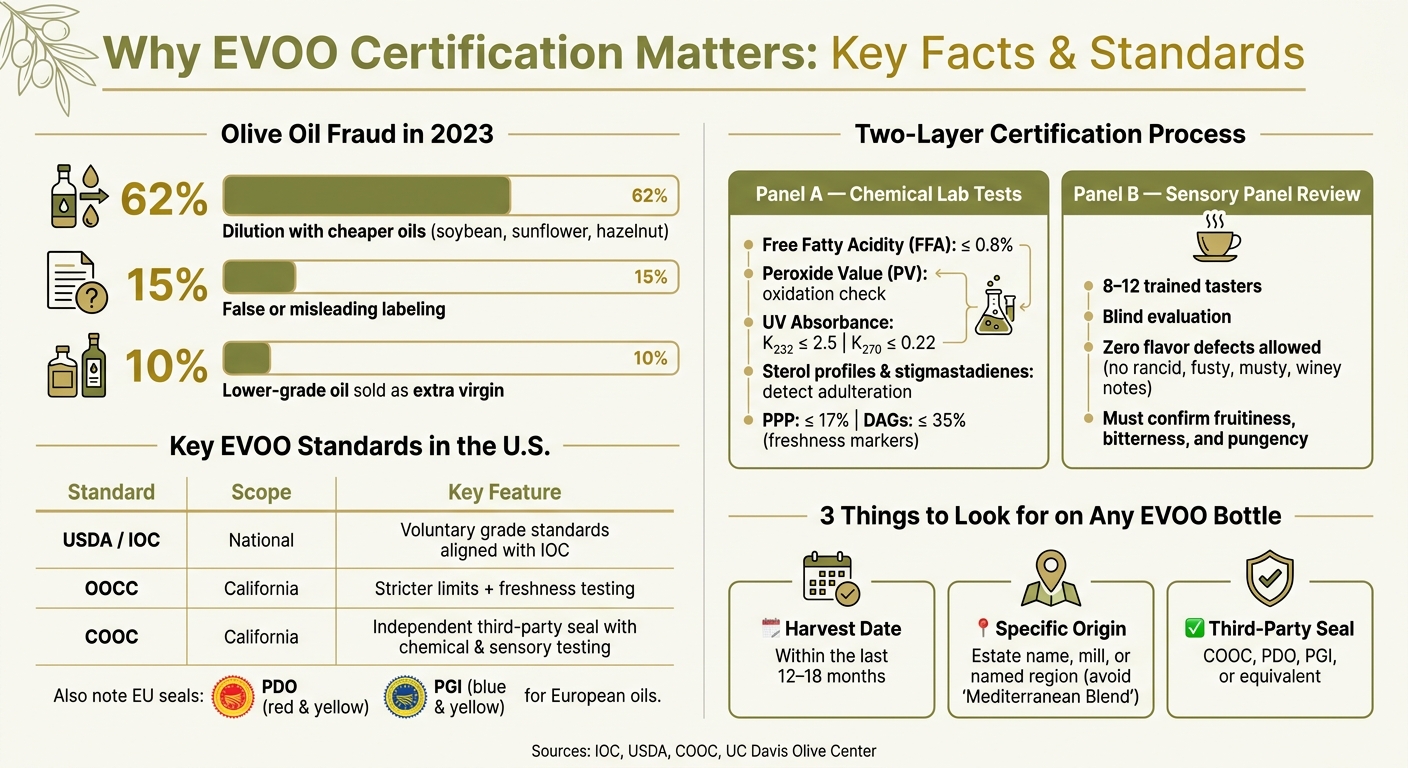
EVOO Fraud & Certification: Key Facts at a Glance
The Real Problem With Extra Virgin Olive Oil
What EVOO Is Supposed to Be
Extra virgin olive oil must be mechanically extracted, with free acidity at or below 0.8%, and no sensory defects. It should also taste fresh, with fruitiness, bitterness, and a peppery finish.
That’s the bar. And it’s exactly what fraud and poor handling can wipe out.
How Counterfeit and Low-Quality Oils Reach Buyers
A lot can go wrong before a bottle lands in someone’s kitchen. In 2023, 62% of olive oil fraud cases involved diluting EVOO with cheaper oils like soybean, sunflower, or hazelnut. Another 15% involved mislabeling, and 10% involved passing off a lower grade oil as extra virgin. It’s easy to see the appeal for bad actors: cut the cost, keep the premium price.
That’s the kind of problem certification programs are supposed to catch.
There’s another issue too: old oil sold as if it were fresh. Best-before dates usually reflect the bottling date, not the harvest date, which means a bottle can still look fine on paper long after the olives were picked.
Certification exists to catch those problems before shoppers ever pick up the bottle.
Why This Affects Home Cooks Directly
For home cooks, the damage is pretty simple. You lose money, you get less flavor, and you miss out on the health perks you thought you were paying for. When premium EVOO is blended with refined oil, the polyphenols and antioxidants that give real extra virgin olive oil its value drop away with it. If the bottle isn’t what the label says it is, the promise on the front means nothing.
That’s why certification matters. It separates marketing claims from checked quality.
"If something is very cheap and it feels too good to be true, that's usually a red flag. But at the same time, higher price does not mean it's pure." - Selina Wang, Professor and Faculty Director, UC Davis Olive Center
Next, certification and quality seals show how those claims get verified.
sbb-itb-4066b8e
How to spot fake extra virgin olive oil
How Certification and Quality Seals Work
Certification isn't just a sticker on a bottle. It's a formal process built on independent testing and written standards. And that's the key difference.
A word like "premium" can mean almost anything. A real certification seal means the oil was tested against set rules and passed.
What Certification Actually Checks
Certified EVOO goes through two separate checks: chemical testing and sensory review.
On the chemical side, labs measure free acidity (FFA), which must be 0.8% or lower. They also check Peroxide Value (PV) for oxidation and UV absorbance limits - K₂₃₂ ≤ 2.5 and K₂₇₀ ≤ 0.22 - to flag quality problems and purity issues.
Labs also review sterol profiles and look for stigmastadienes, which may point to refining. That matters because these tests can catch adulteration with seed oils like hazelnut, soybean, or corn.
The sensory side is just as strict. A panel of 8–12 trained tasters does blind evaluations to confirm the oil has zero flavor defects. That means no rancid, fusty, musty, or winey notes. The oil also needs the fruitiness, bitterness, and pungency that define extra virgin olive oil.
Put simply, this is what helps stop stale or adulterated oil from ending up on the shelf.
Which Standards Apply in the U.S.
In the U.S., federal rules don't go very far here, so buyers often lean on voluntary and third-party standards. The FDA does not define EVOO, which is why these outside standards matter. The main ones come from the International Olive Council (IOC) and the USDA's voluntary olive oil grade standards.
California adds more layers. OOCC uses stricter standards and includes freshness checks. COOC offers an independent third-party seal backed by its own chemical and sensory testing.
| Standard | What It Means |
|---|---|
| USDA / IOC | Voluntary grade standards aligned with IOC requirements |
| OOCC | Stricter California standard with added freshness testing |
| COOC | Independent third-party certification seal for California oils |
What to Look for on a Label
Testing only helps if the bottle gives you enough detail to connect the oil to that testing. That's where the label comes in.
The first thing to check is the harvest date. If the harvest date falls within the last 12–18 months, that's a solid sign of freshness.
Then look for a specific origin. An estate name, a mill, or a named region gives you more traceability. On the other hand, phrases like "Mediterranean Blend" or "bottled in Italy" can mean the bottle contains oils from several countries, with less clarity about where the oil came from.
Seals can help too. On European oils, look for the red-and-yellow PDO (Protected Designation of Origin) logo or the blue-and-yellow PGI (Protected Geographical Indication) logo. For California oils, look for the COOC seal. Each one requires documented testing.
That bottle-level detail is the whole point. Certification only means much when the oil can be traced back to verified testing.
How Certification Protects Quality, Authenticity, and Freshness
Certification matters because it stops specific problems before a bottle ever reaches the shelf.
Catching Adulteration and Defects Before They Reach You
Certification helps catch adulteration by checking chemical markers that cheap oils can't fake. Sterol profiles, fatty acid profiles, and stigmastadiene levels can show whether an oil has been diluted with soybean, corn, hazelnut, or other lower-cost oils, or blended with refined olive oils. If those markers don't pass, the oil is rejected.
There's also a sensory check. A trained panel of 8–12 tasters does blind tastings to screen out oils with rancid, fusty, or musty notes before they ever make it to a store shelf.
Preserving Freshness and Nutritional Value
Freshness shapes both flavor and health value. Polyphenols drop as oil gets older or is handled poorly. Certified oils track this with two lab markers: Pyropheophytins (PPP) and 1,2-Diacylglycerols (DAGs). These tests help show how old the oil actually is, no matter what the label says.
Some stricter certification programs set PPP at ≤ 17% and DAGs at ≤ 35%, even though those tests are not part of standard USDA or IOC rules. That's a big difference. An oil can still meet a basic grade and yet be old enough to lose much of its freshness and nutritional value.
Clearer Labels and Better Traceability
Certification also pushes producers to be clearer about origin. PDO and PGI seals create a legally binding paper trail that connects the oil to a specific region and documented production methods. In plain terms, the bottle isn't just making a claim. It's tied to records and verified testing.
That makes purity, freshness, and source easier to trust.
When a seal proves purity and freshness, it's more than packaging. It's a trust signal.
Why Certification Builds Trust in Premium EVOO
How Verified Standards Give Buyers More Confidence
Once a seal confirms purity and freshness, it starts to matter right at the shelf. If you're paying more for a bottle of olive oil, you want a solid reason to feel good about it. Certification gives you that reason.
Instead of leaning on words like "premium" or "artisan" - terms that don't say much on their own - a third-party seal shows the oil has already gone through independent testing.
That matters most when shoppers are standing in front of a row of bottles that all look good, with not much else to judge by. Without certification, there's less independent proof of origin, freshness, and purity.
With certified premium oils, the price can point to verified quality instead of guesswork.
How Big Horn Olive Oil Puts Quality First
A good example is a producer built around fast harvest-to-bottle timing. Big Horn Olive Oil cold-presses its oils within 2 hours of harvesting and bottles them within 3 months of harvest, which helps keep flavor and freshness in place.
Conclusion: Certification Makes EVOO Easier to Trust
For buyers, certification turns uncertainty into a clear standard. Counterfeit and low-quality olive oil is a real issue, and certification is one of the clearest ways to avoid it. When a bottle carries a trusted seal, it gives U.S. shoppers independent proof of purity, freshness, and origin - and a premium price feels less like a gamble.
FAQs
How can I tell if an EVOO seal is trustworthy?
Look for third-party certifications from groups like the California Olive Oil Council (COOC), the International Olive Council (IOC), or geographic labels such as Protected Designation of Origin (PDO).
That seal matters. It means the oil passed independent chemical testing and sensory review, not just the brand’s own claims on the bottle.
It also helps to check a few other details on the label:
- A certification number you can verify on the certifier’s official website
- A clear crush date
- The oil’s geographic origin
- Any listed chemical data
Think of it like buying a good bottle of wine: the more specific the label, the easier it is to trust what’s inside.
Is a harvest date more useful than a best-by date?
Yes. A crush or harvest date tells you a lot more about extra virgin olive oil freshness than a best-by date.
A best-by date can be fuzzy. It often doesn't tell you how old the oil is right now or how well it has held up over time.
A harvest date is much more direct. It tells you when the olives were picked and processed, so you can make a better call on freshness.
For the best quality, look for a recent harvest date and plan to use the oil within 9 months.
Can certified EVOO still go bad after purchase?
Yes. Even certified extra virgin olive oil can go bad after you buy it if you store it poorly or keep it too long.
Certification tells you the oil met standards for purity, quality, and freshness at the time it was tested. But once the bottle is opened, air, light, and heat can start to break it down. Over time, that can lead to oxidation and rancidity.
To help preserve freshness and the oil’s health perks, store it the right way and buy smaller bottles that you can use within three months.