

Checklist for Visiting Olive Oil Festivals in 2025
Olive oil festivals are a must-visit for anyone who loves food, culture, and unique experiences. These events offer tastings, cooking demos, and mill tours, often paired with local cuisine and music. To make the most of your visit, plan early, pack smart, and budget wisely. Here’s what you need to know:
- Plan Ahead: Festivals align with the autumn harvest season (October-November), so book tickets, workshops, and accommodations early to avoid sold-out events.
- Budget Tips: General admission costs $10–$30/day, with tastings and workshops adding $20–$75. Set aside $100–$300 for buying olive oil, which ranges from $18–$35 per bottle.
- Packing Essentials: Bring a tasting journal, sturdy shoes, reusable bags, and weather-appropriate layers. Don’t forget a valid ID and protective materials if you plan to transport bottles.
- At the Festival: Arrive early, grab a schedule, and prioritize must-see activities like tastings and cooking demos. Taste oils from mild to robust and take notes to compare flavors.
- Post-Festival: Organize your purchases, store oils properly, and plan how to use them in your cooking. Keep notes for future festivals and refine your preferences.
Whether attending in the U.S. or abroad, early preparation ensures a smooth and enjoyable experience. Use this checklist to plan your trip and savor every moment.
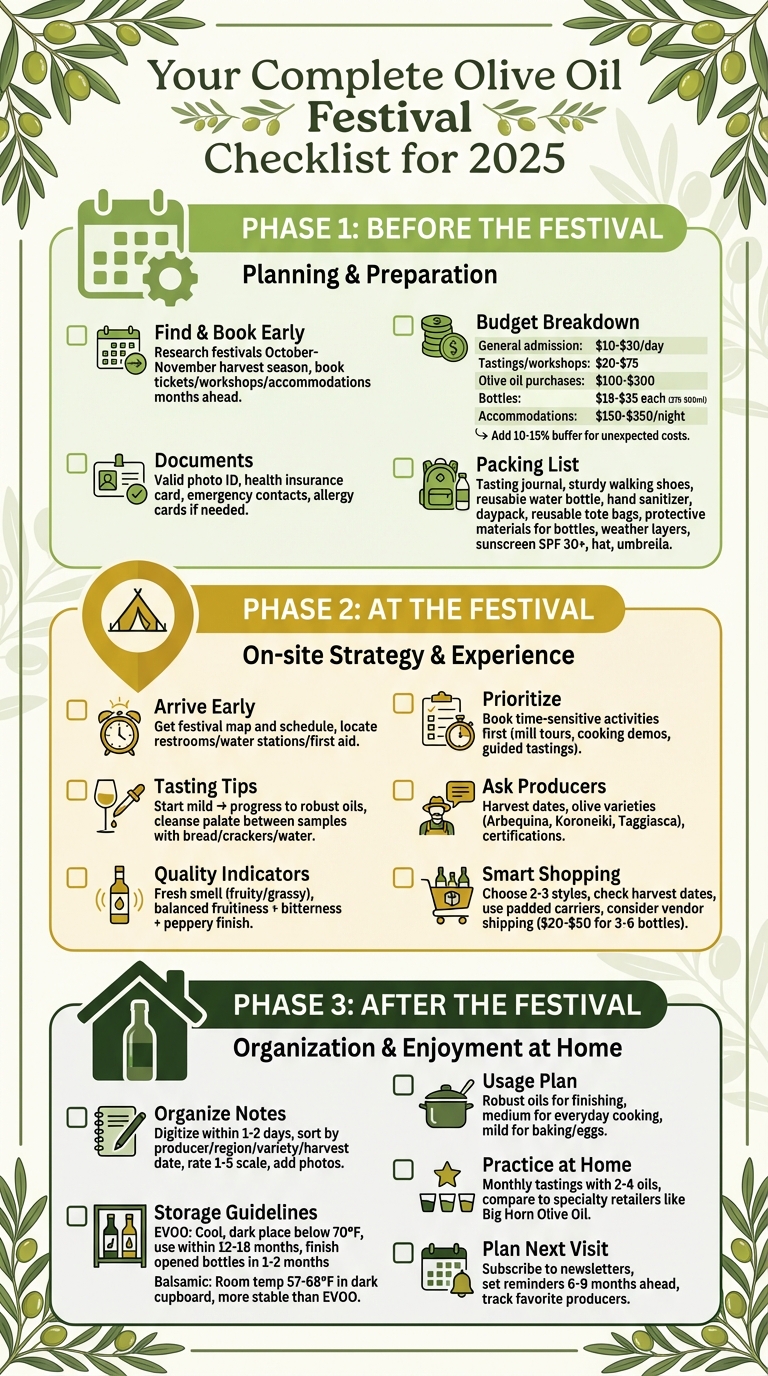
Complete Olive Oil Festival Planning Checklist: Before, During, and After
Experience the Oregon Olive Oil Festival at Durant at Red Ridge Farms
Planning Before You Go
A little preparation can make your festival experience smooth and enjoyable.
Finding Festivals and Making Reservations
Start by picking a local U.S. event or an international festival. In the U.S., California is home to many olive oil festivals, such as the Paso Robles Olive Oil Festival (usually held in late spring or early summer) and several events in Yolo County and the Sacramento Valley during harvest season, which runs from October to December. To find options near you, search online for "olive oil festival + [your state] + 2025", and double-check dates with regional associations or tourism boards. Even wine and food festivals in olive-growing areas often feature olive oil tastings and seminars, even if they aren’t specifically branded as olive oil festivals.
Once you’ve chosen your event, book tickets, workshops, and travel as soon as possible. Popular activities like tastings, cooking demonstrations, and mill tours tend to sell out weeks ahead, especially on weekends. If the festival is in a rural area, secure accommodations several months in advance. In California’s olive-growing regions, mid-range hotels and vacation rentals typically cost $150–$350 per night during peak weekends.
After locking in your plans, make sure to set a realistic budget.
Setting Your Budget
Your budget should cover transportation, lodging, festival tickets, meals, and shopping. It’s also wise to set aside an extra 10–15% for unexpected expenses. General admission fees are usually $10–$30 per day, with special tastings or workshops adding another $20–$75, depending on the experience. On-site food can be pricier than regular restaurant meals, so plan accordingly.
If you’re planning to buy olive oil, set a spending limit - $100–$300 or more, depending on how many bottles you want and how much oil you’ll use in the next six to twelve months. High-quality extra virgin olive oil and balsamic vinegar typically cost $18–$35 for a 375–500 ml bottle, with Ultra Premium EVOO and aged balsamics priced even higher. Specialty retailers like Big Horn Olive Oil focus on these premium products, often sourced from top-quality olives or Modena, Italy.
Lastly, make sure your essential documents are ready to go.
Getting Your Documents Ready
Pack a valid government-issued photo ID for entry and alcohol tastings. It’s also a good idea to carry your health insurance card and an emergency contact list in your wallet or phone. For international trips, consider travel medical insurance and bring printed policy details.
If you have food allergies - such as nuts, gluten, dairy, or shellfish - create a clear, concise card listing them. At festivals where food is paired with oils, like bread or cheese, share your allergy information with vendors before tasting to avoid cross-contact. For dietary preferences like vegetarian, vegan, or gluten-free, notify the festival or tour operator in advance, especially if you’re attending workshops or meals with set menus. Many small-group experiences require early notice to accommodate specific needs.
What to Pack for the Festival
Once your plans are sorted, having a well-thought-out packing list ensures you’re ready to make the most of the festival.
Personal Items and Comfort Supplies
Start with the basics: tickets or digital confirmations, a government-issued photo ID for access to age-restricted areas like beer or wine zones, and a lightweight daypack to carry purchases during tastings and tours. A reusable water bottle is a must to stay hydrated, as most festivals offer water stations for attendees.
Don’t forget hand sanitizer to keep things clean between tastings and avoid mixing flavors. A small first-aid kit can also come in handy. Wear breathable, neutral-colored layers to avoid visible stains from tastings, and make sure your footwear is up to the task - sturdy walking shoes or hiking sneakers with good arch support are ideal for long days on gravel paths or outdoor settings [3]. To stay cool, pack a hat or bandana for sweat management.
Tasting and Shopping Supplies
Bring along a tasting journal or notebook with a pen to jot down details about each sample - its color, aroma, and flavor profile, whether fruity, bitter, or pungent. With 20+ samples often available at these events, keeping organized notes will make comparisons much easier. A reusable tote or collapsible shopping bag is perfect for carrying multiple bottles from vendors.
If you’re planning to buy several bottles, pack protective materials like bubble wrap or use clothing layers to keep them safe in checked luggage. For larger purchases (3–6 bottles), many vendors offer shipping services, which can cost $20–$50 for domestic ground delivery and help preserve the quality of your oils. If you’re flying, transfer small amounts into TSA-approved 2 oz containers for carry-on. Look for premium items like Ultra Premium EVOO or aged balsamics from specialty retailers such as Big Horn Olive Oil, which are both practical and high-quality options to take home.
Preparing for Weather Conditions
Layering is key to handling temperatures ranging from 50–80°F. Pack a base layer (like a t-shirt), a mid-layer (fleece or lightweight jacket), and a waterproof shell to stay comfortable. Don’t skimp on broad-spectrum SPF 30+ sunscreen and lip balm - apply them regularly during outdoor tastings - along with UV-protective sunglasses and a wide-brim hat for extra sun protection.
For regions with unpredictable autumn weather, a compact umbrella or poncho can save the day. Check the forecast before heading out, and if rain or mud is likely, pack closed-toe shoes to keep your feet dry and comfortable.
sbb-itb-4066b8e
At the Festival
Now that you've planned ahead, it's time to make the most of your experience on-site.
Getting Started When You Arrive
Arriving early - shortly after the gates open - has its perks. The crowds are smaller, and staff are more available to answer questions. Start by heading to the entrance or information booth to grab a festival map and schedule. Take a few minutes to mark must-see events like guided tastings, chef demonstrations, mill tours, or expert panels. While you're at it, locate essential areas like restrooms, water stations, seating areas, first-aid stations, and exits. This quick orientation will save you time later.
Don't forget to check out special experiences, such as "olio nuovo" tastings or orchard tours. If there are ticketed or time-sensitive activities, prioritize those early - they can sell out fast. Plan your day by locking in fixed-time events first, then fill in the gaps with tastings. To avoid unnecessary walking, group nearby booths together in your schedule. For outdoor events, plan mid-morning and mid-afternoon breaks near water stations or seating to recharge. Save activities that require a sharp palate, like formal tastings or masterclasses, for earlier in the day when your senses are at their peak.
Once you've got your plan, you're ready to dive into the tasting experience.
How to Taste and Behave
When it comes to tasting olive oil, start with the mildest, most delicate extra virgin oils and work your way up to the more robust, peppery, or pungent ones. This method, used by professionals, helps your palate pick up subtle flavors early on without overwhelming your senses. Between samples, cleanse your palate with plain bread, unsalted crackers, or water to keep your taste buds fresh.
Follow any tasting guidelines provided and avoid wearing strong scents that might interfere with the experience. At tasting tables, be mindful of others - sample the oil, then step aside to reflect or jot down notes so others can have their turn. Questions are encouraged, but save in-depth discussions for quieter times to keep the lines moving.
Engage with producers by asking about olive varieties, harvest dates, and milling processes. Fresh harvests generally offer brighter flavors and higher antioxidant levels. Varieties like Taggiasca, Arbequina, or Koroneiki each bring unique flavor profiles, ranging from fruity and mild to bold and bitter. Confirm the oil’s quality by looking for certifications or awards. If you’re sampling balsamic vinegars, ask about aging techniques, origin (like Modena, Italy), and pairing suggestions. Comparing these to familiar options, such as Big Horn Olive Oil, can also help you decide how they might fit into your cooking.
A high-quality extra virgin olive oil should smell fresh - think fruity, grassy, or herbal. On the palate, look for a balance of fruitiness, bitterness, and a peppery kick, which indicates the presence of polyphenols. Be cautious of oils that taste flat, waxy, or rancid, as they may be past their prime. Use the festival’s guided tastings as a benchmark to develop your sense of what makes a great olive oil.
Once you've honed your palate, it's time to choose your favorites and figure out how to get them home safely.
Buying and Shipping Products
After sampling, revisit the oils you liked best and focus on two or three styles that suit your needs. For example, a robust oil might be perfect for finishing dishes, while a milder one works well for everyday cooking. Look for bottles with recent harvest dates and clear storage instructions. Smaller bottles are ideal for specialty oils with intense flavors, while larger containers make sense for versatile oils you'll use frequently.
To transport your purchases, consider a padded wine or bottle carrier, or use a backpack with protective sleeves to keep glass bottles safe. Avoid exposing your oils to heat or sunlight - don’t leave them on hot pavement or in a parked car. If you’ve bought several bottles, periodically transfer them to a secure location and label them for easy sorting later.
Many festivals and larger producers offer on-site shipping within the U.S. Look for services that use sturdy boxes with dividers and padding designed for glass bottles. If you're buying in bulk (three to six bottles), vendor shipping might be the most convenient option. Compare shipping fees to alternatives like checking the bottles in your luggage. Always confirm that your packages are insured against breakage and include tracking information for peace of mind.
After the Festival
Once you're back home, a few simple steps can help you make the most of your festival finds and prepare for future events.
Organizing Your Tasting Notes
Within a day or two, take the time to digitize your tasting notes. Sort them by producer name, country or region, olive variety (like Koroneiki or Picual), harvest date, and flavor profile. Be sure to include details like fruitiness, bitterness, and pepperiness. Adding photos of bottles and labels can make it easier to recognize products later. Consider rating each product on a 1–5 scale and jotting down a quick descriptor (e.g., "perfect for salads"). Professional tasters recommend noting at least five sensory attributes: appearance, aroma, flavor, mouthfeel, and finish. Also, record the price (in USD) and size (in fl oz) to help compare value.
Once your notes are organized, you’ll have a handy guide for storing and using your purchases.
Storing and Using What You Bought
Just as you carefully prepared for the festival, a bit of planning after the event will ensure you enjoy your selections to the fullest. Start by laying out all your bottles and grouping them by style - robust, medium, mild; plain versus infused; balsamic versus wine vinegars. Create an inventory list that includes the product name, style, and best-by or harvest date. Number the bottles and match those numbers with your notes for easy reference.
For extra virgin olive oil (EVOO), store bottles in a cool, dark place, ideally below 70°F. Keep them tightly sealed to limit oxygen exposure. If a bottle is made of clear glass, consider placing it in a dark sleeve or cupboard. Use high-quality EVOO within 12–18 months of harvest and finish opened bottles within 1–2 months for the best flavor. Avoid keeping oils beyond 18 months, as they lose their health benefits over time. Balsamic vinegars, on the other hand, are more stable. Store them at room temperature in a dark cupboard (57–68°F) with the cap tightly closed to prevent evaporation. For denser, sweeter balsamics, refrigeration is optional, but let them return to room temperature before using to fully enjoy their aroma and texture.
Assign a purpose to each bottle based on your notes. Use robust, peppery EVOOs as a finishing touch for grilled steak, roasted vegetables, or hearty soups. Medium oils work well for everyday tasks like salad dressings, sautéing, and grain bowls. Mild, buttery oils are great for eggs, mashed potatoes, or even baking as a butter substitute. As for balsamic vinegars, try them in quick pan sauces, simple dressings (mix 3 parts oil to 1 part vinegar with a bit of salt and pepper), glazing roasted chicken or Brussels sprouts, or drizzling over berries or vanilla ice cream. To make sure you’re using your purchases, plan a weekly "tasting dinner" where you feature one or two oils or vinegars in multiple dishes. Start with bottles that have the oldest harvest dates or those that traveled the farthest, as they may be more prone to quality loss.
Preparing for Your Next Festival
Once your oils and vinegars are stored and put to use, it’s time to think ahead to your next festival. Subscribe to producers' email newsletters, follow them on social media, and mark potential festival dates on your calendar. Set reminders six to nine months in advance to start organizing flights, lodging, and tickets. Make a list of festivals you want to revisit, along with standout products like Ligurian, Tuscan, or Andalusian oils. Note specific qualities you enjoyed, such as "grassy, green flavors" or "excellent value."
In between festivals, consider visiting or ordering from specialty retailers like Big Horn Olive Oil, which offers Ultra Premium extra virgin olive oils and balsamic vinegars that meet strict quality standards. Compare their traditional and infused EVOOs - often sourced from different regions and harvest seasons - against your festival notes to identify regional styles or cultivars you prefer. Use their tasting recommendations and curated selections to practice structured tastings at home. This will help you refine your vocabulary (e.g., fruitiness, bitterness, pungency) and maintain a sense of what fresh, high-quality oils should taste like.
Set aside time once or twice a month for tasting sessions with 2–4 oils or vinegars. Update your master notes as your impressions evolve. This practice sharpens your ability to detect freshness, recognize personal preferences, and prioritize styles and producers for your next festival.
Conclusion
Planning a visit to an olive oil festival isn’t just about showing up - it’s about making the most of the entire experience, from the moment you decide to attend to the memories you take home. Start by researching festival dates, booking your travel early, and setting a budget. This way, you can focus on savoring tastings and soaking in the atmosphere without unnecessary stress.
Once you're at the festival, take your time. Enjoy the tastings, attend events, and explore at a pace that feels comfortable. Afterward, organize your notes and purchases to keep the experience alive and guide your future visits. Between festivals, you can bring a bit of that magic home by exploring specialty retailers like Big Horn Olive Oil, where you’ll find Ultra Premium Extra Virgin Olive Oils and balsamic vinegars that uphold rigorous quality standards.
To keep things simple, use a checklist to guide your planning. Save it on your phone or print it out, and break your prep into manageable steps - one month before, one week before, and the day of the event. Check off essentials like reservations, travel plans, and budget details as you go. This approach ensures nothing gets overlooked, turning what could be a rushed outing into a relaxed and unforgettable experience.
Why wait? Pick your 2025 festival date, grab that checklist, and start planning. A little preparation goes a long way in making your festival visit not just enjoyable but truly memorable.
FAQs
How can I find and book olive oil festivals ahead of time?
When planning to attend a festival, it’s a good idea to start researching the dates as soon as possible. Check official event websites, sign up for newsletters, and follow their social media accounts for the latest updates. Many festivals publish their schedules months ahead, giving you plenty of time to prepare.
Once you’ve nailed down the details, book your tickets and accommodations right away. Early bookings often come with perks like discounted rates or special packages, so it pays to be proactive. Additionally, consider using festival-specific apps or online platforms to simplify your registration and organize your itinerary more efficiently.
What’s the best way to store and use olive oil after bringing it home from a festival?
To maintain the freshness and flavor of your olive oil, keep it in a cool, dark spot, away from heat and direct sunlight. Always ensure the bottle is tightly closed after use to minimize air exposure, which can impact its quality. Steer clear of storing it near heat sources like stoves or ovens. For optimal taste and benefits, try to use the oil within 9 months of opening.
How can I plan a budget for attending an olive oil festival?
When putting together your budget for an olive oil festival, make sure to account for the essentials: transportation, accommodations, festival tickets, and meals. Beyond that, factor in extras like tastings, souvenirs, and any premium olive oils you might want to bring home - perhaps from brands like Big Horn Olive Oil.
It’s wise to reserve a little extra for unexpected costs. Thoughtful planning and sticking to your budget will help ensure you have an enjoyable and hassle-free festival experience.