

Common Mistakes When Using Olive Oil for Umami
Olive oil can transform savory dishes - if used correctly. But many home cooks make simple mistakes that dull its flavor and umami-boosting potential. Here’s what you need to know:
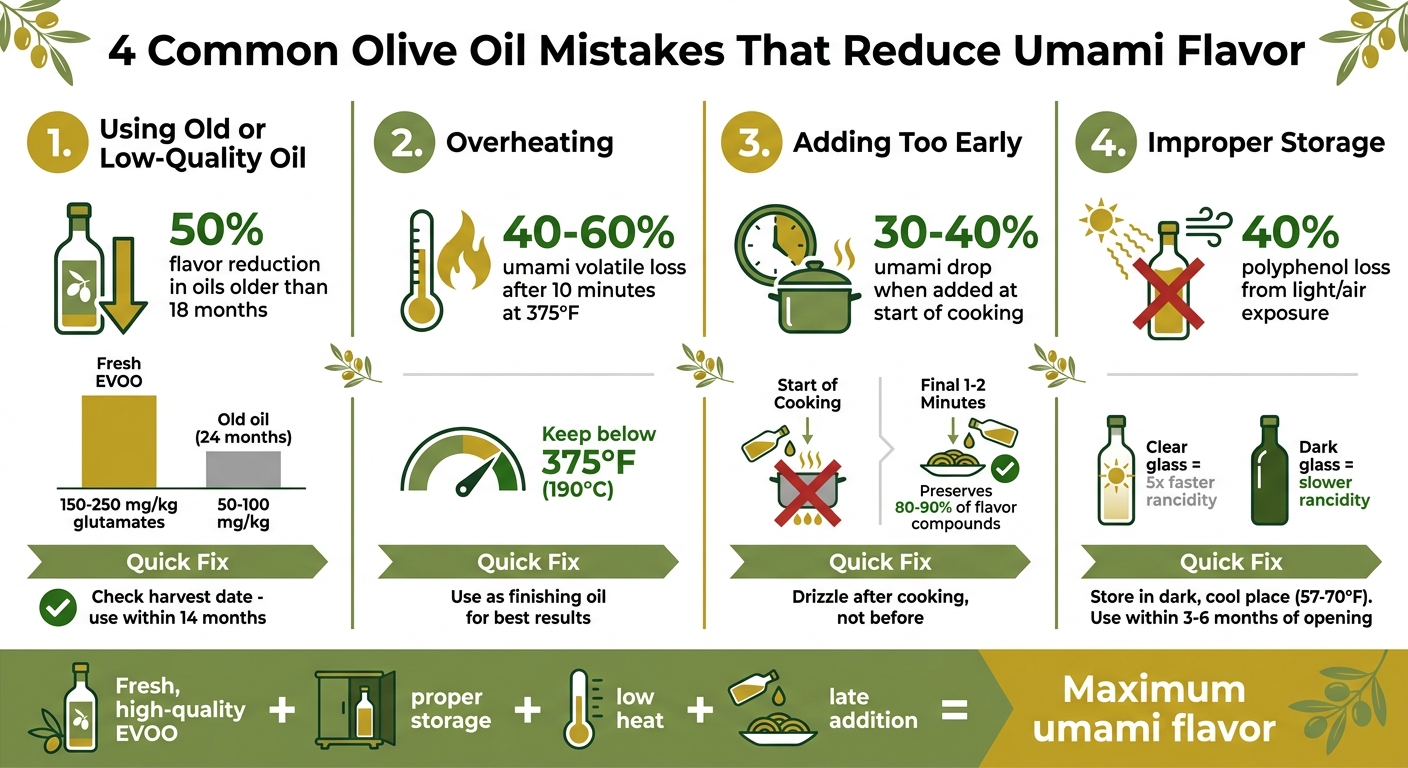
- Don’t use old or low-quality olive oil: Fresh extra virgin olive oil (EVOO) contains key compounds like polyphenols and glutamates that amplify umami. Old oils lose these compounds, reducing flavor by up to 50%.
- Avoid overheating: High heat destroys EVOO’s delicate flavors and umami-enhancing elements. Stick to temperatures below 375°F and use it as a finishing oil for the best results.
- Timing matters: Adding EVOO too early in cooking breaks down its flavor compounds. Drizzle it over dishes at the end to preserve its impact.
- Store it properly: Light, heat, and air cause oxidation, making olive oil rancid. Keep it in a cool, dark place and use within 3–6 months of opening.
4 Common Olive Oil Mistakes That Reduce Umami Flavor
The Hidden Problem With Most Olive Oil
sbb-itb-4066b8e
Mistake 1: Using Low-Quality or Old Olive Oil
Using old or poorly made olive oil can ruin the umami experience. As Big Horn Olive Oil Company explains:
"Well-sourced, well-produced, high-quality Extra Virgin Olive Oil (EVOO) will taste richer (or brighter), more complex, and simply better".
When olive oil ages or is poorly produced, it loses essential flavor compounds. A 2023 study published in the Journal of Agricultural and Food Chemistry found that fresh EVOO (less than six months old) contains 150–250 mg/kg of free glutamates - the amino acids responsible for umami. In comparison, oil that’s 24 months old contains only 50–100 mg/kg. This represents about a 35% drop in umami intensity. Additionally, oxidation strips away volatile compounds like hexanal and (E)-2-hexenal, reducing umami potential by up to 50% in oils older than 18 months.
Why Freshness Matters for Umami
Fresh EVOO is packed with heat-sensitive antioxidants like oleocanthal and hydroxytyrosol. These polyphenols not only offer health perks but also enhance umami by balancing bitterness and boosting savory notes. Once the oil oxidizes, however, off-flavors develop. Blind taste tests reveal that rancid oils can mute umami by 30–40%. The peppery sensation you feel in your throat when tasting fresh, high-quality EVOO is a telltale sign of oleocanthal, emphasizing the oil’s freshness and flavor depth.
Big Horn Olive Oil ensures freshness by milling olives within two to three hours of harvest to preserve these delicate compounds. As they point out:
"Lower-quality olive oils go through unnatural production processes that begin to denature the healthy fats right at the production site".
With freshness being so critical, let’s talk about how to choose a premium olive oil.
How to Identify High-Quality Olive Oil
When shopping for olive oil, check for a harvest date on the label - this is more reliable than a generic "best by" date. Premium EVOO should ideally be consumed within 14 months of its harvest. Big Horn Olive Oil, for instance, selects only the top 5% of olive harvests and uses third-party lab testing to ensure purity, avoiding any mixed oils.
Packaging matters too - dark glass bottles are essential for protecting the oil from light, which can speed up rancidity. When tasting, high-quality EVOO should have vibrant, fresh flavors like green apple or almond, along with a peppery finish. Avoid oils that taste flat or waxy.
Experts at the UC Davis Olive Center have praised Big Horn’s Estate Reserve Ultra Premium EVOO for its exceptional polyphenol levels, exceeding 500 mg/kg. This ensures the preservation of glutamates and antioxidants, delivering a richer, more complex flavor compared to standard supermarket oils. Pairing fresh EVOO with umami-rich foods like Parmesan or mushrooms can amplify flavors by 20–30%, as evidenced by chef tests.
Mistake 2: Overheating Olive Oil
Heating extra virgin olive oil (EVOO) too much can ruin its delicate flavors and umami richness. When the oil surpasses its smoke point, it undergoes oxidation, breaking down the intricate flavor compounds that make it special.
EVOO is naturally heat-stable up to about 375°F (190°C) thanks to its antioxidants. Premium varieties with Free Fatty Acid (FFA) levels below 0.3% can even handle temperatures up to 464°F (240°C), depending on their grade and freshness. However, to preserve the oil's flavor-enhancing qualities, it’s best to keep the temperature well below the smoke point.
Understanding EVOO's Smoke Point
For high-quality EVOO, the smoke point typically falls between 350°F and 410°F (177°C to 210°C). If you see heavy smoke, it’s a clear sign the oil has reached its limit and should be removed from heat immediately. As Learn Olive Oil explains:
"When your oil starts to smoke, it's a clear signal that it's beginning to break down. This process can create unpleasant flavors and harmful compounds".
The freshness of the oil significantly affects its smoke point. Over time, older oils lose polyphenols, which are essential for heat stability. This is why checking the harvest date is crucial, not just for flavor but also for cooking performance. Filtered oils also fare better at higher temperatures because they lack the tiny olive fruit particles that can burn and cause the oil to smoke prematurely.
These factors highlight the importance of matching your cooking methods to the oil's optimal temperature range.
Best Practices for Cooking with EVOO
EVOO is excellent for various cooking techniques, as long as you stay within the right temperature range. Here’s a quick guide:
- Sautéing and stir-frying: 320–350°F
- Pan-searing: 350–375°F
- Roasting: 375–400°F
Look for a subtle shimmer on the oil’s surface - that’s your signal to start cooking before the oil reaches its smoke point.
For low-to-medium heat cooking (250–350°F) or as a finishing oil, EVOO shines by retaining its aroma and texture. As Learn Olive Oil notes:
"Using a robust, flavorful oil isn't just for finishing; it builds a deep, foundational flavor that neutral oils simply cannot replicate".
Drizzling high-quality EVOO over dishes after cooking - like soups, grilled meats, or roasted vegetables - unlocks its full aroma and silky texture while keeping its umami-rich compounds intact.
Mistake 3: Adding Olive Oil Too Early in Recipes
When it comes to cooking with extra virgin olive oil (EVOO), timing is everything. Adding it too early in the process can expose its delicate flavor compounds to prolonged heat, which breaks them down and diminishes the umami flavors. These compounds, such as aldehydes like (E)-2-hexenal, are key to enhancing umami. However, extended exposure to high temperatures causes them to oxidize, leading to off-flavors and a noticeable reduction in umami.
Research published in the Journal of Agricultural and Food Chemistry in 2022 revealed that heating EVOO at 375°F (190°C) for just 10 minutes reduces umami volatiles by 40-60%. Testers noted that dishes prepared this way were 35% less flavorful. For instance, if you add olive oil at the start of making tomato sauce, the umami perception drops by 30-40%. This happens because the heat dissipates the grassy, aromatic notes that naturally elevate the glutamates in tomatoes.
When to Add Olive Oil
To avoid losing those essential flavor compounds, timing your olive oil addition is crucial. The best approach is to add EVOO in the final 1-2 minutes of cooking or drizzle it over dishes once they’re finished. This preserves 80-90% of the compounds that contribute to umami, compared to adding it early in the process.
For example:
- Add EVOO after cooking mushrooms to retain their rich flavor.
- Emulsify it with pasta water after boiling for a silky finish.
- Use it at room temperature for salads to keep its full flavor intact.
A simple drizzle of 1-2 tablespoons per serving after cooking can make a big difference. If needed, gently warm the oil to below 200°F (93°C) to maintain its integrity. Blind taste tests have shown that this method can enhance umami perception by 25%, especially when paired with glutamate-rich ingredients.
Pairing Olive Oil with Umami-Rich Ingredients
Once you’ve nailed the timing, the next step is pairing EVOO with ingredients that naturally boost umami. Olive oil pairs beautifully with foods that are rich in glutamates, guanylate, or inosinate, such as:
- Tomatoes (high in glutamates)
- Mushrooms (packed with guanylate)
- Soy sauce (monosodium glutamate)
- Aged cheeses (inosinate)
- Seaweed
EVOO’s polyphenols interact with these compounds to amplify umami flavors significantly - up to eight times more.
For instance, when making bruschetta, drizzle a robust EVOO like Picual over grilled bread topped with chopped tomatoes and mushrooms after cooking to avoid heat degradation. Similarly, when stir-frying greens, finish with a touch of EVOO and soy sauce instead of cooking them together. For a more elevated pairing, try Big Horn Olive Oil’s Coratina EVOO with balsamic-drizzled mushrooms. This combination enhances the natural glutamates while preserving the oil’s flavorful compounds.
Mistake 4: Improper Storage of Olive Oil
Even the finest extra virgin olive oil (EVOO) can lose its signature flavor if stored the wrong way. The main offenders - light, heat, and air - speed up oxidation, breaking down the antioxidants and polyphenols that give EVOO its bold, peppery taste. For example, air exposure increases oxidation threefold, light doubles the rate, and heat speeds it up by 1.8 times.
When EVOO is stored in clear bottles or exposed to light and air, it can lose up to 40% of its polyphenols. Worse, oil in clear glass can turn rancid up to five times faster than oil kept in dark, cool conditions. Once this happens, the oil’s fresh and grassy notes are replaced with stale, greasy flavors - think old crayons or putty. Instead of enhancing your dishes, it diminishes them. Proper storage is essential to keep those umami-boosting polyphenols intact.
"Storing your oil next to the stove or on a sun-drenched windowsill is like hitting the fast-forward button on spoilage." - Learn Olive Oil
Knowing how to store EVOO correctly can make all the difference in preserving its flavor and quality.
How to Store EVOO Correctly
To protect your olive oil’s flavor and quality, keep it cool, dark, and tightly sealed. Store bottles in a pantry or low cabinet, away from heat sources like stoves, ovens, or dishwashers. The ideal storage temperature is between 57°F and 70°F (14°C–21°C).
Choose containers made of dark glass (amber or green) or stainless steel to block UV rays and prevent oxidation. Clear glass bottles should be avoided altogether. If you buy oil in large tins, transfer it into smaller, dark glass bottles to reduce the air exposure that occurs in larger containers.
Always reseal the bottle tightly as soon as you’ve poured out what you need.
Proper storage not only preserves flavor but also extends the shelf life of your EVOO.
Shelf Life of EVOO and When to Replace It
When stored correctly, fresh EVOO maintains its quality for 18 to 24 months from the harvest date. However, once opened, its quality declines faster. For the best flavor and umami-enhancing properties, aim to use it within 3 to 6 months. Beyond this timeframe, the polyphenol content can drop by as much as 50% in just four months.
When shopping, prioritize oils with a harvest date rather than just a "best by" date. Olive oil often starts losing its peak quality 18 months after harvest. To avoid waste, use the "First-In, First-Out" method: date bottles when you open them and use older oil first.
To determine if your oil has gone bad, rely on your senses. Rancid oil often smells like musty socks or sour fruit and loses its signature peppery kick. Warming a small amount can amplify off-putting odors, making spoilage easier to detect.
Correct Techniques for Using Olive Oil to Amplify Umami
Now that we've covered common mistakes, let's focus on how to use olive oil effectively to bring out umami flavors. The secret lies in selecting the right type of olive oil, pairing it thoughtfully, and using it at just the right time in your cooking process.
Choosing the Right Olive Oil Variety
Not all olive oils are created equal when it comes to enhancing umami. Bold, peppery extra virgin olive oils are ideal for rich, savory dishes. Their strong flavors can balance and complement ingredients like creamy cheeses or hearty breads. Varieties such as Picual and Coratina are excellent choices. These oils pack a spicy punch that pairs beautifully with umami-rich foods like roasted mushrooms, aged Parmesan, or grilled meats.
For more delicate dishes, like white fish, a light and fruity olive oil works better. These oils enhance the dish's natural flavors without overwhelming them. The key is to match the oil's intensity to the dish - mild oils for subtle ingredients, robust oils for bolder flavors.
Layering Umami with Olive Oil and Balsamic Vinegar
Pairing extra virgin olive oil (EVOO) with balsamic vinegar creates a flavor combination that takes umami to the next level. The trick? Match the intensities of the oil and vinegar. For example:
- Use a robust, peppery oil with a tangy, aged balsamic for hearty dishes like grilled vegetables.
- Choose a mild oil with a sweeter balsamic for lighter salads or delicate greens.
Big Horn Olive Oil offers excellent options for this pairing. Their Traditional 18-Year Aged Dark Balsamic ($8.99) delivers the depth needed to complement bold oils, while the Molto Denissimo 25-Year Aged Dark Balsamic ($12.99) provides even more concentrated, rich notes.
This pairing works best as a finishing drizzle. Adding both over roasted vegetables, grilled bread, or burrata preserves the delicate flavors that high heat can diminish. You can also use this combo in marinades to infuse meats and vegetables with deep, savory flavors before cooking.
Practical Tips for Optimal Flavor
For the best results, reserve high-quality EVOO for finishing dishes. As chef Noam Ben-Ami advises:
"Leave EVOO for finishing plates, as a very simple dressing".
A final drizzle over grilled vegetables, pasta, or meats enhances umami without compromising the oil's quality through heat exposure.
For cooked dishes, try sautéing tomato paste in olive oil for 30–60 seconds until it darkens. This quick step eliminates the raw flavor and intensifies the savory base of your dish. Olive oil can also act as a carrier for umami-packed ingredients like anchovies or garlic. Let these ingredients "melt" into the oil to distribute their flavors evenly. After searing, deglaze the pan with wine or stock to capture caramelized bits and add another layer of umami.
These techniques ensure that olive oil not only complements your dishes but also elevates their flavors to their full potential.
Product Spotlight: Big Horn Olive Oil Recommendations
Take your cooking to the next level with Big Horn Olive Oil's premium selections, designed to bring out the best in every savory dish.
Estate Reserve Ultra Premium EVOO
Big Horn Olive Oil's Estate Reserve is a standout choice for freshness and flavor. This extra virgin olive oil (EVOO) is cold-pressed and bottled just 1–3 months after harvest, with olives milled within 2–4 hours of picking. This quick process preserves high levels of polyphenols, which are key to enhancing savory flavors. Perfect for medium-heat sautéing or as a finishing touch, it shines on dishes like grilled meats or roasted mushrooms. At just $8.99, it offers a premium taste without breaking the bank.
Picual and Coratina EVOO Varieties
If you're after a bold and robust flavor, these two varieties deliver.
-
Picual: Priced at $23.99 for 375 ml, this medium-intensity oil boasts 435 ppm of phenolic content and a fruity, nuanced flavor profile. It’s an excellent choice for roasted vegetables, shrimp, or pizza. As Jane I. shares:
"Picual olive oil is my favorite oil to use to pour over breads, pizza, roasted veggies, shrimp...... it has an amazing delightful flavor".
-
Coratina: For those who love a stronger kick, Coratina is the way to go. Also priced at $23.99 for 375 ml, it offers 580.30 ppm of phenolic content. Its unique notes of unripe banana and green almond, along with a peppery finish, elevate dishes like grilled meats and aged cheeses. Donna F. describes it perfectly:
"Coratina has a very pleasant flavor. Strong but smooth. Taste great on my fresh garden tomatoes!".
Both oils have earned glowing reviews, with Picual rated 4.8/5 and Coratina achieving a perfect 5/5. For the best experience, Big Horn recommends using them within six months of purchase.
Pairing with Big Horn Balsamic Vinegars
Pairing these EVOOs with Big Horn's aged balsamic vinegars creates an unbeatable depth of flavor. The Traditional 18-Year Aged Dark Balsamic (priced at $8.99) is an ideal match for robust oils, enhancing grilled vegetables or roasted meats. For a richer, more intense option, the Molto Denissimo 25-Year Aged Dark Balsamic (priced at $12.99) adds complexity to dishes like burrata or caramelized onions.
For a complete flavor upgrade, try the Fresh Ultra Premium EVOO & Balsamic Pairing Bundle at $89.99. This set includes three fresh EVOOs and a 25-year aged balsamic, making it the ultimate kit for creating savory masterpieces. Big Horn Olive Oil has garnered over 20 international awards in the past six years, a testament to their commitment to quality. Plus, enjoy free shipping on orders over $60 and a 10% discount for first-time newsletter subscribers.
With these expertly crafted oils and vinegars, every dish becomes a celebration of flavor.
Conclusion
To master the art of using olive oil for enhancing umami, focus on four key steps: choose fresh, high-quality extra virgin olive oil (EVOO), avoid overheating it, add it at the right time, and store it properly. These steps work together - using premium oil won't matter if it's stored incorrectly or overheated, and no technique can save a dish made with poor-quality oil.
Fresh EVOO is unmatched when it comes to flavor. It delivers bold, fruity notes that can elevate any savory dish, while degraded oil simply falls flat. To preserve the delicate compounds that bring out umami, it's best to drizzle high-quality oil over finished dishes instead of using it for high-heat cooking.
Take a moment to review your olive oil supply. Check purchase dates, ensure proper storage, and invest in fresh EVOO designed for optimal flavor. Big Horn Olive Oil's Estate Reserve, Picual, and Coratina varieties are great examples of oils crafted for this purpose. Cold-pressed within two hours of harvest and bottled within three months, these oils retain their natural polyphenol content, ensuring they consistently enhance umami in your cooking.
For an extra layer of depth, pair these oils with Big Horn's aged balsamic vinegars. By following these practices and selecting quality products, you can elevate your cooking to an art form that transforms every savory dish into something extraordinary.
FAQs
How can I tell if my olive oil is rancid?
To determine if your olive oil has gone bad, start by giving it a sniff. If it smells stale, like crayons or old nuts, that's a red flag. Next, taste it. A greasy, waxy flavor without any fresh or peppery notes is another clear indicator of rancidity. These changes happen due to oxidation and the breakdown of the oil's chemical structure. Using rancid olive oil can ruin the taste of your food, so it's best to steer clear of it.
Can I use EVOO for frying or high-heat cooking?
Yes, you can use extra virgin olive oil (EVOO) for frying and high-heat cooking. It has a fairly high smoke point, making it suitable for these methods. However, when exposed to very high temperatures, EVOO might lose some of its flavor and nutritional properties. To maintain its quality, it's best to stick to medium to high heat rather than pushing it to extreme levels.
What foods boost umami most with a finishing drizzle of EVOO?
Foods that bring out umami flavors with a drizzle of extra virgin olive oil (EVOO) include tomatoes, mushrooms, aged cheeses, grilled meats, seafood, and grains. When paired with high-quality olive oil, these ingredients shine, amplifying their natural flavors and delivering a deeper, more satisfying taste.