

How Eco-Friendly Packaging Impacts Olive Oil Quality
Eco-friendly packaging is transforming the olive oil industry, but it comes with challenges. While materials like dark glass, aluminum cans, and bag-in-box systems help protect olive oil from light and oxygen, they must also meet quality preservation standards. Here’s what you need to know:
- Light and Oxygen Risks: Transparent materials often fail to protect olive oil from photo-oxidation, which degrades flavor and health properties. Dark glass and aluminum cans offer better protection.
- Material Limitations: Many eco-friendly materials lack strong oxygen barriers, leading to faster degradation of the oil over time.
- Balancing Trade-offs: Heavier materials like glass protect oil better but increase carbon emissions during transport. Lighter options reduce emissions but may compromise quality.
- Solutions: Bag-in-box systems prevent air exposure, aluminum cans are fully recyclable and lightweight, and refillable systems cut down on waste.
Key Takeaway: The right packaging can preserve olive oil’s quality without compromising environmental goals. Combining protective materials with efficient designs ensures both product integrity and reduced waste.
Challenges of Eco-Friendly Packaging for Olive Oil
Oxidation and Light Exposure Risks
Light exposure can significantly harm olive oil through a process called photo-oxidation. When light interacts with the oil, it activates compounds like chlorophyll, which then produce hydroperoxides and unpleasant flavors. This not only diminishes the oil's quality but also reduces its health benefits. Unfortunately, many eco-friendly packaging materials prioritize visibility over protection, making this issue worse.
For example, clear plastics and transparent eco-friendly films are popular because consumers like to see the product. In some markets, clear glass has even outsold protective green glass by a staggering 20 to 1. George Eliadis, an olive oil producer, highlights this consumer preference:
"Customers say they prefer to be able to see the olive oil but cartons are cheaper, don't break, aren't heavy and keep oil fresher longer because light can't get in."
However, visibility often comes at the expense of proper protection, leading to further challenges when it comes to preserving olive oil's quality.
Barrier Properties of Eco-Friendly Materials
Another major hurdle is the lack of effective oxygen barriers in many eco-friendly packaging materials. Common sustainable plastics like polyethylene and polypropylene are too porous to provide the necessary long-term protection for premium olive oil. Additionally, molecular migration from these materials can further degrade the oil's quality over time.
In tests designed to simulate shelf life, a 100% compostable metallized material demonstrated an Oxygen Transmission Rate (OTR) of 0.23 cm³/m²·24h - more than twice the 0.1 cm³/m²·24h rate of high-barrier plastic films. Olive oil stored in this compostable material saw an average phenolic reduction of 58%, compared to just 25% in packaging made from UV-blocking transparent plastic film. These findings highlight the difficulty of balancing environmental goals with the need to maintain product quality.
Balancing Environmental Goals with Product Quality
Producers face tough decisions when trying to align environmental concerns with the need for effective packaging. The UC Davis Olive Oil Center explains:
"To maximize shelf stability the ideal packaging material would prevent light and air penetration, and oils would be stored in the dark at 16–18°F (61–64°F)"
While materials like dark glass and stainless steel provide excellent protection, they come with higher environmental costs due to their weight and the energy required for production. For smaller packaging sizes, such as 3.4 oz bottles, the packaging itself can account for as much as 60% of the product's overall global warming potential.
Heavier materials may safeguard the oil's quality but increase transportation emissions, while lighter, eco-friendly options often compromise the preservation of ultra-premium extra virgin olive oil. Additionally, direct contact with metallized layers in some sustainable materials can accelerate oxidative degradation. This trade-off between environmental impact and product quality remains a key challenge for producers.
sbb-itb-4066b8e
Solutions to Preserve Olive Oil Quality in Eco-Friendly Packaging
Dark Glass and Aluminum Cans
Dark glass bottles, especially in amber or green hues, are excellent at blocking UV light, which helps preserve polyphenols and prevent photo-oxidation. These bottles also create an effective oxygen barrier, maintaining the oil's quality for up to 24 months.
Aluminum cans offer another great option, providing complete protection from both light and oxygen. They're also much lighter than glass, making transportation more efficient. In early 2024, Neolea launched extra virgin olive oil in 100% recyclable aluminum cans. These cans include a reusable "fresh cap" that ensures spill-free, controlled pouring while preserving the oil's flavor and polyphenols. As Neolea stated:
"Aluminum is endlessly recyclable, lightweight for efficient transport, and gives our product a sleek, modern look."
The lighter weight of aluminum cans also helps reduce transportation emissions, making them a more sustainable choice.
Bag-in-Box Systems for Extended Freshness
Bag-in-box packaging offers an innovative way to maintain freshness while being environmentally friendly. This system uses a collapsible inner liner that shrinks as oil is dispensed, preventing air from entering the container. This design minimizes oxidation far better than rigid bottles, which allow air to replace the dispensed oil. Additionally, this packaging format uses about 70% less plastic than standard plastic bottles. Since these packages ship flat, they require less space, further reducing transportation needs.
Bag-in-box systems are especially effective for bulk purchases, such as 3-liter (approximately 101 fl oz) options. Thanks to the vacuum seal, the oil remains fresh for months after opening, as it avoids contact with oxygen.
Refillable and Recyclable Options
Refillable systems present another way to cut down on packaging waste. By February 2025, Terra Delyssa plans to introduce 750-milliliter refill packages, allowing consumers to replenish existing glass or squeeze bottles. This approach reduces packaging materials by 96% and costs 10% less for consumers.
Recycled PET (R-PET) bottles are another sustainable alternative. These bottles are made entirely from recycled materials and are over seven times lighter than glass, significantly lowering transportation emissions. With global warming potentials ranging from 459–634 kg CO₂ equivalent (compared to glass's 790–1,137 kg CO₂ equivalent), R-PET bottles offer an eco-conscious choice. For optimal quality, dark-colored R-PET bottles should store oil below 72°F.
Comparing Packaging Options: Quality and Environmental Impact
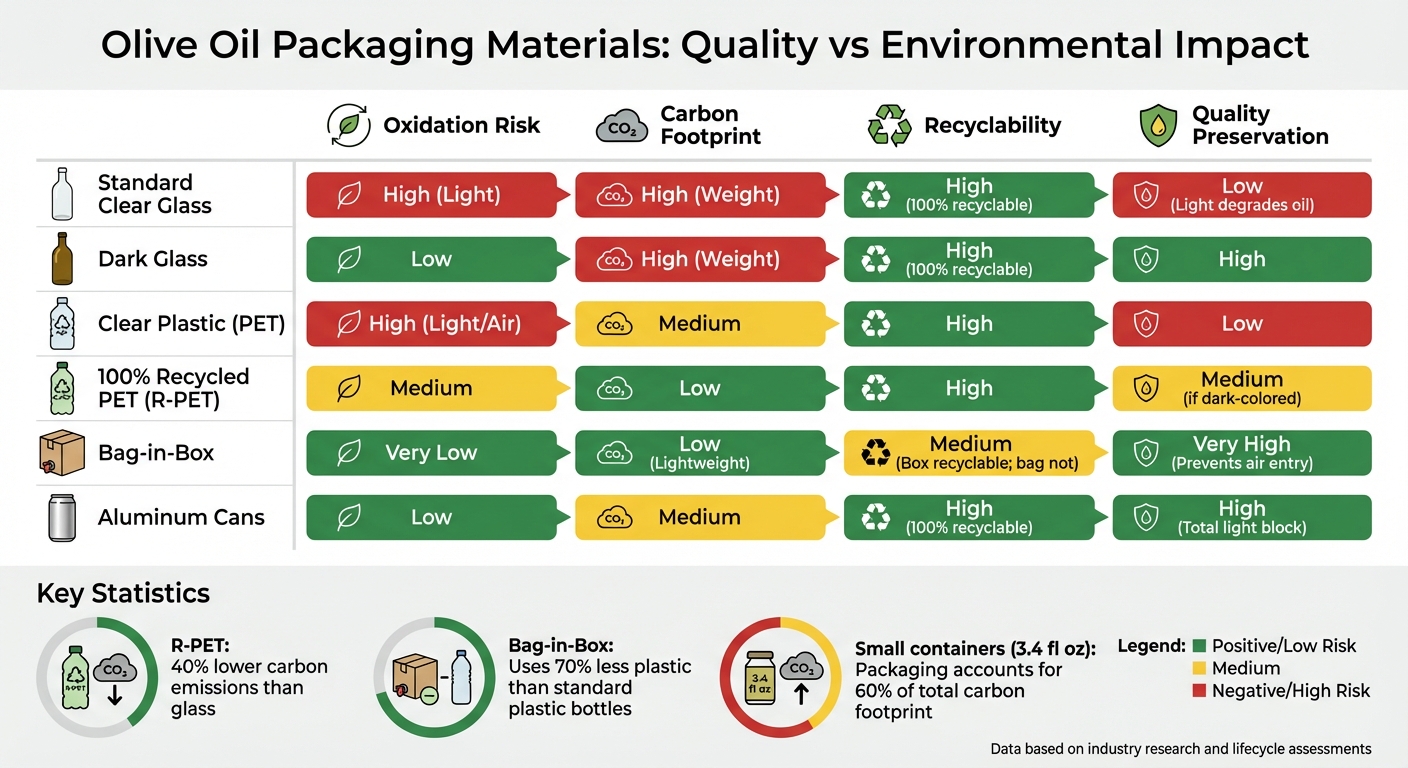
Olive Oil Packaging Materials: Quality vs Environmental Impact Comparison
Packaging Materials Comparison Table
When selecting packaging for fresh extra virgin olive oil, the challenge lies in striking a balance between protecting the oil's quality and reducing environmental impact. Each material comes with its own strengths and weaknesses, particularly in areas like oxidation prevention, carbon footprint, recyclability, and the ability to maintain freshness and flavor. The table below breaks down these factors for a clearer comparison.
| Packaging Material | Oxidation Risk | Carbon Footprint | Recyclability | Quality Preservation |
|---|---|---|---|---|
| Standard Clear Glass | High (Light) | High (Weight) | High (100% recyclable) | Low (Light degrades oil) |
| Dark Glass | Low | High (Weight) | High (100% recyclable) | High |
| Clear Plastic (PET) | High (Light/Air) | Medium | High | Low |
| 100% Recycled PET (R-PET) | Medium | Low | High | Medium (if dark-colored) |
| Bag-in-Box | Very Low | Low (Lightweight) | Medium (Box recyclable; bag not) | Very High (Prevents air entry) |
| Aluminum Cans | Low | Medium | High (100% recyclable) | High (Total light block) |
This table highlights the trade-offs involved, offering a clearer picture of how packaging choices impact both product integrity and sustainability.
For instance, recycled PET (R-PET) stands out for its reduced carbon emissions - over 40% lower than glass - thanks to its lighter weight. Notably, for small containers like 3.4 fl oz (0.100 L) bottles, the packaging itself can account for as much as 60% of the product's total carbon footprint.
While glass remains a strong option for long-term storage due to its impermeability, bag-in-box systems have emerged as a top performer in preserving the phenolic compounds in olive oil. These antioxidants are key to both health benefits and the oil's signature pungency. A 2025 study showed that bag-in-box packaging maintained these compounds better than stainless steel containers over a 12-month period. By preventing oxygen exposure, this packaging not only safeguards the oil's quality but also aligns with efforts to reduce environmental impact.
Best Practices for Eco-Friendly Olive Oil Packaging
Protective Measures in Packaging Design
When it comes to eco-friendly olive oil packaging, protecting the oil from light, oxygen, and temperature changes is key. Materials like aluminum cans and dark-amber glass are excellent choices because they block UV rays, which can lead to photo-oxidation. This process damages chlorophyll and causes the oil to become rancid. For brands that use transparent materials to showcase their product, there are solutions like full-body labels or UV-blocking additives in plastic films. Research has shown that UV-blocked transparent films can significantly reduce the loss of phenolic compounds, which are crucial for olive oil's quality and health benefits.
Keeping oxygen out is just as important. Airtight seals, such as precision flow caps or "fresh caps", help maintain an oxygen-free environment even after the bottle is opened. This preserves the oil's polyphenols, which are responsible for its health properties and its signature peppery flavor. A great example is Neolea, a producer based in Corfu, which launched recyclable aluminum cans with reusable fresh caps in early 2024. This innovation earned them a Gold Award at the 2024 NYIOOC World Olive Oil Competition for both quality and forward-thinking design.
Temperature control is another critical factor. Olive oil should be stored at 61–64°F. Producers need to ensure that their eco-friendly packaging materials can handle these conditions without losing their protective qualities or structural strength. These measures, combined with rapid processing techniques, work together to maintain the oil's quality.
Quick Cold-Pressing and Packaging
While packaging plays a vital role in preserving olive oil, it can only protect oil that starts off fresh. No packaging, no matter how advanced, can reverse the effects of degraded oil. The speed at which olives are harvested, pressed, and packaged is a major factor in determining the oil's initial quality. Big Horn Olive Oil is a standout example, sourcing Ultra Premium Extra Virgin Olive Oils that are cold-pressed and packaged within hours of harvest. This ensures the preservation of antioxidants and flavor compounds.
The oil's initial quality, including metrics like acidity and peroxide levels, sets the stage for how long it will last, regardless of the container used. By combining rapid processing with high-barrier packaging, producers can maximize the shelf life and quality of their olive oil.
Conclusion
Eco-friendly packaging plays a crucial role in maintaining the quality of premium olive oil. The secret lies in selecting materials that shield the product from light, oxygen, heat, and moisture. Options like dark glass, aluminum cans, and bag-in-box systems not only provide these protections but also help reduce waste. For instance, research indicates that bag-in-box packaging retains phenolic compounds more effectively than traditional containers over a 12-month period.
These packaging advancements aren’t just theoretical - they’re reshaping the industry. By early 2025, Terra Delyssa aimed to distribute 150,000 units of 750 mL refill pouches, cutting packaging material use by an impressive 96%. Similarly, brands like Neolea have introduced recyclable aluminum cans paired with reusable fresh caps. These initiatives prove that prioritizing environmental responsibility doesn’t mean compromising on quality.
The shift toward sustainable packaging aligns with growing consumer demand for eco-conscious products. Shoppers increasingly expect brands to deliver both quality and sustainability. Sean Zacot, President and CEO of Boss Strategy Global, highlights this trend:
"This aligns with consumer preferences for sustainable products. Additionally, the packaging is designed to preserve the freshness and quality of olive oil, with dark-colored bottles and air-tight seals to protect against light and oxidation".
Big Horn Olive Oil provides a great example of balancing these priorities. By sourcing Ultra Premium Extra Virgin Olive Oils that are cold-pressed and packaged within hours of harvest, they demonstrate how quick processing and protective packaging can maintain exceptional standards while supporting sustainability.
Looking ahead, the future of olive oil packaging lies in smarter material choices, refillable systems, and designs that safeguard both the product and the planet. Prioritizing features like oxygen barriers, light protection, and temperature control will help producers extend freshness while significantly reducing waste.
FAQs
Which packaging keeps olive oil freshest after opening?
The ideal packaging for preserving olive oil's freshness after opening is opaque and airtight. Options like dark glass bottles or bag-in-box systems are particularly effective. These materials protect the oil from light, air, and moisture, which are key factors in slowing oxidation and maintaining its quality.
How can I tell if a package blocks light and oxygen?
To ensure a package blocks light and oxygen, check for materials such as brown-amber glass, metallized films, or plastic films with UV-blockers. These materials are designed to shield olive oil from harmful exposure, preserving its freshness and quality.
Is bag-in-box or aluminum greener than dark glass?
Bag-in-box packaging is often seen as a more eco-conscious choice for olive oil compared to dark glass bottles. This is because it requires fewer materials, is lighter and easier to transport, and results in a smaller carbon footprint. Beyond its environmental benefits, bag-in-box packaging also helps maintain olive oil's freshness over time. While dark glass does offer protection from light exposure, its heavier material and less efficient shipping processes make it a less environmentally friendly option overall.