

How Olive Oil Packaging Affects Ecosystems
Olive oil packaging has a major impact on carbon emissions, waste, and pollution. Glass bottles are heavy, energy-intensive to produce, and result in higher emissions during transport. Plastic bottles, while lighter and more efficient to transport, contribute to microplastic pollution and chemical leaching. Recycling rates for both materials remain low in the U.S., with only 31.1% of glass and 29.1% of PET being recycled. Alternatives like bag-in-box systems and 100% recycled PET bottles offer lower emissions and better waste management. Consumers and producers can make smarter choices by prioritizing lightweight, recyclable, and refillable options to reduce environmental harm.
Problems with Standard Olive Oil Packaging
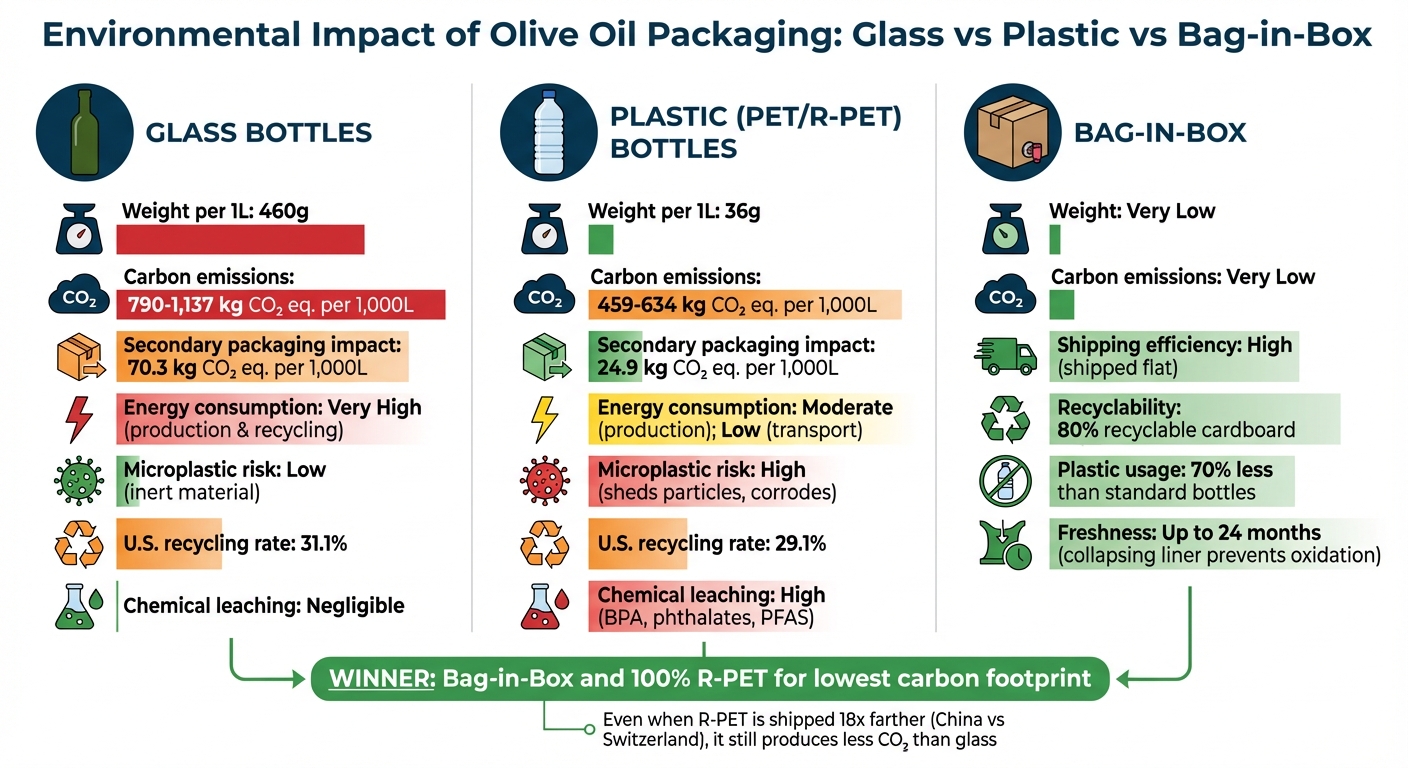
Glass vs Plastic vs Bag-in-Box Olive Oil Packaging Environmental Impact Comparison
Glass Bottles and Carbon Emissions
Glass bottles come with a hefty environmental cost, primarily due to their weight and energy-intensive production. A typical 1-liter glass bottle weighs about 460 g, making it over seven times heavier than a PET bottle, which weighs just 36 g. Manufacturing glass involves high-temperature melting processes, which consume significant amounts of energy and drive up emissions.
This extra weight has a domino effect: it increases fuel consumption during transportation and requires sturdier secondary packaging - think thicker cardboard, protective layers, and reinforced pallets. These additional materials contribute approximately 70.3 kg of CO₂ equivalent per 1,000 liters of olive oil, compared to just 24.9 kg for PET systems. On top of that, glass bottles take up more space, reducing pallet efficiency and increasing the carbon footprint of shipping.
Recycling doesn’t completely solve the problem. While glass can be recycled endlessly without losing quality, the process still requires significant energy. Worse, the U.S. recycling rate for glass remains low, meaning much of it ends up in landfills. This not only wastes the energy invested in production but also misses the chance to reduce future emissions. While glass struggles with production and recycling drawbacks, plastic bottles bring their own set of problems, especially after disposal.
Plastic Bottles and Microplastic Pollution
Plastic bottles present a different set of challenges, particularly when it comes to their long-term environmental impact. Unlike glass, plastic doesn’t biodegrade. Instead, it breaks down into microplastics - tiny particles less than 5 mm in size - that contaminate soil, water, and even food chains.
Olive oil itself can exacerbate the problem. Over time, it corrodes plastic containers, potentially releasing microplastic particles into the oil. A 2024 study found microplastics in 100% of edible oil samples tested in Italy and Spain, with concentrations averaging 1,140 particles per liter. Shockingly, some commercial oils contained anywhere from 134,000 to 580,000 particles per liter. The most common polymers detected were polyethylene (50.3%) and polypropylene (28.7%), with most particles measuring less than 100 μm.
Beyond microplastics, plastic packaging can leach harmful chemicals like phthalates, BPA, and PFAS into the oil. These endocrine-disrupting chemicals are especially prone to leaching when plastic is exposed to heat or light.
Glass vs. Plastic Packaging Comparison
Here’s a side-by-side look at how glass and plastic packaging stack up:
| Feature | Glass Bottles | Plastic (PET/R-PET) Bottles |
|---|---|---|
| Weight (1 L) | ~460 g | ~36 g |
| Carbon Emissions | 790–1,137 kg CO₂ eq. per 1,000 L | 459–634 kg CO₂ eq. per 1,000 L |
| Secondary Packaging Impact | 70.3 kg CO₂ eq. per 1,000 L | 24.9 kg CO₂ eq. per 1,000 L |
| Energy Consumption | Very high (production & recycling) | Moderate (production); Low (transport) |
| Microplastic Risk | Low (inert material) | High (sheds particles, corrodes) |
| U.S. Recycling Rate (2018) | 31.1% | 29.1% |
| Chemical Leaching | Negligible | High (BPA, phthalates, PFAS) |
Both glass and plastic packaging come with environmental trade-offs. From production to disposal, these challenges highlight the need for better packaging solutions for premium extra virgin olive oils.
sbb-itb-4066b8e
Full Lifecycle Impact of Olive Oil Packaging
Glass, Plastic, and Bag-in-Box Across Their Lifecycle
When we talk about the full lifecycle of packaging, we're looking at everything - from sourcing raw materials to manufacturing, transporting, using, and finally disposing of the packaging. Each step comes with its own set of environmental challenges and trade-offs.
Glass bottles are made from sand and limestone, but producing them requires extremely high temperatures. In fact, the production phase alone accounts for 80–90% of the total energy used for glass packaging. This energy-intensive process, combined with the heavy weight of glass during transportation, adds significantly to its overall environmental footprint. While glass can theoretically be recycled endlessly, only about 31.1% of glass containers in the U.S. actually make it back into the recycling system. The rest? They end up in landfills.
Plastic (PET) bottles, on the other hand, rely on fossil fuels for virgin production. However, using 100% recycled PET (R-PET) eliminates the need for new petroleum inputs. PET bottles also require less energy to mold compared to the high-temperature process for glass, and they’re much lighter - around 36 grams per bottle - making transportation far less emissions-heavy. The downside? PET recycling isn't as efficient. Much of it gets downcycled or incinerated instead of being reused for new bottles.
Bag-in-box systems take a different approach. They combine a lightweight plastic liner with a cardboard exterior made from renewable wood pulp. This packaging design requires less energy to manufacture and, because it’s rectangular and collapsible, it maximizes pallet space, cutting down on transportation emissions. The collapsing plastic liner also helps preserve the oil by preventing oxidation better than rigid bottles. While the cardboard is easy to recycle, the plastic liner presents challenges. These lifecycle differences highlight why bag-in-box systems stand out when it comes to reducing emissions.
Why Bag-in-Box Packaging Reduces Emissions
Looking at the lifecycle challenges of different packaging options, it’s clear that transportation is where bag-in-box packaging excels. Weight plays a big role in fuel consumption, and lighter packaging like bag-in-box systems can significantly cut transportation emissions.
A study conducted by the University of Bologna in February 2023 examined the distribution of 1,000 liters of fresh extra virgin olive oil from Italy to destinations such as Switzerland (1,000 km by truck), Denmark (1,500 km by truck), and China (18,000 km by ship). The findings were striking: even when R-PET containers were shipped to China - 18 times farther than Switzerland - the carbon footprint was still much lower than that of glass bottles transported shorter distances. Specifically, R-PET systems produced about 459–634 kg of CO₂ equivalent, while glass bottles generated approximately 790–1,137 kg.
"The heavy weight of glass turns into a significant environmental burden during the distribution phase, especially for long-distance transport", researchers at the University of Bologna concluded.
Bag-in-box systems show similar advantages. Their lightweight and space-efficient design means more product can fit on each pallet and truck, reducing the number of trips needed. For producers exporting olive oil from Mediterranean regions to North America, this translates into lower fuel consumption and a smaller carbon footprint.
Better Packaging Options for Olive Oil
Building on lifecycle insights, these packaging alternatives provide practical ways to reduce environmental impact.
Bag-in-Box with EVOH Liners
Bag-in-box systems are a highly efficient option for packaging olive oil. They use 70% less plastic and are made from 80% recyclable cardboard. The design includes an inner bag that collapses as oil is dispensed, preventing air exposure and keeping the oil fresh for up to 24 months.
The key to their effectiveness lies in high-oxygen barrier films, which preserve oil quality. Some advanced materials achieve an oxygen transmission rate (OTR) as low as 0.1 cm³/m²·24h, outperforming many metallized alternatives. Additionally, because these systems can be shipped flat on rolls, they cut down on transportation needs significantly. While bag-in-box systems excel in efficiency, other options like glass and plastic packaging also have their own advantages.
Dark Glass Bottles and Bio-Based Plastics
Dark glass bottles, especially those in deep green or amber hues, provide excellent UV protection, helping to maintain polyphenols and freshness for up to 24 months. Glass is 100% recyclable and chemically inert, but its weight poses a challenge. For example, a dark glass bottle weighs around 460 g, compared to just 36 g for PET plastic.
Bio-based plastics offer a lightweight alternative. Made from renewable plant sources, these plastics are fully recyclable and help cut shipping costs and carbon emissions. In 2023, Deoleo, the largest olive oil bottler globally, introduced a new bottle design using recycled plastic, reducing their plastic usage by 10%. Additionally, Italian Law No. 178 now allows 100% recycled PET for food packaging, making it easier to move away from virgin plastics. These developments work hand-in-hand with refillable systems to lower overall environmental impact.
Refillable Systems to Cut Waste
Refillable systems can reduce packaging waste by 40–50%. These systems also support a premium brand image by encouraging consumers to reuse containers multiple times.
For example, in December 2024, the Tunisian brand Terra Delyssa (produced by CHO Group) announced a plan to sell 150,000 units of 750-milliliter (25.4 fl oz) refill pouches by February 2025. These recyclable plastic pouches allow customers to refill existing bottles, cutting packaging material use by 96% and offering a retail price that's 10% lower than bottled options. Similarly, in early 2024, the Greek producer Neolea launched extra virgin olive oil in 100% recyclable aluminum cans with reusable caps that prevent spills and preserve polyphenols.
Research shows that 78% of premium food consumers prefer recyclable or biodegradable packaging, and brands adopting eco-friendly options have seen a 25% jump in repeat purchases.
Comparing Eco-Friendly Packaging Types
| Packaging Type | Weight | Recycling Rate/Potential | Shipping Efficiency | Carbon Emissions |
|---|---|---|---|---|
| Bag-in-Box | Very Low | Moderate (80% recyclable cardboard) | High (Shipped flat) | Very Low |
| Dark Glass | High (≈460 g [16.2 oz]) | 100% (Highly efficient) | Low (Heavy/Bulky) | High (790–1,137 kg CO₂ eq) |
| Bio-Based Plastic | Low (≈36 g [1.3 oz]) | 100% (Recyclable) | High (Lightweight) | Moderate |
| Refillable Glass | High (Initial) | 100% (Repeated use) | Moderate | Low (Per use cycle) |
| 100% R-PET | Low (≈36 g [1.3 oz]) | 100% (Recyclable) | High (Lightweight) | Lowest (459–634 kg CO₂ eq) |
The table highlights the trade-offs between these packaging solutions. Dark glass offers excellent UV protection and recyclability but is heavy, leading to higher transportation emissions. Bag-in-box and 100% recycled PET systems, on the other hand, have a much lower carbon footprint, especially for long-distance shipping. Refillable systems stand out for reducing waste over time, but their success depends on consumer participation and available infrastructure. Each packaging type plays a role in minimizing the environmental impact of olive oil production and distribution.
How Big Horn Olive Oil Reduces Packaging Impact
Big Horn Olive Oil takes a thoughtful approach to packaging, combining quality and environmental care for their Ultra Premium Extra Virgin Olive Oils and balsamic vinegars. Their choices aim to shrink their carbon footprint without compromising the freshness and quality their products are known for. This packaging philosophy aligns seamlessly with their broader sustainability goals.
Fresh Harvest and Responsible Packaging
To maintain quality while cutting environmental impact, Big Horn Olive Oil employs FlavorLock technology with bag-in-box systems. This method packages oil directly from climate-controlled cellars into specially designed boxes. The bags feature a five-layer co-extruded EVOH (ethylene vinyl alcohol) technology, layered between polypropylene, which creates an exceptional oxygen barrier. This ensures the oil stays fresh for longer.
Bag-in-box packaging offers a much lower environmental footprint - up to 90% less - compared to traditional single-use glass bottles. Its lightweight design also reduces emissions during transportation. By incorporating this system, Big Horn Olive Oil minimizes fuel consumption across the supply chain, from production facilities to your kitchen.
Eco-Friendly Packaging for Balsamic Vinegars
While their olive oils benefit from advanced bag-in-box systems, Big Horn Olive Oil packages balsamic vinegars in dark glass bottles to preserve their rich flavor and antioxidant content. These bottles provide UV protection, ensuring the quality developed during the aging process remains intact. Additionally, the company prioritizes eco-conscious packaging practices to minimize waste associated with their premium products.
How to Reduce Packaging Harm
Switching to Better Packaging for Producers
Olive oil producers have a significant opportunity to lower their environmental impact by rethinking their packaging strategies. One effective step is transitioning to 100% recycled PET bottles, which can cut emissions by over 40% compared to traditional glass packaging.
For instance, Deoleo, the largest olive oil bottler globally, revealed in 2023 that they are moving to redesigned bottles made from recycled plastic, reducing total plastic usage by 10%. Similarly, Greek producer Neolea introduced aluminum cans with reusable "fresh caps" in early 2024, ensuring both polyphenol protection and infinite recyclability. Meanwhile, Terra Delyssa, a Tunisian brand by CHO Group, plans to sell 150,000 units of 750ml refill packs by February 2025. These packs use 96% less packaging material and offer consumers a 10% price discount.
Producers can also improve their bottling processes with additional measures. For example, using argon gas during bottling removes oxygen from the headspace, helping to prevent oxidation and preserve phenolic compounds. Adding a sealing wax layer over screw caps enhances the seal's effectiveness, protecting the oil during storage. Additionally, incorporating UV-blocking films in transparent or flexible packaging can limit phenolic loss to 25%, compared to 58% in metallized options. While producers are making strides in sustainable packaging, consumer choices also play a vital role in shaping these trends.
How Consumers Can Choose Better Packaging
Consumers have the power to influence sustainable packaging trends by making informed choices. A significant 78% of premium food buyers prefer brands with recyclable or biodegradable packaging. By aligning their purchases with these preferences, consumers can help drive demand for environmentally conscious alternatives.
When shopping for olive oil, prioritize dark or opaque containers - like dark green glass, amber bottles, or opaque tins - that protect the oil's polyphenols and keep it fresh for up to 24 months. Look for packaging labeled "100% R-PET" or "recycled glass", as these support circular economy practices. Bag-in-box systems are another excellent choice, using 70% less plastic than standard bottles while preventing air exposure as the internal bag collapses during use. Opting for larger formats, such as 3-liter or 5-liter tins or bag-in-box options, further reduces the amount of packaging material per liter of oil.
"There is a shift toward more eco-friendly packaging, with glass bottles, tin cans and recyclable materials replacing traditional plastic. This aligns with consumer preferences for sustainable products".
- Sean Zacot, President and CEO of Boss Strategy Global
Conclusion
The journey of olive oil packaging - from the fields where olives are harvested to the final disposal of containers - has a noticeable impact on the planet. Carbon emissions during production and transport, microplastic pollution, and increasing landfill waste all highlight the importance of how olive oil is packaged.
Fortunately, there are ways to reduce these impacts. More producers are now using 100% recycled PET bottles, aluminum cans, and refillable systems that significantly lower the environmental toll of packaging. On top of that, consumer behavior is shifting. Over the last five years, 71% of consumers have opted for more sustainable choices, showing a growing demand for eco-conscious packaging solutions.
By choosing olive oil in dark glass bottles, recycled plastic, or bag-in-box formats, you can support brands that care about both quality and the environment. Larger containers and refill systems are another smart way to cut down on waste while still enjoying your favorite oils.
Take Big Horn Olive Oil, for example. They pair their dedication to fresh, high-quality extra virgin olive oil - cold-pressed within just two hours of harvesting - with thoughtful packaging that protects not only the oil but also the planet. Their approach shows how premium quality and environmental care can go hand in hand, setting a standard for the olive oil industry.
The move toward sustainable packaging isn’t just a passing phase - it’s a necessary step forward. By choosing responsible brands and making informed purchases, we can all help reduce the environmental footprint of this everyday kitchen essential while savoring the rich flavors and health benefits of extra virgin olive oil.
FAQs
What’s the most eco-friendly olive oil packaging overall?
Dark glass bottles and containers made from recycled materials are among the best packaging choices for olive oil when considering eco-friendliness. Not only do they shield the oil from light, preserving its quality, but they’re also recyclable, reducing waste and environmental impact.
Do bag-in-box systems keep olive oil fresh as long as bottles?
Bag-in-box systems are a smart choice for keeping olive oil fresh for longer periods. By minimizing air exposure, they significantly reduce oxidation, which helps maintain the oil's flavor and quality over time. This makes them a practical solution for long-term storage needs.
What should I look for on labels to avoid microplastics and reduce waste?
When selecting packaging, opt for materials like dark glass, metal, coated paperboard, or bag-in-box designs. These materials are excellent at blocking light and limiting oxygen exposure, which helps maintain product quality while reducing the risk of microplastic contamination. Plus, they contribute to cutting down waste, making them a smarter choice for both you and the planet.