

Empeltre Olives: Aragon's Signature Variety
Empeltre olives are a key part of Spain's Aragon region, known for their mild, sweet flavor and versatility in producing both table olives and fresh extra virgin olive oil. These medium-sized olives, weighing about 3 grams each, are characterized by their elongated shape and deep black color when ripe. Originating in the 15th century, they thrive in Aragon's semi-arid climate, covering around 80,000 hectares across Huesca, Zaragoza, and Teruel provinces.
Key facts about Empeltre olives:
- Flavor: Sweet, nutty, and free of bitterness.
- Oil Yield: 18.3%–27%, with a pale yellow to golden hue.
- Culinary Uses: Ideal for salads, seafood, and baking.
- Protected Status: Certified under PDOs like Aceite del Bajo Aragón to ensure quality.
Empeltre olive oil stands out for its smooth texture and unique yellow color, making it a preferred choice for delicate dishes. Despite their low natural rooting ability and sensitivity to frost, these olives are highly valued for their drought resistance and economic importance to Aragon's agriculture.
Origins and History in Aragon
Historical Background
Empeltre olives have been a staple of Spain's Aragon region since at least the 15th century, making them one of the oldest olive varieties in the area. The name Empeltre comes from the Catalan word empelt and the Aragonese impelte, both meaning "graft." This reflects a key challenge in cultivating this variety - its extremely low natural rooting ability. To overcome this, farmers perfected grafting techniques, a skill so closely tied to the variety that it became known as the "Empeltre method".
The trees first took root along the Ebro River basin, spreading from Aragon into Navarra, La Rioja, southern Catalonia, and Castellón. This expansion followed the river's course, creating a natural corridor for cultivation and firmly establishing the olive's regional identity. Empeltre olives thrived in Aragon due to their hardy nature and exceptional drought resistance, making them ideal for the region's tough soils and dry climate.
Over time, these cultivation practices shaped not only the olive's character but also its role as a cornerstone of Aragon's agricultural legacy.
Role in Aragon's Agriculture
Empeltre olives have long been central to Aragon's farming economy. Known for their versatility, they serve as both high-quality table olives and a source of premium olive oil, providing farmers with multiple revenue opportunities. When harvested in early November, after ripening to a rich purple-black hue, they are prized as table olives. If left on the tree longer, they yield an impressive amount of oil, celebrated for its quality.
The variety became so integral to the region that it earned several local names, including Aragonesa, Zaragozana, Negral de Calatayud, and simply Aragones. Its Protected Designation of Origin (PDO) status further solidified its reputation, turning the Empeltre olive into more than just a crop - it became a symbol of Aragon's agricultural excellence and cultural identity.
sbb-itb-4066b8e
Physical and Growing Characteristics
Physical Traits of Empeltre Olives
Empeltre olives are medium-sized, weighing between 2.5–3 grams (0.09–0.11 oz), with an elongated shape that's slightly curved and not perfectly symmetrical. The top of the olive is smooth and rounded, and the skin is dotted with numerous small lenticels (tiny pores). One standout feature is the 5:3 pulp-to-pit ratio, which means there's a generous amount of flesh compared to the stone. This makes them ideal for both table olives and oil production.
As the olives mature early in the season, they change from green to a striking deep black color. When fully ripe, they boast an oil content that exceeds 18%, making them a valuable crop for oil extraction.
| Physical Trait | Description |
|---|---|
| Size | Medium (2.5–3 grams / 0.09–0.11 oz) |
| Shape | Elongated, slightly asymmetrical |
| Color (Ripe) | Deep black |
| Pulp-to-Pit Ratio | 5:3 |
| Nipple | Absent |
| Lenticels | Numerous and small |
| Oil Yield | High (>18%) |
The trees that produce Empeltre olives are known for their high vigor, with an upright growth habit and thick, dense canopies. Their medium-sized leaves are dark green and elliptic-lanceolate in shape, contributing to the tree's healthy appearance. Another advantage for growers is the olives' low shedding resistance, which makes them well-suited for mechanized harvesting - a significant benefit for large-scale production.
These physical traits not only define the quality of the fruit but also influence how the variety is cultivated, offering both opportunities and challenges for farmers.
Growing Conditions in Aragon's Climate
Empeltre olives thrive in the semi-arid conditions of Aragon - a region known for its challenging environment. Their rugged nature and ability to perform well in poor soils make them a standout crop in this part of Spain.
One of the key strengths of this variety is its exceptional drought resistance, which is crucial in a region that receives only about 13.8 inches (350 mm) of rainfall annually. This adaptability allows the olives to flourish along the Ebro River basin, even in soils where other crops might struggle.
However, the trees are not without their weaknesses. While they handle drought well, they are sensitive to winter frosts and vulnerable to pests like the olive fly, as well as diseases such as tuberculosis and olive leaf spot. Another challenge is their low natural rooting ability, which historically required grafting to ensure successful cultivation.
Despite these vulnerabilities, Empeltre olives are widely grown, with approximately 80,000 hectares (about 197,684 acres) under cultivation across Spain. Their combination of drought tolerance, ability to grow in poor soils, and suitability for mechanized harvesting makes them a practical choice for olive farmers in Aragon. This balance of strengths and challenges has cemented their place as a reliable and productive variety in the region.
Premium Extra Virgin Olive Oil Mis Raíces | Empeltre EVOO Variety
Oil Production and Characteristics
Empeltre Olive Oil: Key Attributes
Empeltre olive oil is easily recognized by its distinct yellow hue, setting it apart from the greenish tones typical of many other Spanish oils. It’s celebrated for its smooth texture, sweet taste, and aromatic qualities, with the standout feature of being completely free of bitterness.
"The empeltre variety provides a yellow-colored smooth oil that is sweet and aromatic with no bitterness." – Olive Oil from Spain
This variety has an average oil yield of 18.3%, meaning it takes about 8 to 11 pounds of olives to produce just 1 liter of oil.
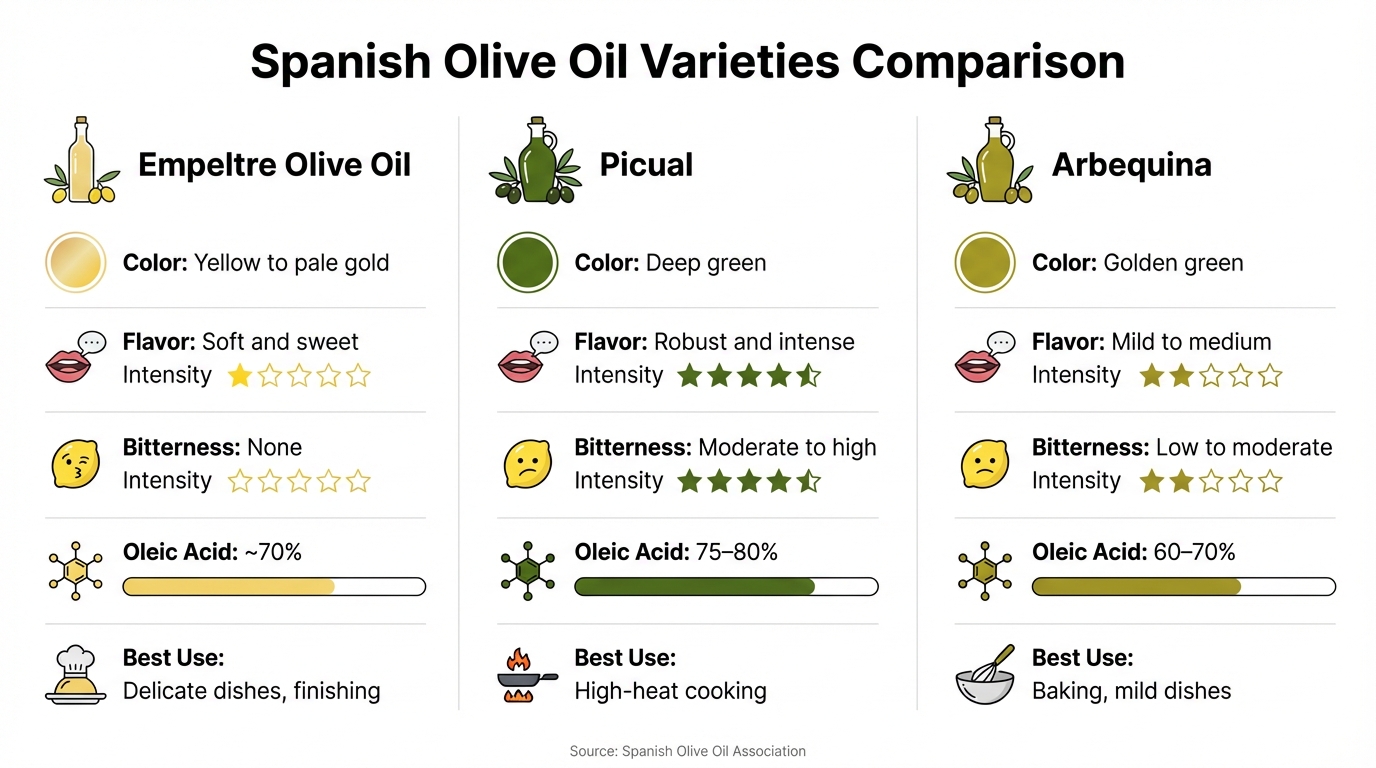
One of the defining chemical traits of Empeltre olive oil is its elevated Delta7 stigmastenol content. This sterol, often exceeding the European Union's limit of 0.5% - sometimes reaching up to 0.76% - is a natural marker of its Aragon origin. The region’s unique soil and climate conditions contribute to this distinctive characteristic. The table below highlights how Empeltre compares to other popular olive oil varieties:
| Attribute | Empeltre Olive Oil | Picual | Arbequina |
|---|---|---|---|
| Color | Yellow to pale gold | Deep green | Golden green |
| Flavor | Soft and sweet | Robust and intense | Mild to medium |
| Bitterness | None | Moderate to high | Low to moderate |
| Oleic Acid | ~70% | 75–80% | 60–70% |
| Best Use | Delicate dishes, finishing | High-heat cooking | Baking, mild dishes |
The oil is extracted using a seven-phase cold mechanical process, keeping temperatures below 80°F (27°C). This method is essential for preserving its polyphenols and vitamins, which contribute to its gentle flavor and health benefits.
Blending and Culinary Applications
Empeltre olive oil's mild and sweet profile makes it a versatile option in the kitchen. It works beautifully on its own or as part of a blend. Its subtle character enhances dishes without overpowering them - perfect for delicate fish, fresh salads, or a drizzle over soft cheeses.
A noteworthy production method involves co-processing the oil with rosemary during the malaxation phase. This technique has been shown to increase the oil’s phenol content by over 50%, significantly enhancing its antioxidant properties and shelf life. As highlighted by the International Journal of Gastronomy and Food Science:
"Aromatization with rosemary by co-processing during malaxation was more effective in increasing antioxidant compounds than the maceration method." – International Journal of Gastronomy and Food Science
When blended with more robust oils like Picual, Empeltre balances the intensity by adding sweetness and smoothness. Its mild nature also makes it an excellent choice for baking, where stronger oils might clash with sweet ingredients.
Empeltre olive oil’s adaptability, combined with its high standards and protected designation status, secures its place as a key product of Aragon. For anyone seeking authentic Spanish flavors, it offers a refined option without overwhelming intensity.
Flavor Profile and Culinary Uses
Flavor and Aroma Profile
Empeltre olive oil stands out for its smooth and sweet character, setting it apart from the stronger Spanish oils. It carries ripe, fruity hints of apple, banana, almond, and nuts. With no bitterness and only a mild pungency, it's a great choice for anyone just starting to explore extra virgin olive oils.
Its texture is silky and fluid, with colors ranging from pale yellow to gold. The unique almond-like aftertaste adds a touch of balance and sweetness, making it a wonderful addition to various dishes. These subtle qualities make it a flexible option in the kitchen.
When enjoyed as table olives, their mild nature is further elevated through traditional curing methods in olive oil or Sherry, which help maintain their soft texture.
Common Culinary Uses
Empeltre olive oil’s gentle flavor profile makes it perfect for a variety of culinary uses. It shines in dishes where a light touch is needed. Try drizzling it over white fish, mixing it with mild salads, or finishing cooked vegetables to retain its delicate aroma. Its natural sweetness also works wonderfully in smooth homemade mayonnaise and other light sauces.
In baking, Empeltre oil is an excellent alternative to butter or other fats, enhancing the sweetness of baked goods without adding bitterness or peppery undertones. For everyday cooking, it provides a reliable base that allows the main ingredients to stand out.
Protected Designations and Regional Importance
PDO Certification and Quality Standards
Empeltre olives, known for their distinctive flavor and culinary versatility, are produced under strict legal protections to maintain their quality and authenticity. In Aragon, these olives are safeguarded by the Protected Designation of Origin (PDO) system, which ensures that only oils produced within specific regions, using native varieties and traditional methods, can carry the protected name. The region is home to three PDOs: Aceite del Bajo Aragón, Sierra del Moncayo, and the newly recognized Aceite del Somontano.
The Aceite del Bajo Aragón PDO sets particularly high standards for Empeltre olive oil. At least 80% of the oil must come from the Empeltre variety, and olives are required to be milled within 48 hours of harvesting to preserve their delicate flavor. Additionally, the oil’s acidity must not exceed 0.8%, and every step of the production process - extraction, storage, and bottling - must occur within the designated region to ensure both authenticity and traceability.
This certification also highlights the naturally elevated levels of campesterol and Δ7-stigmastenol in Empeltre oil, which act as safeguards against adulteration. These measures prevent blending with cheaper seed oils and ensure that consumers receive genuine Aragonese olive oil. Beyond protecting the product’s quality, these standards also support local economies, reinforcing the region's agricultural heritage.
Economic and Regional Impact
PDO certification not only guarantees quality but also plays a vital role in the economic stability of the region. The unique characteristics of Empeltre olives, combined with their PDO status, have helped sustain rural traditions while providing economic opportunities. Grown on approximately 80,000 hectares, this variety supports thousands of small-scale farmers across Huesca, Zaragoza, and Teruel provinces. By emphasizing quality over quantity, PDO certification gives these producers a competitive edge in the market.
The economic benefits extend far beyond farming. In the small town of Oliete, Aragón, the "Apadrina un Oliva" (Adopt an Olive) initiative has breathed new life into the community. Since 2014, this program has revived 15,000 abandoned olive trees through 6,000 annual sponsorships, each costing €50. It has also drawn 3,000 tourists annually to a village with just 300 residents, creating a thriving oleo-tourism industry. In 2016, the project established its own mill, paying local farmers €0.60 per kilogram for high-quality olives - nearly double the standard market rate of €0.30 to €0.40 per kilogram.
"Traditional olive groves have been passed down from our ancestors. It would be natural not to be the last to enjoy them." - Carlos Dominguez, President of the DOP Aceite del Somontano
These revitalization efforts have had a profound impact on the community. The region has welcomed 12 new families, ensuring enough children to keep local schools open. By preserving the centuries-old terraced groves as protected heritage, rather than allowing them to be overtaken by industrial farming, PDO designations ensure that Empeltre olive cultivation remains a sustainable livelihood for generations to come.
Conclusion
Key Takeaways
Empeltre olives are deeply tied to Aragon's rich agricultural history, with their name stemming from the Aragonese word "impelte," meaning "graft." This nod to traditional cultivation methods highlights the enduring legacy of this variety. Empeltre olives stand out for their ability to serve two purposes: producing both exceptional-quality oil and delicious table olives. They are also known for thriving in challenging growing conditions.
Empeltre olive oil boasts an impressive yield of 18.3%–27%, with around 70% oleic acid content. Its pale yellow to golden hue accompanies a smooth, sweet, and aromatic profile, free of any bitterness. This mild flavor makes it a go-to choice for dishes that benefit from subtle fruity notes, offering a gentler alternative to the bold intensity of varieties like Picual.
For verified quality and authenticity, look for PDO certifications such as Aceite del Bajo Aragón and Sierra del Moncayo.
Explore Premium Olive Oils
When choosing olive oil, keep these points in mind. Opt for PDO-certified Empeltre oil to ensure you're getting the best quality and authenticity. Its sweet, aromatic flavor makes it an excellent finishing oil for salads, roasted vegetables, and seafood, enhancing the natural flavors of your dishes without overwhelming them.
Big Horn Olive Oil's Ultra Premium Extra Virgin Olive Oils deliver the refined, delicate richness of Spain's finest olives straight to your kitchen, making it easier than ever to enjoy the authentic taste of Empeltre.
FAQs
How do I know if an Empeltre olive oil is truly PDO-certified?
To verify if an Empeltre olive oil is PDO-certified, check for official certification labels or accompanying documentation. These labels confirm the oil meets PDO standards, guaranteeing its quality, adherence to strict production methods, and genuine origins - like those from the Bajo Aragón PDO region.
Is Empeltre olive oil good for cooking, or only for finishing?
Empeltre olive oil is a multi-purpose option that shines in both cooking and as a finishing touch. It’s often blended into salads, used in marinades, or drizzled over dishes to add a burst of flavor. This makes it a fantastic choice for a wide range of recipes.
What does 'Empeltre' mean, and why is grafting important for this variety?
The term Empeltre translates to "grafted" in Catalan, reflecting the propagation technique used for this olive variety. Grafting plays an important role in preserving the Empeltre cultivar's desirable characteristics, such as its quality and productivity. This method has become a cornerstone of olive-growing traditions in Aragon.