

How EVOO Impacts Metabolism and Energy Use
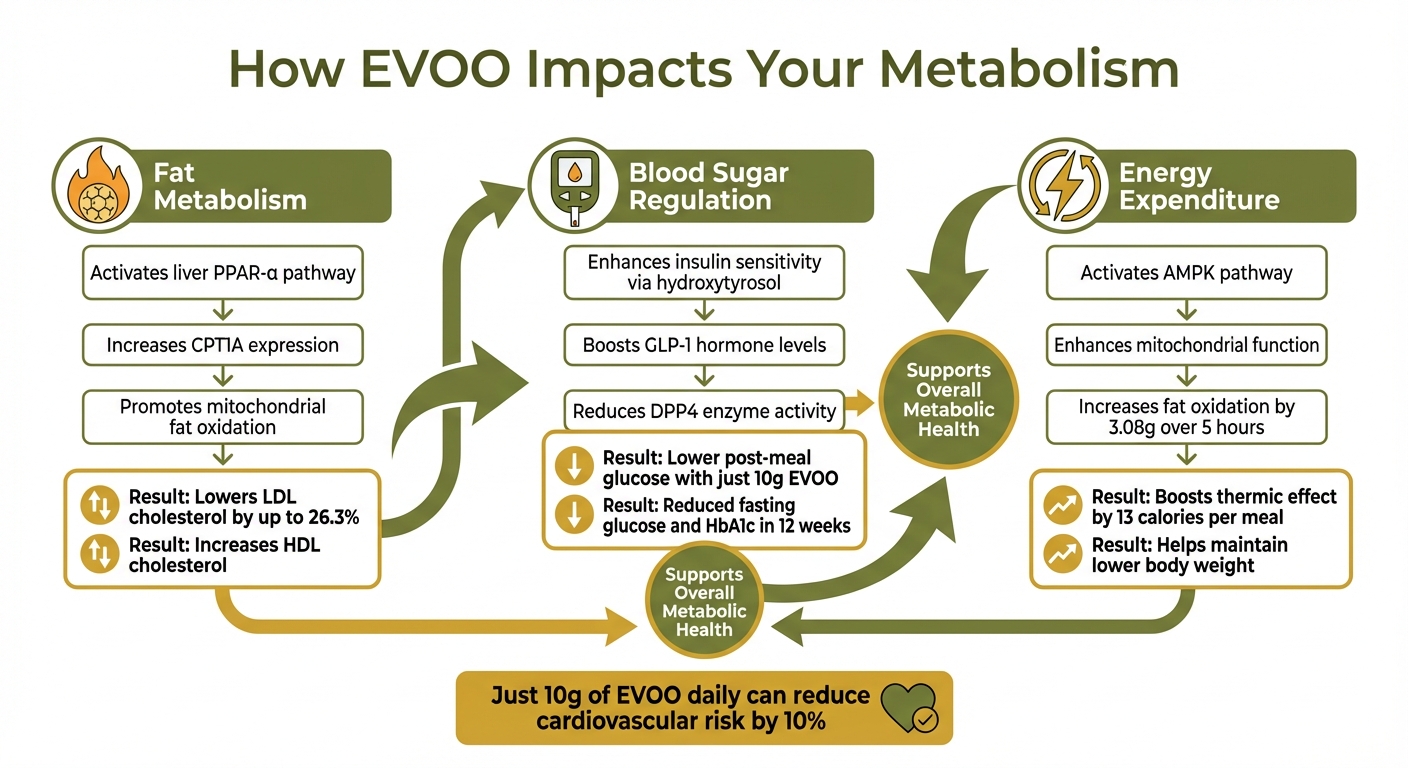
Extra virgin olive oil (EVOO) is more than just a kitchen staple - it plays a key role in supporting your metabolism and energy levels. Packed with monounsaturated fats and polyphenols, EVOO helps your body burn fat, regulate blood sugar, and even increase energy expenditure. Here's a quick breakdown of why it works:
- Fat Metabolism: EVOO promotes fat oxidation, helping your body efficiently convert fat into energy.
- Blood Sugar Regulation: It stabilizes blood sugar by enhancing insulin sensitivity and boosting GLP-1 levels.
- Energy Use: EVOO increases energy burned after meals, thanks to its impact on fat oxidation and mitochondrial function.
Studies show that just 10g per day of EVOO can lower cardiovascular risk by 10% and improve overall metabolic health. Adding EVOO to your meals - whether as a cooking oil, salad dressing, or finishing touch - can make a noticeable difference in how your body processes energy.
How Extra Virgin Olive Oil Affects Metabolism and Energy Use
This is What 10 Tbsp of Olive Oil Daily for 30 Days Does to Your Body
sbb-itb-4066b8e
How EVOO Affects Metabolism and Energy Use
Extra virgin olive oil (EVOO) has some fascinating effects on metabolism and energy use, backed by clinical research. By influencing fat metabolism, stabilizing blood sugar, and boosting energy expenditure, EVOO supports overall metabolic health in meaningful ways.
Improving Fat Metabolism
EVOO encourages your body to burn fat more efficiently. Its phenolic compounds, especially hydroxytyrosol, help activate liver PPAR-α, which increases CPT1A expression - a key player in mitochondrial fat oxidation. Essentially, this means EVOO helps your body convert fat into energy more effectively.
Clinical studies back this up. For instance, supplements enriched with EVOO have been shown to lower LDL cholesterol by up to 26.3% while increasing HDL cholesterol in proportion to the oil's polyphenol concentration. Additionally, oleic acid, a major component of EVOO, enhances the fluidity of cell membranes. This improvement allows insulin receptors to function better, further supporting metabolic health.
By promoting fat oxidation, EVOO also contributes to more stable blood sugar levels, which ties into its next benefit.
Regulating Blood Sugar
EVOO is a powerful ally in keeping blood sugar levels steady. In one clinical trial, participants with impaired fasting glucose experienced lower post-meal glucose levels when just 10 grams of EVOO was added to their meal. This also led to increased insulin and GLP-1 levels, the latter being a hormone that plays a critical role in blood sugar regulation.
Hydroxytyrosol enhances insulin sensitivity by influencing liver gene activity, while oleuropein helps the pancreas release insulin more effectively when glucose levels rise. EVOO also boosts GLP-1 levels and reduces DPP4 activity, an enzyme that normally breaks down GLP-1. Together, these effects help maintain balanced blood sugar levels and prevent the energy crashes that come with rapid glucose spikes and dips.
"EVOO meal was associated with reduction of glucose, triglycerides, Apo B-48 and DPP4 activity and increase of insulin and GLP-1 compared to the meal without EVOO." – Frontiers in Nutrition
For individuals managing type 2 diabetes, the benefits are even greater. A 12-week study revealed that consuming hydroxytyrosol-enriched bread daily significantly reduced fasting glucose and HbA1c levels in overweight participants.
Stable blood sugar levels not only improve energy stability but also set the stage for increased energy expenditure.
Increasing Energy Expenditure
EVOO doesn’t just help your body use energy more efficiently - it can also increase the total amount of energy burned. One study found that an EVOO-based breakfast boosted fat oxidation by 3.08 grams over five hours and increased the meal's thermic effect by about 13 Calories. These benefits are tied to AMPK activation and enhanced mitochondrial function, which improve how your body processes energy.
Animal studies echo these findings. In a 2019 experiment, mice fed a high-fat diet based on EVOO for 24 weeks maintained lower body weights compared to those on a lard-based diet, despite consuming similar amounts of food. The key difference wasn’t calorie intake but how their bodies metabolized and utilized the energy.
"If postprandial fat oxidation rates are higher after high MUFA, rather than SFA meals, then a simple change to the type of dietary fat consumed might have beneficial effects in curbing weight gain in men consuming a relatively high-fat diet." – LS Piers, Researcher, Menzies School of Health Research
Switching out saturated fats for EVOO can shift your metabolism toward burning fat instead of storing it, particularly during the post-meal period when your body is processing nutrients most efficiently.
How to Add EVOO to Your Daily Diet
Now that you're familiar with how EVOO can boost your metabolism, it's time to make it a staple in your meals. The good news? Adding EVOO to your diet doesn’t require elaborate recipes or drastic changes - just a few easy tweaks to your routine can help you enjoy its benefits throughout the day.
Cooking with EVOO
EVOO works wonderfully for everyday cooking. To keep its antioxidants and healthy fats intact, stick to low to medium heat (below 375°F) when cooking.
For a flavorful and metabolism-friendly dish, marinate lean proteins in EVOO with your favorite herbs. Toss vegetables like Brussels sprouts and red bell peppers with EVOO and roast them at 400°F for 20–25 minutes, adding a sprinkle of garlic powder for extra taste. This approach not only enhances flavor but also supports fat oxidation and stabilizes blood sugar levels.
Using EVOO as a Finishing Oil
Drizzling EVOO over your meals is one of the easiest ways to enjoy its full range of benefits. This method keeps its heat-sensitive compounds intact while adding a rich, satisfying flavor to your food. Use it to top salads, soups, grilled veggies, or even whole-grain toast for breakfast, providing steady energy to kickstart your day.
A simple salad with EVOO can turn basic greens into a nutrient-packed meal. For a quick and healthy snack, drizzle EVOO over avocado slices or even air-popped popcorn. Its versatility makes it an essential ingredient in any metabolism-friendly diet.
Combining EVOO with Balsamic Vinegar
Pairing EVOO with balsamic vinegar creates a dynamic duo for metabolic health. The acetic acid in balsamic vinegar enhances insulin sensitivity, helping your body use calories efficiently instead of storing them as fat. At the same time, EVOO provides long-lasting energy through its monounsaturated fats.
"The combination of olive oil and balsamic vinegar helps regulate blood sugar, reducing those cravings and making it easier to stick to a healthy eating plan." – Verde Valley Olive Oil Traders
For an easy and flavorful salad dressing, whisk EVOO with balsamic vinegar. You can also use this combo as a marinade for grilled chicken - let it sit for 15 minutes, then grill for 6–8 minutes per side, finishing with an extra drizzle of EVOO. Want a metabolism-supporting drink? Add a splash of balsamic vinegar to sparkling water with fresh herbs for a refreshing, low-calorie beverage that aids digestion.
A 2009 study found that participants who consumed 15 ml of vinegar daily for 12 weeks experienced reductions in visceral fat, BMI, and triglyceride levels. Traditional balsamic vinegar from Modena, with fewer calories than EVOO, enhances flavor without adding unnecessary energy.
Monitoring Your Metabolic Health with EVOO
Once you start incorporating extra virgin olive oil (EVOO) into your diet, it’s important to keep an eye on how it affects your metabolic health. Tracking specific markers can help you see the bigger picture and understand the impact EVOO has on your body.
What to Measure
EVOO is known to support fat oxidation and help stabilize blood sugar levels. To see these effects in action, focus on key metabolic markers. Start by establishing your baseline measurements before increasing your EVOO intake. For blood sugar control, monitor fasting glucose levels and HbA1c. Your doctor can also calculate the HOMA-IR index, which provides insight into insulin resistance.
Your lipid profile is another critical area to track. This includes total cholesterol, LDL cholesterol, HDL cholesterol, and triglycerides. The ApoB/ApoA-I ratio is particularly useful for assessing cardiovascular risk. Additionally, consider measuring inflammatory markers like C-reactive protein (CRP), as EVOO has been shown to help reduce systemic inflammation.
You can also track some metrics at home. Check your blood pressure weekly - EVOO has been linked to increased nitric oxide production, which helps relax blood vessels and can lower blood pressure. Keep an eye on your body weight and waist circumference, as EVOO consumption is associated with a reduced risk of weight gain. Pay attention to how you feel throughout the day, especially your energy levels and satiety after meals. EVOO influences hormones related to fullness and slows gastric emptying, which can help regulate appetite.
By monitoring these metrics, you’ll have a clear framework for assessing your progress.
Keeping a Progress Journal
A simple journal can be a valuable tool for tracking how EVOO impacts your health. Start by recording your baseline measurements - weight, waist circumference, blood pressure, and any recent blood test results - before you increase your EVOO intake. Then, log your daily EVOO consumption and update your physical measurements weekly. Set specific intervals, like every three weeks or every year, to review your progress.
Your journal should include both quantitative data (like blood sugar levels and cholesterol) and qualitative observations, such as energy levels and how full you feel after meals. Research shows that consuming just 25 mL of EVOO daily for three weeks can significantly reduce LDL oxidation and plasma oxidative markers. This highlights how even small, consistent changes can lead to meaningful improvements over time.
Conclusion: EVOO for Better Metabolism
Extra virgin olive oil (EVOO) plays a key role in supporting metabolic health. Its composition - around 98–99% major components like oleic acid and 1–2% minor compounds, including over 36 phenolics - helps regulate blood sugar, improve lipid profiles, and increase energy expenditure through adipose thermogenesis. Studies reveal that incorporating EVOO into a Mediterranean diet can reduce Type 2 Diabetes risk by 51% compared to a low-fat diet. For those already managing diabetes, it can lower the need for insulin therapy by 12%.
The quality of EVOO is critical to reaping these benefits. High-quality EVOO must meet stringent International Olive Council standards to preserve bioactive compounds such as tyrosol, oleuropein, and oleocanthal. These compounds not only encourage thermogenesis but also combat oxidative stress and reduce inflammation.
Big Horn Olive Oil offers Ultra Premium EVOO, cold-pressed within two hours of harvest and delivered fresh within three months. Their products, including the Estate Reserve and single-source varieties like Picual and Coratina, boast high polyphenol levels (213–450 mg/kg), which are essential for metabolic health. Whether you drizzle it over vegetables, use it as a finishing oil, or pair it with their Traditional 18-Year Aged Dark Balsamic Vinegar from Modena, EVOO can help optimize your body’s functions.
To start benefiting from EVOO, make small, consistent changes - swap out butter or refined oils for premium EVOO in your meals. Track your progress through regular health metrics, and over time, you may notice lasting improvements in energy use and blood sugar control.
Explore the range of Ultra Premium EVOOs at Big Horn Olive Oil to find flavors that fit your preferences. Your metabolism will thank you.
FAQs
How much EVOO should I eat daily for metabolic benefits?
Consuming 1 to 2 tablespoons (15 to 30 milliliters) of extra virgin olive oil (EVOO) daily can help support metabolism and assist with weight management. This small, manageable amount fits within general health guidelines and is simple to add to everyday meals, making it a practical choice for improving metabolic health.
Does cooking EVOO reduce its metabolism-supporting compounds?
Cooking with extra virgin olive oil (EVOO) at temperatures of 375°F or lower helps maintain its beneficial compounds that support metabolism. When exposed to higher heat, its nutrient content can break down, diminishing its health advantages. For the best results, use EVOO in recipes that call for gentle heat or drizzle it over dishes as a finishing touch after cooking.
Which health markers should I track to see if EVOO is helping me?
To understand how EVOO (extra virgin olive oil) might affect your health, keep an eye on several important health markers. These include insulin resistance, body weight, waist circumference, inflammatory cytokines, and liver enzymes. Tracking these can help reveal how EVOO influences your metabolism and overall well-being.