

EVOO and Metabolism: Key Nutrients Explained
Extra virgin olive oil (EVOO) isn’t just a kitchen staple - it’s packed with nutrients that support your metabolism, energy regulation, and overall health. The key compounds in EVOO, like monounsaturated fats (oleic acid) and polyphenols (hydroxytyrosol, oleocanthal, and oleuropein), work together to improve cholesterol, regulate blood sugar, and reduce inflammation. Research shows that daily EVOO consumption lowers the risk of cardiovascular disease, type 2 diabetes, and abdominal obesity.
Here’s what makes EVOO stand out:
- Oleic Acid: Improves cholesterol balance and promotes fat oxidation.
- Hydroxytyrosol: Protects against oxidative stress and boosts insulin sensitivity.
- Oleocanthal: Acts as a natural anti-inflammatory, similar to ibuprofen.
- Oleuropein: Improves blood sugar control through incretin hormones.
For the best results, aim for high-phenolic EVOO (at least 250 mg/kg) and consume around 1.5 tablespoons (20 grams) daily. This simple addition to your diet can help optimize metabolism and support long-term health.
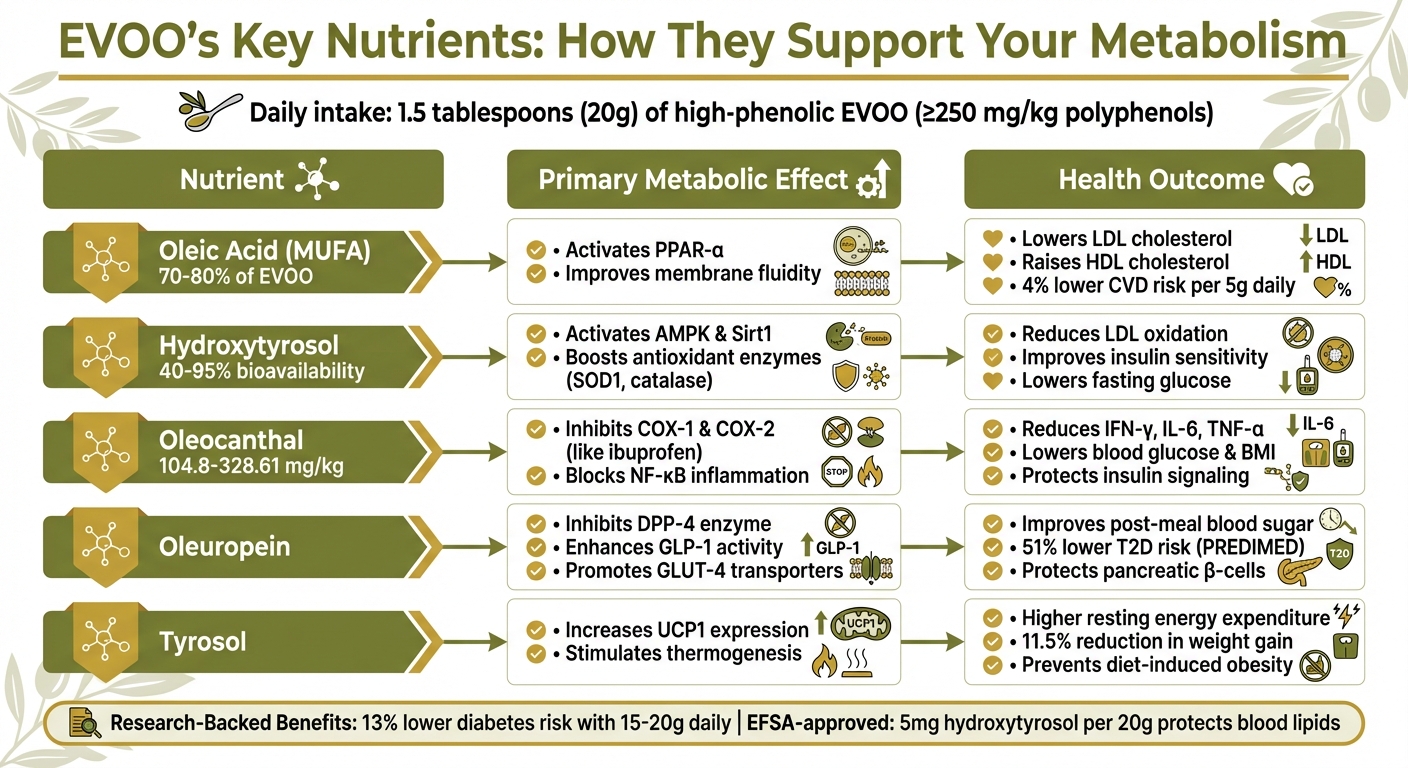
Key EVOO Nutrients and Their Metabolic Benefits
Olive oil: How to unlock health benefits | Prof. Tim Spector & Elizabeth Berger
Monounsaturated Fatty Acids (MUFAs) in EVOO
Extra virgin olive oil (EVOO) owes much of its nutritional power to monounsaturated fatty acids (MUFAs), which make up 55% to 83% of its total fatty acid content. At the heart of this is oleic acid, typically accounting for 70% to 80% of high-quality olive oil. This fatty acid plays a key role in the health benefits associated with EVOO.
When combined with polyphenols, MUFAs work to inhibit pancreatic lipases. This slows down the surge of lipids in the bloodstream after meals, making it easier for your body to clear fats efficiently. The result? Better energy regulation and less stress on your cardiovascular system.
How Oleic Acid Affects Cholesterol Levels
Oleic acid is particularly effective at improving cholesterol balance. It lowers LDL cholesterol (the "bad" type) while boosting HDL cholesterol (the "good" type). Even more impressive, it aids in reverse cholesterol transport - this process removes cholesterol from tissues and directs it to the liver for elimination. Oleic acid achieves this by increasing the expression of key proteins like ABCA1 and ABCG1, which help shuttle cholesterol out of cells.
Additionally, it protects HDL particles from oxidation and improves LDL quality, making these particles larger, less harmful, and more resistant to oxidative damage. Research shows that increasing daily olive oil intake by just 5 grams can lower cardiovascular disease risk by 4%. The greatest benefits are seen at around 20 grams per day, or roughly 1.5 tablespoons.
Lipid Processing and Energy Use
Oleic acid doesn't just influence cholesterol - it also plays a role in how your body processes and uses fats. It activates peroxisome proliferator-activated receptors (PPARs), which are essential for regulating metabolism and inflammation. This activation boosts the expression of genes responsible for fat oxidation, encouraging your cells to burn fats more completely.
The ratio of MUFAs to saturated fats in cell membranes also matters. Higher MUFA levels improve membrane fluidity, preventing phospholipids from packing too tightly. This supports better cellular signaling and overall metabolic efficiency.
Swapping out saturated fats like butter for EVOO can lead to tangible health improvements. For instance, one animal study found that replacing saturated fats with high-phenolic EVOO led to an 11.5% reduction in overall weight gain. Additionally, such changes can enhance glucose regulation and lower the risk of coronary heart disease.
Polyphenols in EVOO and Metabolic Function
Extra virgin olive oil (EVOO) offers more than just monounsaturated fats - it’s also packed with polyphenols that help manage energy and reduce metabolic stress. Two key polyphenols, hydroxytyrosol and oleocanthal, play a significant role at the cellular level by minimizing oxidative damage and controlling inflammation. These processes are essential for maintaining healthy metabolic function.
The European Food Safety Authority (EFSA) has acknowledged that olive oil polyphenols protect blood lipids from oxidative stress. However, this benefit applies only if the oil contains at least 5 mg of hydroxytyrosol and its derivatives per 20 g (about 1.5 tablespoons). High-phenolic EVOO, which is especially rich in these compounds, is defined as having at least 250 mg of polyphenols per kilogram of oil. Let’s take a closer look at how hydroxytyrosol and oleocanthal contribute to metabolic health.
Hydroxytyrosol and Oxidative Stress
Hydroxytyrosol (HT) is one of the most powerful antioxidants found in EVOO. It helps protect vascular health by scavenging free radicals and preventing LDL cholesterol from oxidizing. Additionally, HT activates the Nrf2 signaling pathway, which boosts the production of antioxidant enzymes like superoxide dismutase (SOD1) and catalase. This compound also mimics the effects of caloric restriction by activating Sirt1 and AMPK, which improve insulin sensitivity and enhance fat oxidation.
A 2024 study involving 30 individuals with high cholesterol found that HT supplementation improved LDL cholesterol, fasting glucose levels, and systolic blood pressure. Researchers Stefania Rigacci and Massimo Stefani from the University of Florence noted:
"EVOO polyphenols can be considered a new family of plant-produced gerosuppressants that molecularly 'repair' the AMPK/mTOR-driven path, leading to prevention against aging and age-related diseases."
In another 12-week trial, 60 participants with overweight/obesity and type 2 diabetes consumed 60 g of whole wheat bread enriched with HT daily. Compared to the control group, they saw greater reductions in glycated hemoglobin (HbA1c), glucose, insulin, and TNF-α levels. HT’s high bioavailability - absorbed at rates between 40% and 95% - makes it particularly effective, with its metabolites reaching concentrations 50 to 100 times higher in the bloodstream than the original compound.
Oleocanthal and Inflammation Control
Oleocanthal is best known for the peppery, burning sensation it creates when tasting high-quality EVOO. This natural anti-inflammatory compound works by inhibiting cyclooxygenase enzymes (COX-1 and COX-2), much like ibuprofen. As explained by Vasilis Tsimihodimos and Ourania Psoma from the University of Ioannina:
"Oleocanthal, one of the compounds that gives EVOO its characteristic intense taste, has an action similar to ibuprofen by inhibiting cyclooxygenases 1 and 2 (COX1-COX2)."
Beyond COX inhibition, oleocanthal blocks pro-inflammatory pathways, including NF-κB, MAPKs, and JAK2/STAT3. This helps protect insulin signaling and PPAR-γ activity. The APRIL study, conducted from 2016 to 2019, observed 91 participants with obesity (BMI 30–40 kg/m²) and prediabetes. After replacing their regular cooking oil with oleocanthal-rich EVOO (328.61 mg/kg) for one month, participants experienced notable reductions in interferon-γ (IFN-γ), blood glucose, body weight, and BMI. Greek EVOOs, known for their high oleocanthal content, typically range from 104.8 to 291.7 mg/kg.
These anti-inflammatory properties are particularly beneficial for addressing metabolically unhealthy obesity. Excess fat often triggers inflammatory mediators like IL-6 and TNF-α, which disrupt energy balance and lipid metabolism. Oleocanthal’s ability to counter these effects makes it a valuable ally in promoting metabolic health.
Oleuropein and Glucose Metabolism
Oleuropein, a key polyphenol found in extra virgin olive oil (EVOO) and olive leaves, plays an important role in managing blood sugar levels after meals. It does so by boosting incretin hormones, which are essential for glucose control. Oleuropein inhibits the enzyme Dipeptidyl Peptidase-4 (DPP-4), prolonging the activity of Glucagon-Like Peptide-1 (GLP-1), a hormone that helps regulate blood sugar levels.
In addition, oleuropein reduces the activity of NADPH oxidase (Nox2), which lowers the production of reactive oxygen species (ROS) and oxidative stress - factors that can lead to increased DPP-4 levels. As researchers Vasilis Tsimihodimos and Ourania Psoma from the University of Ioannina explain:
"Oleuropein and subsequently EVOO may act as dipeptidyl-peptidase 4 (DPP-4) inhibitors by hampering DPP-4 production and by enhancing glucagon-like-peptide-1 (GLP-1) activity."
Beyond its influence on incretin hormones, oleuropein aids glucose metabolism in other ways. It promotes the movement of GLUT-4 transporters to cell membranes, enhancing glucose uptake. It also inhibits glucose absorption in the intestines by targeting the GLUT-2 transporter. Additionally, it protects pancreatic β-cells from damage caused by amylin amyloids, which are linked to the development of type 2 diabetes.
These mechanisms highlight oleuropein's role in improving glucose regulation and its impact on incretin hormones.
How Oleuropein Affects Incretin Hormones
Clinical studies reveal that including about 20 mg of oleuropein in a meal can significantly lower postmeal blood sugar levels and DPP-4 activity, while increasing insulin and GLP-1 levels. These effects have been observed in both healthy individuals and those with impaired fasting glucose.
Andrea Da Porto from the University of Udine offers insight into this process:
"Oleuropein might decrease post-prandial blood glucose with a mechanism that counteracts oxidative stress-mediated incretin down-regulation."
This ability to protect the incretin system provides lasting metabolic advantages. For instance, a substudy from the PREDIMED trial demonstrated a 51% reduction in type 2 diabetes cases among participants following a Mediterranean diet enriched with EVOO, compared to those on a low-fat diet. Furthermore, consuming 15–20 g of EVOO daily (roughly 1 to 1.5 tablespoons) is linked to a 13% lower risk of developing diabetes.
These hormonal benefits align with EVOO's broader role in maintaining a steady metabolic rate.
Blood Sugar Control After Meals
Oleuropein's effects extend beyond hormonal regulation, directly contributing to better blood sugar control after meals. It reduces glucose absorption in the intestines and promotes glucose uptake by cells.
Clinical trials have shown that meals containing EVOO significantly lower postmeal blood sugar levels while increasing insulin and GLP-1, compared to meals prepared with other oils or without EVOO. This effect is partly due to oleuropein's ability to inhibit enzymes involved in glucose absorption and activate AMPK, a pathway that enhances glucose uptake in muscles.
For individuals with type 2 diabetes, consuming high-polyphenol EVOO (577 mg/kg) has been found to lower fasting plasma glucose and HbA1c levels over a 4-week period. By stabilizing blood sugar levels, oleuropein can help prevent the energy fluctuations that often accompany blood sugar swings, supporting a more consistent metabolic rate.
As Francesco Violi and colleagues note:
"EVOO improves post-prandial glucose and LDL-C, an effect that may account for the antiatherosclerotic effect of the Mediterranean diet."
When combined with the benefits of monounsaturated fats (MUFAs) and other polyphenols in EVOO, oleuropein's role in glucose regulation underscores its importance in promoting overall metabolic health.
sbb-itb-4066b8e
How EVOO Nutrients Affect Resting Metabolic Rate
Extra virgin olive oil (EVOO) nutrients play a role in boosting resting energy expenditure through several biological pathways. One key mechanism is the activation of PPAR-α. Compounds like hydroxytyrosol and high-phenolic EVOO increase the activity of peroxisome proliferator-activated receptor alpha (PPAR-α) in the liver. This, in turn, enhances the expression of genes like CPT1A and FGF21, which are involved in breaking down fatty acids and promoting fat metabolism.
Another major pathway involves AMPK signaling. Polyphenols such as hydroxytyrosol and oleuropein activate AMPK, a critical energy regulator in the body. AMPK activation inhibits cholesterol production by targeting HMG-CoA reductase and also reduces inflammation by suppressing pathways like NF-κB. On top of that, AMPK promotes the creation of new mitochondria (mitochondrial biogenesis) by increasing the expression of genes like PGC-1α, NRF-1, and TFAM.
Mitochondrial function also sees significant improvement with high-phenolic EVOO. These nutrients reduce the production of harmful reactive oxygen species and increase the activity of enzymes like aconitase, which supports better energy metabolism. Hydroxytyrosol, in particular, helps regulate mitochondrial dynamics by normalizing markers like Drp1 and enhancing the performance of mitochondrial complexes. This leads to more efficient energy production, as seen in the increased activity of electron transport chain complexes I and IV, which result in higher ATP output. Improved mitochondrial efficiency also sets the stage for thermogenesis, a process critical to resting energy expenditure.
Thermogenesis, or heat production, is another factor influenced by EVOO. Tyrosol, a polyphenol found in EVOO, stimulates thermogenesis in fat tissue by increasing the expression of UCP1, which releases energy as heat. Animal studies have shown that replacing saturated fats with high-phenolic EVOO led to an 11.5% reduction in weight gain. Additionally, hydroxytyrosol supplementation at a dosage of 10 mg/kg/day helped prevent obesity caused by a high-fat diet over a span of 17 weeks.
Nutrient Effects on Metabolic Markers
By targeting these pathways, EVOO nutrients optimize how your body uses energy while reducing metabolic stress. The table below highlights the specific effects of key EVOO nutrients on metabolic pathways and their associated health benefits:
| Nutrient | Primary Metabolic Effect | Health Outcome |
|---|---|---|
| Oleic Acid (MUFA) | Activates PPAR-α; improves membrane fluidity | Better lipid profiles and enhanced endothelial function |
| Hydroxytyrosol | Activates AMPK; boosts mitochondrial activity | Lower LDL oxidation; improved insulin sensitivity |
| Oleuropein | Activates AMPK; inhibits carbohydrate-digesting enzymes | Improved blood sugar control; heart health benefits |
| Tyrosol | Increases UCP1 expression; promotes thermogenesis | Higher resting energy expenditure; weight management |
| Oleocanthal | Inhibits COX-1 and COX-2 enzymes | Reduced inflammation (similar to ibuprofen) |
Together, these nutrients create a synergistic effect, supporting a healthy resting metabolic rate. Notably, the European Food Safety Authority has confirmed that consuming 5 mg of hydroxytyrosol and related compounds daily (via 20 g of EVOO) helps protect blood lipids from oxidative stress.
Big Horn Olive Oil: Ultra Premium EVOO Products
Why Freshness and Quality Matter
Big Horn Olive Oil takes the metabolic benefits of extra virgin olive oil (EVOO) to the next level by prioritizing freshness and superior processing. They use rapid cold-pressing, a method that extracts oil through physical pressure without heat or chemicals. This process ensures the oil retains its maximum nutrient density. In fact, olives are pressed within just two hours of harvest, locking in essential nutrients before oxidation can diminish their quality. This method preserves crucial polyphenol levels, which can range from 50 mg/kg to over 1,000 mg/kg. Oils with at least 250 mg/kg of polyphenols are known to support optimal metabolic pathways.
Freshness plays a huge role, too. Big Horn Olive Oil delivers products within three months of harvest, ensuring the oil is packed with phenolic compounds before they naturally degrade over time. To further protect the oil’s bioactive properties, it’s stored in dark glass bottles that shield it from light exposure, which can cause degradation. These thoughtful practices help preserve the compounds responsible for the metabolic benefits discussed earlier.
Products That Support Metabolism
Big Horn Olive Oil’s dedication to quality creates products that consistently promote metabolic health. Take their Picual Extra Virgin Olive Oil, for example. This variety is celebrated for its naturally high polyphenol content and is often considered "Extreme" or "Robust" in flavor intensity. Picual olives also boast elevated oleic acid levels - ranging from 49% to 83% - which are linked to improved lipid metabolism.
Another standout is their Estate Reserve Ultra Premium EVOO, which meets rigorous health claim standards. Each 20 g serving delivers at least 5 mg of hydroxytyrosol and its derivatives. Just one tablespoon provides approximately 13% of the Daily Value for Vitamin E and 7% for Vitamin K. It’s also packed with polyphenols that support AMPK activation and mitochondrial health.
For the best metabolic results, aim to incorporate 2 to 4 tablespoons (about 60 mL) of EVOO into your meals daily. Use it for low- to medium-heat cooking to preserve its polyphenols while enhancing your dishes’ flavors.
Conclusion
Extra virgin olive oil (EVOO) is packed with nutrients that play a crucial role in supporting metabolic health. By working through complementary pathways, these nutrients create a powerful synergy that promotes overall wellness. This commitment to health and quality is at the heart of Big Horn Olive Oil's mission to deliver premium products.
According to the European Food Safety Authority (EFSA), consuming just 20 grams of ultra-premium EVOO daily provides enough polyphenols to protect lipids in the blood from oxidative stress. Additionally, research highlights that following a Mediterranean diet enriched with EVOO can lower the risk of type 2 diabetes by up to 51% in individuals at high risk. Experts continue to praise EVOO for its wide-ranging benefits, including its anti-diabetic, cholesterol-lowering, blood pressure-regulating, and weight-management properties.
For maximum metabolic benefits, opt for high-phenolic EVOO, which contains at least 250 mg of polyphenols per kilogram. Big Horn Olive Oil's meticulous cold-press and rapid-harvest methods preserve these nutrients, ensuring every drop delivers optimal support for your metabolic wellness.
Take a step toward better health with nutrient-rich EVOO. Visit Big Horn Olive Oil at https://bhooc.com to explore their selection of Ultra Premium EVOO. By incorporating just 1.5 tablespoons (about 20 grams) into your daily routine, you can make a meaningful impact on your health journey.
FAQs
How does extra virgin olive oil help with cholesterol and blood sugar control?
Extra virgin olive oil (EVOO) can play a key role in improving your cholesterol levels. It helps reduce LDL (the so-called "bad cholesterol") while promoting a healthier overall lipid profile. Additionally, EVOO supports better blood sugar control by boosting insulin sensitivity and minimizing those post-meal sugar spikes. These qualities make it an excellent addition to a heart-friendly and metabolism-conscious diet.
How much high-phenolic extra virgin olive oil (EVOO) should I consume daily for metabolic health?
While there isn't a universally agreed-upon daily amount of high-phenolic extra virgin olive oil (EVOO) specifically for metabolic health, research indicates that adding 1 to 2 tablespoons (15–30 ml) of high-quality EVOO to your daily routine can contribute to overall well-being, including metabolic support.
To get the most out of it, opt for fresh, high-phenolic EVOO - such as the varieties available from Big Horn Olive Oil. And, as always, it's wise to check with a healthcare professional for guidance tailored to your needs.
How do the polyphenols in extra virgin olive oil help with inflammation and oxidative stress?
Polyphenols found in extra virgin olive oil (EVOO) are natural compounds known for their ability to combat inflammation and oxidative stress. Acting as potent antioxidants and anti-inflammatory agents, they help neutralize harmful free radicals and influence pathways that trigger inflammation.
These benefits go beyond just fighting damage. By protecting cells and reducing oxidative harm, the polyphenols in EVOO support overall health and may even play a role in maintaining a balanced metabolism. Adding high-quality EVOO, such as the Ultra Premium selections from Big Horn Olive Oil, to your meals is a simple way to enjoy these health benefits while enhancing the flavor of your dishes.