

How Fruit-Infused Vinegars Are Made
Fruit-infused vinegar is simple: I steep fruit in vinegar for 1 to 4 weeks, then strain and bottle it. It is not the same as making vinegar from scratch, which can take months. This method uses ready-made vinegar, so the job is mostly about choosing ripe fruit, keeping it covered, and storing it the right way.
If I wanted the short version, it would be this:
- I start with a vinegar base like white, apple cider, or white wine/champagne vinegar
- I use ripe fruit: berries, cherries, peaches, apricots, apples, pears, or citrus zest
- I pack fruit into a clean glass jar and cover it fully with vinegar
- I use about 1 cup fruit to 2 cups vinegar
- I steep it for 1 to 4 weeks in a cool, dark place, usually below 65°F
- I strain it until clear, then bottle and label it
- It keeps about 2 to 3 months in a pantry or 6 to 8 months in the refrigerator
A few points matter more than the rest. Any fruit above the vinegar line can spoil. Heated vinegar at 190°F to 195°F can cut about 1 week off the wait time. And if I see mold, bubbles, cloudiness, or slime, I toss the batch.
Here’s the whole process in one glance:
| Step | What I do | Key number or detail |
|---|---|---|
| Pick ingredients | Match fruit and vinegar | Ripe fruit gives the strongest flavor |
| Prep jar | Use clean glass and nonreactive lids | Boil jars 10 minutes |
| Fill jar | Cover fruit all the way | Leave 1/4 to 1/2 inch headspace |
| Steep | Store in a dark, cool spot | 1 to 4 weeks, below 65°F |
| Strain | Remove solids and filter well | Strain until clear |
| Store | Bottle and label | 2 to 3 months pantry, 6 to 8 months fridge |
That’s the core idea: fruit, vinegar, time, and clean storage. The rest is just making small choices so the flavor comes out the way I want.
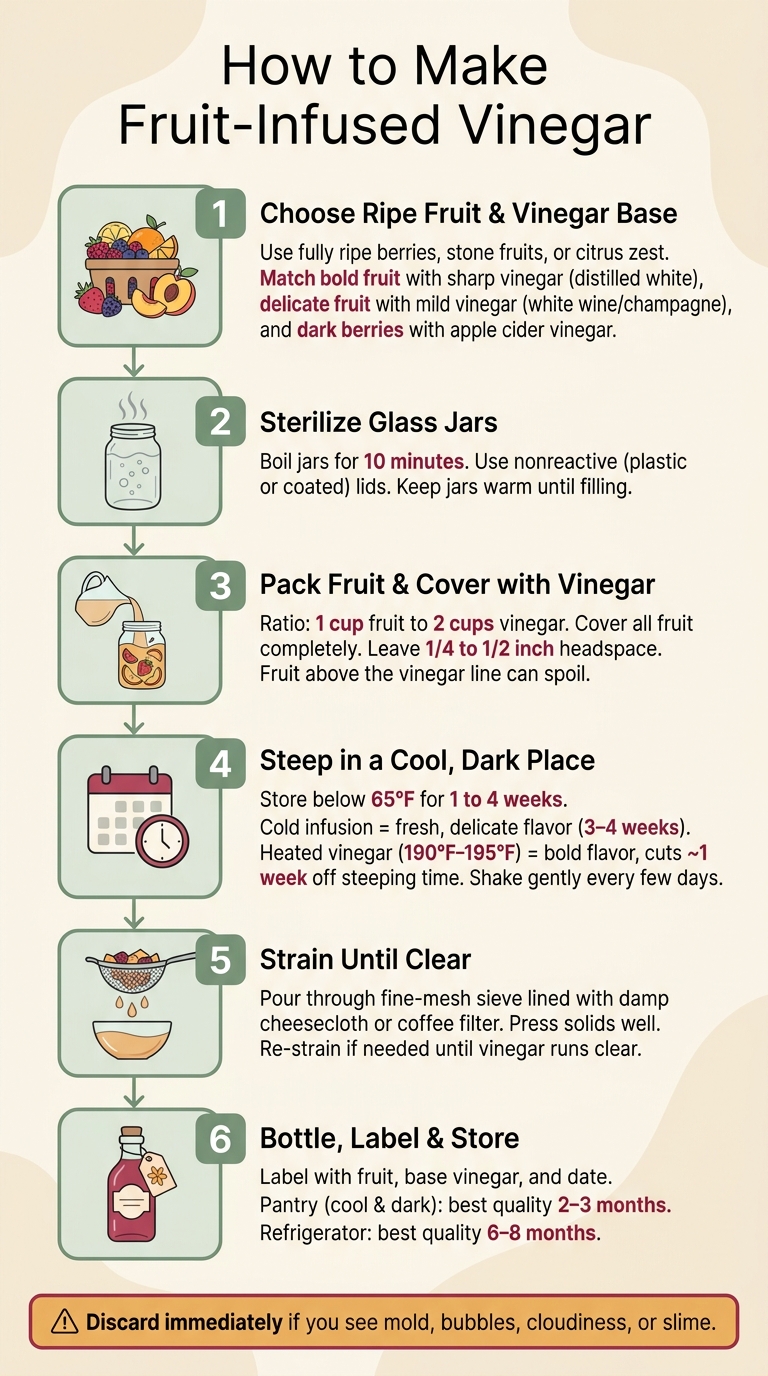
How to Make Fruit-Infused Vinegar: Step-by-Step Guide
Select Your Fruit, Vinegar Base, and Equipment
The fruit, vinegar, and tools you choose shape the flavor, color, and how long the finished vinegar keeps.
Choose Ripe Fruit with Strong Flavor
Start with fully ripe fruit. That’s when the sugars and aroma are at their peak.
Good picks include raspberries, strawberries, blueberries, blackberries, cherries, peaches, and apricots. Citrus peels - lemon and orange - can work well too. Whole berries are fine, but crushing or freezing them first helps release flavor faster. Stone fruits should be sliced or cubed before you add them. With citrus, use only the colored zest and skip the white pith. Apples and pears should also be sliced or cubed.
Pick a Vinegar Base That Matches Your Fruit
Choose a base that fits the fruit: a sharper vinegar for bold fruit, and a milder one for more delicate fruit.
That simple match helps keep the flavor balanced instead of letting one side take over.
| Vinegar Type | Flavor Profile | Best Fruit Pairings |
|---|---|---|
| Distilled White | Sharp, acidic, clear | Light-colored fruits, delicate flavors |
| Apple Cider | Mild, fruity, amber | Dark berries, apples, stone fruits |
| White Wine / Champagne | Smooth, delicate | Lighter fruits, citrus |
Use Clean Jars and Nonreactive Utensils
Because vinegar is acidic, it can react with metal. Glass jars and nonreactive tools are the safer bet.
Boil jars for 10 minutes, then keep them warm until filling so they don’t crack from the temperature change. Use plastic or corrosion-resistant lids. It also helps to have these ready before you start:
- A fine-mesh strainer
- Cheesecloth or a coffee filter
- A funnel for bottling
Once the fruit, vinegar, and tools are set, the next step is building the infusion jar.
sbb-itb-4066b8e
Prepare the Infusion Jar
Add Fruit and Cover It Fully with Vinegar
Loosely pack the prepared fruit into your sterilized jar. Then pour in the vinegar until the fruit is fully covered. Press out any air bubbles and add a bit more vinegar if any pieces are still peeking out.
This part matters. Any fruit sitting above the vinegar line can mold or ferment.
Leave 1/4 to 1/2 inch of headspace between the liquid and the lid.
Use a Simple Fruit-to-Vinegar Ratio
A good starting point is 1 cup of prepared fruit for every 2 cups of vinegar. If you want a stronger flavor, or you're working with very juicy berries, use up to 2 cups of fruit per pint.
Cold Infusion vs. Heated Infusion: A Side-by-Side Comparison
Pick the method that works best for your fruit and how long you want to wait.
| Feature | Cold Infusion | Heated Infusion |
|---|---|---|
| Method | Pour room-temperature vinegar over fruit. | Heat vinegar to 190°F to 195°F before pouring. |
| Time | 3 to 4 weeks for full flavor. | Can cut steeping time by about one week. |
| Flavor | Fresh, bright, delicate fruity notes. | Deep, bold flavor extracted fast. |
| Best For | Delicate berries like strawberries and raspberries. | Firm fruits like pears and apples, plus citrus peels. |
Once the jar is filled and sealed, let it steep in a cool, dark place.
Steep the Mixture Until the Flavor Develops
Rest the Jar in a Cool, Dark Place for 1 to 4 Weeks
Once the jar is sealed, the steeping starts. This is when the fruit gives the vinegar its flavor, color, and aroma. Keep the sealed jar in a cool, dark pantry or cupboard below 65°F. Heat and light can dull both flavor and color.
The timing depends on the fruit. Softer fruits like raspberries and blackberries often develop good flavor in 2 to 3 weeks. Firmer fruits, such as peaches, pears, and citrus peels, usually need 3 to 4 weeks to give off more of their character.
Check Color, Aroma, and Taste as It Steeps
Give the jar a gentle shake every few days so the vinegar keeps touching the fruit. As it sits, you should notice slow, steady changes in both color and smell.
Here’s what you want to see:
- The vinegar gets deeper in color
- The fruit aroma smells stronger when you open the lid
To test it, put a few drops on plain white bread instead of tasting straight from the jar. If the flavor still seems weak after 10 days, let it steep longer. If it tastes too sharp, add a little more base vinegar.
If you see bubbling, cloudiness, sliminess, or mold, throw the batch out right away.
Strain, Bottle, Store, and Use the Finished Vinegar
Strain Until the Vinegar Runs Clear
Once the flavor is where you want it, take out the fruit so the vinegar stays clean and steady in storage. Pour the mixture through a fine-mesh sieve lined with damp cheesecloth, a jelly bag, or a coffee filter. Wet the filter first so it doesn’t soak up too much of the finished vinegar. Press the solids well to get out as much liquid as you can, then strain again if needed until the vinegar runs clear.
Bottle in Clean Containers and Label with the Date
Pour the strained vinegar into sterilized glass bottles. Boil bottles for 10 minutes below 1,000 feet, then add 1 minute for each extra 1,000 feet of elevation. Use acid-resistant lids, such as plastic, coated metal lids, or new, pre-sterilized corks, so the acid doesn’t react with the closure.
Label each bottle with the base vinegar, the fruit, and the infusion date.
Store the Finished Vinegar and Review the Key Steps
After bottling, storage has a big effect on how long the vinegar keeps its best color and flavor.
| Storage Method | Best Quality | Notes |
|---|---|---|
| Cool, dark pantry | 2 to 3 months | Color and flavor may start to fade or brown after this point. |
| Refrigerator | 6 to 8 months | Best for maintaining color, freshness, and flavor. |
You can use the finished vinegar in dressings, marinades, glazes, or sparkling drinks.
FAQs
Can I reuse the fruit for a second batch?
No. Once the infusion is done and the liquid has been strained and bottled, throw the fruit away.
At that point, most of the flavor is already out of it. If you use it again, the next batch will likely taste weak and flat. For the best result, use fresh, high-quality fruit every time.
Do I need to refrigerate fruit-infused vinegar after bottling?
Yes. Refrigeration is the best way to keep it fresh, protect the flavor, and stretch shelf life to about 6 to 8 months.
A cool, dark spot can also work if the bottle is sealed tightly, but it may last closer to 3 months. Toss it if you notice mold, bubbling, or cloudiness.
What fruits should I avoid using?
Steer clear of citrus white pith. It can turn the infusion bitter fast. Also pass on any fruit that shows spoilage, like mold, bubbling, cloudiness, or a slimy texture.
A lot of fruits can work well here. But balsamic vinegar usually overpowers delicate fruit flavors, so it’s not a good pick for infusions.