

Garlic Herb Oil Pairings for Root Vegetables
Root vegetables like carrots, potatoes, and beets can often seem bland, overly earthy, or dry when roasted. The solution? Garlic herb-infused olive oil. This flavorful oil not only improves taste but also helps vegetables caramelize, retain moisture, and develop a balanced flavor profile. Here's how it works:
- Carrots & Potatoes: Prevent dryness and enhance sweetness with proper oil coating and high-temperature roasting (400°F).
- Beets: Balance their strong earthy tones with acidity and sweetness.
- Parsnips & Sweet Potatoes: Use garlic herb oil to combat dryness and bring out their natural richness.
High-quality oils like Big Horn Olive Oil's garlic herb-infused variety simplify seasoning while delivering bold, consistent flavors. Toss your veggies, roast at 400°F, and enjoy perfectly seasoned, caramelized results every time.
How to Make Perfect Garlic Herb Roasted Vegetables
sbb-itb-4066b8e
Flavor Problems with Root Vegetables
Root vegetables can be tricky to work with in the kitchen, often leaving cooks frustrated when their dishes turn out bland, overly earthy, or dry. Here’s a closer look at some common flavor issues and how to address them.
Bland Carrots and Potatoes
Carrots and potatoes often struggle to deliver bold flavors when they’re not prepped properly. The main culprits? A lack of oil and seasoning. Without enough oil to coat every piece, these vegetables dry out in the oven, leaving them with a cardboard-like texture. And if you roast them at temperatures below 400°F, they tend to steam rather than caramelize, which robs them of that deep, sweet flavor that makes roasted vegetables so satisfying.
"You need enough oil to coat every piece of vegetable or they dry out in the high heat and taste like cardboard." - Davin Eberhardt
To get the best results, aim for a roasting time of at least 40 minutes at a higher temperature, ensuring the vegetables brown and develop their natural sweetness.
Strong Earthy Taste in Beets
While some root vegetables fall flat on flavor, beets can go in the opposite direction. Their strong, earthy taste can easily dominate a dish if not balanced correctly. The key to taming their intensity lies in pairing them with acidity and sweetness. These contrasting flavors help tone down the earthiness, making the dish more vibrant and layered.
Dry Parsnips and Sweet Potatoes
Parsnips and sweet potatoes are another challenge. Their starchy nature makes them particularly prone to drying out during roasting, especially if they’re unevenly cut or not properly coated in oil. High heat (around 400°F) can further draw out their moisture, leaving them less tender and flavorful.
Tori Avey offers a helpful tip:
"I still suggest peeling the parsnip and yams for best texture in this dish." - Tori Avey
Peeling these vegetables removes tough outer layers, helping them retain moisture and cook more evenly. For an extra flavor boost, consider using a garlic olive oil to elevate their taste and texture.
How Garlic Herb Oil Solves These Problems
Garlic herb-infused olive oil tackles common flavor challenges by ensuring every root vegetable is evenly coated with bold, consistent seasoning. Unlike dry seasonings that can clump or fail to distribute evenly, this oil spreads aromatics seamlessly across vegetables like turnips, parsnips, and carrots during roasting. The result? Every bite is packed with flavor, eliminating bland spots entirely. Let’s dive into how its flavor profile and nutritional qualities elevate your dishes.
Garlic and Herb Flavor Boost
The combination of garlic’s sharp, savory punch with herbs like rosemary and thyme brings depth and complexity to any dish. Tossing potatoes or carrots in garlic-infused oil amplifies their natural flavors, while the bright herbal notes balance the earthiness of vegetables like beets. For parsnips and sweet potatoes, the oil enhances their richness, creating a well-rounded flavor experience. Want to take it a step further? Add a splash of balsamic vinegar and a drizzle of honey for a glaze that blends sweet, savory, and tangy flavors effortlessly.
Health Benefits of Quality Olive Oil
This isn’t just about flavor - high-quality extra virgin olive oil (EVOO) also delivers impressive health perks. For instance, Big Horn Olive Oil ensures their oils are cold-pressed within two hours of harvest, locking in antioxidants and maintaining a fresh, vibrant taste. Freshness matters: oils that sit on shelves for extended periods lose their potency. By using ultra-premium EVOO delivered within three months of harvesting, you’re not just enhancing the taste of your roasted vegetables - you’re also making a nutrient-rich, wholesome choice.
Infusion Process and Product Freshness
The infusion process simplifies your cooking routine by evenly distributing garlic and herb flavors throughout the oil. No need to spend extra time mincing garlic or measuring out herbs - Big Horn Olive Oil’s infused varieties take care of that for you. Plus, their oils perform beautifully at high roasting temperatures (around 400°F), creating a golden, crispy exterior on root vegetables. This caramelization adds a satisfying crunch and deepens the flavor, making your dishes even more irresistible.
Root Vegetable Pairing Guide
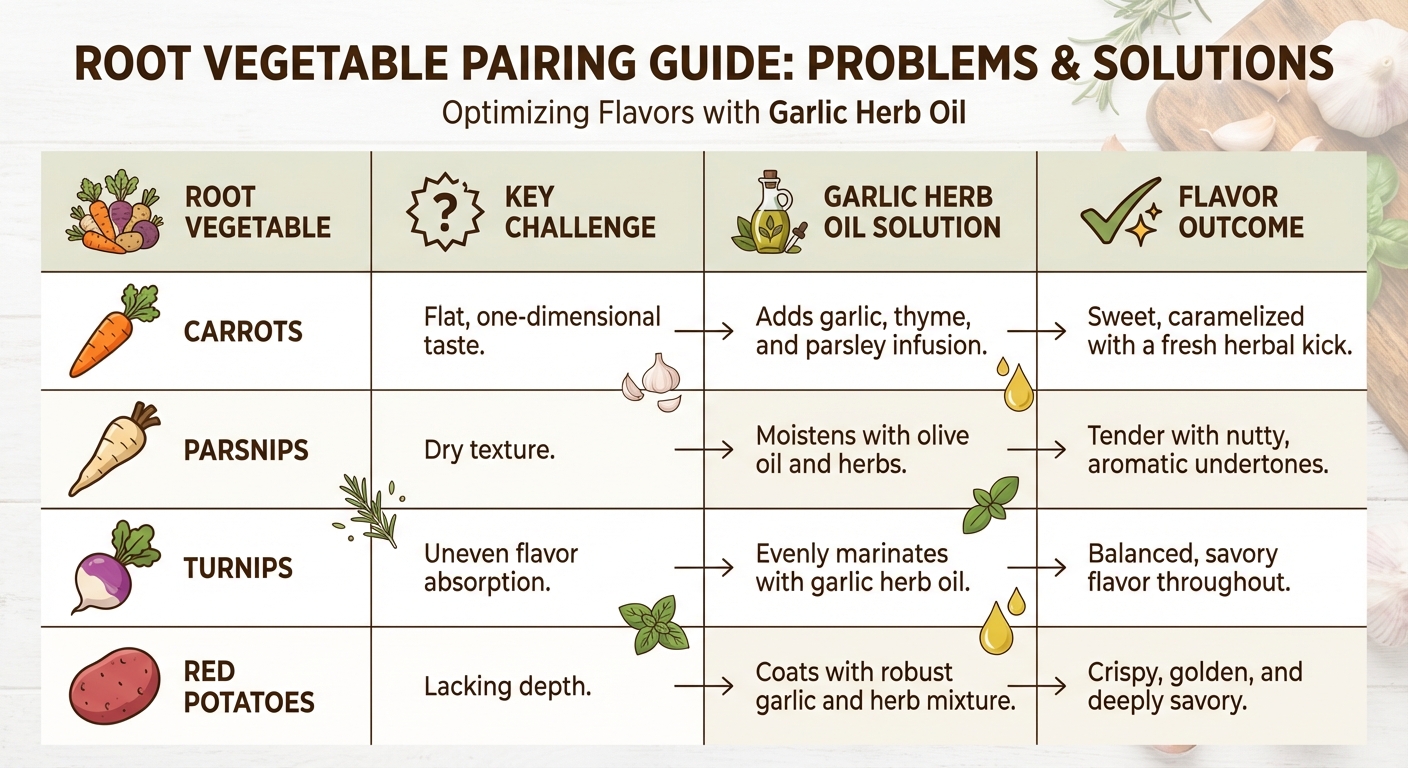
Root Vegetable Problems and Garlic Herb Oil Solutions Guide
Let's dive into how to bring out the best in root vegetables with carefully chosen pairings and techniques.
Each root vegetable has its quirks. Carrots can sometimes feel flat in flavor, parsnips risk being too dry, and turnips or red potatoes often struggle to stand out on their own. The key to transforming these ingredients lies in matching their unique characteristics with the right aromatics and seasonings.
Using garlic herb oil, especially when made with Big Horn Olive Oil's ultra-premium EVOO, is a game-changer. This oil not only enhances the flavor but also ensures even seasoning. For denser vegetables like turnips, the oil penetrates deeply, making sure every bite is packed with flavor. Here's a closer look at how this pairing works for each vegetable.
Comparison Table: Problems and Solutions
The table below highlights common challenges with root vegetables and how to solve them using garlic herb oil.
| Root Vegetable | Key Challenge | Garlic Herb Oil Solution | Flavor Outcome |
|---|---|---|---|
| Carrots | Flat, one-dimensional taste | Adds garlic, thyme, and parsley infusion | Sweet, caramelized with a fresh herbal kick |
| Parsnips | Dry texture | Moistens with olive oil and herbs | Tender with nutty, aromatic undertones |
| Turnips | Uneven flavor absorption | Evenly marinates with garlic herb oil | Balanced, savory flavor throughout |
| Red Potatoes | Lacking depth | Coats with robust garlic and herb mixture | Crispy, golden, and deeply savory |
With these tips, you can turn ordinary root vegetables into show-stopping sides. Next, we’ll explore roasting techniques to maximize these flavor combinations.
How to Roast Root Vegetables with Garlic Herb Oil
Preparation and Seasoning
To ensure your vegetables cook evenly, cut them into uniform pieces about 1–1.5 inches wide. If you're working with parsnips or carrots, peel them first and halve them lengthwise if they're particularly large. As food writer Tori Avey points out:
"The width of the pieces is what needs to be somewhat consistent for them to roast evenly. Pieces can be longer or shorter, but if the width is the same, in general they will roast evenly."
For seasoning, toss the vegetables with 2–3 tablespoons of garlic herb oil. If you're roasting a standard 3-pound mix of root vegetables, 3 tablespoons should be just right to coat everything without leaving excess oil behind. Add salt and pepper to taste for a balanced flavor.
For a richer taste, try using a high-quality garlic herb oil like the one from Big Horn Olive Oil (https://bhooc.com). Their ultra-premium extra virgin olive oils are known for their freshness and vibrant flavors.
Once prepped, you're ready to roast these veggies to perfection.
Roasting Instructions
Preheat your oven to 400°F and position the rack on the lower level for consistent heat distribution. Spread the vegetables out in a single layer on a baking sheet, making sure not to overcrowd. Overcrowding traps steam, which can prevent the vegetables from getting that delicious golden-brown caramelization.
Roast for 25–35 minutes, stirring the vegetables around the 15-minute mark. This helps them brown evenly and prevents them from sticking to the pan. You'll know they're ready when they're tender and the edges are beautifully golden.
Tips for Better Flavor
For an extra layer of flavor, add fresh rosemary or thyme during the last 10–15 minutes of roasting. This keeps the herbs from burning while still infusing their fragrance into the vegetables. You can also roast whole garlic cloves wrapped in foil alongside the veggies. The result? A sweet, mellow garlic flavor that complements the dish perfectly.
Want to make your dish pop visually? Use tri-color carrots or golden beets, as red beets can sometimes bleed their color onto other vegetables. Once the vegetables are roasted, garnish them with fresh herbs for an added burst of aroma and flavor.
These steps will make your roasted root vegetables shine, with every piece perfectly seasoned and packed with flavor.
Flavor Variations and Adjustments
Once you've mastered your roasted root vegetable base, you can take it up a notch by playing with both sweet and savory enhancements.
Sweet Additions
A drizzle of honey after roasting can bring out the natural sweetness of carrots and sweet potatoes. For an irresistible glaze, whisk together 1 tablespoon of honey, 4 tablespoons of balsamic vinegar, and 4 tablespoons of garlic herb oil before coating your vegetables. Roasting at 400°F allows this glaze to caramelize perfectly, adding a sweet depth to the earthy flavors of root vegetables.
If you're looking for a sweet-tart twist, try balsamic vinegar varieties like Blanco Balsamic or Neapolitan Herb Balsamic. These options cut through the richness of dense vegetables like parsnips and turnips, creating a balanced flavor that’s both bright and satisfying.
Savory Additions
For those who prefer a savory kick, spices like smoked sweet paprika, cumin, or fresh dill can transform your dish. A standout combination includes 2 tablespoons each of Garlic Infused and Dill Infused Olive Oils, 4 tablespoons of Neapolitan Herb Balsamic Vinegar, and 1 teaspoon of smoked sweet paprika. This mix has been praised for its ability to enhance the earthy flavors of roasted vegetables while maintaining balance.
Adding fresh herbs like dill or oregano right after roasting gives the dish a burst of freshness. These herbs pair particularly well with beets and parsnips, where their bright, grassy notes contrast beautifully with the deep, earthy tones of the vegetables.
Scaling and Customization
If you're cooking for a crowd or experimenting with new flavor combinations, these tips will help ensure your dish shines. When preparing larger portions, double the ingredients and use two baking sheets to avoid overcrowding. Proper spacing is key to achieving caramelization, as overcrowding can trap moisture and lead to steaming instead.
For a bold base, consider using Big Horn Olive Oil's Estate Reserve EVOO (https://bhooc.com). This oil complements strong spices like cumin beautifully. To save time, chop and peel your vegetables up to two days in advance. Store them in a sealed bag with your oil-herb mixture to let the flavors fully develop before roasting.
Conclusion
Garlic herb oil has the power to turn ordinary carrots and potatoes into savory, aromatic masterpieces while complementing the earthy flavors of beets and turnips. The pre-infused oils seep into the vegetables during roasting, providing a depth of flavor that dry seasonings simply can't match.
Recipes featuring garlic and herb-infused olive oils for roasted root vegetables are a hit with home cooks, often receiving ratings as high as 4.76 out of 5 stars. This highlights how the right oil can enhance every bite.
Big Horn Olive Oil's garlic herb-infused options tackle flavor challenges effortlessly. Their ultra-premium extra virgin olive oil (EVOO) is cold-pressed within just 2 hours of harvest and delivered fresh within 3 months, ensuring the boldest flavor possible.
Bring your roasted vegetables to life with high-quality garlic herb oil and make every dish unforgettable.
FAQs
How much garlic herb oil should I use per pound of vegetables?
For roasting root vegetables, use approximately 3 tablespoons of garlic herb oil per pound. This ensures the vegetables are evenly coated and packed with flavor. You can adjust the amount slightly based on your personal preference.
Can I roast mixed root vegetables together without overcooking some?
When roasting vegetables, keep a few tips in mind for the best results. Cut them into uniform pieces to ensure they cook evenly. Start with denser vegetables like parsnips and carrots, as they take longer to cook. Softer vegetables can be added later, or you can cut them into smaller pieces to match the cooking time.
Make sure not to overcrowd the pan - this allows for proper caramelization. Also, remember to flip the vegetables halfway through roasting. Set your oven to 425°F and roast for about 30–40 minutes for that perfectly golden finish.
How do I mellow the earthy taste of beets when roasting?
To tone down the earthy flavor of beets, try roasting them with garlic or herb-infused olive oil. This not only boosts their sweetness but also gives them a gentler, more balanced taste. Using the right roasting temperature is key - it helps caramelize their natural sugars, making the flavor more enjoyable.