

Health Benefits of EVOO in Plant-Based Diets
Extra Virgin Olive Oil (EVOO) is a cornerstone of plant-based diets, offering incredible support for heart health, longevity, and metabolic function. Its high content of monounsaturated fats (over 70%) and polyphenols - such as hydroxytyrosol and oleuropein - makes it a nutrient-dense choice compared to refined oils. Research proves that EVOO not only reduces the risk of cardiovascular disease but also enhances nutrient absorption and supports anti-inflammatory processes.
Key takeaways:
- Heart Health: EVOO lowers LDL cholesterol oxidation and improves blood flow.
- Antioxidants: Packed with over 200 bioactive compounds to combat inflammation and oxidative stress.
- Longevity: Regular use is linked to lower risks of all-cause mortality and chronic diseases.
- Metabolic Support: Improves insulin sensitivity and balances gut health.
To maximize benefits, choose high-quality EVOO with a high polyphenol content (over 250 mg/kg) and use it as a finishing oil for salads, grains, or vegetables. Brands like Big Horn Olive Oil offer cold-pressed, polyphenol-rich options that align with the latest research.
Olive oil: How to unlock health benefits | Prof. Tim Spector & Elizabeth Berger
sbb-itb-4066b8e
What Research Says About EVOO in Plant-Based Diets
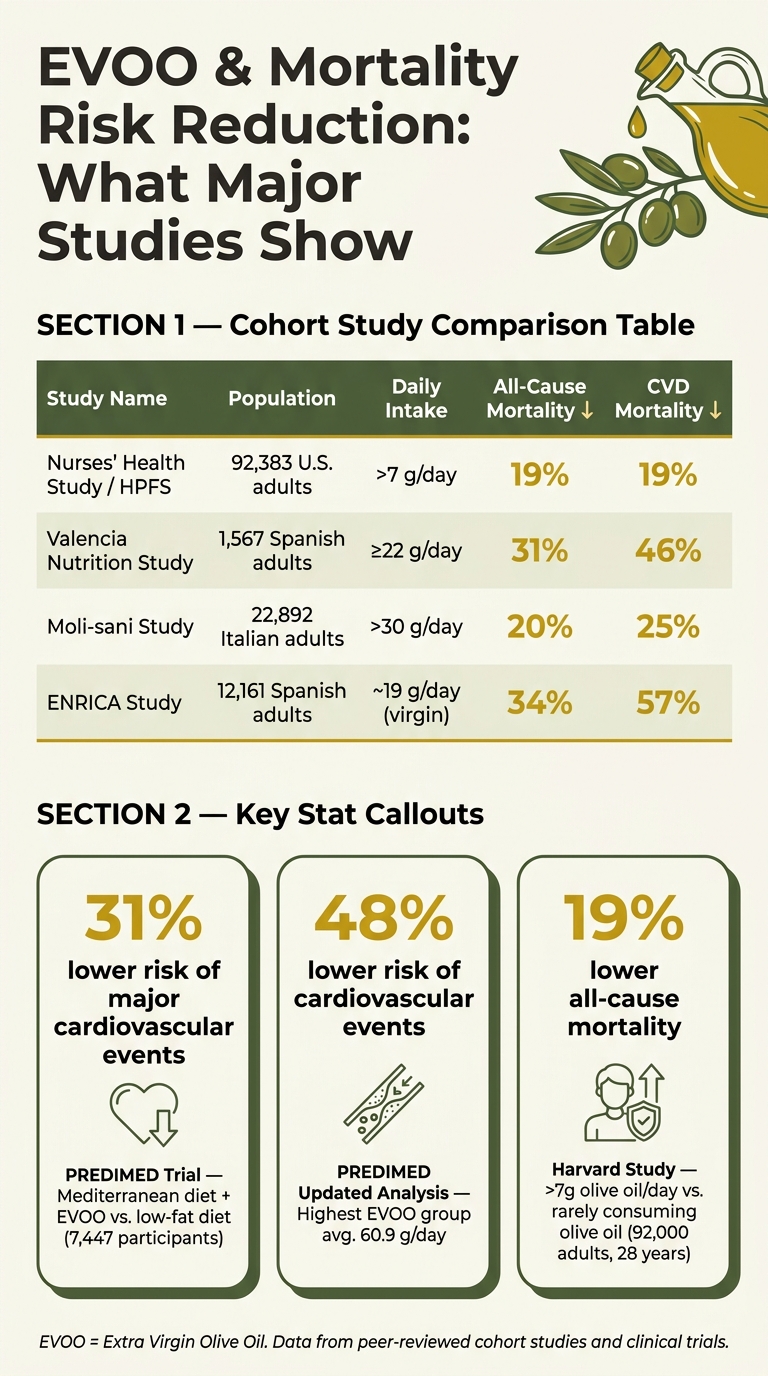
EVOO & Mortality Risk Reduction: What Major Studies Show
A growing body of research highlights the health benefits of extra-virgin olive oil (EVOO), particularly in plant-based eating patterns.
Mediterranean Diet Trials and EVOO
One of the most well-known studies is the PREDIMED trial, conducted in Spain from 2003 to 2011. This large-scale study involved 7,447 participants at high cardiovascular risk. Researchers found that those following a Mediterranean diet supplemented with EVOO (about 1 liter per week per household) experienced a 31% lower risk of major cardiovascular events - such as stroke, heart attack, and cardiovascular-related death - compared to those on a reduced-fat diet.
"Olive oil consumption, specifically the extra-virgin variety, is associated with reduced risks of cardiovascular disease and mortality in individuals at high cardiovascular risk." - BMC Medicine
An updated analysis of the PREDIMED trial in 2026 revealed even stronger results. Participants in the highest EVOO consumption group (averaging 60.9 g/day) had a 48% lower risk of cardiovascular events compared to those in the lowest intake group. Interestingly, refined olive oil did not show the same benefits, emphasizing the importance of EVOO's polyphenol content.
Vegan and Whole-Food Plant-Based Diet Studies
When it comes to plant-based diets, the role of EVOO is a bit more nuanced. The Recipe for Heart Health (RFHH) trial, published in 2024 in the Journal of the American Heart Association, examined this question. Forty adults with elevated cardiovascular risk followed two phases of a whole-food plant-based (WFPB) vegan diet: one with high EVOO intake (4 tablespoons/day) and another with very low EVOO intake (less than 1 teaspoon/day). Both approaches improved cardiometabolic markers, but the low-EVOO phase led to a greater reduction in LDL cholesterol (25.5 mg/dL vs. 16.7 mg/dL).
"Both plant-based diet patterns improved cardiometabolic risk profiles compared with baseline diets, with more pronounced decreases in LDL-C after the low EVOO diet." - Journal of the American Heart Association
This suggests that while EVOO can be part of a healthy plant-based diet, reducing its intake might be beneficial for those aiming to aggressively lower LDL cholesterol.
Large Cohort Studies on EVOO and Longevity
Observational studies offer additional insights into EVOO's broader health effects. A long-term study led by Dr. Marta Guasch-Ferré at the Harvard T.H. Chan School of Public Health tracked over 92,000 U.S. adults from 1990 to 2018. Those consuming more than 7 grams of olive oil per day (roughly half a tablespoon) had a 19% lower risk of all-cause mortality compared to those who rarely consumed it.
Higher intakes showed even greater benefits. A Spanish follow-up study spanning 18 years found that individuals consuming 2 or more tablespoons of olive oil daily had a 31% lower risk of all-cause mortality, a 46% lower risk of cardiovascular disease (CVD) mortality, and a 51% lower risk of cancer mortality. The table below summarizes findings from several major cohort studies:
| Study | Population | Daily Intake | All-Cause Mortality Reduction | CVD Mortality Reduction |
|---|---|---|---|---|
| Nurses' Health Study / HPFS | 92,383 U.S. adults | >7 g/day | 19% | 19% |
| Valencia Nutrition Study | 1,567 Spanish adults | ≥22 g/day | 31% | 46% |
| Moli-sani Study | 22,892 Italian adults | >30 g/day | 20% | 25% |
| ENRICA Study | 12,161 Spanish adults | ~19 g/day (virgin) | 34% | 57% |
"Higher olive oil intake was associated with lower risk of total and cause-specific mortality. Replacing margarine, butter, mayonnaise, and dairy fat with olive oil was associated with lower risk of mortality." - Marta Guasch-Ferré, PhD, Harvard T.H. Chan School of Public Health
These findings consistently show that EVOO offers more health benefits than refined olive oil, with clear advantages seen at higher levels of daily consumption. For plant-based eaters, this research underscores EVOO's potential as a valuable addition to their diets.
Health Benefits of EVOO for Plant-Based Eaters
Heart Health
Extra virgin olive oil (EVOO) offers more than just a replacement for saturated fats when it comes to heart health. Its bioactive compounds actively support cardiovascular function by increasing nitric oxide (NO) production and protecting LDL cholesterol from oxidation.
EVOO boosts NO levels in the bloodstream, which helps blood vessels relax and improves blood flow. This vasodilation effect can lower blood pressure, reducing risks for heart-related conditions. For instance, research shows that even a small reduction of 2 mmHg in blood pressure from EVOO consumption is associated with a 6% lower risk of coronary heart disease, a 10% lower risk of stroke, and a 15% lower risk of heart attack. Key compounds like oleocanthal and hydroxytyrosol enhance NO availability, contributing to these benefits.
Additionally, EVOO protects LDL cholesterol from oxidative damage, a critical factor in preventing atherosclerosis. The European Food Safety Authority (EFSA) has even established a guideline: oils must contain at least 5 mg of hydroxytyrosol per 20 g to claim cardiovascular benefits.
"Polyphenols in olive oil contribute to the safety of blood lipids from oxidative stress." - European Food Safety Authority (EFSA)
Antioxidants and Polyphenols
EVOO is packed with over 200 bioactive compounds, including oleocanthal, hydroxytyrosol, squalene, and tocopherols, all known for their anti-inflammatory and antioxidant properties.
Oleocanthal and hydroxytyrosol play a key role in reducing chronic inflammation by suppressing NF-κB, a molecule linked to inflammatory responses. These compounds also activate Nrf-2, a pathway that strengthens the body’s defenses against oxidative stress. On a cellular level, EVOO’s polyphenols enhance mitochondrial function by activating AMPK and SIRT1 pathways, which improve energy efficiency and reduce harmful reactive oxygen species (ROS).
For those on plant-based diets, these benefits are particularly important. Low-fat plant-based diets can sometimes limit the absorption of fat-soluble antioxidants like carotenoids and tocopherols. EVOO’s oil matrix enhances the bioavailability of these nutrients when consumed with vegetables and other plant foods.
"The presence of an oil matrix can affect the bioaccessibility of polyphenols, leading to a significant increase in the bioaccessibility of certain polyphenols when consumed together with oils." - Nutrients Journal
To get the most out of EVOO, choose oils labeled "High Phenolic" (minimum 250 mg/kg) and use it as a finishing oil for salads, grains, or roasted vegetables. This approach preserves heat-sensitive compounds like oleocanthal, which can degrade during high-heat cooking. Brands like Big Horn Olive Oil offer Ultra Premium EVOO options that emphasize polyphenol-rich qualities.
These antioxidant properties not only reduce inflammation but also support metabolic health, as discussed next.
Weight and Metabolic Health
EVOO’s benefits extend to metabolic health, making it a valuable addition to plant-based diets. While it is calorie-dense, EVOO doesn’t contribute to weight gain when consumed in moderation and may even offer metabolic advantages.
The RFHH trial highlights that lower EVOO intake within a whole-food plant-based diet can lead to better outcomes for LDL cholesterol, total cholesterol, and fasting glucose levels, especially for individuals aiming for aggressive lipid reduction. For most people, a moderate daily intake - around 2 tablespoons - can improve HDL cholesterol levels, enhance insulin sensitivity, and positively influence gut microbiota. For example, EVOO has been shown to reduce Desulfovibrio, a bacterial group linked to high blood pressure.
The takeaway? EVOO isn’t harmful, but portion control matters. For those pursuing strict lipid management on a plant-based diet, balancing EVOO with whole-food fats like nuts, seeds, and avocados may yield optimal results. This approach complements the overall health benefits of plant-based eating while reinforcing EVOO’s role as a valuable dietary fat.
How to Use EVOO in a Plant-Based Diet
Everyday Cooking with EVOO
Extra virgin olive oil (EVOO) is a versatile ingredient that works beautifully in plant-based diets, especially when used raw or at low-to-moderate heat. This approach helps preserve its natural compounds, like oleocanthal, which can be sensitive to high temperatures. Try drizzling EVOO over roasted veggies, grain bowls, soups, or legumes to boost flavor while retaining these delicate properties. For dressings, whisk it with lemon juice, garlic, or fresh herbs to create a vibrant mix that may also enhance the absorption of fat-soluble nutrients. To round out your meals, combine EVOO with other whole-food fats.
Pairing EVOO with Whole-Food Fats
Pairing EVOO with whole-food fats like nuts, seeds, or avocados provides a well-rounded nutritional boost. These combinations not only add fiber and protein but also enhance the dish's micronutrient profile. For instance, pairing EVOO with walnuts or avocado can help balance nutrients while delivering a satisfying texture and flavor. A study released in January 2026 highlights that EVOO’s anti-aging properties are largely due to the synergy between its squalene content and certain flavonoids, such as apigenin.
How to Choose a High-Quality EVOO
To fully enjoy the benefits of EVOO, it’s crucial to choose a high-quality product. Here are some tips to guide your selection:
| What to Look For | Why It Matters |
|---|---|
| High Polyphenol Quality | Signals the presence of antioxidants like hydroxytyrosol and oleocanthal, which offer various health benefits |
| Cold-pressed Soon After Harvest | Preserves sensitive bioactive compounds |
| Harvest Date | Fresher oils often have a higher concentration of polyphenols |
| Single-Origin or Named Cultivar | Allows for targeted benefits; for example, Valanolia varieties are rich in antioxidants, while Biancolilla varieties are known for their anti-aging properties |
Brands like Big Horn Olive Oil follow these standards closely. Their Ultra Premium EVOOs, such as Picual and Coratina, are cold-pressed within 2 hours of harvest and shipped fresh within 3 months. Starting at $8.99, these oils are packed with polyphenols, making them a great addition to a plant-based lifestyle.
Conclusion: The Case for EVOO in Plant-Based Eating
Studies consistently highlight the importance of extra virgin olive oil (EVOO) in plant-based diets. Take the PREDIMED trial, for instance - participants who consumed four tablespoons of EVOO daily saw a 30% drop in major cardiovascular events. Even smaller amounts, like half a tablespoon daily, have been linked to a 15% lower risk of cardiovascular disease. These findings emphasize not just the benefits of EVOO but also the value of choosing one with a high phenolic content.
EVOO's health perks go beyond heart health, thanks to its rich mix of antioxidants and bioactive compounds. These elements work together to improve heart function, support mitochondria (your cells' energy powerhouses), and slow down cellular aging. As Mary M. Flynn, PhD, RD, from Brown University, puts it:
"It is therefore important to promote the regular use of EVOO in the context of healthy dietary patterns such as the Mediterranean diet for maximal health benefit."
To get the most out of EVOO, it's key to pick a cold-pressed, high-phenol option. Brands like Big Horn Olive Oil offer products with higher polyphenol levels, which are tied to better blood pressure, reduced LDL cholesterol, and stronger antioxidant defenses.
Adding about two tablespoons of high-quality EVOO to your daily routine - whether drizzled raw or used at low heat in plant-based meals - is a simple, effective way to boost cardiovascular and metabolic health.
FAQs
How much EVOO should I use on a plant-based diet?
Research indicates that consuming 1 to 2 tablespoons (15–30 grams) of high-quality extra virgin olive oil (EVOO) daily offers optimal benefits for heart health. Going beyond this amount might just increase calorie intake without providing any additional perks. While certain diets encourage heavier use of EVOO, studies suggest that cutting back on added oils can help improve markers such as LDL cholesterol. Ultimately, the ideal amount varies based on your health objectives and personal dietary choices.
Is EVOO okay if I’m trying to lower LDL cholesterol?
Extra virgin olive oil (EVOO) is widely recognized as a heart-healthy fat that can play a role in maintaining a balanced diet. While plant-based diets with minimal oil intake may be better for lowering LDL cholesterol, swapping out saturated fats for the monounsaturated fats found in premium EVOO - such as Big Horn Olive Oil - could help improve your lipid profile. Think of EVOO as a supportive addition to a healthy eating plan, rather than a cure-all.
What should I look for on the label to get high-polyphenol EVOO?
To identify high-polyphenol extra virgin olive oil, start by checking for a lab-verified polyphenol content of at least 250 mg/kg. Make sure the bottle lists a harvest date, ideally within the last 12–18 months, rather than relying on a generic best-by date. Opt for early-harvest oils, as they tend to have higher antioxidant levels. Lastly, ensure the oil is stored in dark glass or tin packaging to shield it from harmful light and oxygen exposure.