

Holiday Vegan Pasta: Balsamic Pairing Tips
Balsamic vinegar can elevate vegan pasta dishes into flavorful holiday meals. Its tangy sweetness complements roasted vegetables, mushrooms, and seasonal produce, while its syrupy texture enhances both warm entrées and cold pasta salads. Here's how to use and choose the right balsamic vinegar for your dishes:
- 18-Year Aged Balsamic ($8.99): Balanced flavor, ideal for reductions, marinades, and vinaigrettes.
- 25-Year Aged Balsamic ($12.99): Thicker, sweeter, best for drizzling over finished dishes.
- Pair with ingredients like mushrooms, roasted squash, cherry tomatoes, and spring vegetables.
- Add maple syrup or agave for sweetness, or blend balsamic into reductions, vinaigrettes, or creamy sauces for added depth.
Quick Tips:
- Toss warm pasta with balsamic to absorb flavor.
- Use golden balsamic for lighter dishes like pasta salads.
- Finish with garnishes like fresh herbs, nuts, or vegan feta for texture and presentation.
These simple techniques and high-quality balsamic choices will make your vegan pasta a standout on any holiday table.
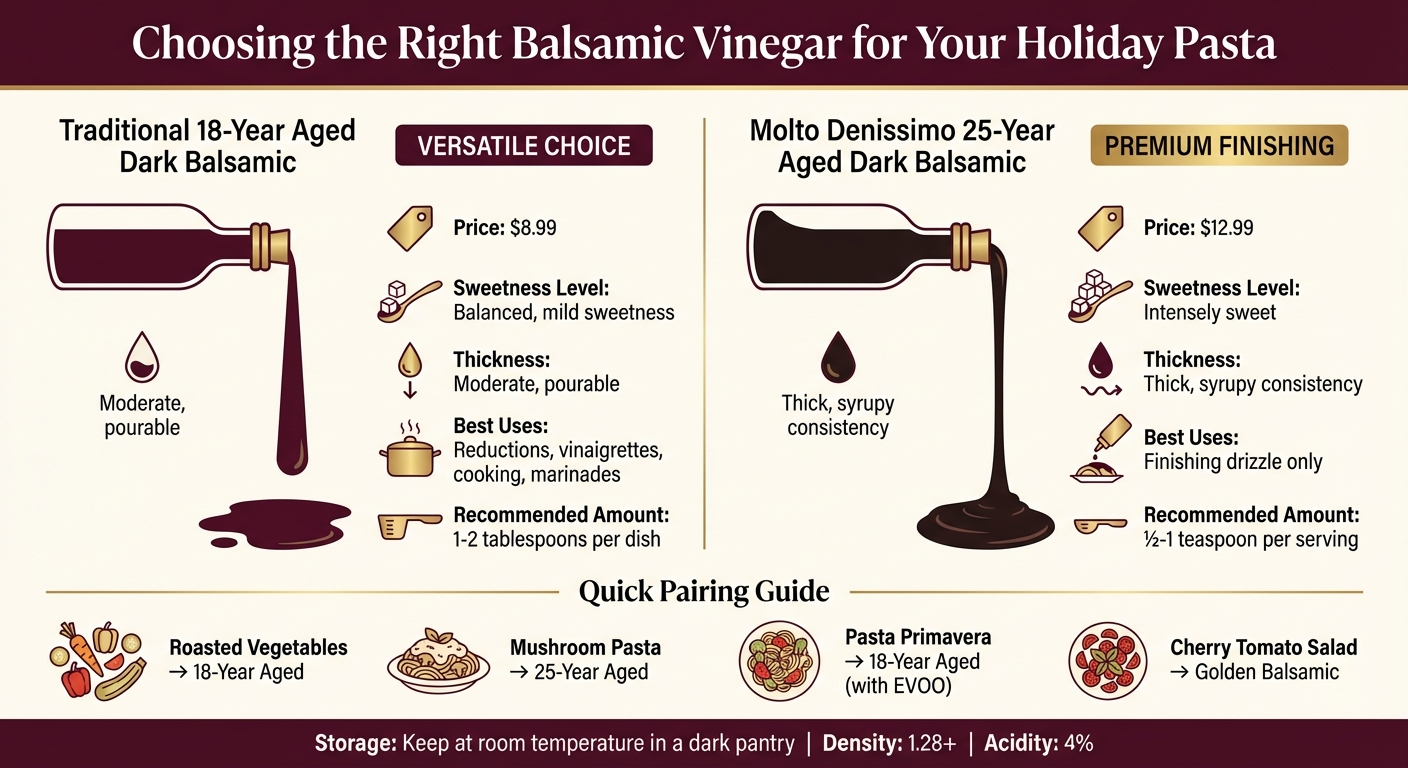
18-Year vs 25-Year Aged Balsamic Vinegar Comparison Guide
White Bean Balsamic Pasta Salad | This Savory Vegan
sbb-itb-4066b8e
How to Select Balsamic Vinegar for Holiday Pasta
Picking the right balsamic vinegar for your holiday pasta is all about understanding its age, density, and acidity. Traditional balsamic vinegar, aged between 18 and 25 years, develops a rich, syrupy consistency and a balanced sweet-tart flavor that pairs beautifully with vegan pasta. Premium aged balsamic typically has a density of 1.28+ and a 4% acidity level, which helps it cling perfectly to pasta and vegetables.
Big Horn Olive Oil offers excellent options for both cooking and finishing. Their Traditional 18-Year Aged Dark Balsamic ($8.99) strikes the perfect balance for most dishes, while the Molto Denissimo 25-Year Aged Dark Balsamic ($12.99) provides a deeper, richer flavor with a smoother finish. The 25-year version is best used as a finishing drizzle to preserve its thick texture and refined taste. For storage, keep aged balsamic vinegar at room temperature in a dark pantry. Learning about the aging process helps explain why these choices stand out.
How Aging Affects Flavor and Texture
Traditional balsamic vinegar undergoes aging in a series of wooden barrels made from materials like chestnut, oak, mulberry, and ash. This process allows evaporation to concentrate the flavors, while the barrels add subtle, complementary notes.
"The longer the vinegar ages, the more refined its flavor becomes... This extended aging allows for a greater development of complexity and a smoother, richer taste." - vomFASS
An 18-year aged balsamic is perfect for reductions and marinades, especially in roasted vegetable pasta dishes. On the other hand, a 25-year aged vinegar is highly concentrated, syrupy, and has a mellow acidity - making it ideal for drizzling over premium holiday meals. To earn the label "traditional aceto balsamico Tradizionale", the vinegar must be aged for at least 12 years.
Infused vs. Traditional Balsamic Vinegar
While aging naturally enhances flavor, production methods also play a role in creating distinct profiles. Traditional balsamic vinegar is made exclusively from grape must, with its complexity coming entirely from the aging process. When shopping, check that "grape must" is the only ingredient listed.
On the other hand, infused balsamic vinegars incorporate added flavors like fig, pomegranate, or herbs. These varieties are great for enhancing dishes like mushroom pasta or pasta primavera. Use aged traditional balsamic for finishing dishes to preserve its delicate flavor and thickness, while younger or commercial balsamic options are better suited for high-heat cooking.
Balsamic Vinegar Pairings for Vegan Holiday Pasta
Using premium aged balsamic vinegar can elevate your holiday vegan pasta dishes, turning them into something truly special. The secret lies in how the vinegar’s sweetness, acidity, and texture interact with your ingredients.
Roasted Vegetable Pasta
For roasted vegetable pasta, the Traditional 18-Year Aged Dark Balsamic ($8.99) is an excellent choice. It pairs beautifully with caramelized vegetables like butternut squash, Brussels sprouts, and red peppers. Its balanced acidity complements the natural sweetness of roasted veggies while enhancing their earthy undertones. To maximize its flavor, toss the pasta with the vegetables and finish with a drizzle of balsamic just before serving.
Mushroom Pasta
When mushrooms take center stage, opt for the Molto Denissimo 25-Year Aged Dark Balsamic ($12.99). Its syrupy texture and concentrated flavor perfectly complement the deep umami of mushrooms like cremini, shiitake, and chanterelles. Use it to deglaze the pan after browning the mushrooms for added complexity. As Bon Appétit puts it:
"A glug of balsamic vinegar, used to scrape up any browned bits that build up on the bottom of the pot, adds complexity, acidity, and a little sweetness in one fell swoop."
For a unique twist, try adding fig white balsamic vinegar. Its fruity sweetness pairs wonderfully with mushrooms and red onions, creating a balanced and flavorful dish.
Pasta Primavera
For a lighter, refreshing option, combine Big Horn Olive Oil’s Ultra Premium Extra Virgin Olive Oil ($8.99) with the Traditional 18-Year Aged Dark Balsamic. This pairing works particularly well with spring vegetables like asparagus, snap peas, and zucchini. The olive oil’s peppery notes complement the tangy balsamic, creating a simple yet elegant dressing. Use a 3:1 ratio of oil to balsamic to coat warm pasta and seasonal produce evenly. This combination enhances the vegetables’ natural flavors while keeping the dish light and vibrant.
Cherry Tomato Pasta Salad
Golden balsamic is a natural fit for cherry tomato pasta salad, thanks to its subtle sweetness and bright color. Roast halved cherry tomatoes with a drizzle of balsamic at 400°F for 20–25 minutes to create a sticky-sweet glaze. Let the salad rest for at least 30 minutes before serving, allowing the pasta to absorb the dressing and the tomato juices to blend with the vinegar’s tangy-sweet profile.
Each of these pairings adds a unique flair to your holiday table, inspiring creative ways to enhance your vegan pasta dishes with bold and balanced flavors.
Balsamic Sauce Recipes for Vegan Pasta
These balsamic sauces are perfect for turning vegan pasta into a holiday favorite. Using Big Horn Olive Oil's premium products, these recipes are quick, flavorful, and versatile - ideal for elevating your pasta dishes.
Balsamic Reduction
This syrupy reduction is a great match for roasted vegetables and adds a glossy, flavorful finish. Combine 1 cup of Big Horn's Traditional Balsamic Vinegar with 2 tablespoons of maple syrup in a saucepan. Simmer over medium heat (around 200°F to avoid bitterness) for 15–20 minutes, stirring every few minutes until the mixture reduces by half and thickens enough to coat the back of a spoon. Let it cool for 10 minutes before drizzling 1–2 teaspoons per serving. Store any leftovers in the refrigerator for up to two weeks.
Balsamic Vinaigrette for Pasta Salads
This vinaigrette is a fantastic choice for cold pasta salads, offering a balanced flavor profile. In a bowl, whisk together ⅓ cup Big Horn Balsamic Vinegar, 1 teaspoon Dijon mustard, 1 teaspoon maple syrup, ½ teaspoon salt, ¼ teaspoon black pepper, and 1 minced garlic clove. Slowly add ¼ cup Big Horn EVOO, whisking constantly to create a smooth emulsion. Toss the vinaigrette with 8 ounces of cooked pasta and your choice of vegetables, then let it sit for 10 minutes to allow the flavors to blend. This dressing can be refrigerated for up to one week - just give it a good shake before using.
Creamy Balsamic Sauce
For a rich, dairy-free option, this sauce pairs beautifully with mushroom pasta. Blend ½ cup raw cashews (soaked or briefly boiled) with ½ cup pasta water, 2 tablespoons Big Horn Balsamic Vinegar, 2 tablespoons nutritional yeast, 1 tablespoon Big Horn EVOO, 1 teaspoon Dijon mustard, and salt and pepper to taste. Blend until completely smooth, then warm the sauce over low heat for 2–3 minutes, keeping the temperature below 180°F to preserve its creamy texture. The nutritional yeast adds a subtle cheesy flavor that complements the tangy sweetness of the balsamic. For the best results, prepare this sauce fresh on the day you plan to serve it.
Serving and Presentation for Holiday Tables
The way you present balsamic-paired vegan pasta can elevate it from a simple dish to a show-stopping centerpiece for any holiday gathering. Thoughtful plating and finishing touches not only enhance the dish's flavor but also its visual appeal, which is especially important when hosting guests who value both taste and aesthetics.
How to Drizzle Balsamic Vinegar
Drizzling balsamic vinegar with care can enhance both the look and flavor of your dish. For balsamic reductions, use a spoon to create thin, precise zigzag patterns across the pasta. If you're working with Big Horn's Molto Denissimo 25-Year Aged Dark Balsamic Vinegar, which is naturally thicker and sweeter, limit your drizzle to just 1 teaspoon per serving for the best balance.
For dishes featuring cooked vegetables, there’s another way to incorporate balsamic for maximum flavor and presentation. Monica Davis, Author and Founder of The Hidden Veggies, advises:
"Be sure to allow the balsamic dressing to cook down a little with the veggies. This will help to mellow out the flavor of the balsamic vinegar."
Simmering the balsamic with vegetables for about 3–4 minutes, just until it boils, creates a harmonious flavor and lends the pasta a glossy, appealing finish. For a pop of color, add fresh baby spinach at the very end, covering the pasta to let the residual heat wilt the leaves. The vibrant green spinach against the deep balsamic glaze creates a visually striking dish that’s perfect for holiday tables. Finish with thoughtful garnishes to tie it all together.
Garnishes and Finishing Touches
The right garnishes can take your dish to the next level, adding both texture and visual appeal. Toasted pine nuts or walnuts work wonderfully here, offering a satisfying crunch to contrast the smooth sauce. To toast, simply heat them in a dry skillet for 3–4 minutes until fragrant. Fresh herbs like basil, parsley, or thyme provide brightness and a pop of color - tear them by hand for a rustic yet elegant touch.
For an extra layer of flavor, sprinkle vegan feta on top and finish with a ½ teaspoon drizzle of Big Horn EVOO. This combination delivers a salty, creamy, and vibrant finish that’s sure to impress. Paying attention to these small details ensures your pasta looks as good as it tastes, making it a standout on any holiday table.
Comparison of 18-Year vs. 25-Year Balsamic
Choosing between Big Horn's Traditional 18-Year Aged Dark Balsamic Vinegar and Molto Denissimo 25-Year Aged Dark Balsamic Vinegar depends on the occasion and desired presentation. Each has unique characteristics that can enhance your dish in different ways.
| Feature | Traditional 18-Year Aged Dark Balsamic Vinegar | Molto Denissimo 25-Year Aged Dark Balsamic Vinegar |
|---|---|---|
| Sweetness Level | Balanced, mild sweetness | Intensely sweet |
| Thickness | Moderate, pourable | Thick, syrupy consistency |
| Best Uses | Reductions, vinaigrettes, cooking | Finishing drizzle |
| Price | $8.99 | $12.99 |
| Recommended Amount | 1–2 tablespoons per dish | ½–1 teaspoon per serving |
For versatile holiday meals, the 18-year aged balsamic offers excellent value and works well in a variety of applications, from sauces to vinaigrettes. On the other hand, the 25-year aged version is ideal for special occasions. Its luxurious texture and concentrated flavor make it perfect as a finishing touch, adding sophistication to your most memorable gatherings without the need for extra preparation.
Conclusion
This guide has highlighted how balsamic vinegar can transform any vegan pasta dish into something special, perfect for both everyday meals and festive occasions. Its sweet and tangy complexity enhances roasted vegetables, enriches the earthy taste of mushrooms, and brings out the brightness of fresh herbs. The aging process of authentic balsamic vinegar from Modena, Italy, adds a syrupy texture and caramelized depth that takes these dishes to the next level.
The suggested pairings demonstrate how balsamic vinegar effortlessly coats ingredients, intensifying flavors without requiring extra preparation. Whether you're using a balsamic-soy marinade to deglaze mushrooms or tossing pasta primavera with a zesty vinaigrette, these combinations make for meals that are equally suited to weeknight dinners or potluck gatherings.
The three sauce recipes - balsamic reduction, vinaigrette, and creamy balsamic sauce - offer flexible options that blend seamlessly with pasta water for a glossy, flavorful finish. For example, a simple 15-minute vinaigrette shows how quickly these sauces can elevate a dish without complicated techniques.
Adding thoughtful garnishes and finishing drizzles not only enhances the flavor but also adds visual appeal. Big Horn Olive Oil's traditional and aged balsamic vinegars from Modena provide the quality needed for bold and refined pairings.
Whether you choose the versatile 18-year aged vinegar for reductions or the luxurious 25-year aged variety for finishing touches, your vegan holiday pasta can become a show-stopping centerpiece that pleases both the palate and the eye, perfectly embodying the pairing philosophy outlined in this guide.
FAQs
When should I cook with balsamic vs. drizzle it at the end?
When you're aiming for that tangy, slightly sweet kick, cook with balsamic vinegar to let its flavor meld beautifully into marinades or sauces. Want a bold, concentrated finish? Drizzle it at the end to elevate salads, pasta, or even desserts with a bright, polished touch.
- Cook: Adds depth and acidity to your dish.
- Drizzle: Perfect for a vibrant, eye-catching finish.
How can I tell if balsamic vinegar is truly traditional and aged?
To spot genuine, aged balsamic vinegar, check for certification seals such as DOP (Denominazione di Origine Protetta) or PDO (Protected Designation of Origin). These labels guarantee the vinegar is made from 100% grape must and has been aged for a minimum of 12 years, ensuring its authenticity and premium quality.
What’s the best way to keep balsamic from tasting too sharp in pasta?
To keep balsamic vinegar from overpowering your pasta with sharpness, pair it with ingredients that balance its flavor - think sweet, savory, or herbal touches. Using a high-quality, aged balsamic vinegar can also make a big difference, as it tends to have a smoother, milder taste. This way, your pasta will have a more harmonious and enjoyable flavor profile.