

Holy Anointing Oil: Recipe in Exodus 30
Exodus 30 outlines the recipe for holy anointing oil, a sacred mixture used to consecrate priests, the Tabernacle, and its furnishings. This oil was made from specific ingredients: liquid myrrh, cinnamon, calamus, cassia, and olive oil. The recipe's exact measurements and symbolic meanings highlight its spiritual importance, representing devotion, joy, integrity, humility, and the Holy Spirit.
Key points:
- Ingredients: Myrrh, cinnamon, calamus, cassia, and olive oil.
- Measurements: 500 shekels of myrrh and cassia, 250 shekels of cinnamon and calamus, and 1 hin (about 1 gallon) of olive oil.
- Symbolism: Each ingredient carried deep spiritual meaning, from humility to the presence of God.
- Restrictions: The oil was for sacred use only, with strict prohibitions against replicating or misusing it.
The process involved careful preparation, infusing spices into olive oil to create a fragrant mixture. While modern adaptations exist, the Bible forbids recreating the exact formula. This oil symbolizes being set apart for God's service and points to Christ as the "Anointed One."
Exodus 30:22-33
sbb-itb-4066b8e
Ingredients of the Holy Anointing Oil
Let’s take a closer look at the precise biblical measurements and the profound meanings behind each ingredient.
Biblical Ingredients and Measurements
Exodus 30:23–24 outlines five key components, each with exact measurements. The pattern for the dry spices - 500, 250, 250, 500 shekels - follows a chiastic structure, symbolizing divine order.
- Liquid myrrh (mor deror) is listed at 500 shekels. The term deror, meaning "freely flowing", highlights purity .
- Cinnamon (qinnamon besem) and calamus (qaneh besem) are each measured at 250 shekels.
- Cassia (qiddah) is prescribed at 500 shekels.
- Olive oil (shemen zayit) serves as the base, measured at 1 hin - roughly 1 gallon (3.8 liters).
For reference, the sanctuary shekel weighed about 11.4 grams (0.4 ounces). These precise measurements go beyond practicality, carrying deep symbolic meanings that align with the sacredness of the oil.
Symbolism of the Ingredients
Each ingredient is rich with symbolism, offering layers of meaning tied to sacred worship:
- Myrrh: Known for its bitterness, myrrh was used in both the birth (Matthew 2:11) and burial (John 19:39) of Christ. This dual use reflects the Messiah's suffering and the cycle of life and death.
- Cinnamon: Its warm, fragrant aroma, driven by cinnamaldehyde, symbolizes divine zeal and passion.
- Calamus: With its upright growth, calamus represents righteousness and honor.
- Cassia: This spice is associated with humility and worship, essential virtues in sacred service.
- Olive oil: Serving as the carrier, olive oil represents the Holy Spirit, unifying and empowering the other ingredients .
Interestingly, modern studies suggest that these spices had antimicrobial properties, possibly protecting the priests who used the oil. This practical benefit aligns with their sacred purpose, highlighting the intentionality behind their selection.
"The mixture consecrated the Tabernacle, its furnishings, the priests, and later the kings. Its fragrance signified the presence of the Holy Spirit, set apart the worship space from common life, and foreshadowed the Messiah." - Bible Hub
These ingredients, both individually and collectively, emphasize the oil’s role in consecration - setting apart the Tabernacle, priests, and kings for sacred purposes, while also pointing forward to the Messiah.
Modern Measurement Conversions
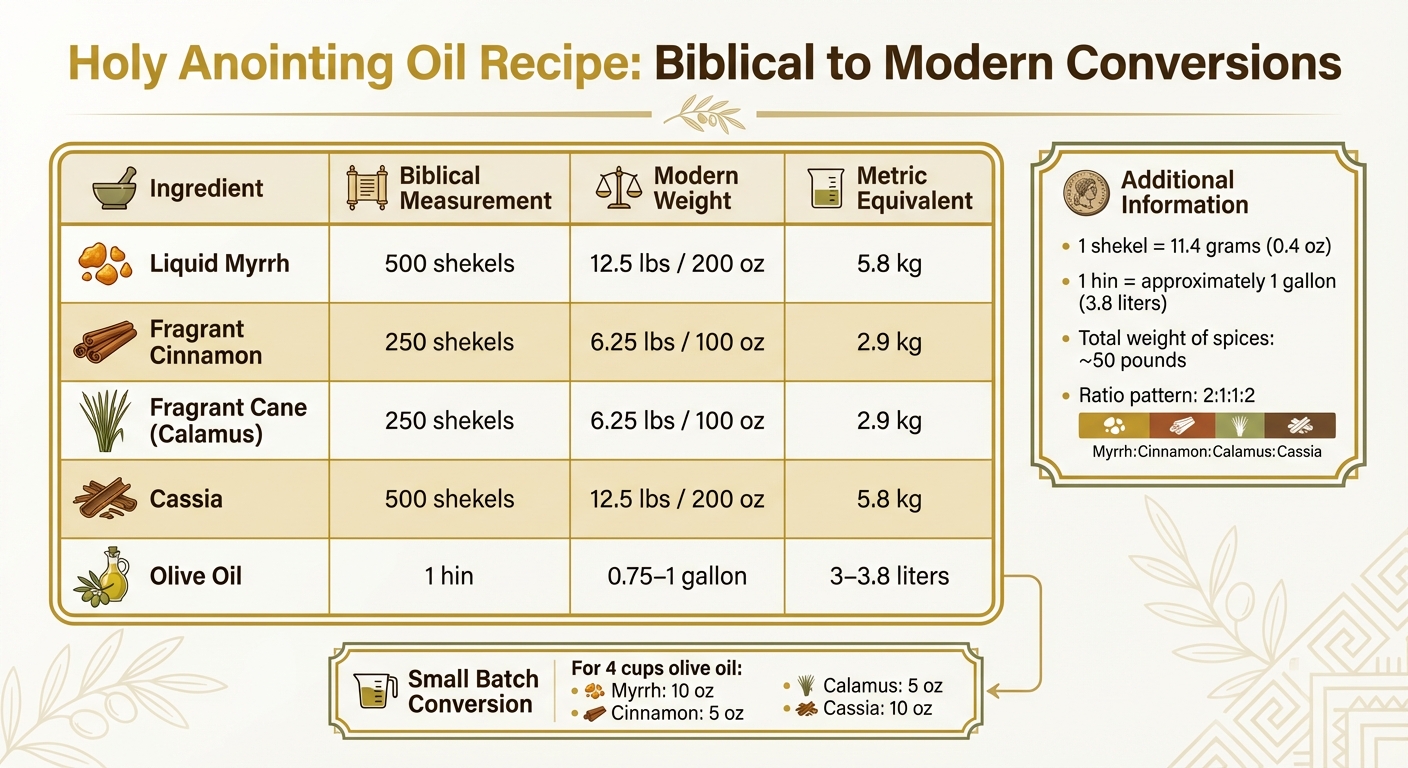
Holy Anointing Oil Ingredients: Biblical Measurements and Modern Conversions
Translating these ancient measurements helps bridge the gap between the sacred recipe and modern practices.
Converting Shekels and Hin
To adapt biblical measurements for today, it's useful to know that a shekel weighed about 11.4 grams (0.4 ounces), and a hin was approximately 1 gallon (3.8 liters). For home use, some sources suggest rounding the hin to 3 liters or 4 quarts for convenience.
Here’s a quick reference table showing the biblical measurements alongside their modern equivalents:
| Biblical Ingredient | Biblical Measurement | Modern Weight (Approx.) | Metric Equivalent |
|---|---|---|---|
| Liquid Myrrh | 500 shekels | 12.5 lbs / 200 oz | 5.8 kg |
| Fragrant Cinnamon | 250 shekels | 6.25 lbs / 100 oz | 2.9 kg |
| Fragrant Cane/Calamus | 250 shekels | 6.25 lbs / 100 oz | 2.9 kg |
| Cassia | 500 shekels | 12.5 lbs / 200 oz | 5.8 kg |
| Olive Oil | 1 hin | 0.75–1 gallon | 3–3.8 liters |
For example, 500 shekels of liquid myrrh or cassia equal about 12.5 pounds (5.8 kg), while 250 shekels of cinnamon or calamus come to 6.25 pounds (2.9 kg). Altogether, the total weight of these ingredients is close to 50 pounds.
If you’re preparing a smaller batch, keep the same 2:1:1:2 ratio. For instance, use 4 cups of olive oil, 10 ounces each of myrrh and cassia, and 5 ounces each of cinnamon and calamus. A digital scale and liquid measuring cups will help ensure accuracy.
Choosing High-Quality Olive Oil
The olive oil forms the foundation of this recipe, so its quality is key. Consider using Ultra Premium Extra Virgin Olive Oil from Big Horn Olive Oil. Their cold-pressed oils, known for their fruity and peppery notes, align with both the biblical purpose and modern artisanal excellence. Made from carefully sourced olives and recognized internationally, Big Horn Olive Oil ensures your blend remains true to the original intent of the sacred recipe.
How to Prepare Holy Anointing Oil
Using the precise measurements outlined, you can prepare this sacred oil with care and reverence. As described in Exodus 30:25, the process involves crafting an "oil of holy ointment, an ointment compound after the art of the apothecary".
Extracting Essences from Spices
To capture the full aromatic qualities of the spices, work with whole botanicals - such as cinnamon sticks, myrrh tears, calamus, and cassia bark chips - rather than powdered forms. Whole spices are easier to strain and help maintain the clarity of the oil. Infuse these botanicals in extra virgin olive oil at a low, steady temperature of 100°F–120°F (38°C–49°C) for 6–8 hours. Keep the heat gentle to avoid creating bubbles, which can result in a bitter aroma.
"It's about a slow, gentle, whole-botanical infusion." - Silas, Founder of Flavor365
Once the infusion process is complete and the essences have been fully released, you can combine the infused oil with fresh olive oil.
Mixing with Olive Oil
Let the infused oil cool to room temperature before straining it through a fine-mesh sieve or cheesecloth. For extra clarity, you can pass the oil through a coffee filter. If you're working with a smaller batch, you can follow this ratio: 50 drops myrrh, 25 drops each of cinnamon and calamus, 50 drops cassia, and 65 drops olive oil.
Maintaining Proportions and Purity
Precision is key when preparing this sacred blend. Use a digital scale for measuring whole botanicals or a dropper for essential oils to ensure accuracy. Store the finished oil in a dark glass bottle and keep it in a cool, dark place to protect it from light and heat. Allow the oil to rest for seven days before using it, giving the aromas time to meld into a rich and layered fragrance. This step honors both the biblical formula and the artistry of ancient perfume-making.
Sacred Use and Restrictions of Holy Anointing Oil
Anointing Rituals in the Bible
In Exodus 30, God gave Moses specific instructions for using the holy anointing oil to consecrate the sanctuary and its key elements. This oil was applied to the Tabernacle's furnishings, sacred items, and priestly garments, setting them apart as holy. As stated in Exodus 30:29, "whatever touches them will be holy". Aaron and his sons were also anointed with this oil, marking their dedication to priestly service. The oil was designated as the sacred anointing oil for all future generations.
Prohibitions on Duplication
The Bible places strict restrictions on the use and replication of this oil. Exodus 30:32 commands, "Do not pour it on anyone else's body and do not make any other oil using the same formula. It is sacred, and you are to consider it sacred". Its use was reserved solely for the consecration of priests and sacred items, making it off-limits for ordinary individuals or outsiders. Any attempt to replicate the formula or misuse the oil carried severe consequences, including being "cut off", which meant complete spiritual and communal exclusion. These guidelines highlight the importance of maintaining the oil’s distinct purpose and sanctity. Today, this reverence informs modern practices, such as ensuring ingredient safety, conducting allergen testing, and adhering to ethical standards, blending ancient principles with contemporary considerations.
Modern Considerations for Safety and Use
Bringing this sacred recipe into modern practice requires careful attention to safety, as well as adherence to legal and ethical standards. By blending traditional methods with contemporary precautions, we can honor the historical importance of holy anointing oil while ensuring it remains safe and relevant today.
Sourcing Safe Ingredients
Start with 100% pure, cold-pressed extra virgin olive oil from trusted suppliers like Big Horn Olive Oil (https://bhooc.com) as the base. This choice aligns with the biblical symbolism of olive oil. For the aromatic elements, use whole or coarsely crushed botanicals such as myrrh resin tears, cinnamon bark, and cassia chips. Avoid fine powders, as they can create a murky mixture that’s harder to strain. If you prefer essential oils, make sure they are pure-grade and purchased from reliable sources.
A key safety concern is calamus (Acorus calamus), which is known to be toxic. Safer, historically plausible alternatives include lemongrass, gingergrass, frankincense, or clove. When preparing the oil, keep the temperature between 100–120°F to avoid scorching the spices. Overheating can result in a bitter or unpleasant aroma.
Testing for Allergens
Before using the oil more broadly, it’s essential to test for potential allergic reactions. Apply a small amount to the inside of your arm and wait 24 hours to check for redness, irritation, or sensitivity. This step is especially important because ingredients like cinnamon and cassia contain high levels of cinnamaldehyde, which can cause burning or rashes. Additionally, cassia has sometimes been flagged as a possible carcinogen, so handle it with care.
"Always perform a small patch test on your inner arm first to check for any sensitivity." - Silas, Founder of Flavor365
Take extra precautions to ensure the oil doesn’t come into contact with your eyes, as the concentrated cinnamon and cassia can cause severe burning. Remember, this oil is strictly for external, symbolic use - it should never be ingested or used in diffusers.
Legal and Ethical Guidelines
In the U.S., any commercially sold anointing oils must include FDA disclaimers stating that these products are not evaluated to diagnose, treat, cure, or prevent any disease. To honor the biblical directive in Exodus 30:32–33 against replicating the sacred formula, many modern practitioners use symbolic substitutes or adjust the proportions to distinguish their recipes from the original.
"We don't make this oil for ritual or tradition but as a symbolic act of faith to set things apart unto God. The power is not in the oil, but in the Holy Spirit." - Khrystal, Author, Holy Appetite
Avoid creating the oil for commercial purposes or making therapeutic claims unless you comply with all regulatory requirements. Modern recipes are typically scaled down for personal, devotional use.
Conclusion
Exodus 30's holy anointing oil was designed to sanctify people and objects as qodesh - set apart for God's exclusive service. This act of consecration symbolized divine ownership and pointed forward to Christ, the Anointed One.
The crafting of the oil, described in Exodus 30:25, is compared to the work of a skilled perfumer, highlighting that careful preparation reflects sacred dedication.
"God values careful preparation and quality; rushed or careless substitutes undercut the symbol."
- Bible Hub
Today, modern practitioners honor this sacred tradition by adapting the formula with respect and precision. For example, using 100% pure, cold-pressed extra virgin olive oil from trusted sources like Big Horn Olive Oil (https://bhooc.com) reflects the biblical emphasis on quality and craftsmanship.
While the Bible strictly forbids replicating the exact formula (Exodus 30:32–33), the principle remains clear: we are called to follow the pattern, not the recipe. Modern symbolic oils, crafted with reverence, continue to carry the spirit of divine consecration. They remind us of the spiritual anointing of the Holy Spirit - Christ's presence and the empowering work of the Spirit in our lives.
FAQs
Why does Exodus 30 forbid copying the holy anointing oil recipe today?
Exodus 30 explicitly prohibits replicating the holy anointing oil because it is considered sacred and reserved exclusively for divine purposes. Using or recreating it for any other reason would compromise its sanctity and the unique role it plays in worship and consecration.
What is the safest substitute for calamus in modern anointing oil?
The safest modern alternative to calamus for anointing oil is typically aromatic cane or sweet flag. These substitutes are often chosen due to their comparable qualities and are commonly associated with the biblical ingredient referenced in Exodus 30.
How should anointing oil be used in a Christian devotional setting?
Anointing oil plays a meaningful role in Christian devotion, symbolizing healing, consecration, and the dedication of people or spaces to God's purpose. It is often used during prayer or worship, where individuals anoint themselves or others as an expression of faith and commitment to God's will.