

Hot Sauce vs. Spicy Olive Oil: Which Is Healthier?
If you're deciding between hot sauce and spicy olive oil, here's the bottom line:
- Hot sauce is low in calories (0–6 per teaspoon) and adds flavor without fat, but it can be high in sodium. Its capsaicin content may boost metabolism and support weight loss.
- Spicy olive oil is calorie-dense (40 per teaspoon) but packed with heart-friendly fats and antioxidants. It supports cardiovascular health and nutrient absorption but should be used sparingly.
Quick Comparison
| Feature | Hot Sauce | Spicy Olive Oil |
|---|---|---|
| Calories (per tsp) | 0–6 kcal | ~40 kcal |
| Fat | 0 g | ~4.5 g (monounsaturated) |
| Sodium (per tsp) | 35–200 mg | Negligible |
| Key Compound | Capsaicin | Capsaicin, Polyphenols |
| Best Use | Low-calorie flavoring | Heart-healthy finishing oil |
Both have unique benefits: hot sauce is great for weight management, while spicy olive oil supports heart health. Use them together or separately based on your goals.
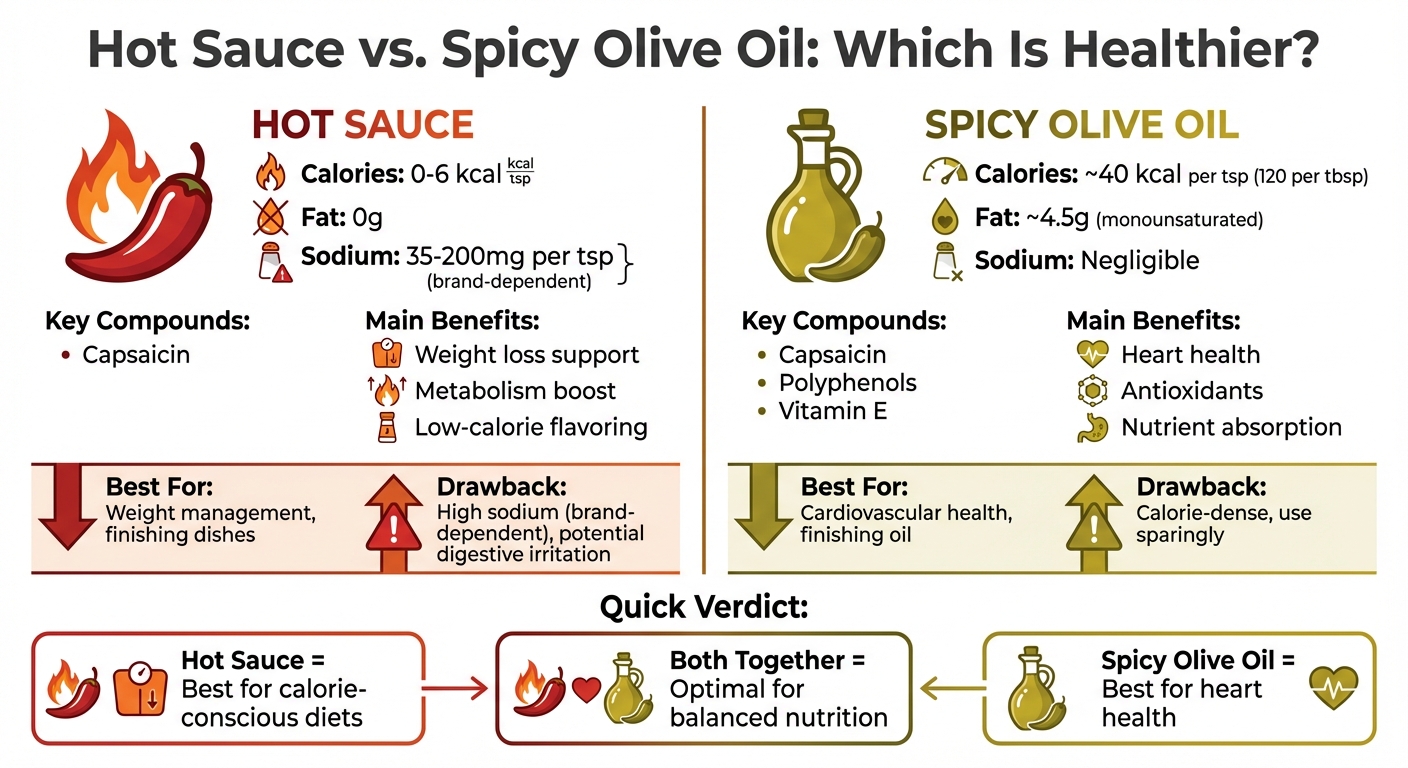
Hot Sauce vs Spicy Olive Oil Nutritional Comparison Chart
Nutritional Content
Hot Sauce: A Low-Calorie Kick
Hot sauce is a great way to add flavor without piling on the calories. A single teaspoon packs only 0–6 calories, with no fat and barely any carbohydrates. The heat comes from capsaicin, found in concentrations of about 0.6 mg per teaspoon in Tabasco sauce. However, sodium content can vary significantly between brands. For example, Tabasco contains around 35 mg per teaspoon, while Frank's RedHot and Louisiana-style hot sauces have about 190 mg and 200 mg, respectively. Some types, like Sriracha, also include around 1 gram of sugar per teaspoon, unlike traditional vinegar-based hot sauces, which typically have none.
Spicy Olive Oil: Packed with Healthy Fats and Antioxidants
Spicy olive oil offers a richer nutritional profile, primarily because of its healthy fats. Each teaspoon contains about 40 calories (or roughly 120 calories per tablespoon), mostly from heart-friendly monounsaturated fats. When infused with dried chili peppers, the oil is enriched with capsaicinoids, which enhance its antioxidant properties. Research from the University of Naples Federico II highlights that infusing olive oil with dried chili peppers significantly increases its antioxidant content, with peak capsaicinoid levels achieved within seven days. Additionally, pure spicy olive oil contains very little sodium unless salt is added during production.
For premium cold-pressed extra virgin olive oils that retain essential antioxidants, check out Big Horn Olive Oil.
| Nutrient (per tsp) | Hot Sauce | Spicy Olive Oil |
|---|---|---|
| Calories | 0–6 kcal | ~40 kcal |
| Total Fat | 0 g | ~4.5 g |
| Sodium | 35–200 mg | Negligible |
| Vitamin C | 2–4% DV | Negligible |
| Active Compounds | Capsaicin | Capsaicin, Polyphenols, Vitamin E |
Both condiments bring their own unique benefits to the table, making them versatile additions to your kitchen. Whether you're looking for a low-calorie flavor boost or a nutrient-rich option, there's something here for everyone.
sbb-itb-4066b8e
Health Benefits Comparison
Hot Sauce: Capsaicin Effects
Capsaicin, the star compound in hot sauce, has been linked to both metabolic and cardiovascular perks. It activates TRPV1 receptors in the body, creating a temporary boost in calorie burning and fat oxidation. Patricia Bridget Lane, a Registered Dietitian at Cleveland Clinic, highlights its impact:
"It seems to rev up the body's fat-burning mechanisms. That can help with weight loss and weight management".
Capsaicin doesn’t stop at metabolism. It also fights inflammation by suppressing proteins like IL-6, TNF‑α, and cox‑2, which are known to promote inflammation. On the cardiovascular front, it supports heart health by increasing the expression of endothelial nitric oxide synthase (eNOS). This helps blood vessels dilate more effectively, potentially reducing risks of hypertension and stroke. Studies even suggest regular chili pepper consumption is tied to a 13% lower risk of death from heart-related causes, such as heart attacks and strokes. Additionally, a meta-analysis involving 461 patients found that capsaicin significantly reduced both total cholesterol and LDL cholesterol in individuals with metabolic syndrome.
However, commercial hot sauces often come with high sodium content. Opting for low-sodium versions with simple ingredients like peppers, vinegar, and minimal salt can help you enjoy the benefits without the drawbacks. For an added twist, spicy olive oil combines capsaicin’s advantages with heart-healthy fats, creating a unique health pairing.
Spicy Olive Oil: Heart Health and Anti-Inflammatory Properties
Spicy olive oil takes the benefits of capsaicin to the next level by blending its metabolic effects with the cardiovascular advantages of monounsaturated fats and antioxidants. Like hot sauce, it encourages thermogenesis, but when infused in olive oil, it also enhances fat metabolism by stimulating uncoupling protein 2 (UCP2) expression.
Extra virgin olive oil itself is packed with phenolic compounds and Vitamin E, which, when combined with capsaicinoids, help lower LDL cholesterol, improve blood vessel function, and combat free radicals. Nicola Caporaso from the University of Naples Federico II explains:
"DCP [Dried Chili Pepper] infusion significantly enriched olive oil with antioxidant compounds and also modified its volatile profile".
Additionally, the healthy fats in olive oil promote feelings of fullness, which can aid in managing appetite.
Spicy olive oil is naturally sodium-free. With 40 calories per teaspoon, it’s best used sparingly as a finishing oil for salads, grains, or proteins. If you're looking for premium cold-pressed extra virgin olive oils to maximize these benefits, check out the offerings at Big Horn Olive Oil.
Cooking Applications
Hot Sauce: Adding Heat to Any Dish
Hot sauce isn't just about the heat - it’s a quick, low-calorie way to elevate the flavor of your meals. With its sharp, vinegar-forward profile, it’s perfect as a finishing touch or flavor enhancer. As Rachael Ajmera, MS, RD, explains:
"Hot sauce is a great topping for your favorite savory healthy dishes. I love using hot sauce to give veggie omelets, soups, and salad dressings an extra kick".
Its versatility makes it a go-to for marinades, soups, and egg dishes. It also works wonders on tacos, burgers, and stir-fries, delivering instant spice to completed dishes. Just remember that cooking hot sauce for too long can reduce its liquid content, concentrating the capsaicin and amping up the heat.
For those looking for a different kind of spicy kick, spicy olive oil offers a richer, more nutrient-packed alternative.
Spicy Olive Oil: Finishing and Cooking Oil
Spicy olive oil brings a unique, peppery heat to the table, thanks to oleocanthal rather than just capsaicin. It’s ideal for drizzling over salads, grains, or grilled proteins, creating a lingering warmth that complements a variety of flavors. It also pairs beautifully with crusty bread or fresh veggies for dipping.
When it comes to cooking, spicy olive oil shines in low-to-medium heat applications like roasting or sautéing, which help retain its beneficial polyphenols. Unlike hot sauce, it’s calorie-dense, with about 120 calories per tablespoon, so a little goes a long way. For a creative twist, combine spicy olive oil and hot sauce in a vinaigrette - the hot sauce adds an immediate kick, while the oil provides a rich, peppery depth. For top-quality options, check out Big Horn Olive Oil.
Olive Oil, Hot Sauce, Wild Boar | Food Unwrapped Season 4 Episode 12 | Full Episode
Pros and Cons
When it comes to choosing between hot sauce and spicy olive oil, their nutritional differences lead to some distinct practical trade-offs.
Hot sauce is a great pick for those focused on cutting calories, with only 0.5–6 calories per teaspoon. Plus, its capsaicin content might give your metabolism a slight edge, burning an extra 33 to 50 calories daily when consumed in larger amounts. That said, many hot sauce brands pack in a lot of sodium, which could be an issue for anyone keeping an eye on their blood pressure. If sodium is a concern, go for lower-sodium options like Tabasco, which has just 35 mg per teaspoon, compared to other brands with much higher levels. Another downside? For some, hot sauce can irritate the digestive system.
Spicy olive oil, on the other hand, brings a different set of benefits. While it’s calorie-dense, it’s loaded with heart-friendly monounsaturated fats and antioxidants like Vitamin E. It also helps your body absorb fat-soluble vitamins from other foods, whether you’re cooking or using it as a finishing touch - something hot sauce can’t do. The catch? Its high calorie count means you’ll need to use it sparingly, and simple infused varieties may lose their flavor or develop defects within two months unless advanced techniques are used. Interestingly, a 2025 study in Food Chemistry found that co-milled spicy olive oils (made by crushing fresh peppers with olives) stayed fresh and defect-free for up to 18 months, far outlasting basic infusions.
Comparison Table
| Feature | Hot Sauce | Spicy Olive Oil |
|---|---|---|
| Calories (per tsp) | 0.5–6 kcal | High (fat-based) |
| Sodium (per tsp) | 35–200 mg | Negligible |
| Key Vitamins | Vitamin C | Vitamin E |
| Main Benefit | Weight loss support, low-calorie | Heart health and improved nutrient absorption |
| Main Drawback | High sodium and potential digestive irritation | Caloric density and shorter shelf life |
| Best For | Finishing dishes, table condiment | Cooking, roasting, and finishing |
If you’re looking for premium spicy olive oils crafted with advanced methods, check out Big Horn Olive Oil. By weighing these pros and cons, you can decide which condiment fits your health and culinary goals best.
Conclusion: Which One to Choose
Hot sauce and spicy olive oil cater to different dietary needs. Hot sauce is your go-to for adding bold flavor without adding calories, while spicy olive oil offers heart-healthy fats and antioxidants.
If weight management is your goal, hot sauce is a smart choice. With just 0 to 6 calories per teaspoon and no fat, it’s a great way to spice up lean proteins and vegetables without impacting your calorie count. Just keep an eye on the sodium content and opt for lower-sodium options when possible.
On the other hand, spicy olive oil shines when it comes to cardiovascular health. Packed with monounsaturated fats, it helps lower LDL cholesterol, while its phenolic compounds, like oleocanthal, may reduce inflammation markers such as C-reactive protein. Plus, it enhances the absorption of fat-soluble vitamins. However, at about 120 calories per tablespoon, it’s best to use it in moderation.
For the best of both worlds, consider incorporating both into your meals. Use hot sauce as a calorie-free way to add a kick to eggs, wraps, or marinades. Save spicy olive oil for finishing dishes like pasta, roasted vegetables, or salads, where it not only enhances flavor but also adds nutritional value. If you're looking for high-quality spicy olive oil, check out Big Horn Olive Oil.
In short, hot sauce is perfect for low-calorie flavor and metabolic support, while spicy olive oil provides essential fats and anti-inflammatory properties. Balancing the two can help you enjoy both taste and health benefits.
FAQs
Which is better for high blood pressure: hot sauce or spicy olive oil?
Spicy olive oil might be a smarter option for managing high blood pressure. Extra virgin olive oil is packed with monounsaturated fats and polyphenols, which can support healthier blood pressure by improving how blood vessels function and cutting down on oxidative stress. On the other hand, hot sauce often contains a lot of sodium, which can raise blood pressure if eaten in large amounts. While the capsaicin in peppers found in hot sauce may help relax blood vessels, choosing low-sodium hot sauces is key to avoiding potential drawbacks.
Can I use both hot sauce and spicy olive oil in the same meal?
Yes, you can absolutely use both hot sauce and spicy olive oil in the same meal. Hot sauce delivers a bold, fiery kick thanks to capsaicin, which is known for its antioxidant properties and potential heart health benefits. On the other hand, spicy olive oil - infused with chili peppers - offers a more subtle heat while providing phenolic compounds like oleocanthal, which may help reduce inflammation. Together, they not only elevate the flavor of your dishes but also pack a punch of health-boosting nutrients.
Does cooking reduce the health benefits of spicy olive oil?
Olive oil holds up well under typical cooking temperatures, even when it's spicy. When heated at or below 375°F, it retains the bulk of its antioxidants and polyphenols - those compounds that make it such a popular choice for health-conscious cooking. While extreme heat may lead to some nutrient loss, most of its beneficial properties stay intact during everyday methods like sautéing or roasting. This makes olive oil a solid option for cooking within these temperature guidelines.