

How Olive Oil Reduces Age-Related Heart Risks
Olive oil can help lower the risk of heart disease as you age. Research shows that consuming just over half a tablespoon daily reduces heart disease risk by 14%. Replacing saturated fats with olive oil can cut mortality by up to 34%. Its polyphenols and healthy fats improve cholesterol levels, reduce inflammation, and protect arteries.
Here’s why olive oil matters for heart health:
- Improves cholesterol: Raises HDL (good cholesterol) and lowers LDL (bad cholesterol).
- Reduces blood pressure: Lowers systolic pressure by 3.91 mmHg on average.
- Fights inflammation: Compounds like oleocanthal reduce artery damage.
- Supports aging arteries: Keeps blood vessels flexible and prevents plaque buildup.
For best results, choose extra virgin olive oil (EVOO), which retains the highest levels of heart-friendly compounds. Use 2–4 tablespoons daily in meals - drizzle it on salads, roast vegetables, or replace butter in recipes. Studies confirm that higher olive oil intake is linked to a significant drop in cardiovascular risks and overall mortality.
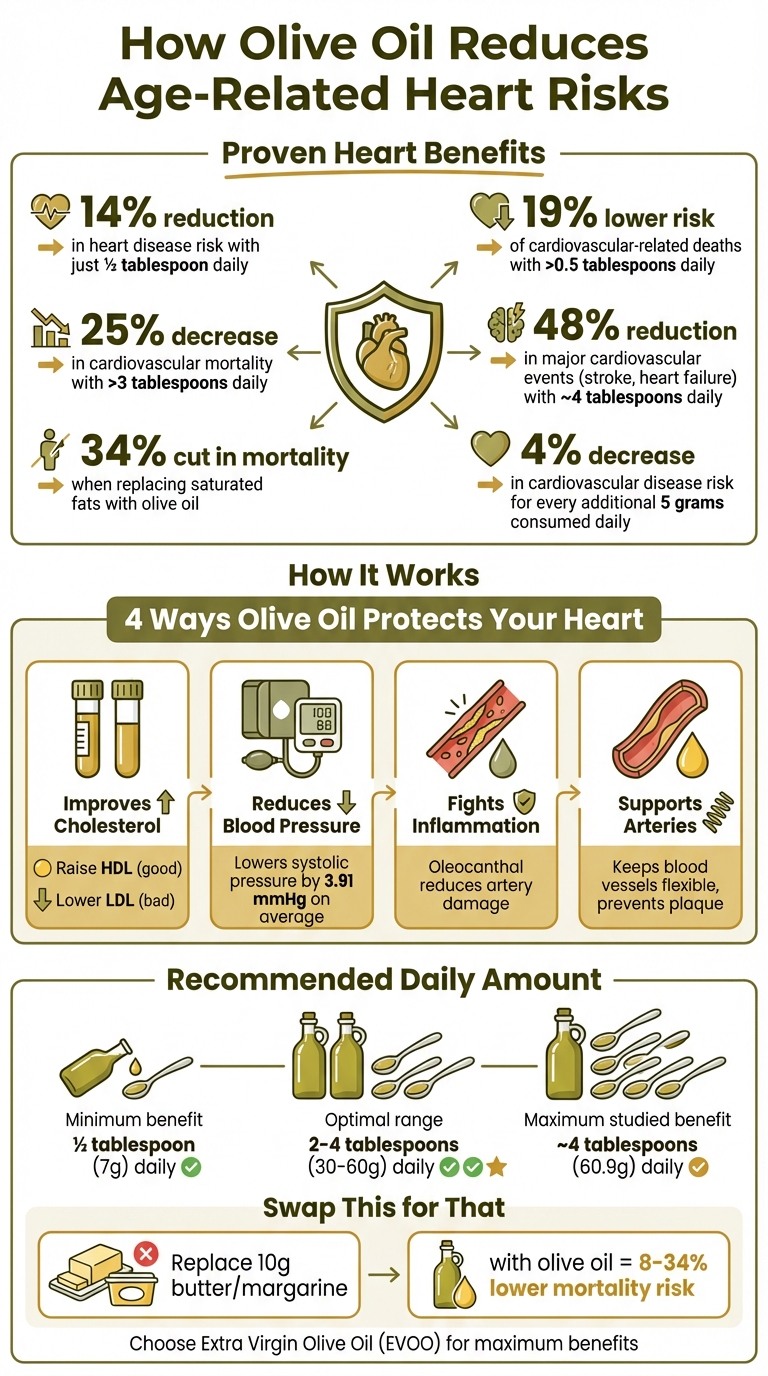
Olive Oil Heart Health Benefits: Key Statistics and Daily Intake Guide
Does Olive Oil Help Your Arteries? What New Research Really Shows | The Artery Report
sbb-itb-4066b8e
How Olive Oil Protects Your Heart
Extra virgin olive oil is packed with phenolic compounds that play a key role in safeguarding your heart as you age. Among these, hydroxytyrosol, oleuropein, oleocanthal, and tyrosol stand out for their specific benefits, such as reducing inflammation and protecting arteries. Let’s break down how these compounds work to provide antioxidant protection, improve cholesterol levels, and support healthy blood vessel function.
Polyphenols and Their Antioxidant Effects
The polyphenols in olive oil are like a shield for your heart cells, defending them against oxidative stress. Hydroxytyrosol, for example, neutralizes free radicals and prevents the oxidation of LDL cholesterol, a key factor in heart disease. Meanwhile, oleocanthal works as a natural anti-inflammatory, blocking COX enzymes in much the same way as certain medications.
These compounds also address chronic inflammation, a major driver of heart disease. By reducing markers like C-reactive protein and interleukin-6, they help prevent plaque buildup in arteries. Studies have shown that consuming olive oil rich in polyphenols can lower systolic blood pressure by an average of 3.91 mmHg and diastolic pressure by 1.79 mmHg. For older adults at high risk, a diet abundant in extra virgin olive oil can cut the likelihood of major cardiovascular events by about 30%.
How Olive Oil Improves Cholesterol Levels
Olive oil doesn’t just tweak your cholesterol numbers - it changes how cholesterol behaves in your body. The polyphenols in extra virgin olive oil help raise HDL (the "good" cholesterol) while lowering LDL (the "bad" cholesterol) and triglycerides. They also boost a process called cholesterol efflux, where HDL removes cholesterol from cells, by roughly 40% compared to diets without olive oil.
"Polyphenols contained in EVOO are responsible for inhibiting lipoproteins oxidative damages and promoting reverse cholesterol transport process via ABCA1 pathway." - Hicham Berrougui et al., Department of Medicine, University of Sherbrooke
This is vital because, as we age, the body’s ability to clear cholesterol from arteries tends to decline. Olive oil polyphenols counteract this by activating the ABCA1 protein, which facilitates the movement of cholesterol onto HDL particles for removal. Supporting healthy cholesterol levels is a critical step in managing age-related changes in arterial health.
Blood Pressure and Blood Vessel Function
Compounds like oleic acid, along with polyphenols such as hydroxytyrosol and tyrosol, help reduce inflammation and oxidative stress in arteries, combating the stiffening that often comes with aging.
These polyphenols also encourage an anti-inflammatory macrophage profile, which helps prevent the formation of foam cells - the precursors to arterial plaque. High-phenolic olive oil, containing up to 1,525 mg of phenolic compounds per kilogram, offers significantly greater benefits compared to standard varieties, which contain about 716 mg per kilogram. Just 25 mL (about 2 tablespoons) of extra virgin olive oil daily is enough to deliver these heart-health benefits.
What Research Shows About Olive Oil and Heart Health
Clinical Studies on Olive Oil's Cardiovascular Benefits
Research has consistently highlighted the positive effects of olive oil on heart health. A long-term study by Harvard T.H. Chan School of Public Health tracked 92,383 U.S. adults from 1990 to 2018 through the Nurses' Health Study and Health Professionals Follow-up Study. Dr. Marta Guasch-Ferré and her team found that consuming more than 0.5 tablespoons (about 7 grams) of olive oil daily was linked to a 19% lower risk of cardiovascular-related deaths. Even small changes, like swapping 10 grams of butter or margarine for olive oil, were tied to a reduction in mortality risk of up to 34%.
Another study, Italy's Moli-sani Study, observed 22,892 adults over a median of 13.1 years. It revealed that consuming more than 3 tablespoons of olive oil daily decreased cardiovascular mortality by 25%.
The PREDIMED trial, involving 7,102 participants at high cardiovascular risk, found that consuming approximately 60.9 grams of extra virgin olive oil daily reduced the risk of major cardiovascular events - like stroke and heart failure - by 48%.
"Higher olive oil intake was associated with lower risk of total and cause-specific mortality. Replacing margarine, butter, mayonnaise, and dairy fat with olive oil was associated with lower risk of mortality."
– Journal of the American College of Cardiology
These studies underline a clear link between higher olive oil consumption and improved heart health, demonstrating a dose-response relationship.
Recommended Daily Intake for Heart Health
Evidence suggests that increasing daily olive oil intake can significantly enhance heart health. Research shows that for every additional 5 grams of olive oil consumed daily, the risk of cardiovascular disease decreases by 4%. Even modest amounts can lead to meaningful improvements.
For optimal benefits, studies recommend incorporating 2 to 4 tablespoons of olive oil into daily meals. A Spanish study found that consuming at least 2 tablespoons per day reduced cardiovascular mortality by 46%. Meanwhile, the PREDIMED trial highlighted the greatest benefits at around 4 tablespoons per day.
The heart-protective effects of olive oil are most pronounced when it replaces saturated fats and processed spreads like margarine and mayonnaise.
How to Add Olive Oil to Your Daily Diet
Research has shown that olive oil can play a key role in supporting heart health. By making small changes to your daily meals, you can enjoy its health benefits while enhancing the flavor of your dishes. Here’s how to make olive oil a part of your routine.
Selecting High-Quality Olive Oil
Not all olive oils are created equal. For the best health benefits, go for Extra Virgin Olive Oil (EVOO), which is made through mechanical cold-pressing. Look for terms like "first-pressed" or "cold-pressed" on the label to ensure the oil retains its nutrients and heart-friendly properties. Avoid oils labeled "light" or "pure", as these are refined and lack many of the beneficial compounds found in EVOO. High-quality EVOO should have a free acidity level of 0.8% or less and a fruity, defect-free flavor.
"You take olives, and you press them and collect the oil in a bucket, and that's it. There's no processing to it." – Stephen L. Kopecky, M.D., Cardiologist, Mayo Clinic
Freshness is another critical factor. EVOO is essentially fresh olive juice, and its antioxidant levels are highest when consumed within a few months of harvest. Companies like Big Horn Olive Oil focus on delivering Ultra Premium EVOO that is cold-pressed within two hours of harvest and reaches consumers within three months, ensuring maximum health benefits.
Easy Meal Ideas Using Olive Oil
Adding olive oil to your meals doesn’t have to be complicated. Here are some simple ways to incorporate it into your cooking:
- Drizzle over roasted vegetables: Use 1–2 tablespoons to keep the polyphenols intact while adding flavor.
- Make a quick salad dressing: Combine 3 tablespoons of EVOO with 1 tablespoon of balsamic vinegar, a teaspoon of Dijon mustard, and minced garlic for a heart-healthy and delicious dressing.
- Marinate proteins: Mix EVOO with lemon juice, herbs, and spices for chicken, fish, or tofu. The oil’s monounsaturated fats help absorb fat-soluble nutrients.
- Enhance breakfast: Drizzle olive oil over avocado toast or stir a spoonful into scrambled eggs for a rich, creamy texture.
- Upgrade pasta dishes: Toss pasta with EVOO, fresh tomatoes, and basil as a healthier alternative to cream-based sauces.
These ideas not only improve the taste of your meals but also help you replace less healthy fats with olive oil, adding another layer of heart protection.
Swapping Unhealthy Fats for Olive Oil
Replacing saturated fats with EVOO is one of the easiest ways to support heart health. For example:
- Butter alternatives: Swap 10 grams of butter or margarine with EVOO. Try dipping bread in a small dish of olive oil instead of spreading it with butter. This Mediterranean habit reduces saturated fat while adding heart-friendly monounsaturated fats.
- Creamy mashed potatoes: Replace butter with olive oil and a splash of cooking water for a smooth, dairy-free texture.
"As long as you make extra virgin olive oil the main source of fat in your diet, that means there's other stuff you're not eating - saturated animal fat, butter fat, milk fat." – Stephen L. Kopecky, M.D., Cardiologist, Mayo Clinic
For cooking, use EVOO for low-heat sautéing or roasting (below 375°F) to preserve its polyphenols. It’s also a great substitute for butter or vegetable oil in baking - use about three-quarters the amount called for in recipes. For instance, if a recipe requires 1 cup of butter, use ¾ cup of EVOO instead. These swaps make it easy to enjoy olive oil’s benefits while keeping your meals delicious and heart-healthy.
Long-Term Heart Health Benefits of Quality Olive Oil
Including fresh, high-quality Extra Virgin Olive Oil (EVOO) in your daily meals can provide lasting heart health benefits. But here's the catch - not all olive oils are created equal. The key lies in their freshness and quality. These long-term benefits build on EVOO’s immediate effects on blood lipids and vascular health, as discussed earlier.
Why Freshness Matters for Antioxidant Content
Fresh EVOO is packed with antioxidants, particularly polyphenols like oleocanthal and hydroxytyrosol. These compounds are essential for heart health, but they degrade over time and with processing. This means that the fresher the oil, the more potent its heart-protective properties.
To be labeled as Extra Virgin, olive oil must meet strict standards, including a peroxide value of 20 mEq O₂/kg or less. High-phenolic EVOO, which contains at least 250 mg/kg of polyphenols, ensures a minimum of 5 mg of hydroxytyrosol per 20 g serving - enough to support blood lipid health.
The difference between fresh and older oils is striking. Refined "pure" olive oils have only about 25–30% of the polyphenol content found in fresh virgin oils. Some premium brands, like Big Horn Olive Oil, prioritize freshness by cold-pressing olives within two hours of harvest and delivering the oil to consumers within three months. This process ensures maximum antioxidant levels.
"The more an olive oil stings in the back of the throat, the more oleocanthal it contains and the more anti-inflammatory properties it has." – Dr. Martin Juneau, Cardiologist and Director of Prevention Watch, Montreal Heart Institute
That peppery sensation at the back of your throat? It’s a sign of fresh oleocanthal, a compound known for its anti-inflammatory effects, similar to ibuprofen. If your olive oil doesn’t deliver this sensation, it may have lost much of its heart-protective power.
Combining Olive Oil with a Mediterranean Diet
Fresh EVOO becomes even more effective when paired with a Mediterranean diet. This diet, which emphasizes vegetables, fruits, whole grains, legumes, fish, and olive oil as the main fat source, has been linked to a 26–46% reduction in recurrent cardiovascular events.
Using EVOO with vegetables also boosts the absorption of fat-soluble vitamins like A, D, E, and K. The monounsaturated fats in olive oil help your body extract more nutrients from plant-based foods. This combination of fresh olive oil and nutrient-rich foods creates a powerful shield against heart aging.
Even small changes can make a big impact. Swapping just 10 grams (about 2 teaspoons) of butter or mayonnaise for olive oil can lower the risk of total and cause-specific death by 8% to 34%. Sticking to fresh EVOO, such as Big Horn Olive Oil's Ultra Premium varieties, as your go-to cooking and finishing oil can significantly support long-term heart health.
Conclusion: Protecting Your Heart as You Age
Support your heart as you age with fresh, high-quality extra-virgin olive oil. Research shows that incorporating it into your daily routine can lower the risk of cardiovascular disease by 15% to 20%, while high-polyphenol options may reduce systolic blood pressure by nearly 4 mmHg. Swapping just 10 grams of saturated fats - like butter or mayonnaise - with olive oil daily can also help decrease heart disease mortality rates.
Make extra-virgin olive oil your go-to fat for drizzling, dressings, or cooking at low to medium heat. It’s a simple way to maintain healthy blood vessels and cholesterol levels. As News-Medical Review puts it, "Extra-virgin olive oil transforms heart health by acting as a bioactive food that targets inflammation and oxidative stress at the cellular level."
Freshness matters, too. Extra-virgin olive oil contains over 30 powerful phenolic compounds that lose potency over time. Opt for options like Big Horn Olive Oil, which is cold-pressed within two hours of harvest and delivered within three months, to maximize health benefits. Pairing fresh EVOO with a diet rich in vegetables, nuts, and lean proteins can further enhance its positive effects on your heart.
With strong evidence backing these benefits, it’s clear that small changes can have a big impact. Start protecting your heart today by incorporating ultra-premium extra-virgin olive oil into your diet. Explore fresh, high-polyphenol varieties at Big Horn Olive Oil and give your heart the care it deserves.
FAQs
Can I cook with extra virgin olive oil without losing its benefits?
Extra virgin olive oil holds onto its antioxidant properties and healthy fats even when exposed to normal cooking temperatures. Research shows that its nutritional benefits stay intact, making it an excellent option for cooking while also promoting heart health.
How can I tell if an olive oil is truly fresh and high in polyphenols?
To spot high-polyphenol olive oil, check for labels that mention early harvest. It's best to use the oil within 12–18 months of its harvest date because polyphenols diminish as the oil ages. Opting for high-polyphenol extra virgin olive oil (EVOO) allows you to enjoy the full health perks these antioxidants provide.
Does olive oil still help if I’m already taking cholesterol or blood pressure medicine?
Yes, olive oil can still support your heart health even if you're taking cholesterol or blood pressure medication. It works by helping to improve cholesterol levels, reduce inflammation, and promote a balanced gut. These benefits can complement the effects of your prescribed treatments, offering an added layer of support for your cardiovascular health.