

How to Make Cilantro-Infused Olive Oil at Home
Cilantro-infused olive oil is a simple and flavorful addition to your kitchen. By blending fresh cilantro with high-quality extra virgin olive oil, you can create a vibrant oil perfect for drizzling over tacos, grilled meats, or roasted vegetables. Here’s a quick overview of how to make it:
- Ingredients: Fresh cilantro, extra virgin olive oil, and optional add-ins like garlic or citrus zest.
- Methods: Choose between cold infusion (quick but short shelf life) or blanching (longer shelf life and brighter color).
- Storage: Always refrigerate to prevent spoilage, with a shelf life of 2–7 days depending on preparation.
This guide walks you through each step, from selecting ingredients to safely storing your infused oil. Let’s dive in!
Ingredients and Equipment
Ingredients
To make cilantro oil, you'll need a simple set of ingredients. The basic ratio is 1 cup of packed fresh cilantro leaves to 1 cup of extra virgin olive oil - a straightforward 1:1 mix that delivers a balanced, herb-filled flavor. If you want a bolder cilantro taste, you can increase the cilantro to 2 cups per 1 cup of oil. For precise measurements, weigh out 3 oz of cilantro (including leaves and tender stems) and combine it with 1¼ cups of oil.
When picking cilantro, choose bunches with bright green, firm leaves and a strong, fresh aroma. The more fragrant the cilantro, the better the oil will taste. Organic cilantro is a good option if available, as it avoids pesticide residues. Stick to the leaves and tender stems; the thicker, woody stems can make the oil taste bitter.
Here's a handy table that lists the ingredients, including optional add-ins to customize the flavor:
| Ingredient | U.S. Measurement | Purpose |
|---|---|---|
| Fresh cilantro leaves | 1 cup (packed) | Main flavor component |
| Extra virgin olive oil | 1 cup | Base for the infusion |
| Garlic (optional) | 1–2 cloves | Adds a bold, savory kick |
| Lemon or lime zest (optional) | 1 tbsp | Brings a hint of citrus freshness |
| Salt (optional) | ½ tsp | Boosts the overall flavor |
| Cayenne pepper (optional) | 1 pinch | Introduces a touch of heat |
Equipment
You don't need fancy gadgets to make cilantro oil - just a few basic kitchen tools. Start with a blender or food processor to blend the cilantro and oil. If you have a high-speed blender like a Vitamix or Blendtec, you’ll get an ultra-smooth result, but a standard blender will also work well.
For straining, a fine-mesh strainer lined with 4 to 6 layers of cheesecloth is ideal. This setup helps remove any solids, leaving you with a clean, clear oil. Avoid using paper coffee filters, as they tend to clog. To dry your cilantro, a salad spinner works great, or you can pat the leaves dry with a towel to prevent moisture from spoiling the oil.
Store your finished oil in sterilized glass bottles or mason jars with tight lids. Glass containers are preferred to avoid any reactions with plastic. To sterilize your jars, boil them for 10 minutes or run them through a high-heat dishwasher cycle. A funnel can make pouring the oil into narrow bottles much easier and mess-free.
With your ingredients and tools ready, you're all set to create a flavorful cilantro-infused oil!
sbb-itb-4066b8e
How To Make Cilantro Oil
How to Make Cilantro-Infused Olive Oil
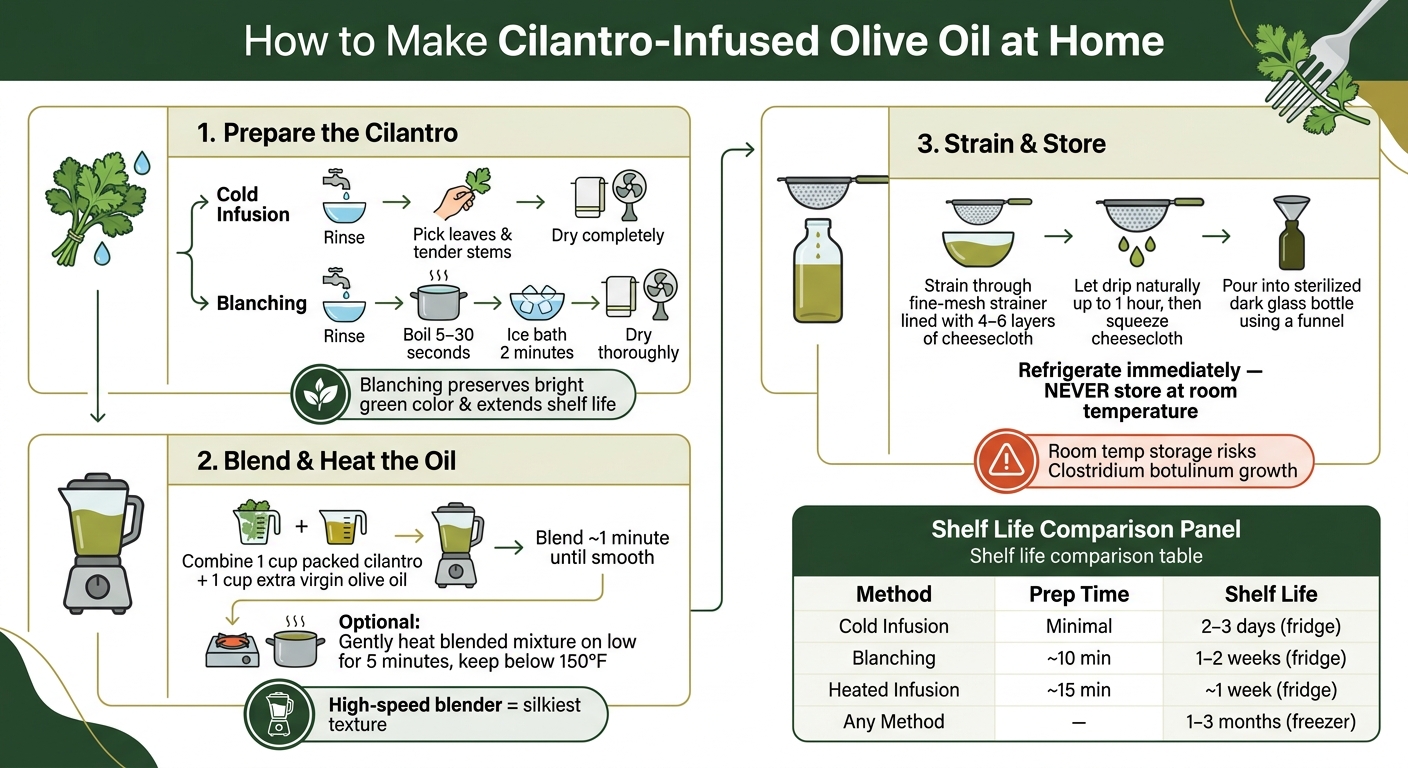
How to Make Cilantro-Infused Olive Oil: Step-by-Step Guide
Once your ingredients are ready and your tools are set, the process of making cilantro-infused olive oil is straightforward. There are two primary methods to choose from: cold infusion and blanching. Your choice will impact the oil's color and shelf life.
Step 1: Prepare the Cilantro
Start by thoroughly cleaning the cilantro. Rinse it well under cold water to remove dirt or debris. Then, pick off the leaves and tender stems, discarding any thick, woody stems that could add bitterness to the oil.
For the cold infusion method, ensure the cilantro is completely dry after washing. If you prefer blanching, briefly submerge the cilantro in boiling water for 5–30 seconds until it wilts but remains bright green. Immediately transfer it to an ice bath for 2 minutes to stop the cooking process. Afterward, dry it thoroughly.
Why blanch? Paul Adams, Science Editor at America's Test Kitchen, explains:
"Blanching the herbs before blending them is important because it deactivates two enzymes: polyphenol oxidase, which would otherwise turn the blended herbs brown and create unpleasant flavors, and chlorophyllase, which degrades the natural chlorophyll and thus also causes darkening."
This step ensures a vibrant color and prevents unwanted flavors. Also, make sure the cilantro is completely dry to avoid spoilage.
Step 2: Blend and Heat the Oil
Combine the dried cilantro and olive oil in a blender. Blend for about 1 minute until smooth. A high-speed blender like a Vitamix works best for a silky texture, but a standard blender will also do the job.
For a richer flavor, you can gently heat the blended mixture. Warm it on low heat for about 5 minutes, keeping the temperature below 150°F to prevent a cooked taste or rancidity. Once blended (and heated, if desired), you’re ready to strain and store the oil.
Step 3: Strain and Store the Oil
Set up a fine-mesh strainer lined with 4–6 layers of cheesecloth over a bowl. Pour the blended mixture into the strainer and let it drip naturally for up to an hour. After most of the oil has strained, carefully squeeze the cheesecloth to extract the remaining oil. Avoid using paper coffee filters, as they can clog or tear under the weight of the oil.
Using a funnel, transfer the strained oil into a sterilized glass bottle. Seal it tightly and refrigerate immediately. Never store cilantro-infused oil at room temperature, as fresh herbs in oil create conditions where Clostridium botulinum, the bacteria responsible for botulism, can thrive.
Here’s a quick breakdown of the methods and their outcomes:
| Method | Prep Time | Refrigerated Shelf Life | Best For |
|---|---|---|---|
| Cold Infusion | Minimal | 2–3 days | Immediate use, raw flavor |
| Blanching | ~10 minutes | 1–2 weeks | Bright color, meal prep |
| Heated Infusion | ~15 minutes | ~1 week | Bold, deep flavor profile |
If any solids settle in the bottle, you can either stir them back in or pour off the clear oil.
Flavor Variations and Ways to Use the Oil
Flavor Variations
Cilantro oil is delicious on its own, but you can easily customize it with a few simple ingredients to match different dishes. The most popular tweaks fall into four main categories: heat, citrus, aromatics, and herbal blends.
| Variation | Add-ins | Best Pairing |
|---|---|---|
| Spicy | Serrano chiles, jalapeños, or chili flakes | Tacos, grilled shrimp, or flank steak |
| Citrusy | Lemon zest, lime juice, or orange zest | Fish marinades and light summer salads |
| Aromatic | Minced garlic, shallots, or red onion | Bread dipping or drizzling over roasted potatoes |
| Herbal Blend | Fresh mint, basil, or oregano | Heirloom tomato salads or Mediterranean dishes |
For a more rustic texture, hand-mince garlic or red onion instead of blending them. This keeps the oil chunky and closer to a finishing sauce than a smooth, clarified oil.
As the Bon Appétit Test Kitchen says:
"The sky's the limit when it comes to how to flavor your oil."
Below are some specific ideas to make the most of your cilantro oil in the kitchen.
Cooking Ideas
Cilantro-infused olive oil shines as a finishing touch, rather than something to cook with over high heat. Heat can dull its flavor and even make it taste bitter, so it's best added right before serving.
Here are some easy ways to use it:
- Drizzle over tacos, grilled chicken, roasted vegetables, or a bowl of black bean soup. Add it just before serving to keep its vibrant green color and fresh herb flavor intact.
- For a quick salad dressing, whisk 2 tablespoons of cilantro oil with 1 tablespoon of balsamic vinegar, then season with salt and pepper. A fruity balsamic vinegar, like those from Big Horn Olive Oil, adds a tangy balance to the herbal notes of cilantro.
- Use it as a marinade for grilling. Mix ¼ cup of cilantro oil with 2 tablespoons of lime juice and one minced garlic clove. Let chicken, fish, or vegetables soak in the mixture for at least 30 minutes before grilling.
If you plan to cook with the oil over direct heat, mix it with a higher smoke-point oil like canola or sunflower oil to avoid burning. This way, you can still enjoy its flavor without compromising the dish.
Storage, Food Safety, and Shelf Life
How to Store the Oil
Cilantro-infused olive oil needs to be refrigerated immediately. Since cilantro is a low-acid herb, combining it with oil creates an environment where Clostridium botulinum bacteria can thrive. Carla Luisa Schwan, Assistant Professor at the University of Georgia, explains:
"Oils provide an anaerobic environment, and when combined with low-acid food matrices such as garlic and herbs, this provides the perfect conditions for specific bacteria to thrive. Clostridium botulinum specifically is of concern in infused oils."
This makes refrigeration absolutely essential. Use a sterilized, dark glass jar with a tight lid to store the oil. To sterilize, boil the container for 10 minutes. Dark glass helps block UV light, which can speed up oxidation. If the oil solidifies in the refrigerator (a common trait of good olive oil), leave it at room temperature for 30–60 minutes to return it to its liquid state.
Shelf Life and Signs of Spoilage
Proper storage directly impacts both the safety and quality of your infused oil. Cilantro-infused oil is best enjoyed fresh, and its shelf life varies depending on the preparation method:
| Method | Storage Location | Shelf Life |
|---|---|---|
| Cold Infusion (Fresh) | Refrigerator | 2–3 days |
| Blanched Infusion | Refrigerator | 4–7 days |
| Any Method | Freezer | 1–3 months |
Watch for signs of spoilage. If the oil develops a rancid odor, noticeable browning, persistent cloudiness, or fizzing, it’s time to toss it. A bit of sediment is normal - just give it a stir before using.
Tips for Keeping the Oil Fresh
For the best flavor and safety, make small batches and label them with preparation dates. Freezing the oil in ice cube trays is an easy way to extend its shelf life. Starting with a high-quality extra virgin olive oil, like the kind offered by Big Horn Olive Oil, can elevate both the taste and stability of your infusion.
Wrapping Up
Making cilantro-infused olive oil at home is a breeze. Start by rinsing and drying your cilantro, then briefly blanch it to lock in that bright green color. Blend the cilantro with high-quality extra virgin olive oil, strain the mixture, and refrigerate it right away to keep it fresh and safe.
For the best results, use a buttery, smooth extra virgin olive oil - like the kind from Big Horn Olive Oil, which is cold-pressed within just two hours of harvesting. This type of oil provides a clean, rich base that complements the cilantro without introducing any unwanted bitterness.
The whole process takes less than 30 minutes, and the result is a versatile oil that can elevate your meals. Drizzle it over tacos, swirl it into soups, or serve it as a dipping oil with crusty bread. Start with a 1:1 ratio of packed cilantro leaves to olive oil, and tweak it to match your preferences.
Why not give it a shot? Try it out this week and see how it transforms your dishes.
FAQs
Do I have to blanch the cilantro?
Blanching cilantro isn’t absolutely necessary, but it’s a good idea if you want to preserve its bright green color and fresh taste. This quick process halts enzymes that can lead to discoloration and might even help the oil last longer. To blanch, simply dip the cilantro in boiling water for 5–30 seconds, then immediately cool it down in an ice bath. Make sure to refrigerate your cilantro-infused oil and use it quickly to ensure it stays safe.
How can I make cilantro oil last longer safely?
To keep cilantro-infused olive oil safe and lasting longer, opt for dried cilantro to minimize moisture and reduce the risk of botulism. If you choose to use fresh cilantro, make sure to refrigerate the oil right away and consume it within 4 days. Always strain the oil thoroughly to remove any solids, store it in a clean, dark glass bottle, and place it in a cool, dark spot. If you notice cloudiness, mold, water droplets, or an off smell or flavor, it's time to discard it.
Can I freeze cilantro-infused olive oil?
Freezing cilantro-infused olive oil is an excellent method to keep it fresh longer. Simply use ice cube trays or an airtight container to portion it out for easy use. If the oil turns cloudy or solidifies, just leave it at room temperature for about 10–15 minutes, and it will return to its liquid state. Only thaw what you need to prevent unnecessary waste.