

How to Make Sweet and Spicy Balsamic Glaze
You can make sweet and spicy balsamic glaze with 3 main parts: balsamic vinegar, a sweetener, and chili heat. In most kitchens, I can get it done in 15 to 30 minutes on the stovetop, then use it on meat, vegetables, cheese, fruit, or dessert.
Here’s the short version:
- I start with 1 cup balsamic vinegar
- I add 1 to 2 tablespoons of honey or brown sugar
- I add about 1/4 teaspoon red pepper flakes
- I simmer it until it turns thick, glossy, and spoon-coating
- I stop a little early, because it gets thicker as it cools
- I store it in the fridge for up to 4 weeks
A few details matter most:
- Pan: use stainless steel or enamel-coated cookware
- Heat: keep it at a gentle simmer, not a hard boil
- Texture: aim for a glaze that leaves a clear line on a spoon
- Target temperature: about 220°F to 225°F
- Risk zone: above 230°F, it can turn too stiff
If I want to change the taste, I keep the changes small. Honey makes it shinier and stickier. Brown sugar gives it a darker, deeper taste. Red pepper flakes are the easiest way to control heat, while jalapeño gives less heat and cayenne gives more.
| Part | Main options | What it changes |
|---|---|---|
| Vinegar | Balsamic | Tang, depth, body |
| Sweetener | Honey, brown sugar, white sugar | Shine, stickiness, sweetness |
| Heat | Red pepper flakes, jalapeño, cayenne | Mild warmth to strong kick |
This article explains the ingredients, the cooking steps, how to fix texture, how to change the heat level, and how I store and reheat the glaze without ruining it.
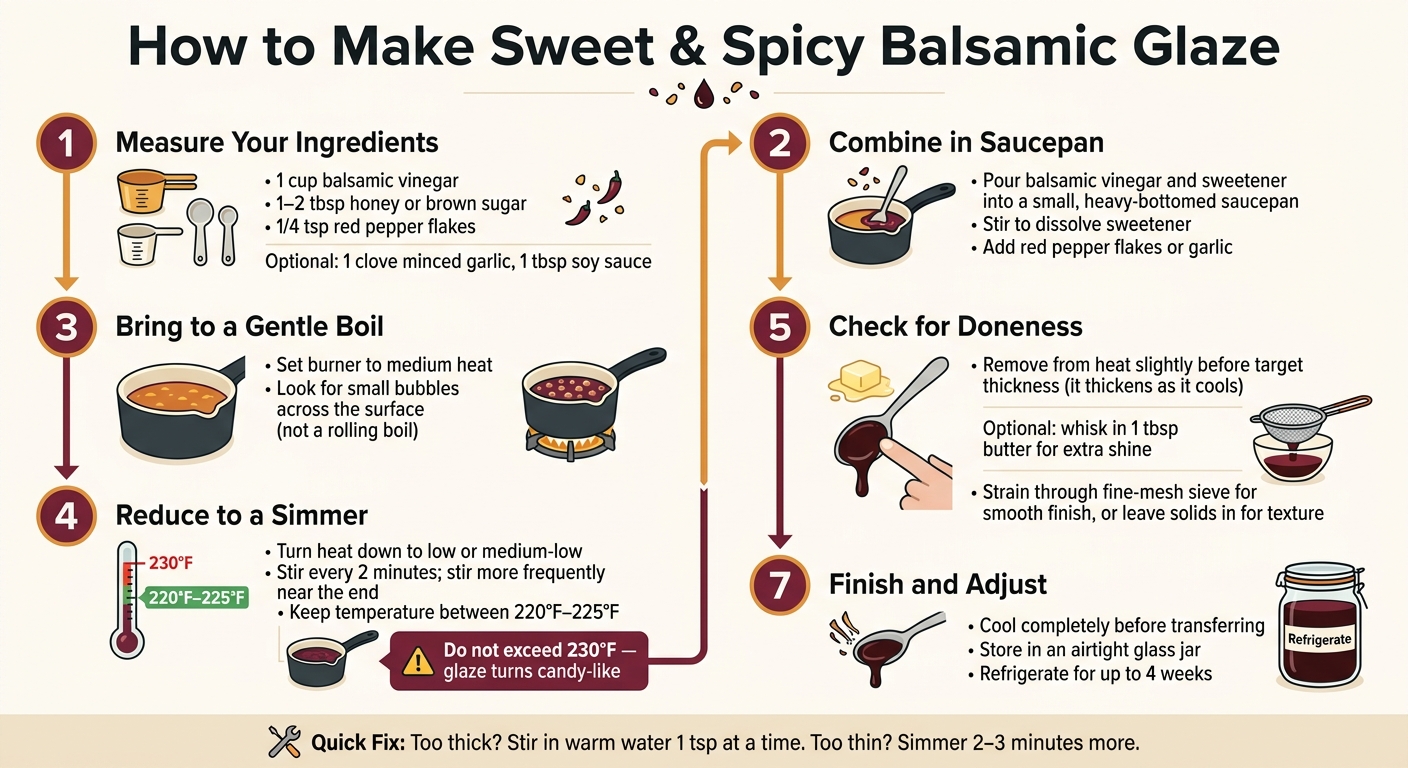
How to Make Sweet & Spicy Balsamic Glaze: Step-by-Step Guide
1. Ingredients and Equipment You Need
Core Ingredients in U.S. Measurements
You only need a handful of ingredients to make this glaze. Start with 1 cup balsamic vinegar, 1 to 2 tablespoons honey or brown sugar, and 1/4 teaspoon red pepper flakes.
If you want to round out the flavor, add 1 clove of minced garlic or 1 tablespoon of soy sauce for a savory edge. A pinch of salt and black pepper can help balance things out. And if you want more aroma, try 1 teaspoon of fresh rosemary or a cinnamon quill. For a smoother, shinier finish, stir in 1 tablespoon of butter right at the end.
Aged balsamic from Modena gives you deeper flavor and a thicker reduction. Big Horn Olive Oil offers both a Traditional 18-Year Aged Dark Balsamic Vinegar and a Molto Denissimo 25-Year Aged Dark Balsamic Vinegar, both from Modena. They bring natural depth and balance to the glaze.
Sweeteners and Heat Sources Compared
The sweetener and chili you use change both flavor and texture. Here’s a quick side-by-side look:
| Ingredient | Flavor | Effect on Texture | Heat Level |
|---|---|---|---|
| Brown Sugar | Deep, molasses-like | Helps the glaze reduce fast into a rich syrup | - |
| Honey | Floral, mild | Glossy, velvety, and very sticky | - |
| Red Pepper Flakes | Sharp, direct | Smooth if strained, speckled if left in | Mild to moderate |
| Jalapeño | Bright, slightly vegetal | Milder heat; best for subtle warmth | Low to moderate |
| Ground Cayenne | Clean, immediate | Smooth if strained or infused | High |
Brown sugar thickens fast and gives the glaze a darker color. Honey leans shinier and stickier. For heat, red pepper flakes are the easiest to control in small amounts. Those little choices matter more than they seem, and they shape the glaze before it even starts to simmer.
Basic Tools for Stovetop Cooking and Storage
Use a small, heavy-bottomed saucepan so the glaze doesn’t scorch. Standard measuring cups and spoons help keep the ratio right. For stirring, a whisk or wooden spoon works fine. If you plan to remove chili seeds or whole spices, keep a fine-mesh sieve close by.
Once the glaze is done, store it in a clean glass jar or airtight container. With your ingredients measured and your tools set out, you’re ready for the stovetop.
sbb-itb-4066b8e
2. How to Make Sweet and Spicy Balsamic Glaze Step by Step
Combine, Simmer, and Reduce Until Glossy
Once your ingredients are measured, head to the stove. Pour the balsamic vinegar and sweetener into a small, heavy-bottomed saucepan. Give it a quick stir so the honey or brown sugar starts to melt into the vinegar. Then add the red pepper flakes or minced garlic, so that spicy kick has time to work into the glaze as it cooks down.
Set the burner to medium and bring the mixture to a gentle boil. You’re looking for small bubbles across the surface, not a wild, rolling boil. As soon as it reaches that point, turn the heat down to low or medium-low and let it simmer.
Here’s the easiest way to check it: dip a spoon into the glaze, then run your finger through the back of the spoon. If the line stays put, it’s ready. The glaze should look dark, glossy, and thick enough to coat the spoon. Once it’s off the heat, stir in 1 tablespoon of butter if you want extra shine. At this stage, even heat matters more than trying to rush it.
Heat Control and How to Avoid Scorching
Keep the glaze at low or medium-low once it starts to simmer. Too much heat can make the reduction move too fast and burn the sugars. Stir every couple of minutes at first, then stir more often near the end, when scorching is most likely.
The glaze will thicken more after it comes off the heat, so pull it from the burner while it still seems a little looser than you want. If it ends up too thick, stir in a small splash of warm water or balsamic vinegar to loosen it.
"Don't let it simmer too long, as it will continue to thicken as it cools. It should have a slightly runny yet sticky consistency. If it becomes too thick, it may be difficult to squeeze out of the bottle and could even risk hardening over time." - Marcia, Chef and Recipe Developer
Once the glaze hits the right texture, you can adjust the sweetness, heat, or thickness to suit your taste.
3. How to Adjust Flavor, Texture, and Heat
Make It Sweeter, Hotter, or More Savory
When the glaze is close, make your changes in small amounts. That gives you control and keeps the flavor from swinging too far in one direction.
For more sweetness, use brown sugar if you want a deeper taste, honey if you want a shinier glaze, or white sugar for a cleaner finish. If you want more heat, add red pepper flakes a pinch at a time. You can also swap in jalapeño, chipotle powder, or smoked paprika for a different style of heat. Want it milder? Steep sliced chiles in the vinegar for 2 hours in the refrigerator before cooking.
Savory add-ins should stay light so the balsamic still leads. A dash of soy sauce or a pinch of garlic-pepper blend can add more depth, but it’s easy to overdo. For a silkier finish, whisk in 1 tablespoon of butter off the heat.
Strain for a Smooth Finish or Leave It Textured
Once the flavor is where you want it, decide on texture. You can strain it for a smooth drizzle or leave the solids in for a more rustic spoonful.
Straining through a fine-mesh sieve removes garlic pieces, chili flakes, and herb bits. That gives you a smooth, glossy drizzle that works well over desserts, fish, or any dish where appearance matters.
If you’re serving it over roasted vegetables or grilled meats, leaving the solids in gives you more texture and little pops of flavor. Either way works. If the glaze reduces too much, whisk in 1 tablespoon of warm water.
"Stop simmering when it looks slightly thinner than your target, because carryover thickening as it cools will firm it up further." - Olya Shepard, Author, What's in the Pan
Aim to stop at 220°F to 225°F. Once it goes above 230°F, the glaze can start to turn candy-like.
4. How to Use, Store, and Reheat the Glaze
Ways to Use the Glaze
Once the glaze turns glossy and coats the back of a spoon, it’s ready to use. Treat it like a finishing drizzle, not something to cook over high heat, because direct heat can scorch it fast.
| Category | Pairings |
|---|---|
| Proteins | Grilled chicken, pork chops, sirloin steak, salmon |
| Vegetables | Roasted Brussels sprouts, honey-glazed carrots, asparagus, charred zucchini |
| Desserts & Fruit | Vanilla ice cream, cheesecake, fresh strawberries, grilled peaches |
| Starters | Caprese salad, bruschetta, burrata, goat cheese, charcuterie boards |
Start with a small drizzle, then add more if you want.
Storage and Reheating
After serving, store leftover glaze right away. Let it cool all the way, then transfer it to an airtight glass jar. That helps stop condensation from watering it down. Refrigerate for up to 4 weeks.
Before using it again, let it sit at room temperature for 10 to 15 minutes. Then warm it gently over low heat or in short microwave bursts. If it feels too thick, stir in warm water 1 teaspoon at a time until it pours easily. Don’t heat it past 230°F, and don’t freeze it.
Key Takeaways
The process is simple: reduce, taste, finish, and store. Simmer balsamic vinegar with a sweetener and chili until the glaze coats a spoon, pull it a little early, then refrigerate it for up to 4 weeks.
How Can Something So Simple Taste So Good | Balsamic Glaze Recipe | How to Make Balsamic Glaze
FAQs
Can I make it ahead?
Yes. Let the glaze cool all the way, then transfer it to an airtight container or glass jar and keep it in the refrigerator for up to 2 weeks.
It'll thicken as it chills. If it gets too firm to drizzle, warm it gently on the stove or in the microwave with a tiny splash of water.
Why did my glaze get too thick?
Your glaze probably got too thick for one of two simple reasons: it reduced too much on the heat, or it kept thickening as it cooled.
The fix is easy. Gently warm it back up on the stove or in the microwave, then stir in a small splash of warm water until it looks right.
Next time, pull it off the heat when it’s still a little thinner than your target. As it cools, it’ll thicken up on its own.
What balsamic works best?
For the best results, use a mid-range balsamic vinegar labeled Balsamic Vinegar of Modena. It cooks down nicely and gives you the right texture for a glaze.
Skip the pricey, well-aged bottles. They’re better used as-is, where you can taste every nuance. On the other end, cheap imitation vinegars often contain artificial additives and can leave you with a flat or overly sharp result.
If you want a good option, Big Horn Olive Oil offers premium balsamic vinegars from Modena, Italy, that work well for a rich, flavorful glaze.