

How to Tell If Olive Oil Has Gone Bad
When olive oil spoils, it loses its flavor, nutritional value, and can even harm your dishes. Here's how to quickly check if your olive oil has gone bad:
- Smell: Rancid olive oil smells like wax or crayons, not fresh-cut grass or fruit.
- Taste: Spoiled oil tastes stale, greasy, or like old nuts, lacking the bitterness and peppery kick of good oil.
- Appearance: Look for dull, murky oil or sticky residue around the bottle neck.
To prevent spoilage, store olive oil in a cool, dark place, tightly sealed, and use it within 3-6 months of opening. Avoid heat, light, and air exposure to keep it fresh longer. If your oil smells or tastes off, it’s best to toss it - it won’t improve with time.
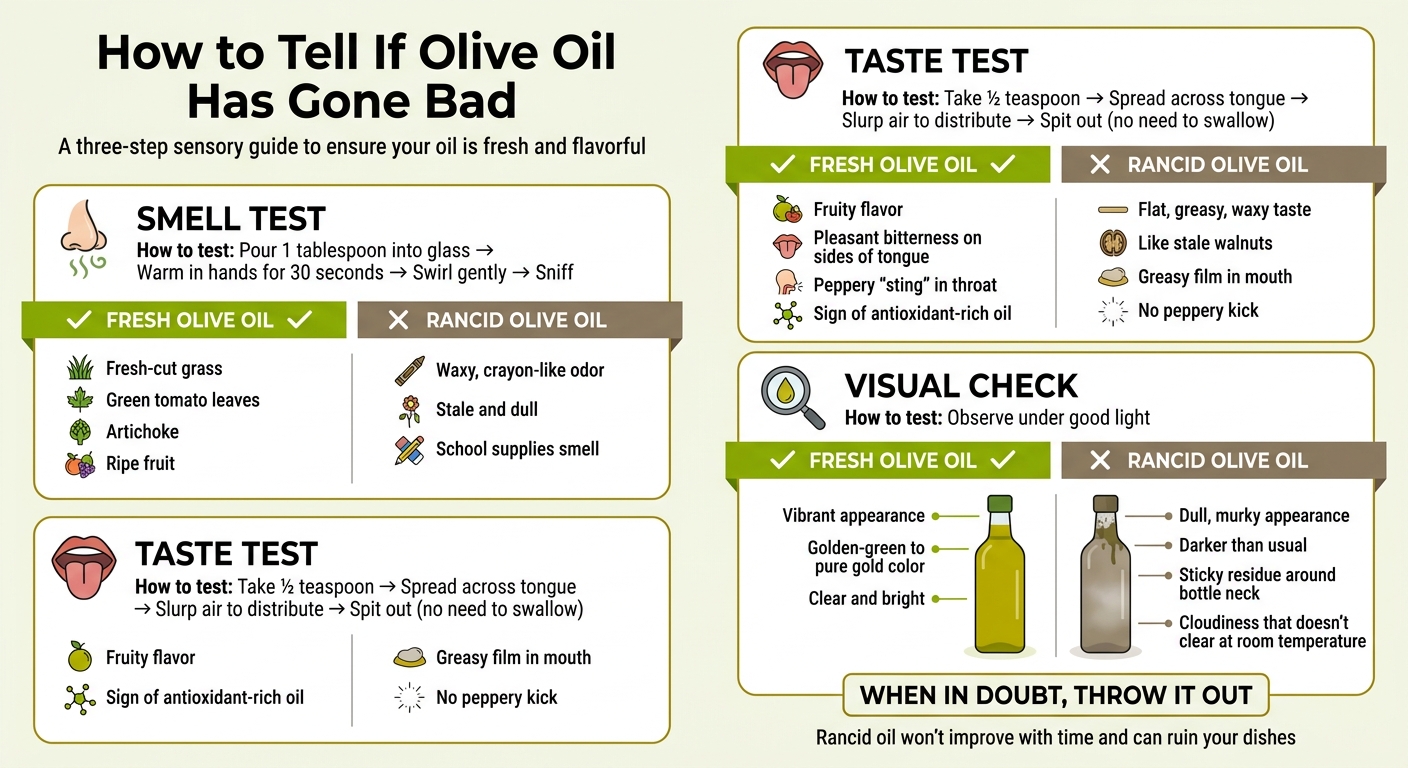
How to Test if Olive Oil Has Gone Bad: 3-Step Sensory Guide
How Do I Check For Rotten Olive Oil?
sbb-itb-4066b8e
How Olive Oil Spoils
Knowing how olive oil spoils helps you spot signs of deterioration later. Unlike wine, olive oil doesn’t get better with age. Think of it more like fresh fruit juice - it starts to break down right after being pressed. Three key factors speed up this process: oxygen, light, and heat. Oxygen reacts with the oil's fatty acids, creating free radicals and reducing its monounsaturated fats and polyphenols. UV light destroys vitamins and antioxidants, while heat accelerates chemical reactions that lead to rancidity.
Oxidation and Storage
Oxidation is the primary reason olive oil goes bad. When oxygen interacts with the oil's delicate fats, it triggers a chain reaction, turning the oil into what experts describe as "flavorless fat." This process also eliminates its anti-inflammatory benefits. Each time you open the bottle, more oxygen gets in, speeding up the spoilage.
To slow this down, store your olive oil in a cool, dark place - away from stoves, dishwashers, or sunny windowsills. The ideal storage temperature is between 57°F and 70°F (14°C to 21°C). Always opt for dark glass bottles (green or brown) or metal tins, as clear glass offers little protection from UV light. After each use, seal the cap tightly to limit air exposure.
Refrigerating olive oil isn’t ideal either. Cold temperatures cause waxes in the oil to solidify, and condensation can form, which harms the flavor.
Expected Shelf Life
How you handle olive oil plays a big role in its shelf life. If stored properly, unopened bottles of high-quality extra virgin olive oil usually stay fresh for 18 to 24 months from the harvest date. Once opened, the oil retains its best flavor for about 3 to 6 months, though many experts suggest using it within 30 to 60 days for maximum freshness and nutrients.
One crucial thing to note: harvest dates are more reliable than best-by dates. Best-by dates can be set up to two years after bottling, regardless of when the olives were pressed. Brands like Big Horn Olive Oil include harvest dates on their products so you know exactly when the oil was at its peak, which is typically within 12 to 18 months of harvest.
"The harvest date tells you when the olives were picked and pressed - this is the most important date for quality." - Bill's Premium Olive Oil
Unfiltered oils, while flavorful, contain olive sediment that can cause them to spoil faster. On the other hand, refined oils may last 2 to 3 years because the processing removes the fragile compounds that make extra virgin olive oil both nutritious and more prone to spoilage.
Signs Your Olive Oil Has Spoiled
Identifying spoiled olive oil doesn’t require any fancy tools - your senses are often all you need. Start by paying attention to the smell, taste, and appearance of the oil.
Smell Test
Your sense of smell is a reliable way to check if olive oil has gone bad. Fresh olive oil typically has a lively aroma, often described as resembling fresh-cut grass, green tomato leaves, artichoke, or ripe fruit. On the other hand, rancid oil smells stale and dull, often with a waxy, crayon-like odor.
"That 'crayon' smell is the most classic and unmistakable sign of oxidation" - Learn Olive Oil
To test, pour about a tablespoon of oil into a small glass. Warm it in your hands for 30 seconds, swirl it gently to release the aroma, and then take a sniff.
"If you feel like you are cooking with school supplies instead of vegetable oil, it's time to find a new bottle" - Emily Lichty, Allrecipes
Taste Test
After evaluating the smell, tasting the oil can confirm its quality. Professional tasters use a specific technique: they take about half a teaspoon of oil, spread it across their tongue, and slurp in air to distribute it evenly. You can do the same - just like taking a sip of hot soup.
Fresh olive oil has a fruity flavor, with a pleasant bitterness on the sides of the tongue and a peppery "sting" in the throat. These characteristics are signs of high-quality, antioxidant-rich extra virgin olive oil. Spoiled oil, on the other hand, tastes flat, greasy, or waxy - similar to stale walnuts - and may leave a greasy film in your mouth. There’s no need to swallow the oil; you can spit it out after tasting.
Visual Changes
While smell and taste are the most reliable indicators, visual clues can also help. Fresh olive oil has a vibrant appearance, ranging from golden-green to pure gold. As it deteriorates, the oil may lose its brightness, appearing dull, murky, or darker than usual.
"If your oil looks darker than usual, that's another sign" - Dr. Luke LaBorde, Penn State University
Check the bottle neck for sticky residue as well.
"If your bottle of oil feels sticky... That's oil residue undergoing polymerization - an advanced stage of the rancidity process" - Dr. Luke LaBorde
Lastly, if you notice cloudiness in olive oil stored in the fridge, it’s likely due to natural waxes solidifying in the cold. This should clear up once the oil returns to room temperature. However, if the murkiness remains, it could indicate the oil has spoiled.
What to Do with Rancid Olive Oil
Once you've spotted the signs of rancid olive oil, the next step is figuring out how to deal with it.
Is Rancid Olive Oil Safe?
While rancid olive oil isn't poisonous and a small accidental taste won't harm you, it's not something you want to keep around. Rancidity strips away the beneficial compounds in the oil and introduces free radicals that aren't good for your health. Plus, its unpleasant taste can ruin any dish. Unfortunately, there's no way to fix rancid oil - neither heating nor filtering will restore its quality.
"When in doubt, throw it out. It's not gonna kill you, but there is some [health] concern about all these complex reactions going on." - Dr. Luke LaBorde, Penn State University
Disposing of Rancid Olive Oil
Since the chemical changes in rancid oil are irreversible, it's best not to cook with it. The safest option is to discard it and replace it with fresh, high-quality olive oil. If you're looking for a reliable option, consider ultra-premium extra virgin olive oil from Big Horn Olive Oil to ensure you retain both flavor and nutritional value.
Conclusion
Rely on your senses when it comes to spotting spoiled olive oil. A quick sniff or taste can reveal if your oil has gone bad. That waxy, crayon-like smell or greasy, bland taste? Those are clear signs of rancidity, and it’s time to toss it out.
But detecting spoilage is only part of the equation - how you store your olive oil matters just as much. Unlike wine, olive oil doesn’t get better with age. For the best flavor and nutritional benefits, use it within a reasonable timeframe and store it properly, away from heat, light, and air.
Starting with high-quality oil also makes a big difference. Premium extra virgin olive oils are packed with polyphenols, natural antioxidants that help them stay fresh longer. For instance, Big Horn Olive Oil’s Ultra Premium Extra Virgin Olive Oils are milled just 2 to 3 hours after harvest and are guaranteed to be no older than 14 months from the harvest date, ensuring both freshness and nutritional value.
"Well-sourced, well-produced, high-quality Extra Virgin Olive Oil (EVOO) will taste richer (or brighter), more complex, and simply better." - Big Horn Olive Oil Company
FAQs
Can rancid olive oil make you sick?
When olive oil turns rancid, it can potentially make you sick. Spoiled olive oil loses its beneficial properties and takes on unpleasant smells and flavors, signaling that it’s no longer good to use. Consuming it might cause digestive discomfort or other minor health issues. To avoid this, always smell and taste your olive oil before using it to confirm its freshness and quality.
Does olive oil go bad faster after you open it?
Extra virgin olive oil (EVOO) does lose quality more quickly once opened. Its peak flavor and nutrient profile typically last for about 30 to 60 days after opening. However, with proper storage, you can still use it for up to 3 to 6 months. To help preserve its freshness, keep it in a cool, dark place and opt for dark glass bottles or stainless steel containers to minimize exposure to light and air.
Should you refrigerate olive oil to keep it fresh?
Storing olive oil in the refrigerator isn’t a good idea. Instead, keep it in a cool, dark place - a pantry is ideal - away from heat and light. Opt for dark glass bottles or stainless steel containers to protect it from air and UV rays. While refrigeration might make the oil cloudy or cause it to solidify, it doesn’t harm the quality. Proper storage ensures the oil retains its flavor, aroma, and beneficial antioxidants for up to 18–24 months if unopened.