

8 Italian Appetizers With Herb Olive Oil
Build an Italian-inspired appetizer spread with one crisp bread bite, one briny bite, and one vegetable dish. Herb olive oil works as a dip, marinade, or finishing drizzle across these eight options:
- Bread dip with antipasti: Rosemary, thyme, basil, and garlic stirred into olive oil.
- Marinated Castelvetrano olives: Buttery olives with rosemary, thyme, and lemon peel.
- Focaccia bites: Crisp squares topped with tomatoes, olives, or artichokes.
- Tomato bruschetta: Toasted bread with diced tomatoes and basil oil.
- Cannellini bean crostini: Creamy mashed beans with lemon, garlic, and herb oil.
- Artichoke hearts: A chilled or briefly grilled option with parsley or mint.
- Grilled zucchini and eggplant: Tender slices finished with herb oil after grilling.
- White bean and roasted pepper toasts: Mashed beans and pepper strips on garlic-rubbed bread.
For a light starter, plan 2–3 bread bites per person, plus small portions of olives and vegetables. Prepare spreads and marinades ahead, but keep bread separate until serving.
Store homemade herb or garlic oil at 40°F or below, and use or freeze it within 4 days. Keep perishable appetizers out for no more than 2 hours - or 1 hour above 90°F.
Olive Tapenade Italian Appetizer Recipe
sbb-itb-4066b8e
How to Choose and Prepare Herb Olive Oil
Choose extra virgin olive oil (EVOO) with a harvest date, packaged in dark glass or metal. Taste it first: fruity, grassy, bitter, or peppery notes are welcome. Skip oil with stale, paint-like aromas, and don’t judge quality by color alone.
Olive oil carries herb flavor through each bite. For the appetizers ahead, pair mild, fruity EVOO with basil, parsley, or mint. Choose a stronger-flavored oil for rosemary and oregano, and use thyme with beans and artichokes.
Start with a small batch: 1/2 cup EVOO with 1–2 tablespoons finely chopped, thoroughly dried fresh herbs or 1 teaspoon dried herbs. Let it stand for 15–30 minutes. Go lighter on rosemary or oregano, since their flavor can take over. Strain the oil for a smooth dip, or leave the herbs in for texture.
Taste before seasoning. Just before serving, add a pinch of salt, lemon zest, or red-pepper flakes. If the herb flavor is too strong, stir in more EVOO. Plan on 1 teaspoon per crostini or 2–3 tablespoons per cup of olives or artichokes. For any extra oil, follow the storage guidance below.
How to Store Homemade Herb and Garlic Oil Safely
Make herb-and-garlic oil just before serving, and keep its fridge storage time short. Fresh garlic and herbs in oil can support the growth of bacteria that cause botulism. Heating or straining the oil does not make it shelf-stable.
Use clean containers, label the oil with the date made, and refrigerate promptly at 40°F or below. Use or freeze it within 4 days, counting the day you made it. Keep it refrigerated, and discard any portion left out for more than 2 hours.
Marinated olives in herb-and-garlic oil have the same 4-day limit, unless another ingredient needs a shorter storage time. Follow this rule for any olive or vegetable appetizer packed in the oil.
1. Herb Olive Oil Bread Dip With Antipasti
Herb Pairings
Rosemary and thyme give this dip a classic Italian flavor, while basil adds a bright, herbal note. Choose a fruity extra-virgin olive oil and just enough balsamic to balance it. Serve it as the first bite of a simple antipasto spread.
Preparation
For 4–6 people, combine 1 tablespoon chopped fresh rosemary, 1 tablespoon chopped fresh thyme, 2 tablespoons thinly sliced basil, 1 small minced garlic clove, a small pinch of red pepper flakes, 1/4 teaspoon kosher salt, black pepper to taste, and 1 teaspoon balsamic vinegar in a shallow bowl.
Stir in 1/2 cup olive oil and let stand for 10–15 minutes. Taste with bread before adjusting the seasoning.
Storage
Making it ahead? Refrigerate in a clean, covered container and use within 4 days. Discard any oil that bread or utensils have touched.
Serve
Pair with warm rustic bread or focaccia strips, plus Castelvetrano olives or grilled vegetables.
2. Herb-Marinated Castelvetrano Olives
Herb Pairings
Castelvetrano olives add a briny contrast to the bread dip. Marinate them in olive oil with rosemary, thyme, and lemon peel. Their mild, buttery flavor and firm texture pair well with savory herbs and bright citrus.
Preparation
For a make-ahead option, combine the ingredients, cover, and refrigerate for 4 hours or overnight. For 1 pound of drained olives, use 1/4 cup extra-virgin olive oil, 1 small rosemary sprig, 3–4 thyme sprigs, 1 lightly crushed garlic clove, and 2–3 strips of lemon peel. Pat the olives dry to help the oil cling, and leave out the peel’s bitter white pith.
Serving right away? Warm everything in a small saucepan over low heat for 5–10 minutes, until fragrant. Don’t brown the garlic or let the oil smoke.
Storage
Refrigerate promptly in a clean, covered container at 40°F or below. Label the container and use within 4 days, or sooner if an ingredient requires it. Discard after 2 hours at room temperature.
Serve
Spoon the olives into a shallow dish, remove the woody stems and lemon peel, and serve with crusty bread. Allow 2–3 ounces per guest. Add Parmigiano-Reggiano and roasted peppers as simple accompaniments. The olives also balance richer bites later in the spread.
3. Focaccia Bites With Herb Olive Oil
Warm, crisp focaccia offers a contrast to the briny bites served before it.
Herb Pairings
Keep the oil light so one herbal flavor leads each bite. Pair basil oil with cherry tomatoes, rosemary oil with olives, or thyme oil with artichokes. Stick to one topping per bite.
Preparation
Cut focaccia into 1½- to 2-inch squares. Warm at 350°F for 5 to 8 minutes, just until the edges crisp, then drizzle with herb oil.
Pat the toppings dry, finish with flaky salt, and assemble just before serving.
Serve on a Shared Platter
Plan for 24–32 bites for 8–10 guests. Group matching toppings together, with tomato bites in the center. Add small bamboo picks to slippery pieces, and serve extra herb oil on the side so the focaccia stays crisp.
4. Tomato Bruschetta With Basil Oil
Preparation
Makes about 24 pieces. Dice 1 1/2 pounds Roma tomatoes into 1/4-inch pieces and let them drain. Mix with 1 minced garlic clove, 1/4 cup chopped basil, 1 tablespoon extra-virgin olive oil, and 1 tablespoon lemon juice. Add salt and pepper to taste.
For the basil oil, blend 1/2 cup basil leaves with 1/2 cup extra-virgin olive oil. Strain for a smooth drizzle. Keep it separate from the tomatoes and use it only to finish the bruschetta.
Storage
Keep cut tomatoes covered and refrigerated at 41°F or below. Store the basil oil chilled in a separate sealed container until serving.
Serving
Follow the warm focaccia with this bright, cool bruschetta topping.
Cut a baguette or ciabatta into 1/2-inch slices. Brush lightly with olive oil, then toast at 400°F for 8–12 minutes, flipping once. Let the toast cool briefly so it stays crisp.
Take the tomatoes out of the refrigerator 10–15 minutes before serving and drain again. Spoon onto the toast and drizzle with basil oil just before serving to keep the bread crisp.
5. Cannellini Bean Crostini With Herb Oil
Preparation
Follow the tomato bruschetta with this creamier, protein-rich bean crostini, or explore our other Italian appetizer recipes.
Makes about 16 crostini. Drain and rinse one 15-ounce can of cannellini beans. Mash with 1 tablespoon fresh lemon juice, 1 small finely grated garlic clove, and 1 tablespoon chopped parsley. Leave a few beans partly intact for texture.
Stir in 2 tablespoons high-quality herb-infused extra-virgin olive oil. Add more oil 1 teaspoon at a time as needed - the mixture should be spreadable, not greasy. Season to taste with salt and black pepper.
Serving
Just before serving, spread about 1 tablespoon of the bean mixture on each toasted baguette slice. Finish with cracked black pepper and chopped parsley, or add a few drops of balsamic for contrast.
6. Artichoke Hearts With Herb Olive Oil
Artichoke hearts add a lighter, briny bite to an antipasto spread.
Preparation
Serves 4 as part of an antipasto spread. Drain 1 pound of artichoke hearts. Rinse if very briny, then pat dry and quarter any large hearts. Make sure the hearts are cooked, tender, cooled, and fully trimmed.
Toss with 3 tablespoons parsley- or mint-infused extra-virgin olive oil, 1 small grated garlic clove, 1 tablespoon lemon juice, 1 teaspoon finely grated lemon zest, and 2 tablespoons chopped parsley or mint. Juice and zest the lemon just before using. Taste before adding up to 1/4 teaspoon kosher salt, then add black pepper. No infused oil? Use plain, high-quality EVOO with herbs chopped just before mixing.
Serve Chilled or Briefly Grilled
For chilled artichokes, refrigerate for 30 minutes to 2 hours. To grill, pat dry and cook over medium-high heat for 2 to 3 minutes per side, until lightly browned and tender inside. Finish with another drizzle of herb oil.
Pairing
Use parsley for a savory flavor or mint for a brighter, minty finish. Serve with toasted focaccia and shaved Parmesan.
Refrigerate leftovers promptly and use within 4 days.
Finish with extra lemon and serve immediately, or chill briefly before plating.
7. Grilled Zucchini and Eggplant With Herb Oil
Grill zucchini and eggplant for a smoky, hearty vegetable bite, then spoon herb oil over the tender slices.
Preparation
Serves 4 as part of an antipasto spread. Wash and dry 1 medium zucchini and 1 small eggplant. Slice lengthwise into 1/4-inch slabs, then lightly coat with extra-virgin olive oil, salt, and black pepper. Save the herb oil for after grilling.
Heat a grill to 375–425°F. Place the slices in a single layer and grill for 3–5 minutes per side, turning once. Watch closely to prevent scorching. Remove the zucchini as it softens; the eggplant may need a little longer. Aim for tender, flexible slices with light grill marks rather than charred edges.
Transfer the vegetables to a platter while they’re tender but still hold their shape.
Herb Oil Pairings
Mix 3 tablespoons EVOO with 1 tablespoon finely chopped herbs, 1 teaspoon lemon zest, and a pinch of salt. Choose basil and parsley for a light, bright finish, or oregano and rosemary for a bolder flavor. Big Horn Olive Oil’s Tuscan Herb Olive Oil blends rosemary, oregano, thyme, and sage.
Serve at Room Temperature
Arrange the vegetables in overlapping rows, spoon over 1–2 tablespoons herb oil, and let rest for 15–30 minutes. Finish with lemon or a splash of balsamic, and serve with fresh mozzarella and grilled bread.
Keep total room-temperature time under 2 hours, or 1 hour above 90°F. Refrigerate leftovers promptly.
8. White Bean and Roasted Pepper Toasts
Follow the grilled vegetables with creamy white bean toasts topped with sweet roasted peppers.
Preparation
This pantry-friendly toast gives your antipasto board a make-ahead option.
Makes 12 appetizer toasts. Rinse and drain one 15-ounce can of cannellini beans. Mash lightly, leaving some texture. Stir in 2 tablespoons herb olive oil, 1 tablespoon lemon juice, 1/4 teaspoon kosher salt, and black pepper. If needed, add more oil a teaspoon at a time until the beans are spreadable.
Drain 1 cup jarred roasted red peppers, pat dry, and slice into thin strips for a sweet, colorful topping.
Cut 6 slices of country bread about 1/2 inch thick. Brush both sides with olive oil, then toast at 400°F for 8–10 minutes, turning once. Rub the warm bread with a cut garlic clove.
Assemble and Serve
Cut each toast in half diagonally for 12 portions, or into thirds for 18 smaller bites. Spread with the mashed beans, top with pepper strips, and add lemon zest if you like.
You can chill the beans and peppers separately up to 1 day ahead. Assemble 15–30 minutes before serving to keep the bread crisp. Finish with chopped Italian parsley or torn basil, and arrange in a single layer so guests can easily pick up each piece.
How to Plan an Antipasto Spread
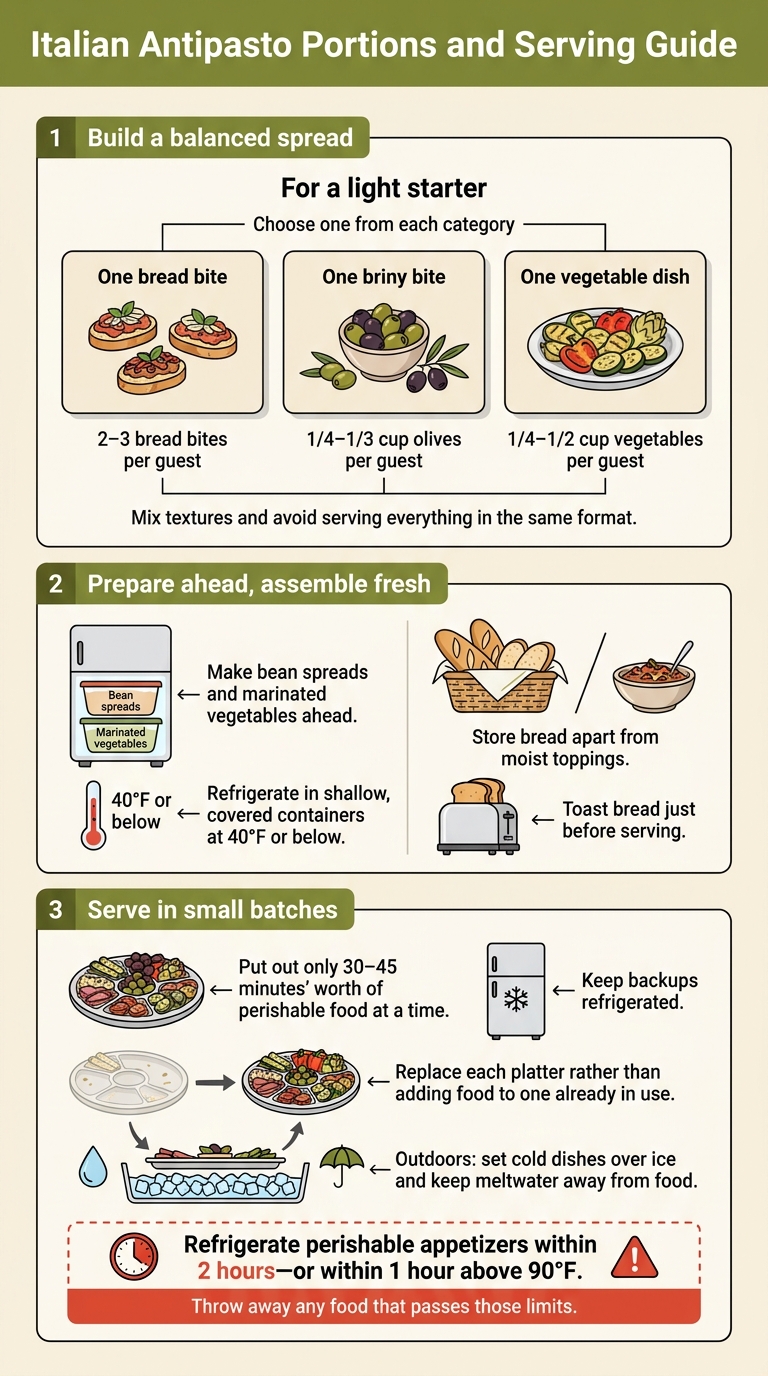
Italian Antipasto Portions and Serving Guide
Treat these recipes as building blocks, not a full menu. Start with one bread bite, one briny bite, and one vegetable dish. Mix textures and avoid serving everything in the same format.
For a light starter, allow 2–3 bread bites, 1/4–1/3 cup olives, and 1/4–1/2 cup vegetables per guest.
Once you've chosen the menu, plan your timing so bread stays crisp and cold dishes stay cold. Make bean spreads and marinated vegetables ahead, then refrigerate them in shallow, covered containers at 40°F or below. Store bread apart from moist toppings and toast it just before serving.
Put out only 30–45 minutes’ worth of perishable food at a time, keeping backups refrigerated. Replace each platter rather than adding food to one already in use. If you're serving outdoors, set cold dishes over ice and keep meltwater away from the food.
Refrigerate perishable appetizers within 2 hours, or within 1 hour when the temperature is above 90°F. Throw away any food that passes those limits.
Conclusion
Herb-infused extra virgin olive oil brings these eight appetizers together as a dip, marinade, dressing, and finishing oil. Mix crisp, briny, creamy, and grilled bites to give your spread contrast.
For a smaller spread, start with herb olive oil bread dip, marinated Castelvetrano olives, and tomato bruschetta.
Refrigerate homemade fresh herb or garlic oil immediately in a clean, covered container. Label it with the date you made it, and use it within 4 days or freeze it within that time for longer storage. This is a safety rule: garlic and herbs stored improperly in oil can cause botulism. For commercially bottled infused oils, follow the package’s storage instructions.
FAQs
Can I make these appetizers gluten-free?
Yes. For appetizers like crostini and focaccia, swap wheat-based bread for gluten-free bread, or choose options made with naturally gluten-free vegetables and legumes. Big Horn Olive Oil’s Tuscan Herb Olive Oil adds flavor and is naturally gluten-free and vegan.
How can I infuse olive oil without garlic?
Try rosemary, thyme, oregano, or basil. For a quick infusion, heat high-quality extra virgin olive oil with dried herbs at 180°F for 5 minutes in a saucepan. This adds flavor, but it does not make the oil safe for room-temperature storage.
Dried herbs help limit moisture. If you use fresh herbs, acidify them first using a tested food-safety method - not an improvised splash of vinegar or lemon juice.
Store the finished oil in dark glass bottles. A cool, dark place is suitable only if a tested preparation method confirms the oil is shelf-stable. Otherwise, refrigerate it and use it within 4 days, or freeze it for longer storage.
What can I use instead of an outdoor grill?
No outdoor grill? Roast your vegetables in the oven. Extra virgin olive oil stays stable at temperatures up to 400°F, so it’s a good choice for roasting.
For the best flavor, drizzle high-quality olive oil over the vegetables after cooking. This preserves the oil’s delicate flavors and brings out the vegetables’ natural sweetness.