

5 Italian Meat Stuffings with Olive Oil
If I want Italian meat stuffing to stay moist and hold together, olive oil does most of the work. In these 5 recipes, it softens garlic and onion, helps breadcrumbs bind, and adds moisture to lean meats like chicken, pork, and turkey.
Here’s the article in one quick view:
- Sicilian Beef Involtini: beef rolls with breadcrumbs, cheese, raisins, and pine nuts
- Neapolitan Braciole: beef in tomato sauce with a sweet-salty breadcrumb filling
- Spicy Sausage Bread Stuffing: hot sausage, toasted bread, broth, eggs, and cheese
- Sicilian-Style Pork or Chicken Stuffing: capers, olives, citrus, breadcrumbs, and egg
- Holiday Turkey Sausage Stuffing: fennel sausage, bread cubes, herbs, cheese, and stock
I also noticed a simple pattern across all 5: olive oil handles 3 main jobs - it cooks aromatics, brings dry ingredients together, and helps meat stay juicy while roasting or braising. The article also matches oil strength to the meat: lighter for chicken and turkey, medium for pork, and stronger oils for beef and sausage.
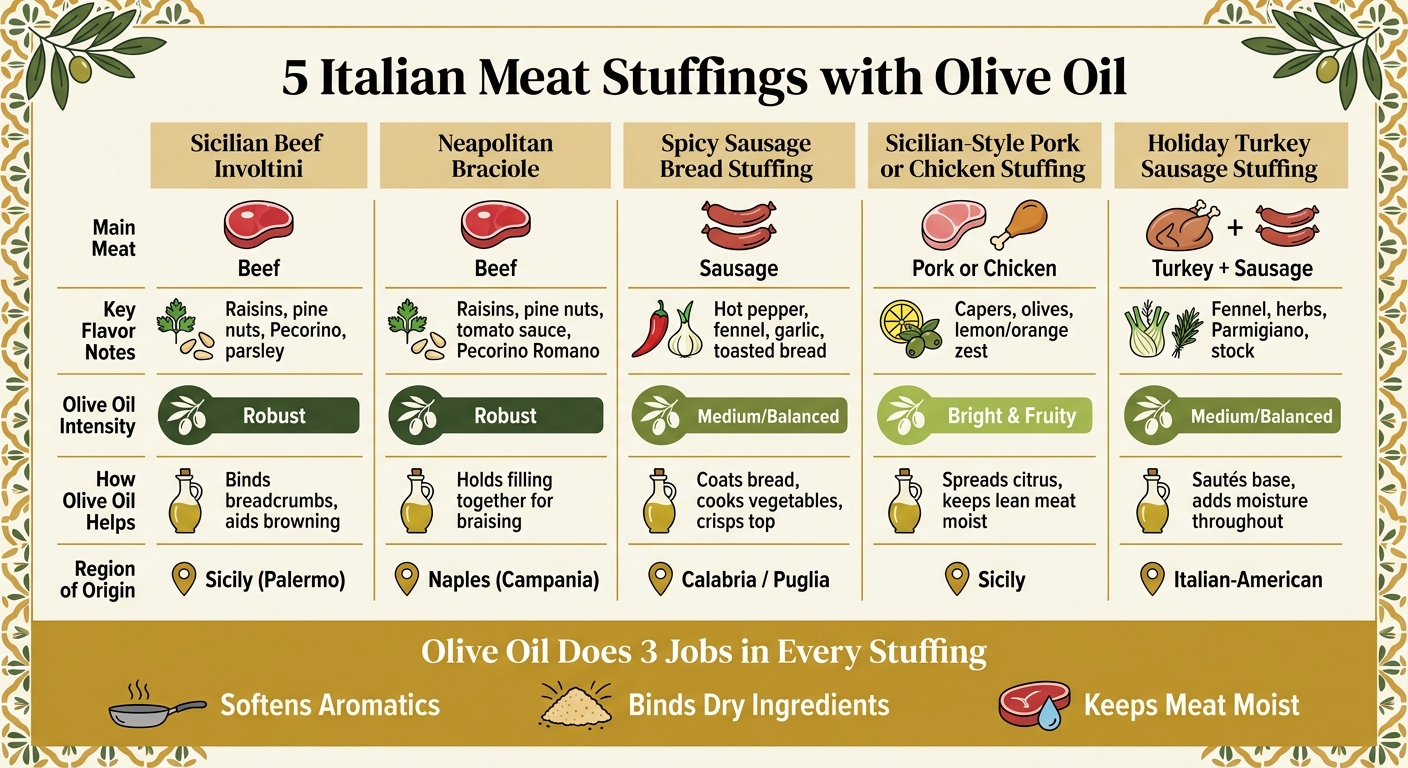
5 Italian Meat Stuffings with Olive Oil: Regional Comparison Guide
2826 Stuffed Veal Rolls, Sicilian Style
sbb-itb-4066b8e
Quick Comparison
| Stuffing | Main Meat | Main Flavor Notes | How olive oil helps |
|---|---|---|---|
| Sicilian Beef Involtini | Beef | Raisins, pine nuts, cheese, parsley | Binds breadcrumbs and helps browning |
| Neapolitan Braciole | Beef | Raisins, pine nuts, tomato sauce, Pecorino | Holds filling together for braising |
| Spicy Sausage Bread Stuffing | Sausage | Heat, fennel, garlic, toasted bread | Coats bread, cooks vegetables, finishes top |
| Sicilian-Style Pork or Chicken Stuffing | Pork or chicken | Capers, olives, lemon/orange zest | Spreads citrus and keeps lean meat moist |
| Holiday Turkey Sausage Stuffing | Turkey with sausage stuffing | Fennel, herbs, cheese, stock | Sautés the base and adds moisture |
If I had to sum it up in one line, it’s this: the stuffing changes by region, but olive oil keeps the texture and flavor in line every time.
What Olive Oil Adds to Italian Meat Stuffings
Extra virgin olive oil does three key jobs in a meat stuffing.
First, it gently softens onions and garlic over low to medium heat. That takes the edge off their raw bite and builds a sweeter, more blended flavor base.
Second, it helps bind looser ingredients. When you toss breadcrumbs with EVOO before mixing, they soak up moisture more evenly and hold together better when the stuffing is rolled or packed into the meat.
Third, it helps the meat stay moist. That matters a lot with lean cuts.
Chicken breast, turkey, and lean pork can dry out fast in the oven. A stuffing made with EVOO adds moisture from the inside. And if you brush a light coat of olive oil on the outside before roasting, you also get better browning while the inside stays tender.
Match the oil’s intensity to the meat:
| Oil Intensity | Best For |
|---|---|
| Robust | Beef, sausage, and bold or savory fillings |
| Medium | Pork and mixed stuffings with herbs, cheese, or cured ingredients |
| Delicate | Chicken, turkey, and lighter fillings where balance is the goal |
Once you’ve picked the oil style, the cooking method matters just as much. Sauté the aromatics in olive oil, then toast the breadcrumbs in the same pan. It’s a simple move, but it builds flavor without making the filling oily.
Let the crumbs cool a bit, then mix in the rest of the ingredients. If the filling seems dry, add a small drizzle of EVOO to bring it together. Big Horn Olive Oil's ultra-premium EVOO fits these stuffing styles.
Those choices play out in different ways in the five recipes below.
1. Sicilian Beef Involtini with Olive Oil Breadcrumbs
In Sicily, this dish leans on a sweet-and-savory breadcrumb filling to turn thin slices of beef into something rich and tender. Sicilian beef involtini are rolled, browned, and then braised until soft. The dish comes from Palermo and other coastal parts of Sicily, where cooks long used bread, raisins, and nuts to stretch a small amount of meat a bit further.
What gives the filling its Sicilian stamp is that push and pull between sweet and salty. The usual mix brings together fine dry breadcrumbs, grated Pecorino or caciocavallo, raisins, pine nuts, garlic, and chopped fresh parsley. The raisins bring sweetness, the pine nuts add a soft crunch, and the cheese adds salt and depth.
The part that matters most is how the EVOO works with the crumbs. Drizzle in just enough so the breadcrumbs clump lightly. That touch of olive oil helps balance the raisins and cheese without making the stuffing feel dense or greasy.
For every 1 pound of thinly sliced beef, use about 1 to 1½ cups of breadcrumbs, 2 to 3 tablespoons of EVOO, ¼ cup grated Pecorino or caciocavallo, 2 tablespoons each of raisins and pine nuts, and a handful of chopped parsley. Spread a thin layer over each slice, roll them up tight, and secure with toothpicks.
Then brown the rolls in 2 to 3 tablespoons of EVOO over medium-high heat for about 2 to 3 minutes. Move them to a tomato-onion sauce and braise at 325–350°F for 30 to 45 minutes, until the beef is tender and the sauce turns rich and clingy.
That same olive-oil logic shifts into a pork-and-chicken profile in the next stuffing.
2. Neapolitan Braciole with Raisin and Pine Nut Stuffing
If Sicilian involtini show what olive oil can do with breadcrumbs, Neapolitan braciole takes that same idea and moves it into a beef roll simmered in tomato sauce. Braciole alla napoletana are thin slices of beef filled with a sweet-salty stuffing, then cooked low and slow in sauce. The filling is what gives the dish its Neapolitan character.
The classic stuffing uses raisins, pine nuts, garlic, parsley, and grated Pecorino Romano, or a mix of Pecorino and Parmigiano-Reggiano, with breadcrumbs to give it shape. Extra virgin olive oil brings the mixture together for the braise, using about 1/4 cup per 2 pounds of beef. The flavor turns on contrast: raisins soften the salty edge of the cheese, while pine nuts bring a gentle crunch. Toast the pine nuts lightly before mixing them in. The texture should be spreadable and slightly grainy, not wet or pasty. A good target is about 1/3 cup golden raisins and 1/3 cup pine nuts per 2 pounds of beef.
For the meat, use top round or flank steak pounded to 1/8 to 1/4 inch thick. Spread the filling in a thin layer, leave a border around the edges, roll the meat tightly, and secure it with toothpicks or kitchen twine. Go easy on the filling. Breadcrumbs swell as they take on moisture, and too much can split the rolls. Keep the tomato sauce at a moderate simmer so the braciole stay together.
That mix of bread, cheese, and olive oil helps the rolls stay tender during the braise. Big Horn Olive Oil's Ultra Premium EVOO works well in this breadcrumb-based filling.
3. Spicy Italian Sausage and Olive Oil Bread Stuffing
After the rolled beef dishes above, this recipe moves into bread-based stuffing, with a spicier southern Italian angle. It pulls from Calabria and Puglia, where hot sausage, stale bread, and EVOO are pantry staples. In Calabria, pork sausage seasoned with peperoncino, fennel seed, and garlic is often cooked with stale bread. That’s the basic pattern this stuffing follows.
EVOO plays a part at every stage. Toss the bread cubes with 3–4 tablespoons of EVOO, then toast them at 300–325°F for 12–20 minutes so they soak up broth evenly without getting soggy. Brown the sausage in 2–3 tablespoons of olive oil, then use the drippings left in the pan to cook the onion, celery, and garlic. Before baking, drizzle 1–2 more tablespoons of robust EVOO over the top to help form a crisp, golden crust. Big Horn Olive Oil's Ultra Premium EVOO is a good match for that last drizzle.
Once the bread is toasted and the sausage is browned, bring it all together with broth and eggs. Whisk 2 eggs into 2–3 cups of low-sodium chicken broth, then pour the mixture over the bread and sausage, tossing until the bread is evenly moistened but not saturated.
Use hot Italian sausage seasoned with crushed red pepper, fennel seed, garlic, and black pepper. If you want more Calabrian heat, stir in a spoonful of Calabrian chili paste. It adds a fruity, smoky kick that pairs well with the sausage and olive oil. Taste the mixture before adding the eggs, then adjust with chili flakes or salt if needed. Fold in 1/4–1/2 cup grated Pecorino Romano or Parmesan and chopped parsley, then finish with a toasted breadcrumb topping for crunch.
4. Sicilian-Inspired Pork or Chicken Stuffing with Capers, Olives, and Citrus
This pork or chicken stuffing leans on olive oil to carry the bold, salty-sunny mix that shows up so often in Sicilian cooking. Classic dishes such as pollo alla siciliana use that same balance, pairing meat with capers, olives, lemon or orange zest, and generous extra virgin olive oil. The result is a stuffing that tastes bright, savory, and well-balanced.
EVOO brings a fruity note, helps spread the garlic and citrus zest, and keeps lean pork or chicken from drying out. Plan on about 2 to 4 tablespoons of EVOO per pound of meat, then adjust until the mixture looks moist and slightly glossy. A robust, fruit-forward Ultra Premium EVOO from Big Horn Olive Oil pairs especially well with the briny ingredients in this style.
For the base, mix 1 pound of ground pork or chicken with 1 to 2 cups of dry breadcrumbs, 1 beaten egg, and a few tablespoons of chicken broth. The breadcrumbs and egg help turn the mixture into a moist stuffing that slices cleanly after baking. Grated Pecorino Romano or Parmigiano can add a salty, savory edge that fits nicely with the citrus and capers.
Capers and olives are what give this stuffing its unmistakably Sicilian feel. Capers bring a sharp, floral brininess, while olives - especially firm green kinds like Castelvetrano - add a buttery, savory note. Use about 2 to 4 tablespoons of chopped brined capers and 1/2 to 1 cup of chopped green or black olives per pound of meat. Chop both fairly fine so the flavor runs through the whole stuffing instead of landing in random bursts. If sodium is a concern, rinse the capers before adding them.
Citrus pulls the whole thing together. Add the zest of 1 lemon or orange per pound of meat, then mix in 1 to 3 tablespoons of juice to taste. Stirring the zest into the EVOO first helps spread those aromatic oils more evenly through the stuffing. Bake at 350°F until the stuffing is hot and fully set and the meat reaches a safe internal temperature: 160°F for pork or 165°F for chicken. Let it rest for 10 to 15 minutes before slicing. That briny-citrus profile carries straight into the holiday turkey stuffing in the next recipe.
5. Holiday Turkey with Italian Olive Oil Sausage Stuffing
This version takes that same olive-oil approach and brings it straight to the Thanksgiving table. The result is an Italian-American stuffing with a fennel-forward profile that pairs well with turkey. At the center is Italian sausage seasoned with fennel, browned and crumbled, then mixed with onion, celery, and garlic sautéed in EVOO. The olive oil softens the vegetables and helps carry the sausage and herbs through the whole stuffing.
A two-step olive-oil sauté adds more depth. First, cook the vegetables in EVOO. Then brown the sausage and deglaze the pan with white wine. That wine lifts the browned bits from the bottom and adds another layer of flavor to the base.
Once that base is ready, the bread should hold together without turning dense. Mix the cooled sausage and vegetables with day-old bread cubes, 1 beaten egg per 4 to 5 cups of bread, and only enough stock to moisten. Fold in Parmigiano Reggiano, then spoon the stuffing loosely into the turkey cavity.
The Italian flavor comes from fennel seed, parsley, oregano, red pepper flakes, and Parmigiano or Pecorino. If you want more texture, add pine nuts, sun-dried tomatoes, or olives. A bold, peppery EVOO fits this stuffing well, bringing fruitiness and a peppery finish.
USDA safe target: 165°F at the center of the stuffing. If you want a lighter texture, bake it first in a lightly oiled casserole, then move it to the turkey for the last 30 to 45 minutes at 325°F to 350°F.
Olive Oil Pairing Notes by Stuffing Style
Use this as a last quick guide for matching each stuffing with the right olive oil intensity. These pairings stick with the same Sicily, Naples, and Italian-American flavor patterns used across the recipes.
| Stuffing Style | Best EVOO Profile | Why It Works | Example Olive Oil Type |
|---|---|---|---|
| Sicilian Beef Involtini with Olive Oil Breadcrumbs | Robust | Cuts through rich beef and savory filling | A robust, peppery EVOO |
| Neapolitan Braciole with Raisin and Pine Nut Stuffing | Robust | Holds up through long braising without fading | A robust single-varietal EVOO |
| Spicy Italian Sausage and Olive Oil Bread Stuffing | Medium/Balanced | Adds fruitiness without dulling the sausage and herbs | A balanced, medium-intensity EVOO |
| Sicilian-Inspired Pork or Chicken Stuffing with Capers, Olives, and Citrus | Bright, fruity | Amplifies citrus zest and lifts the brininess of capers and olives | A green, herb-forward EVOO |
| Holiday Turkey with Italian Olive Oil Sausage Stuffing | Medium/Balanced | Blends into the sausage and herb base without overpowering | A balanced, medium-intensity EVOO |
One thing to keep in mind: heat softens olive oil's aroma and flavor. So if you're making a braise or a baked stuffing, a more assertive EVOO tends to hold its own better.
Conclusion
Olive oil does a lot more than add richness to Italian meat stuffings. It softens breadcrumbs, helps hold the filling together, keeps the meat tender, and brings in that herb-and-garlic flavor people expect. Across the five regional styles covered here, those jobs stay the same, but the way they show up changes from one recipe to the next.
Each recipe also points to a different regional role for EVOO, from bright Sicilian fillings to richer holiday stuffing. So the next move is simple: pick an EVOO that matches the strength of the filling.
Look for a fresh EVOO with a visible harvest date and packaging in dark glass or a metal tin. Good extra virgin olive oil should taste fresh, peppery, and lightly bitter, not flat. Big Horn Olive Oil offers fresh harvest EVOO sets that work well across all five stuffing styles. With the right bottle, each stuffing keeps its regional character.
Choose the stuffing that fits the meal, and let fresh EVOO carry the flavor.
FAQs
Can I make these stuffings ahead?
Yes - you can prep these meat stuffings ahead of time.
In fact, doing the seasoning and marinating early often helps the flavor soak in better.
If you're using olive oil-based rubs or marinades, larger cuts can sit in the refrigerator for up to 24 hours. After cooking, let the stuffed meat rest for 15 to 20 minutes before serving so it stays moist and tender.
How do I keep the stuffing from drying out?
Focus on moisture and temperature. If you're making a stew or braise, keep the lid on so the meat holds onto more moisture. If you're roasting, use 1–2 tablespoons of Big Horn Olive Oil per pound of meat. That light coating forms a barrier that helps the meat stay moist.
It also helps to leave the meat alone once it’s cooking. Flipping it too often can disturb the coating and make the meat dry out. Steady temperature control goes a long way here, helping the meat stay tender and full of flavor.
Which olive oil is best for each meat?
Choose olive oil based on how strong the meat tastes. Bold, peppery extra virgin olive oils like Picual or Coratina pair well with richer meats like beef and lamb.
For chicken, veal, or pork, go with milder, fruitier oils like Arbequina or Lametia. They add richness without taking over the dish. Garlic- or herb-infused oils are also a good fit for poultry, lamb, or roasted meats.