

Ultimate Guide to Roasting Meat with Olive Oil
Yes - you can roast meat with olive oil, and for most home ovens, it works well. The short version: dry the meat first, use a light coat of oil, match the oil to the meat, and trust a thermometer over cook time.
If I wanted the whole article in one quick read, I’d boil it down to this:
- Olive oil helps meat brown and slows the surface from drying out too fast.
- EVOO works for most roasting, while light/refined olive oil fits higher-heat cooking.
- Chicken likes milder oil, while beef and lamb can handle stronger olive flavor. Pork sits between the two.
- Use about 1 to 2 tablespoons of olive oil per pound for an even coat.
- Safe target temps matter most:
- Chicken: 165°F
- Beef, pork, lamb roasts: 145°F, then rest at least 3 minutes
- Common roast issues are simple to fix:
- Smoke: oven too hot or oil not suited for the heat
- Pale meat: surface too wet or too much oil
- Dry meat: overcooked or not rested
My main takeaway: olive oil is not just for flavor. It helps with browning, seasoning, moisture control, and finishing.
| Meat | Best Oil Style | Good Flavor Pairings | Target Temp |
|---|---|---|---|
| Chicken | Mild to medium EVOO | Lemon, garlic, thyme | 165°F |
| Beef | Stronger EVOO or light olive oil for high heat | Rosemary, garlic, black pepper | 145°F |
| Pork | Mild to medium EVOO | Garlic, sage, rosemary | 145°F |
| Lamb | Stronger EVOO | Garlic, rosemary, lemon, cumin | 145°F |
One more point: pull the meat 2°F to 5°F early, then let it rest so carryover heat can finish the job.
That’s the full article in plain English: pick the right oil, keep the coat thin, roast to temperature, and finish with a little olive oil at the end if you want more olive flavor.
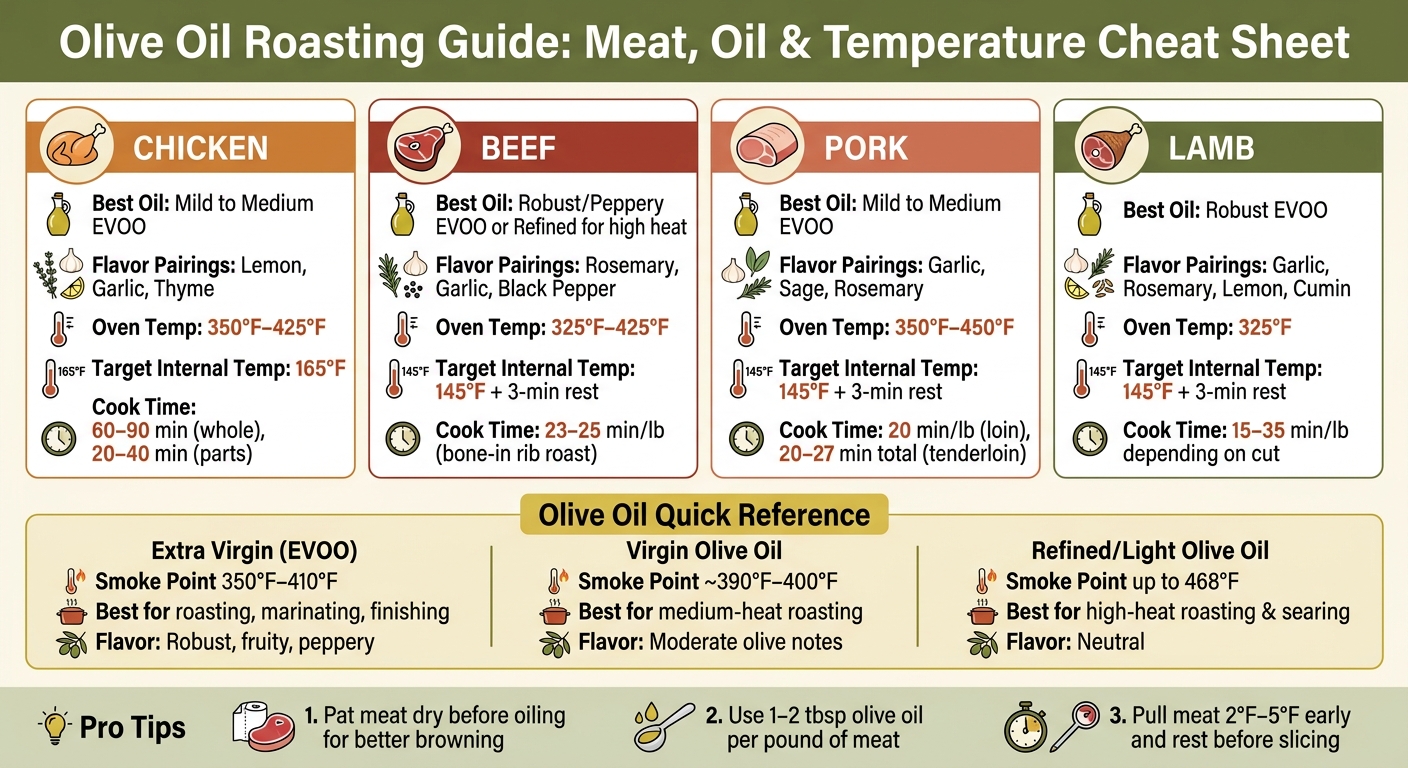
Olive Oil Roasting Guide: Meat, Oil & Temperature Cheat Sheet
Perfect Roasted Turkey with Olive Oil
sbb-itb-4066b8e
How Olive Oil Works in Roasting
In the oven, olive oil does a few jobs at once. It helps meat brown, keeps it from drying out as fast, and helps seasoning stick to the surface. It also helps heat move more evenly across the meat, while forming a thin layer that slows moisture loss. That sets the stage for Maillard browning and a better crust.
One small step makes a big difference: pat the meat completely dry before you add oil. If the surface is wet, browning slows down until that moisture cooks off.
Types of Olive Oil and When to Use Each
When you're roasting meat, three types of olive oil matter most. EVOO works for most roasting and finishing. Virgin olive oil fits moderate heat. Refined or light olive oil is the better pick for higher heat when you want a more neutral taste.
The goal is simple: match the oil's flavor strength to the meat.
Smoke Point, Stability, and Oven Safety
Smoke point gets a lot of attention, but it isn't the whole story. Stability matters more.
EVOO has a high level of monounsaturated fats and natural antioxidants, which help it hold up under heat. That's why it works well for most oven roasting. So when you choose an olive oil, look at both the cooking temperature and the flavor you want, not smoke point alone.
| Olive Oil Type | Typical Smoke Point (°F) | Best Uses With Meat | Flavor Intensity |
|---|---|---|---|
| Extra Virgin (EVOO) | 350°F – 410°F | Roasting, marinating, finishing | Robust: fruity, peppery, herbal |
| Virgin | ~390°F – 400°F | Medium-heat roasting, robust meat dishes | Moderate: natural olive notes |
| Refined / Light | Up to 468°F | High-heat roasting, searing, neutral browning | Neutral: lets meat flavor lead |
For high-heat roasting, filtered olive oil is the safer bet. Unfiltered oils have tiny bits of olive pulp, and those particles can burn and smoke at lower temperatures.
Why Fresh Ultra Premium EVOO Makes a Difference
Fresh olive oil tends to do better in the oven. Higher polyphenol levels help protect the oil as it heats up, and they also give the roast a cleaner, more defined flavor.
Big Horn Olive Oil's Ultra Premium EVOO includes single-varietal options like Picual and Coratina. Both are high in polyphenols and pair well with bold meats like beef and lamb. Infused oils, such as garlic or rosemary, can handle the oil-and-aromatics job in one step. Just watch the heat, since any solid bits can burn more easily at higher temperatures.
A final drizzle of fresh EVOO after roasting adds uncooked olive flavor right on top of the meat.
Picking the Right Olive Oil and Seasonings for Each Meat
Pairing Oil Intensity With Chicken, Beef, Pork, and Lamb
Once you’ve picked the extra virgin olive oil type, the next step is simple: match the oil’s strength to the meat and seasoning. A light oil fits chicken. A bolder oil works better with beef and lamb. Pork sits in the middle.
Chicken usually works best with a mild to medium EVOO. Poultry has a softer flavor, so a strong, peppery oil can take over fast. Beef and lamb have enough richness to handle a bold EVOO without getting lost. Pork needs a middle-ground approach: mild, fruit-forward oils suit lean cuts, while richer cuts can take a stronger oil.
| Meat | EVOO Intensity | Notes |
|---|---|---|
| Chicken | Mild to Medium | Keeps the delicate flavor intact |
| Pork (lean cuts) | Mild, fruit-forward | Subtle fruity notes complement pork well |
| Pork (shoulder/fattier cuts) | Medium to Robust | Richer fat content handles bolder oil |
| Beef | Robust / Peppery | Matches the meat's depth |
| Lamb | Robust | Complements lamb's earthy flavor |
Building Flavor With Herbs, Garlic, Citrus, and Infused Oils
The same rule applies to seasonings. Keep poultry bright, beef and lamb bold, and pork balanced.
For chicken, lemon, garlic, and thyme are dependable starting points. Beef pairs well with rosemary, black pepper, and garlic. For pork, garlic, rosemary, sage, or fruit-leaning notes all fit nicely. Lamb works especially well with rosemary, lemon, garlic, and cumin.
Infused oils can help when that herb or citrus note belongs in the roast itself. Just watch the heat. Added aromatics can burn if the temperature runs too high.
Using Olive Oil in Rubs, Marinades, and Herb Pastes
Once the oil and flavor direction are set, use the oil as the binder. Olive oil helps salt, spices, and herbs cling to the meat and spread in an even layer.
A simple paste can be as basic as olive oil, garlic, salt, pepper, and the herbs that fit the meat. Use about 1 to 2 tablespoons of olive oil per pound of meat - enough to coat the surface evenly without making it slick or greasy. Rub it in with your hands or use a pastry brush, and don’t skip the underside of the roast.
In marinades, oil helps slow surface drying during roasting. That matters most with lean cuts, which can dry out fast. Salt at least 30 minutes ahead, or go 24 to 48 hours ahead if you want deeper seasoning, so the salt and moisture have time to redistribute for better flavor.
Core Roasting Method and Meat-Specific Guidelines
The Basic Olive Oil Roasting Workflow
Start by patting the meat dry. Then rub on a light coat of fresh extra virgin olive oil and add your seasoning so the salt and herbs stick well. Set the meat on a rack, or place it over vegetables, so hot air can move around it. Preheat the oven all the way before the roast goes in. That helps it cook more evenly and brown better.
About halfway through roasting, take a look at the color and browning. When the meat is done, let it rest before carving. Give poultry 10 to 15 minutes, and red meats at least 3 minutes, so the juices stay in the meat instead of running onto the cutting board.
Once the roast is ready for the oven, let time guide you, but let internal temperature make the final call.
Roasting Times and Target Internal Temperatures
These cut-by-cut numbers are a good starting point. Still, the safest way to judge doneness is by internal temperature.
| Meat Type | Common Cut | Oven Temp (°F) | Approximate Time | Target Internal Temp (°F) |
|---|---|---|---|---|
| Chicken | Whole (3–4 lbs) | 350°F–425°F | 60–90 minutes | 165°F |
| Chicken | Thighs / Parts | 375°F–400°F | 20–40 minutes | 165°F |
| Beef | Rib Roast (bone-in) | 325°F | 23–25 min/lb | 145°F + 3-min rest |
| Beef | Tenderloin (whole) | 425°F | 45–60 minutes total | 145°F + 3-min rest |
| Pork | Loin Roast | 350°F | 20 min/lb | 145°F + 3-min rest |
| Pork | Tenderloin | 425°F–450°F | 20–27 minutes total | 145°F + 3-min rest |
| Lamb | Leg (bone-in) | 325°F | 15–25 min/lb | 145°F + 3-min rest |
| Lamb | Shoulder Roast | 325°F | 30–35 min/lb | 145°F + 3-min rest |
Here’s one thing people often miss: boneless roasts usually need more minutes per pound than bone-in cuts. A boneless beef rib roast, for instance, takes 28 to 33 minutes per pound, while the bone-in version takes 23 to 25 minutes per pound. It also helps to pull the meat when it's 2 to 5°F below the final target. Resting heat will carry it the rest of the way.
How the Method Changes for Chicken, Beef, Pork, and Lamb
Chicken does well with EVOO both under the skin and over the outside, which helps the skin crisp up. Trussing with kitchen twine helps the breast and thighs finish closer together instead of one part lagging behind. To check doneness, test the thickest part of the thigh and stay clear of the bone.
Beef pairs nicely with an herb paste made from olive oil, garlic, cracked pepper, and rosemary. That mix helps move those flavors across the roast as it cooks.
Pork is a strong match for olive oil, especially on lean cuts like tenderloin. In that case, the oil works like a light shield that slows moisture loss in the oven.
Lamb and olive oil are a natural match, especially with garlic, rosemary, and lemon. Use those in the marinade. From there, switch to higher heat and a finishing coat of oil only if the roast needs more color.
Advanced Techniques, Troubleshooting, and Key Takeaways
High-Heat Roasting, Searing, and Finishing With EVOO
Once the roast goes into the oven, the last bit of improvement comes from heat control, the oil you use at the end, and a few quick fixes when things go sideways. EVOO works well for moderate roasting. For high-heat roasting or searing, switch to refined or light olive oil.
For stovetop searing, bring the pan up to heat slowly, then add the oil once the pan is ready. A heavy-bottomed pan or cast iron skillet works best here. Sear each side for 1 to 3 minutes, then move the meat to the oven to finish.
After the meat has rested, drizzle on a fresh, high-polyphenol EVOO. That final layer helps bring back the fruity or peppery notes that can fade during high-heat cooking.
Fixing Smoke, Dryness, and Poor Browning
Most roast problems trace back to a small mistake, and most of them are easy to fix.
| Issue | Cause | Oil Fix | Other Fix |
|---|---|---|---|
| Smoke | Oil past smoke point; unfiltered particles burning | Use refined/light olive oil or filtered EVOO | Lower oven or burner temperature immediately |
| Pale Surface | Surface moisture; too much oil; no initial high heat | Apply a thin, even coat with a brush | Start at 450°F for the first 10 to 15 minutes, then lower heat |
| Dry Interior | Overcooking | Apply olive oil before roasting to slow surface evaporation | Pull at the correct internal temperature; rest 15 to 30 minutes before slicing |
| Bitter Flavor | Oil degraded; herbs scorched | Reserve fresh EVOO for finishing rather than the hottest part of the cook | Add fresh herbs and garlic in the final minutes or as a garnish |
| Greasy Surface | Too much oil applied | Use a thinner coat and roast on a rack so excess oil drips away | - |
Key Takeaways for Better Roasts
At this point, it’s mostly about doing the small things well every time. Pat the meat dry. Use a light coat of oil. Roast at the right temperature. Check the internal temperature instead of guessing. Let the meat rest before slicing, then finish with fresh EVOO.
Do that, and olive oil won’t just sit on the surface. It becomes part of the roast’s flavor, crust, and final touch.
FAQs
Can I use olive oil for every type of roast?
Yes. Olive oil works well for roasting beef, chicken, pork, lamb, and veal.
For the best result, match the oil to your oven temperature and the flavor you want. Extra virgin olive oil works well for most roasting in the 350°F to 425°F range. It can add more aroma and help the meat stay moist. If you want a different taste, infused oils like Big Horn Olive Oil’s Tuscan Herb or Garlic varieties can work well too.
How do I keep meat from smoking or burning in the oven?
Keep your oven temperature within your oil’s heat range, which is usually 375–410°F. If you’re using Big Horn Olive Oil with a 410°F smoke point, stay at or below that mark.
Before you add oil, pat the meat dry. Then set it on a roasting rack so air can move around it and the drippings are less likely to burn. It also helps to use a meat thermometer, so you can track the cook without opening the oven door and letting heat escape.
Should I oil the meat before roasting or after?
For the best results, use olive oil at more than one stage. Start by coating the meat with high-quality Big Horn Olive Oil before roasting. That helps it hold onto moisture, brown more evenly, and develop a crisp crust.
You can also baste the meat as it cooks to build flavor and help keep it tender. Then, after it rests, add a light drizzle on top to bring out the aroma and flavor.