

How to Make Italian Poached Fish
Acqua Pazza, or "crazy water", is a simple yet flavorful Southern Italian dish where white fish is gently poached in a broth made with tomatoes, garlic, white wine, and olive oil. Originating from the Amalfi Coast, this recipe highlights fresh ingredients and straightforward preparation techniques.
Key Steps:
- Prepare the Broth: Sauté shallots and garlic in extra virgin olive oil, add cherry tomatoes, white wine, and water or fish stock, then simmer gently.
- Choose the Fish: Use firm, white fish like cod, halibut, branzino, or haddock. Avoid oily or delicate fish.
- Poach the Fish: Place the fish in the broth, maintain a low simmer (around 180°F), and cook until the fish is opaque and flakes easily.
- Serve: Plate with toasted garlic crostini, ladle broth over the fish, and finish with fresh herbs and a drizzle of high-quality olive oil.
Tips:
- Use high-quality extra virgin olive oil for the best flavor and texture.
- Avoid boiling the broth to keep the fish tender.
- Serve with crusty bread to soak up the broth.
This dish is a celebration of simplicity and fresh flavors, perfect for a light yet satisfying meal.
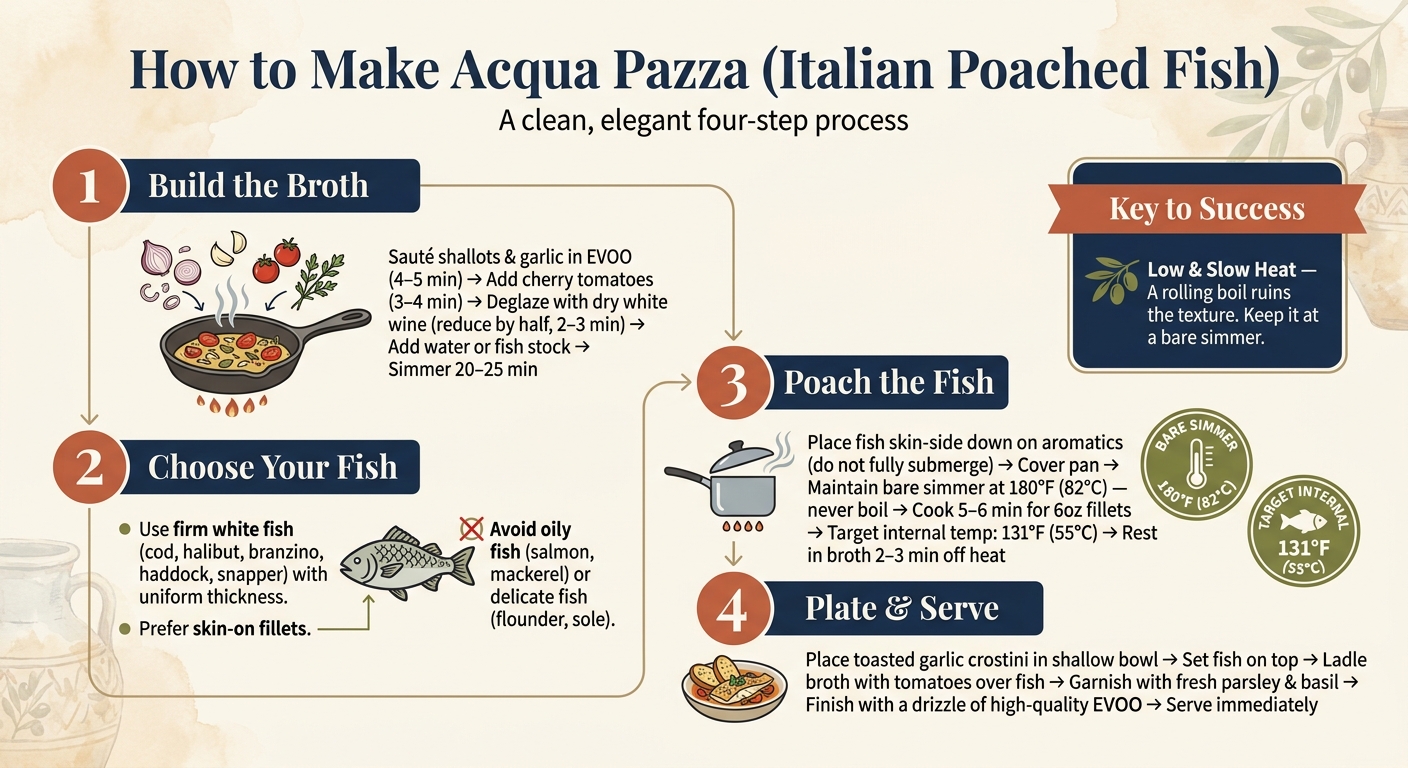
How to Make Acqua Pazza: Italian Poached Fish Step-by-Step
How to Make Pesce all’acqua Pazza (Southern Italian-Style Poached Fish)
sbb-itb-4066b8e
Ingredients for Acqua Pazza
Acqua Pazza relies on a handful of simple ingredients, each playing a crucial role in creating its distinct flavor.
Broth Ingredients
The poaching broth is a blend of high-quality extra virgin olive oil, garlic, shallots, cherry tomatoes, dry white wine, water or fish stock, salt, crushed red pepper, and fresh parsley. As the cherry tomatoes cook, they soften and release their natural sweetness and acidity, which not only enhances the broth’s flavor but also gently tenderizes the fish. A bold dry white wine, like Chardonnay, adds depth and complexity that plain water just can’t replicate.
Extra virgin olive oil is essential for sautéing the aromatics and giving the broth a rich, velvety texture. As CucinaBot from I Love Italian Food explains:
"The olive oil emulsifies with the broth to create a silky mouthfeel that carries flavor efficiently across the palate."
This attention to quality reflects the heart of Italian cooking, where even the simplest dishes rely on premium ingredients. For an exceptional olive oil, consider Big Horn Olive Oil, which offers an Ultra Premium EVOO, cold-pressed within two hours of harvest, for just $8.99.
With the broth ready, the next step is selecting the perfect fish to complement these flavors.
How to Choose the Right Fish
For Acqua Pazza, firm, white fish that hold their shape during poaching work best. Popular options include cod, haddock, halibut, or branzino. As Nagi, founder of RecipeTin Eats, notes:
"This dish works best with fairly firm white fish fillets that are not too thick."
To ensure even cooking, select fillets with uniform thickness. Skin-on fillets are ideal since the skin provides natural support, helping the fish stay intact while it cooks.
Here’s a quick guide to help you choose the right fish:
| Use | Avoid |
|---|---|
| Cod, Halibut, Branzino, Snapper | Salmon, Mackerel, Trout (too oily) |
| Haddock, Sea Bass, Barramundi | Flounder, Sole, Plaice (too delicate) |
| Pollock, Tilapia, Bream | Swordfish, Tuna (dry out easily) |
How to Make the Acqua Pazza Broth
With your fish chosen, the next step is crafting the perfect broth. The idea here is to create a light, aromatic base - not something heavy or sauce-like. As I Love Italian Food explains:
"The broth should be light and fragrant, not thick or sauce-like."
Sauté the Aromatics in Olive Oil
Start by heating extra virgin olive oil (EVOO) in a wide skillet over medium heat. Add finely chopped shallots and sauté for about 4 minutes until they turn translucent. Then, add minced garlic and cook for another 1–2 minutes until it releases its aroma. Be careful not to let the garlic burn, as it can turn bitter.
Using high-quality EVOO here can elevate the dish. For example, Big Horn Olive Oil offers an Ultra Premium EVOO, cold-pressed within two hours of harvest, for $8.99. Its fresh, fruity flavor holds up beautifully when heated gently.
Deglaze and Build the Broth
Once the aromatics are softened, it's time to add the tomatoes and wine. Toss in halved cherry tomatoes and cook for 3–4 minutes, letting their juices release. Turn up the heat slightly, pour in dry white wine, and let it simmer for 2–3 minutes until reduced by half. As Nagi from RecipeTin Eats suggests:
"Using a bolder white wine is an excellent option here to pack complexity and depth of flavour into this simple dish."
After the wine has reduced, stir in either water or fish stock. Lower the heat and let the broth simmer gently for 20–25 minutes. If some tomatoes remain intact, gently press them with the back of a wooden spoon to release their juices into the broth.
Season the Broth
Once the broth has simmered, it’s time to season. Add sea salt and red pepper flakes to taste. For an extra layer of flavor, toss in a few parsley or basil stems while the broth simmers, but make sure to remove them before adding the fish. The acidity from the tomatoes and wine naturally enhances the flavor, so season gradually and taste as you go. Now, your broth is ready for the next step: poaching the fish.
How to Poach the Fish
With your broth seasoned and ready, the next step is poaching the fish. The key? Gentle heat and a little patience to avoid a dry, rubbery texture.
Add the Fish to the Broth
Carefully place the fish fillets on top of the tomatoes and aromatics, ensuring the skin side touches the broth. Don’t fully submerge the fillets; they should rest on the chunky tomatoes and aromatics, with just the bottom part in the liquid. This setup allows the bottom to poach in the broth while the top steams under a lid. Cover the pan securely using a lid, foil, or even a baking tray. To keep the fish moist and evenly cooked, occasionally spoon the hot broth over the fillets. At this stage, controlling the temperature is crucial for flawless poaching.
Keep the Broth at a Low Simmer
Maintaining a gentle simmer is non-negotiable. As I Love Italian Food notes:
"Maintain a bare simmer (around 180°F/82°C) - never allow the liquid to boil vigorously."
A rolling boil will tighten the fish proteins, leaving the texture tough and dry. Instead, aim for a barely moving surface with a few gentle bubbles. If the heat gets too high, lower the burner immediately.
For extra precision, Adam Ried from America's Test Kitchen suggests a clever finishing technique:
"To ensure perfectly cooked fillets, I poached them over low heat until they were nearly done and then slid the pan off the burner to finish them at a gentler pace."
This method uses residual heat to finish cooking, reducing the risk of overcooking. Once the fish is nearly done, it’s time to test for doneness.
Check the Fish for Doneness
For fillets weighing about 6 ounces, cooking takes 5–6 minutes, while a whole fish (1–1.5 pounds) needs 8–10 minutes. The target internal temperature is 131°F (55°C). Nagi, founder of RecipeTin Eats, explains:
"Check until the internal temperature is 55°C/131°F. This is medium which is when the fish is just cooked with no rare/raw parts left, optimum moistness."
If you don’t have a thermometer, look for the flesh to turn completely opaque. Test the thickest part with a fork; it should flake easily. Once the fish reaches this point, remove the pan from the heat and let it rest in the hot broth for 2–3 minutes. This brief resting period allows the heat to distribute evenly, preserving the fish’s perfect texture.
Serving and Finishing the Dish
Carefully lift the fish out of the broth and plate it right away. This ensures the fish stays moist while the broth retains its vibrant flavor.
How to Plate Acqua Pazza
Use shallow bowls or deep plates to hold the broth and showcase the dish beautifully. For a classic Italian flair, start by placing two slices of toasted garlic crostini at the bottom of the bowl. Spoon a bit of the hot broth over the crostini to let them absorb some of that delicious liquid. Then, gently set the fish on top, keeping the fillets intact.
Afterward, ladle the chunky sauce - complete with cherry tomatoes and aromatics - over and around the fish. In Italian cuisine, the broth is just as important as the fish. And don’t forget the bread! Using it to soak up the broth, a practice called fare la scarpetta, is a beloved tradition.
"The best part is the crispy garlic crostini hidden under the fish that soaks up all that delicious sauce." - Nagi, Recipe Author
Once the fish and sauce are arranged, it’s time for the finishing touches to elevate both the flavor and presentation.
Garnish and Final Olive Oil Drizzle
To keep the herbs fresh and aromatic, stir in chopped flat-leaf parsley and torn basil after removing the dish from the heat. Then, for the final flourish, drizzle some high-quality extra virgin olive oil over the fish and broth. As CucinaBot from I Love Italian Food explains:
"The olive oil emulsifies with the broth to create a silky mouthfeel that carries flavor efficiently across the palate."
A medium-profile extra virgin olive oil with grassy notes pairs perfectly with the delicate flavor of white fish. Consider using Big Horn Olive Oil's Ultra Premium EVOO, which is cold-pressed within two hours of harvest and delivered fresh within three months. Its vibrant, natural flavor makes it an ideal choice. Lightly drizzle the oil over the fish, broth, and crostini before serving. Serve immediately to enjoy the dish at its peak.
Conclusion: Making Acqua Pazza at Home
Acqua Pazza is all about simplicity and quality. Start with fresh, firm white fish like cod or snapper, and focus on building a flavorful broth. Begin by sautéing aromatics in olive oil, reduce a splash of white wine, and allow cherry tomatoes to gently break down, creating a rich base. When it’s time to add the fish, keep the heat low - around 180°F - to ensure it cooks evenly and stays tender. This careful process lets every ingredient shine by the time it reaches your plate.
Patience is your best friend here. Resist the urge to stir or rush the cooking process.
Using high-quality extra virgin olive oil (EVOO) elevates every step, from the aromatics to the final silky broth. A premium choice, like Big Horn Olive Oil's Ultra Premium EVOO, priced at $8.99 and cold-pressed within hours of harvest, adds a clean, grassy flavor that keeps the broth vibrant and well-rounded.
Serve your Acqua Pazza immediately, accompanied by plenty of crusty bread. The Italian tradition of fare la scarpetta - using bread to soak up every last bit of broth - is not just a delightful custom but also a testament to how well your dish turned out.
FAQs
Can I make Acqua Pazza without wine?
Yes, you can absolutely prepare Acqua Pazza without wine. While many traditional recipes call for white wine, it’s not a must-have ingredient. You can swap it out with water or broth and still create a flavorful dish. Ingredients like tomatoes, garlic, and olive oil provide plenty of richness, ensuring the dish retains its character while catering to those who prefer to skip the wine.
How do I prevent poached fish from falling apart?
To keep poached fish in one piece, it’s important to cook it gently over moderate heat. Make sure the poaching liquid is simmering softly - avoid a rolling boil. Opt for firm or medium-firm white fish like sea bass or sea bream, as they hold up better during cooking. Carefully lower the fish into the liquid and cook just until it’s done. Using a slightly thick, tomato-based broth can also help support the fish’s structure and prevent it from overcooking.
What’s the best way to reheat Acqua Pazza?
The ideal way to warm up Acqua Pazza is by using the stovetop on low heat. This approach helps maintain the tender texture of the fish and keeps the broth tasting just right.
Simply move the dish to a saucepan and heat it gently, stirring now and then, until it's warmed through. Skip the microwave - it tends to heat unevenly and can mess with the dish’s texture.