

Jasmine Vinegar Pairings: Best Foods and Flavors
Jasmine vinegar is a fragrant condiment combining the depth of balsamic vinegar with the floral essence of jasmine. It works best as a finishing ingredient, enhancing the flavor of dishes without overpowering them. Here’s how to use it effectively:
- Citrus & Herbs: Pair with Meyer lemon, yuzu, basil, or mint for dressings or marinades.
- Fruits & Sweet Ingredients: Complement with honey, cherries, or caramelized glazes.
- Proteins: Ideal for fish, tofu, chicken, and scallops, adding a crisp finish.
- Seafood: Enhances salmon, shrimp, and Thai curries with its floral acidity.
- Poultry & Meats: Use in marinades or as a glaze for chicken and Moroccan tagines.
- Vegetables: Brightens eggplant, squash, and stir-fries with balanced acidity.
- Grains: Perfect for jasmine rice, sushi rice, or fried rice as a finishing touch.
Use sparingly - start with a teaspoon and adjust to taste. Pair it with high-quality olive oil for dressings or marinades. Jasmine vinegar adds a floral twist to everyday meals, making it a versatile addition to your kitchen.
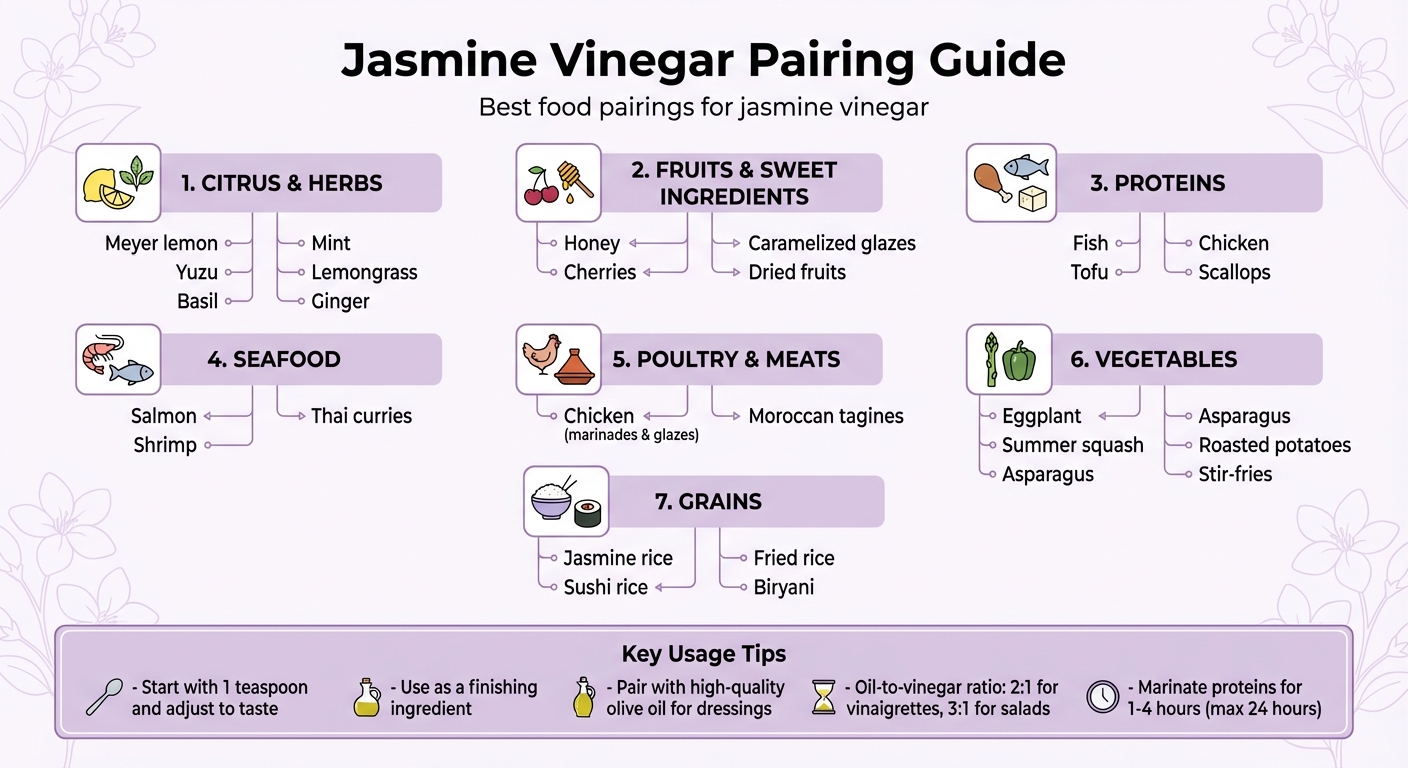
Jasmine Vinegar Food Pairing Guide by Category
Complementary Flavors for Jasmine Vinegar
Pairing jasmine vinegar with the right flavors can elevate your dishes, allowing its delicate floral notes to shine. Below are some ideal flavor combinations to bring out the best in this unique ingredient.
Citrus and Herbs
Citrus zest - like Meyer lemon, yuzu, or calamansi - and soft herbs such as basil, tarragon, and mint amplify the floral qualities of jasmine vinegar. For a subtle earthy touch, use rosemary or thyme sparingly. A classic pairing like grapefruit and rosemary creates a refreshing contrast, perfect for dressings.
Aromatics such as lemongrass and ginger also pair beautifully. To maximize the flavor of lemongrass, gently smash the stalks with the back of a knife before slicing and infusing.
Fruits and Sweet Ingredients
Sweet ingredients bring out a tangy-sweet interplay that complements jasmine vinegar's nuanced profile. Honey, in particular, adds a floral sweetness that mirrors and enhances the vinegar's character. Cherries work wonderfully to balance salty or umami flavors, especially when combined with miso. This sweet-acidic harmony is also ideal for crafting caramelized glazes in marinades for grilled proteins or roasted vegetables.
Light Proteins and Aromatics
Mild proteins like fish, tofu, chicken, and scallops pair seamlessly with jasmine vinegar, offering a crisp, wine-like finish. Aromatics such as ginger, scallions, garlic, and shallots add depth and warmth without overshadowing the vinegar's subtle sweetness. These combinations are particularly well-suited to Asian-inspired recipes.
For vinaigrettes, stick to a 2:1 oil-to-vinegar ratio to maintain balance. To elevate your dressings or marinades, consider using a premium extra virgin olive oil, such as the Ultra Premium EVOO from Big Horn Olive Oil (https://bhooc.com), for an added layer of richness and flavor.
Seafood Dishes
Jasmine vinegar brings a delicate floral acidity that enhances the natural umami of seafood while balancing out rich, fatty, or creamy components. Made from jasmine rice, this vinegar develops a fragrant profile that pairs beautifully with seafood like salmon and shrimp.
"Vinegar is really a flavor-enhancer (umami). That's why it is so often used in cooking, sauces, and salad dressings." - Pascal Baudar, Author
For a quick and flavorful seafood sauce or poaching liquid, try the 1.1.1. Method: mix 1 cup of stock, 1 tablespoon of soy sauce, and 1 tablespoon of jasmine vinegar. This simple combination enhances the natural flavors of your fish. Let’s dive into a few specific examples where jasmine vinegar truly shines.
Miso Glazed Salmon
Jasmine vinegar is a perfect addition to miso-based marinades, balancing the fermented depth of miso with its floral brightness. To make a well-rounded glaze, whisk together 1 tablespoon of jasmine vinegar, 2 tablespoons of miso paste, soy sauce, and a drizzle of sesame oil. This mixture cuts through the salmon's richness while complementing its natural sweetness.
"Miso paste is made from fermented soybeans that has a deep umami flavor with a hint of funk... The combo of savory sesame oil, rice vinegar, and miso is magic on fish." - Alyssa Rivers, Author and Recipe Developer
Marinate the salmon for 1 to 3 hours - any longer, and the acid may start to alter the fish's texture. For a polished finish, set aside a portion of the marinade before adding the raw fish. Brush this reserved marinade onto the salmon during the final minutes of broiling to add a fresh, floral layer. Since miso and soy sauce are naturally salty, jasmine vinegar boosts brightness without adding extra sodium. If you're watching your salt intake, opt for low-sodium soy sauce to keep the flavors balanced.
Jasmine vinegar isn’t just for glazes - it also works wonders in curry dishes.
Thai Green Curry Shrimp
A splash of jasmine vinegar at the end of cooking can elevate coconut milk-based curries, cutting through their richness and highlighting the shrimp’s natural sweetness. Adding the vinegar just before serving preserves its floral aromatics, which can otherwise be lost with extended heat exposure.
The vinegar’s floral notes blend seamlessly with classic Thai curry ingredients like grated ginger, garlic, and scallions, creating a harmonious flavor profile. Unlike the sharp acidity of lemon or lime juice, jasmine vinegar offers a more mellow, fermented tang with a lingering floral quality, making it a perfect match for the complex spices in green curry.
Poultry and Meat Dishes
When it comes to poultry and meat dishes, jasmine vinegar plays a dual role: tenderizing proteins and enhancing savory flavors. Its gentle acidity works wonders when paired with aromatics like ginger and garlic, creating a flavor profile that feels vibrant yet balanced. Unlike stronger vinegars, jasmine vinegar’s lighter touch complements white meats and delicate herbs without overpowering their subtle nuances.
To make the most of it, marinate poultry or meat for 30 minutes to a few hours - but don’t go beyond 24 hours, as too much acid exposure can lead to mushy textures. Before cooking, pat the meat dry to ensure a good sear. If you want to soften the vinegar’s sharpness, try whisking in a bit of honey or brown sugar. These steps create the foundation for dishes that highlight jasmine vinegar’s unique qualities.
Grilled Lemongrass Chicken
Grilled lemongrass chicken is a perfect example of how jasmine vinegar elevates a dish. It helps distribute aromatics like garlic and ginger evenly throughout the marinade, enhancing the overall flavor. A good rule of thumb is to use 1 tablespoon of vinegar and 1 tablespoon of oil per pound of meat to maintain balance. For an extra layer of richness, consider using Ultra Premium Extra Virgin Olive Oil from Big Horn Olive Oil in your marinade. Chicken thighs should marinate for 1 to 4 hours for the best results.
"Acid: This helps to tenderize the meat and balance flavors." - Melissa Dillehay, Founder, Tastefully Olive
Always set aside about 1/3 cup of marinade before it comes into contact with raw meat. This reserved portion can be used later as a finishing drizzle or basting sauce during grilling. When cooking, grill chicken thighs for 7–8 minutes per side and breasts for 5–6 minutes per side, ensuring they reach safe internal temperatures. For a final touch, drizzle fresh jasmine vinegar over the grilled chicken just before serving. This adds a bright, zesty contrast to the smoky, charred flavors.
Moroccan Chicken Tagine
Jasmine vinegar truly stands out in Moroccan chicken tagine. It’s excellent for deglazing pans after browning the chicken, helping to incorporate those flavorful caramelized bits into the sauce. Its mild, slightly sweet character complements staples like garlic and cilantro, which are integral to Moroccan cuisine. A final splash of jasmine vinegar cuts through the sweetness of dried fruits and intensifies the spices.
When marinating for tagines, use non-reactive containers like glass, ceramic, or stainless steel - avoid aluminum, as the acid can cause unwanted reactions. The floral notes of jasmine vinegar tie together the savory proteins and fruit-forward flavors, creating a beautifully balanced dish that’s both hearty and aromatic.
sbb-itb-4066b8e
Vegetable and Plant-Based Dishes
Vegetables, much like seafood and poultry, come alive with the bright, floral touch of jasmine vinegar. Its gentle acidity enhances natural flavors, making it a versatile addition to plant-based dishes. Eggplant, for instance, is a standout - its spongy texture eagerly soaks up flavors, creating a perfect backdrop for jasmine vinegar's sweet-savory balance. Other vegetables like summer squash, asparagus, and roasted potatoes also benefit from a light drizzle or a carefully crafted vinaigrette. This mirrors how jasmine vinegar elevates seafood, poultry, and meat dishes.
To get the most out of jasmine vinegar in plant-based recipes, it's essential to balance its acidity. A hint of honey, maple syrup, or agave can tone down the sharpness, while Dijon mustard or grated ginger helps emulsify oil and vinegar into a smooth, cohesive dressing. If you're using raw garlic or shallots, soaking them in the vinegar for 5 to 15 minutes will mellow their intensity, ensuring they blend seamlessly into your dish.
Now, let’s see how jasmine vinegar transforms hearty stir-fries and fresh salads into something extraordinary.
Chili Garlic Eggplant
Start by coating eggplant slices in cornstarch and pan-frying them for 8–10 minutes until they’re perfectly crisp. Finish with a soy-sesame sauce infused with jasmine vinegar for a delightful sweet-savory harmony. To preserve its delicate floral aroma and bright acidity, add the vinegar right at the end of cooking. For the best texture, soak the eggplant slices in salt water for 15 minutes, drain them, and pat them dry before frying - this helps prevent sogginess.
"Just a splash [of vinegar] adds pizazz and piquancy." - Bon Appétit
Cherry Strawberry Salad
To create a balanced vinaigrette, whisk a pinch of salt into jasmine vinegar, then slowly add Ultra Premium Extra Virgin Olive Oil from Big Horn Olive Oil in a 3:1 ratio, with a splash of lemon juice for added brightness. Whisk continuously while drizzling in the oil to achieve a creamy, velvety consistency. This dressing pairs beautifully with the natural sweetness of strawberries and cherries, with jasmine vinegar's floral notes tying it all together.
Rice and Grain Dishes
Jasmine vinegar brings a gentle acidity and floral aroma to rice and grains, enhancing their flavors without overwhelming them. It’s particularly well-suited for aromatic varieties like jasmine and basmati rice. When mixed into warm rice, a blend of vinegar, sugar, and salt creates a seasoned finish that’s reminiscent of sushi rice.
To season your rice, add jasmine vinegar while it’s still warm so the grains fully absorb the mixture. A good starting ratio is 1/4 cup vinegar, 1 tablespoon sugar, and 1 teaspoon salt per 1 cup of uncooked long-grain rice. Dissolve the sugar and salt in the vinegar over low heat, let it cool, and then gently fold it into the rice. Always use a ceramic or glass bowl to prevent any metallic aftertaste. Now, let's dive into some recipes that highlight jasmine vinegar’s magic in rice dishes.
Ginger Jasmine Rice
For a fragrant and flavorful side dish, start by sautéing freshly grated ginger in butter or oil for 30–60 seconds to release its aroma. Cook your jasmine rice as usual, rinsing it under cold water until the water runs clear - this helps avoid mushiness. While the rice is still warm, carefully fold in the prepared jasmine vinegar mixture and the sautéed ginger. Add the mixture gradually to prevent the rice from becoming soggy, stirring gently to keep the grains intact. Allow the rice to rest for a few minutes so the flavors can meld together.
“Soaking the rice for about 20 minutes - a Japanese practice to open up the fragrance of aromatic rice, prep brown rice for absorption, and ensure a more even cook for sushi rice.” – Naoko Takei Moore, Author of Donabe: Classic and Modern Japanese Clay Pot Cooking
Fried Rice or Biryani
Jasmine vinegar works best as a finishing touch for dishes like fried rice or biryani. Just before serving, drizzle a small amount over the dish to cut through the richness of oils and spices, giving it a bright, fresh lift. This method is especially effective with egg-fried rice, where the vinegar balances out the richness of the eggs and other ingredients. Its floral notes enhance the existing aromatics without overpowering the dish.
Take your rice and grain dishes to the next level with premium jasmine vinegar and curated ingredients from Big Horn Olive Oil.
Conclusion
Jasmine vinegar, with its gentle floral aroma and 4% acidity, is a versatile addition to a wide range of dishes. Its subtle flavor enhances meals without overpowering them. Whether you're tenderizing proteins in marinades, adding depth to miso-based recipes, or giving fruit salads a refreshing twist, this vinegar brings a touch of elegance to your cooking.
For a simple yet effective starting point, try mixing jasmine vinegar with Big Horn Olive Oil in a 1:1 ratio. Feeling adventurous? Combine it with sparkling water to create a light and refreshing drink.
"I make 'fizzies' with different flavors of the vinegars - vinegar (to taste) and plain bubbly water - so flavorful and refreshing!" - Cat T., Verified Buyer
Need help deciding how to use it? The team at Big Horn Olive Oil is ready to guide you in pairing their products with your favorite dishes. For the best experience, aim to use your jasmine vinegar within nine months of its crush date to preserve its freshness and flavor. Whether as a finishing drizzle, a marinade base, or a bright accent to your recipes, jasmine vinegar is a subtle yet impactful way to elevate your culinary creations.
FAQs
How can I use jasmine vinegar to enhance seafood dishes?
Jasmine vinegar’s delicate, floral tang works beautifully with seafood, adding a touch of brightness without overpowering its natural flavors. To bring out its best, mix it with high-quality extra virgin olive oil (such as Big Horn Olive Oil’s premium EVOO) in a 2:1 or 3:1 ratio. Sprinkle in a pinch of sea salt and a splash of fresh citrus juice for added zest. Use this blend as a quick marinade - let the seafood soak for about 10–15 minutes before grilling, searing, or poaching. This short marination enhances the fish’s flavor while the olive oil provides a silky richness and keeps the texture tender.
If you’re grilling or pan-searing, brush the oil and vinegar mixture onto the seafood before cooking and reapply once or twice during the process. This not only keeps the fish moist but also infuses it with a gentle jasmine aroma. To finish, drizzle a bit more of the mixture over the cooked fish and sprinkle fresh herbs like dill or cilantro on top. The result? A vibrant, restaurant-worthy dish that perfectly balances the jasmine vinegar’s subtle complexity with the seafood’s natural sweetness.
What makes jasmine vinegar a great addition to plant-based meals?
Jasmine vinegar offers a light, floral zest that elevates the natural flavors of vegetables and other plant-based dishes. Its gentle acidity works beautifully to balance richer elements like nuts, seeds, or oils, while also pairing seamlessly with fresh herbs and spices.
This adaptable vinegar is perfect for adding complexity to salads, roasted vegetables, or marinades, making it an essential ingredient for crafting flavorful, plant-forward meals.
Can jasmine vinegar be used to season rice dishes like sushi rice?
Jasmine vinegar brings a subtle floral note that can add an interesting twist to rice dishes, including sushi. While traditional sushi rice relies on rice vinegar for its signature taste, jasmine vinegar offers a lighter, more delicate flavor. It pairs well with milder recipes but might not replicate the authentic taste of classic sushi rice. To find the right balance, try using it sparingly and adjust as needed to suit your dish.