

Lemon Balsamic Vinaigrette: Easy Recipe
Lemon balsamic vinaigrette combines the tangy brightness of lemon with the rich depth of balsamic vinegar to create a versatile dressing. Perfect for salads, roasted vegetables, marinades, or even fruit, this simple recipe relies on high-quality ingredients like extra virgin olive oil, aged balsamic vinegar, and fresh lemon juice. The key steps include whisking the base ingredients, slowly emulsifying with olive oil, and adjusting flavors to your preference. Add herbs, sweeteners, or spices for extra flair. Store in a sealed glass jar in the fridge for up to a week, and shake before use. This dressing is quick to make and enhances a wide range of dishes.
Ingredients You'll Need
Core Ingredients
The flavor of this recipe relies heavily on the quality of its ingredients. Start with balsamic vinegar as your acidic base - Big Horn Olive Oil's Traditional 18-Year Aged Dark Balsamic Vinegar is a great choice. Its syrupy consistency and sweet-tart balance add depth to the dressing. Pair it with extra virgin olive oil to round out the sharpness of the vinegar and lemon. Big Horn Olive Oil's Estate Reserve Ultra Premium EVOO, known for its fruity notes, adds a smooth finish that ties everything together. High-quality ingredients like these ensure every component stands out.
Fresh lemon juice and zest bring a burst of brightness and aroma. When zesting, stick to the yellow part of the peel to avoid any bitterness. Dijon mustard is a must for emulsifying the dressing, as Bella Bucchiotti explains:
"Mustard helps to emulsify the vinaigrette, so don't skip it."
Other essential players include minced garlic for a savory kick, a sweetener like honey or maple syrup to balance the acidity, and salt and pepper to enhance the overall flavor. Stick to the classic ratio of about 3 parts oil to 1 part vinegar or acid for a dressing that coats vegetables beautifully.
Optional Add-Ins
Want to customize your vinaigrette? Try adding dried oregano or thyme for a herby twist, or a pinch of red pepper flakes if you like a little heat. These extras let you adapt the flavor to suit dishes like fresh salads or marinated grilled chicken. For something different, Big Horn Olive Oil's Lemongrass Mint White Balsamic Vinegar ($23.99 for 375 ml) offers zesty notes of Thai lemongrass and mint. It’s a fan favorite, earning a 5/5 rating from 11 reviews. As verified buyer Katelyn P. raves:
"This balsamic is the best. It's so refreshing and delicious!! I put it on my salads and it definitely elevates the flavor."
sbb-itb-4066b8e
White Lemon Balsamic Vinaigrette
How to Make Lemon Balsamic Vinaigrette
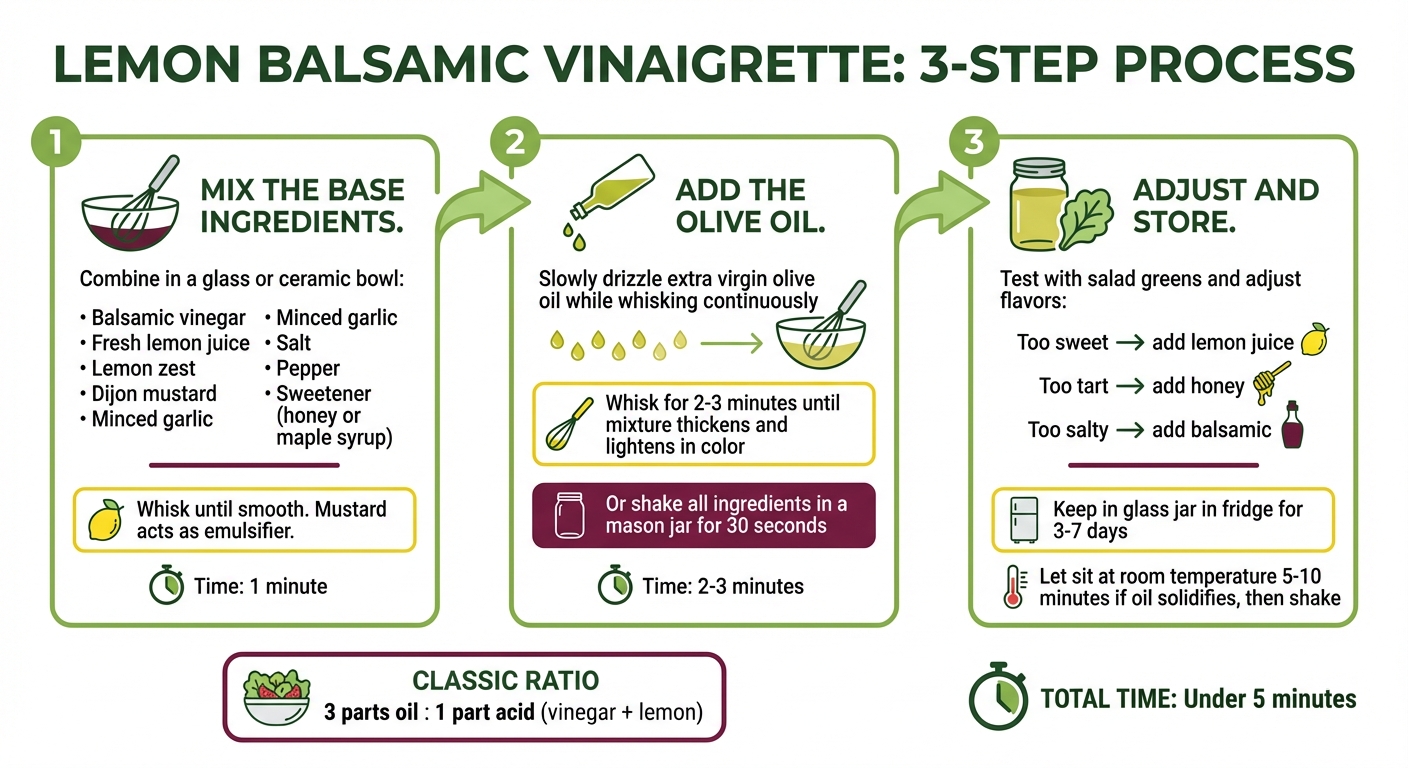
How to Make Lemon Balsamic Vinaigrette in 3 Easy Steps
Mix the Base Ingredients
Start by gathering your ingredients: balsamic vinegar, fresh lemon juice, lemon zest, Dijon mustard, minced garlic, salt, pepper, and a sweetener of your choice. Use a glass or ceramic bowl to avoid any metallic taste, as acidic ingredients like vinegar and lemon can react with metal bowls (like aluminum or copper) and alter the flavor. Whisk everything together until the mixture is smooth.
The Dijon mustard isn’t just about flavor - it plays a key role. As Tracy Halasz from Simply Ceecee explains:
"Mustard acts as an emulsifier (like oil does) to make the dressing thicker."
This step sets the foundation for a well-balanced vinaigrette.
Add the Olive Oil
With your base ready, slowly drizzle in extra virgin olive oil while whisking continuously. Start with just a few drops, then gradually increase to a thin, steady stream as the mixture begins to thicken and lighten in color. This process, which takes about 2–3 minutes, creates a smooth and creamy emulsion. For the best flavor, use high-quality extra virgin olive oil, like Big Horn Olive Oil's Ultra Premium EVOO (https://bhooc.com).
If you prefer a quicker method, you can combine all the ingredients in a mason jar, seal it tightly, and shake vigorously for about 30 seconds.
Adjust and Store
Once your vinaigrette is emulsified, test it with a piece of salad rather than tasting it directly - this will give you a better idea of how it complements the greens. Adjust the flavors as needed: add more lemon juice if it’s too sweet, a bit of honey or maple syrup if it’s too tart, or extra balsamic or red wine vinegar if it’s overly salty.
Transfer the finished dressing to a glass jar or bottle with a secure lid. It will keep fresh in the refrigerator for 3 to 7 days. If the olive oil solidifies in the cold, let the jar sit at room temperature for 5 to 10 minutes, then shake well before using.
Ways to Customize Your Vinaigrette
Once you've mastered the basic lemon balsamic vinaigrette, you can tweak it to suit your taste or specific dishes. Here are some ideas to take it to the next level.
Make It Richer or Creamier
If you're craving a creamier texture, try adding a dollop of sour cream, mayonnaise, or Greek yogurt. According to Chef Jenn Allen from Cook What You Love, sour cream "is the secret ingredient to make the dressing creamy and rich".
For a lighter option, blend in some avocado puree. It adds a velvety consistency while keeping the bright, zesty lemon flavor intact. These variations work wonderfully with hearty salads or as a sauce for grilled meats and seafood.
Adjust Sweetness or Heat
Want to balance the tangy kick? A touch of sweetness can do the trick. Gradually mix in maple syrup, honey, or agave nectar. Meyer lemons can also add a naturally sweeter citrus note, while an aged balsamic vinegar, with its syrupy texture and subtle sweetness, can smooth out the acidity. Linda Sandra from Tasty at Home shares that "honey creates natural sweetness that balances the vinegar's acidity".
For those who like a little spice, sprinkle in red pepper flakes or a dash of cayenne pepper. A pinch of freshly cracked black pepper adds a gentle warmth. These adjustments let you fine-tune the vinaigrette to match the flavors of your meal.
Add Fresh Herbs
Fresh herbs are a fantastic way to elevate the citrus and balsamic flavors. Basil brings a sweet, peppery touch that pairs beautifully with tomato-based salads. Thyme and rosemary add earthy, aromatic notes, while oregano gives an Italian vibe. Dill can brighten the citrus profile, and mint is perfect for fruit salads featuring strawberries or watermelon.
If fresh herbs aren’t available, substitute dried herbs - about 1/2 teaspoon of dried for every 1.5 teaspoons of fresh. For the best results, blend the herbs directly into the dressing using an immersion blender, and let the vinaigrette sit for 10–15 minutes to allow the flavors to meld. Brenda from A Farmgirl's Dabbles suggests, "use fresh thyme and rosemary, but use what you like. This is a great recipe to make when you buy a package of herbs for a recipe and have some leftovers".
To ensure your vinaigrette shines, opt for high-quality ingredients, like the ultra-premium extra virgin olive oils and traditional balsamic vinegars from Big Horn Olive Oil. These ingredients can make all the difference.
Storage and Serving Ideas
Once you've whipped up your vinaigrette, knowing how to store it properly and use it creatively can help you enjoy its flavor to the fullest.
How to Store
Store your lemon balsamic vinaigrette in a tightly sealed glass jar, like a mason jar or a small jam jar, and keep it in the fridge. If you've included fresh garlic or lemon zest, the dressing will stay fresh for 3–4 days. With stabilizers like Dijon mustard, it can last up to two weeks. Before using, give the jar a good shake to re-emulsify the oil and vinegar. If the olive oil solidifies in the cold, just let it sit at room temperature for a few minutes to loosen up.
How to Use
This vinaigrette is incredibly versatile. Try drizzling it over green salads with citrus fruits, berries, or stone fruits like peaches and nectarines. It also pairs beautifully with creamy ingredients such as avocado, burrata, or goat cheese. For something heartier, toss it with roasted veggies like carrots, broccoli, asparagus, or pumpkin. It’s also a great addition to grain bowls featuring quinoa or rice.
If you're looking for a marinade, this vinaigrette works wonderfully with chicken, fish, and shrimp. Just a heads-up - acidic dressings are better for bone-in chicken or dark meat since they can toughen lean cuts like boneless chicken breasts if marinated too long. Beyond that, you can use it as a dipping oil for crusty bread or drizzle it over pasta salads and Italian bean salads. For the best flavor, opt for ultra-premium extra virgin olive oils and high-quality traditional balsamic vinegars, like those from Big Horn Olive Oil.
Final Thoughts
Every step and ingredient plays a role in creating this simple yet elegant vinaigrette. In just under 5 minutes, you can whip up a homemade lemon balsamic vinaigrette using a handful of quality pantry staples. As Cyndy Ufkes from The Art of Food and Wine explains:
"The key to great taste is using the highest quality ingredients because the flavor will really shine through in a vinaigrette".
Choosing high-quality ingredients like ultra-premium extra virgin olive oil and traditional aged balsamic vinegar from Big Horn Olive Oil makes all the difference. Authentic aged balsamic from Modena, naturally sweet and syrupy from its oak barrel aging, eliminates the need for added sugars.
The beauty of making your own dressing lies in the control it gives you - adjust the sweetness, acidity, or richness to suit your taste. Add a touch of lemon zest for extra brightness, a pinch of red pepper flakes for a hint of heat, or fresh herbs to deepen the flavor. It’s a chance to create a vinaigrette that not only enhances your dishes but also showcases your culinary flair.
FAQs
How can I keep the vinaigrette from separating?
To keep your lemon balsamic vinaigrette smooth and consistent, an emulsifier is key. Adding a touch of lemon juice or water while whisking can help bring a separated mixture back together. Another simple trick? Give the dressing a good shake before using it. When properly emulsified, your vinaigrette can stay blended and ready to use in the fridge for up to a week.
What’s the best balsamic vinegar to use for this?
For this recipe, opt for a high-quality dark balsamic vinegar - ideally, a traditional or aged variety. These types tend to have a smoother, slightly sweeter taste that adds depth to the vinaigrette without overwhelming the flavors of your salad.
Can I make it without Dijon mustard?
Yes, you can absolutely make lemon balsamic vinaigrette without Dijon mustard. While Dijon adds a slight tang and helps blend the dressing smoothly, it’s not a dealbreaker. The vinaigrette will still taste great even without it.