

How to Make Mediterranean-Style Dressings
Mediterranean-style dressings are simple to make and elevate any meal with their bold flavors. The key is using high-quality ingredients like extra virgin olive oil, lemon juice, or balsamic vinegar, paired with herbs such as oregano and thyme. These dressings are ready in minutes and work for salads, marinades, or drizzles over vegetables and proteins. Here's what you need to know:
- Core Ingredients: Extra virgin olive oil, acid (lemon juice, red wine vinegar, or balsamic), herbs (oregano, thyme, garlic), and optional sweeteners like honey.
- Basic Ratio: 3:1 oil to acid for a balanced flavor.
- Quick Recipe: Whisk lemon juice, garlic, mustard, honey, oregano, salt, and pepper. Slowly add olive oil until emulsified.
- Storage: Keep in the fridge for up to 2 weeks. Shake before use.
For a tangy Greek-style dressing, try ladolemono, or go richer with a balsamic variation. These dressings are versatile, cost-effective, and bring vibrant flavors to your kitchen.
How to Make Mediterranean Salad Dressing (Easy 1-Minute Recipe)
Core Ingredients for Mediterranean Dressings
The secret to a perfect Mediterranean dressing lies in selecting the right ingredients. Each component plays a key role in creating that signature balance of flavors.
Extra Virgin Olive Oil (EVOO)
At the heart of every Mediterranean dressing is extra virgin olive oil. It’s what gives the dressing its luxurious texture and fruity depth. The quality of your EVOO matters - a lot. Always go for fresh, high-quality oil, as it directly impacts the flavor. Ideally, EVOO should be used within 18–24 months of harvest to avoid losing its vibrant taste. For the freshest experience, look for oils shipped within 1–3 months of harvest and aim to use them within 9 months of the crush date.
Take, for instance, Big Horn Olive Oil's Estate Reserve Ultra Premium EVOO. This oil stands out for its rich antioxidants and bold flavor, crafted from the top 5% of harvests. Its peppery and grassy notes pair beautifully with the bright acids and herbs in Mediterranean dressings. As Cleo H. remarked in July 2025:
My husband buys fine wine; I prefer the "finest" olive oil!! We enjoy it daily.
Acidic Components
The acidic element is what balances the richness of olive oil and adds that essential brightness to Mediterranean dressings. Fresh lemon juice is a go-to, offering a clean and zesty flavor that works wonderfully in lighter dishes like Greek ladolemono. A good ratio to follow is ¼ cup lemon juice to ¾ cup EVOO.
For a sharper, more robust tang, red wine vinegar is an excellent choice. It pairs well with bold ingredients like tomatoes, cucumbers, olives, and feta. Use about 3 tablespoons per ½ cup of oil for a classic Greek-style dressing.
If you're after something richer, balsamic vinegar brings a sweet-tart depth and a slightly syrupy texture, perfect for heartier greens or roasted vegetables. Big Horn Olive Oil's Traditional 18-Year Aged Dark Balsamic Vinegar, sourced from Modena, Italy, is a standout option. Cat T. shared her experience in July 2025:
I consistently use the company's flavored vinegars and oils on salads, grilled salmon, veggies.
Aromatics, Herbs, and Spices
The backbone of Mediterranean flavor comes from aromatics and herbs like garlic, oregano, basil, and thyme. Fresh minced garlic (about ½–1 clove per batch) adds a bold, savory kick, while garlic powder (¾ teaspoon) is a convenient alternative for a milder, longer-lasting flavor.
Dried oregano (1–2 teaspoons) provides a warm, earthy note, while thyme (½ teaspoon) adds a subtle, grounding earthiness. Basil, on the other hand, lends a sweet, aromatic touch. Fresh herbs, if available, bring even more vibrancy, but dried versions are potent and practical.
Sweeteners and Flavor Enhancers
A touch of sweetness can soften the acidity in your dressing without making it overly sweet. Honey or maple syrup (start with ½ teaspoon and adjust as needed) works wonders here.
For a creamy texture and added tang, Dijon mustard (½–1 tablespoon) is indispensable. It helps emulsify the oil and acid, ensuring the dressing clings perfectly to your salad greens.
To elevate the savory elements, try adding 1–2 teaspoons of olive or caper brine. This briny addition boosts umami and enhances the overall flavor, especially in herb-forward or Greek-style dressings.
Step-by-Step Guide to Making a Classic Mediterranean Vinaigrette
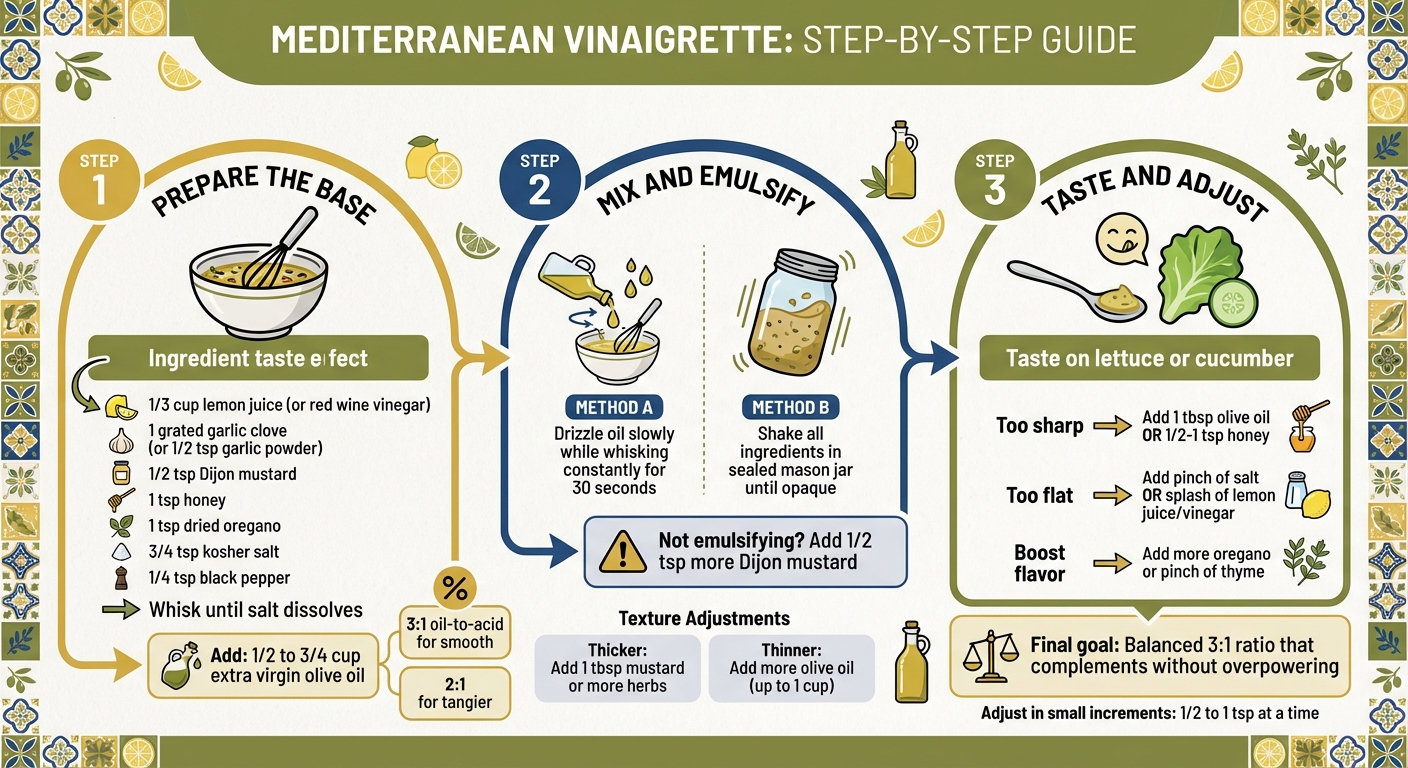
How to Make Mediterranean Vinaigrette in 3 Steps
Here's how to whip up a perfectly balanced Mediterranean vinaigrette at home.
Preparing the Base
Start by combining the following ingredients in a bowl:
- 1/3 cup lemon juice (or red wine vinegar)
- 1 grated garlic clove (or ½ teaspoon garlic powder)
- ½ teaspoon Dijon mustard
- 1 teaspoon honey
- 1 teaspoon dried oregano
- ¾ teaspoon kosher salt
- ¼ teaspoon black pepper
Whisk everything together until the salt dissolves completely.
Next, slowly incorporate ½ to ¾ cup of Big Horn Olive Oil's Ultra Premium Extra Virgin Olive Oil. For a smoother dressing, aim for a 3:1 oil-to-acid ratio. Prefer a tangier kick? Stick to a 2:1 ratio.
Mixing and Emulsifying
Once the base is ready, it's time to emulsify. Gradually drizzle the olive oil into the mixture in a thin stream, whisking constantly for about 30 seconds until it turns creamy and well-blended. Alternatively, toss all the ingredients into a mason jar, seal it tightly, and shake vigorously until the dressing looks opaque.
If your dressing isn’t coming together, try adding an extra ½ teaspoon of Dijon mustard to stabilize it. For a thicker texture, increase the mustard to 1 tablespoon or sprinkle in more herbs. Want it thinner? Slowly add more olive oil - up to 1 cup - tasting as you go.
Tasting and Adjusting
Now for the final touches: taste your vinaigrette on a piece of lettuce or cucumber. If it feels too sharp, whisk in a tablespoon of olive oil at a time or add ½ to 1 teaspoon of honey to mellow it out. If it tastes flat, sprinkle in a pinch of salt or add a splash more lemon juice or vinegar.
For extra flavor, consider a bit more dried oregano or a pinch of thyme. The goal is to achieve a balanced 3:1 oil-to-acid ratio that complements your greens without overpowering them. Adjust slowly - about ½ to 1 teaspoon at a time - until the flavors sing together.
sbb-itb-4066b8e
Mediterranean Dressing Variations
Take your Mediterranean dishes to the next level with these flavorful dressing ideas. Each offers a distinct twist, perfect for a variety of meals.
Greek Ladolemono (Lemon-Olive Oil Dressing)
A staple in Greek cuisine, this zesty dressing doubles as a versatile sauce. To make it, whisk together ¼ cup freshly squeezed lemon juice, 1 minced garlic clove, 1–2 teaspoons dried oregano, ¾ teaspoon kosher salt, and ¾ teaspoon black pepper. While whisking, slowly drizzle in ¾ cup high-quality extra virgin olive oil until the mixture emulsifies and turns glossy.
Ladolemono works wonders over grilled or roasted fish like branzino, warm boiled potatoes, or steamed greens. Its bright, citrusy kick balances rich proteins and hearty dishes, making it a refreshing complement to your meal.
Herb-Rich Mediterranean Vinaigrette
For a dressing packed with fresh, vibrant flavors, this herb-forward vinaigrette is a winner. Start by whisking together 1 tablespoon red wine vinegar, 2 teaspoons lemon juice, ½ teaspoon Dijon mustard, ¼ teaspoon minced garlic, ¼ teaspoon kosher salt, and a pinch of black pepper. Slowly incorporate ½ cup extra virgin olive oil until slightly thickened, then fold in 2 teaspoons each of minced fresh oregano, dill, and parsley (or 1 teaspoon each if using dried herbs).
This vinaigrette is perfect for grain bowls featuring farro, quinoa, or bulgur, and adds a punch of flavor to chickpea salads, pasta salads, and mixed vegetable dishes. It’s also meal-prep friendly, staying fresh in the fridge for up to two weeks. Just shake it well before serving.
Balsamic Mediterranean Dressing
For a dressing with a rich, sweet-savory profile, aged balsamic vinegar is your secret weapon. Mix aged balsamic vinegar and extra virgin olive oil in a 1:2 or 1:3 ratio, then season with a pinch of salt and pepper. If you like, add ½ teaspoon Dijon mustard for extra depth. Using a premium aged balsamic - like Big Horn Olive Oil's Molto Denissimo 25-Year Aged Dark Balsamic - creates a naturally sweet, syrupy dressing that usually doesn’t need added sweeteners.
This dressing pairs beautifully with tomato-mozzarella salads, mixed greens with berries and nuts, roasted Brussels sprouts, carrots, and grilled chicken or steak. Its complexity enhances caramelized and charred flavors, making it a standout choice for hearty dishes. Store it in a covered jar in the fridge for up to two weeks, and give it a quick shake before using.
Practical Tips for Success
Choosing Quality Ingredients
The secret to a standout Mediterranean dressing starts with premium extra virgin olive oil (EVOO). Always opt for oil that’s been harvested within the last nine months - freshness plays a huge role in both flavor and nutritional value. Look for EVOO with a high smoke point and a rich, fruity profile. For a reliable option, check out Big Horn Olive Oil, known for its antioxidant-packed biophenols.
When it comes to balsamic vinegar, authenticity is key. Seek out products from Modena, Italy, which are known for their thick, syrupy consistency and low acidity (under 6%). A great example is Big Horn Olive Oil's Molto Denissimo 25-Year Aged Dark Balsamic - its perfectly balanced sweet-tart flavor makes it a natural choice for dressings without needing extra sweeteners. As for aromatics like garlic and herbs, pick firm, fresh garlic cloves and dried herbs such as oregano that are still vibrant and aromatic. Avoid herbs that look faded or dusty, as they can dull your dressing’s overall taste.
Balancing Flavors
Once you’ve got quality ingredients, it’s all about blending them in just the right way. Start with your acidic component - lemon juice or vinegar - then mix in salt, pepper, and herbs before slowly whisking in the oil. A helpful guideline is the 1:3 ratio (one part acid to three parts oil), but always taste as you go. If the dressing feels too sharp or tangy, balance it by adding 2 tablespoons of oil and ½ teaspoon of honey. For a brighter kick, add vinegar or lemon juice a teaspoon at a time. Pro tip: taste the dressing on a piece of lettuce to get a real sense of its balance. For a slightly creamy texture and extra depth, whisk in ½ teaspoon Dijon mustard - it also helps keep the oil and acid from separating.
Storage and Usage
To keep your dressing fresh, store it in a sealed glass jar in the refrigerator. It’ll stay flavorful for up to two weeks. If the oil and vinegar separate, just give the jar a good shake to bring it back together. For even longer storage, consider using garlic powder instead of fresh garlic. Dressings made with fresh ingredients typically last 5-7 days, while those with dried herbs can last up to two weeks.
And don’t stop at salads! These dressings are incredibly versatile. Drizzle them over grilled fish, roasted veggies, or grain bowls, or use them as marinades for chicken. A good rule of thumb is about 2-3 tablespoons per serving for a family of four.
Conclusion
Whipping up your own Mediterranean-style dressings at home takes just 5 minutes and can completely elevate your meals. Whether you're tossing a salad, marinating chicken, or adding a drizzle to roasted vegetables, these dressings bring a burst of flavor straight to your table. The recipe is simple: start with high-quality extra virgin olive oil, add a tangy element like lemon juice or balsamic vinegar, and finish with fragrant herbs that embody Mediterranean cooking.
Using top-notch ingredients is key. When you choose premium EVOO and authentic Modena balsamic vinegar - such as those from Big Horn Olive Oil - you’re not just enhancing taste. These ingredients are packed with antioxidants and rich flavors that take your dressings to the next level.
Aside from their incredible taste, Mediterranean dressings fit perfectly into a diet linked to better heart health and reduced inflammation. Thanks to the monounsaturated fats and polyphenols in extra virgin olive oil, you're not just adding flavor - you’re also incorporating ingredients that support your overall health.
To keep your dressings fresh, store them in a sealed jar in the refrigerator for up to 1–2 weeks. Shake well before each use to re-emulsify the ingredients. From classic vinaigrettes to Greek ladolemono or balsamic twists, you now have the know-how to craft dressings that rival those from your favorite restaurant. Play around with herbs, tweak the balance of oil and acid, and uncover your own signature combinations.
FAQs
What’s the best way to store homemade Mediterranean-style dressings?
To ensure your homemade Mediterranean-style dressings stay fresh and delicious, keep them in an airtight container in the refrigerator. Before serving, shake the container well to mix the ingredients back together. For the best flavor, try to use the dressing within 1 to 2 weeks.
How can I fix my dressing if it tastes too tangy?
If your dressing tastes a bit too sharp, you can tone down the acidity by adding a splash of extra virgin olive oil to smooth out the flavor. For a hint of sweetness, try stirring in a small amount of honey or maple syrup. Make adjustments slowly, tasting along the way, until you find the right balance.
What are some unique ways to use Mediterranean dressings besides on salads?
Mediterranean dressings bring a flavorful twist to countless dishes. Drizzle them over roasted vegetables to enhance their natural sweetness, or use them as a marinade for grilled meats, chicken, or seafood to infuse bold, savory notes. They’re also a fantastic addition to grain bowls, pasta, or as a dip for fresh bread and crunchy veggies. Their rich, vibrant flavors can easily add a Mediterranean touch to any meal.