

Lemon Olive Oil Cake: Recipe and Tips
Lemon olive oil cake combines the brightness of lemon with the richness of olive oil to create a moist, flavorful dessert that stays soft for days. This cake swaps butter for olive oil, providing a tender crumb and subtle fruity notes. Key ingredients include fresh lemon juice, zest, high-quality extra virgin olive oil, and a mix of dry and wet components for balance. Use tools like a springform pan and a Microplane for best results.
Quick Steps:
- Mix wet ingredients (olive oil, eggs, sugar, lemon juice, zest, and dairy).
- Combine dry ingredients (flour, baking powder, baking soda, salt).
- Gently fold wet and dry mixtures, pour into a prepared pan, and bake at 350°F for 40–55 minutes.
- Cool completely before serving.
Tips:
- Use extra virgin olive oil for depth of flavor or light olive oil for a more neutral taste.
- Add zest for more lemon flavor without altering texture.
- Store at room temperature for up to 5 days or freeze for 2 months.
Serve simply with powdered sugar, fresh berries, or a lemon glaze. For a sophisticated touch, try pairing with a balsamic drizzle. This cake is easy to make and perfect for any occasion.
The BEST Lemony Olive Oil Loaf Cake | Moist, Zesty & Easy One-Bowl Recipe
sbb-itb-4066b8e
Ingredients and Tools You Need
Get everything prepped and ready for a smooth baking experience.
Ingredients Breakdown
The ingredient list is simple, but each one plays a key role in creating a perfectly balanced cake.
Dry ingredients provide structure and texture. All-purpose flour forms the base, while sugar sweetens the batter and can be sprinkled on top for a golden, slightly crunchy crust. If you want a lighter crumb and a hint of nuttiness, almond flour is a great optional add-in. Baking powder and baking soda work together to give the cake its lift and airy feel.
Wet ingredients are all about flavor and moisture. Eggs contribute richness and stability, while whole milk and a touch of Greek yogurt (or sour cream) keep the cake moist and tender with a slight tang. Fresh lemon juice adds a bright acidity, and lemon zest intensifies the citrusy aroma. For the best flavor, rub the zest into the sugar to release its natural oils and evenly infuse the batter.
The choice of oil is important. Use a high-quality extra virgin olive oil for a fruity note that pairs beautifully with the lemon. A great option is Big Horn Olive Oil's Ultra Premium Extra Virgin Olive Oils, which are cold-pressed within two hours of harvest. This kind of freshness enhances the cake's flavor significantly. If you prefer a more neutral taste, you can go with a lighter olive oil, but keep in mind that it may not deliver the same depth.
Once your ingredients are measured and ready, make sure your tools are set up for the baking process.
Baking Tools to Have Ready
Having the right tools makes all the difference in creating a flawless cake:
| Tool | Purpose |
|---|---|
| 9-inch springform pan | Makes it easy to unmold the delicate cake without risking damage. |
| Microplane or zester | Perfect for removing just the fragrant yellow zest, leaving the bitter white pith behind. |
| Whisk | Ensures the oil, eggs, and sugar combine into a smooth, even batter. |
| Parchment paper | Prevents sticking by lining the bottom of the pan - especially useful for this moist cake. |
| Wire cooling rack | Allows air to circulate under the cake as it cools, avoiding a soggy bottom. |
To prepare the pan, lightly oil the sides and place a parchment paper round on the bottom, then oil the parchment as well. Wrapping the outside of the springform pan with aluminum foil is a smart move - this batter is thinner than most, and the foil will catch any potential leaks before they reach your oven floor.
A sharp Microplane is a worthwhile investment (around $18). Zesting lemons becomes much easier, and you'll get maximum zest with minimal effort, keeping the bitter pith out of your batter.
With these tools at your disposal, you'll be ready to tackle every step of making this lemon olive oil cake.
How to Make Lemon Olive Oil Cake: Step-by-Step
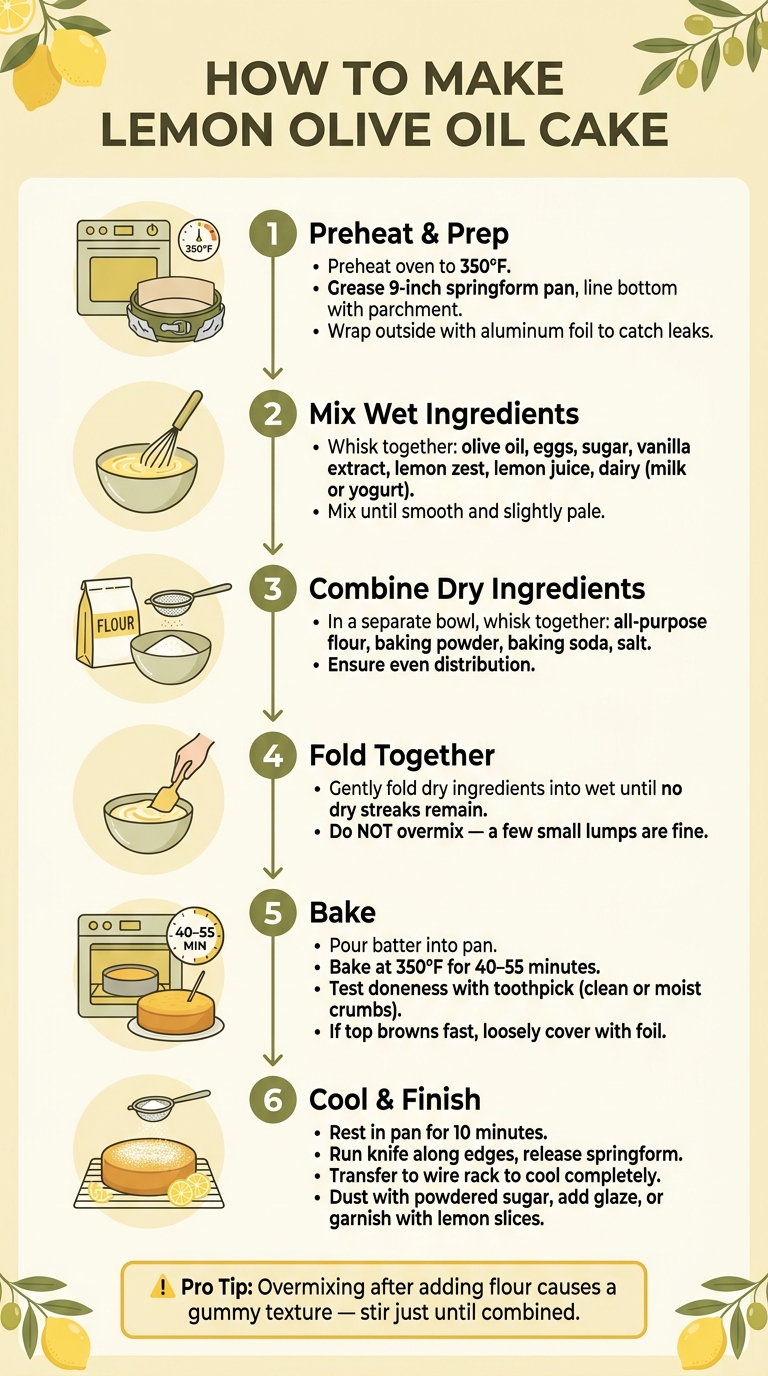
How to Make Lemon Olive Oil Cake: Step-by-Step Visual Guide
Got your ingredients measured and your pan ready? Great - let’s dive into the baking process. A little prep goes a long way in making sure everything comes together smoothly.
Mixing the Batter
Start by preheating your oven to 350°F. In a large mixing bowl, whisk together the olive oil, eggs, and sugar until the mixture is smooth and slightly pale. Then, stir in the vanilla extract, lemon zest, lemon juice, and your choice of dairy - whether it’s milk or Greek yogurt. Keep whisking until everything is well blended.
In another bowl, combine the dry ingredients: flour, baking powder, baking soda, and salt. Whisk these together to ensure the leavening agents are evenly distributed. Slowly add the dry mixture to the wet ingredients, stirring gently until there are no visible dry streaks. Don’t stress about a few small lumps - they’re totally fine.
"Don't over-mix your batter once you've added the flour or you will get a gummy texture." - Sue Moran, Author, The View from Great Island
As soon as the batter is ready, pour it into your prepared pan to keep the texture light and airy.
Baking and Cooling the Cake
Pour the batter into your greased or parchment-lined 9-inch pan and pop it into the oven. Bake at 350°F for 40–55 minutes. To check if it’s done, insert a toothpick into the center - it should come out clean or with just a few moist crumbs. Don’t rely solely on the timer; the toothpick is your best guide. If the top starts browning too quickly while the center is still setting, cover it loosely with foil and continue baking.
When the cake is done, let it rest in the pan for at least 10 minutes. Removing it too soon can cause the cake to break apart or lose its top layer. To release it, run a thin knife along the edges before unlatching the springform pan and transferring the cake to a wire rack to cool completely.
Finishing the Cake
Once the cake is fully cooled, you’ve got a couple of finishing options. A simple dusting of powdered sugar works beautifully for a minimalist touch. If you want something with a bit more zing, whip up a lemon glaze using fresh lemon juice, powdered sugar, and a drizzle of Big Horn Olive Oil. For an extra touch, garnish with thin lemon slices or a sprinkle of fresh zest just before serving. It’s all about keeping things fresh and inviting!
Tips for Balancing Lemon and Olive Oil Flavors
Getting the balance right between lemon and olive oil can take a cake from good to unforgettable.
How to Adjust Lemon Intensity
Lemon zest and juice each bring something special to the table. While zest delivers a vibrant citrus aroma, the juice provides the tanginess that offsets the sweetness.
"Lemon zest adds a wonderful fresh, lemon flavor, while the juice adds tang to balance the sweetness of the cake." - Beyond Frosting
If you want to amp up the lemon flavor without altering the cake’s texture, add more zest instead of extra juice. Always zest your lemons before juicing them to make the process easier. For an added citrus kick, drizzle a simple lemon sugar syrup over the warm cake after baking - it soaks in beautifully.
Stick with regular lemons for this recipe. Their acidity is perfectly matched to the leavening agents in the batter. Swapping in other citrus varieties could throw off the chemical reactions and impact the cake’s rise.
Picking the Right Olive Oil
The olive oil you choose can completely change the cake’s flavor profile. Here's a quick guide to help you decide:
| Olive Oil Type | Flavor Profile | Effect on Cake |
|---|---|---|
| Light | Neutral | Keeps the focus on the lemon flavor |
| Pure / Regular | Mild | Adds subtle background notes for balance |
| Extra Virgin | Robust / Fruity | Brings complexity with a fruity or peppery finish |
| Lemon-Infused | Bright / Citrusy | Boosts the lemon flavor without overpowering |
For a rich, layered flavor, go with a high-quality extra virgin olive oil. Its fruity elements pair beautifully with the lemon, creating a more sophisticated taste. If you want to try something special, check out Big Horn Olive Oil, which offers a Whole Fruit Lemon Olive Oil ($23.99 for 375 ml, approximately 12.7 fl oz). On the other hand, if you prefer the lemon to shine on its own, a light olive oil is a better choice.
Balancing Sweetness and Acidity
Sugar is key to offsetting the tartness of the lemon and the richness of the olive oil. Vanilla extract also plays a subtle but important role, softening the olive oil’s peppery notes and tying the citrus flavors together.
"The combination of the lemon, vanilla, and a hint of olive oil makes for a simple but complexly flavored cake." - Sue Moran, Author, The View from Great Island
For a fun twist, sprinkle about 2 tablespoons of granulated sugar over the batter before baking. This creates a delicate, crunchy crust that contrasts with the moist interior. If you’re planning to add a lemon sugar syrup later, consider reducing the sugar in the batter slightly to avoid making the cake too sweet. Adding full-fat Greek yogurt or sour cream to the batter is another great trick. These ingredients bring a creamy tang that complements the lemon without overwhelming the balance.
Now that the flavors are in harmony, it’s time to focus on achieving the perfect moist texture.
How to Get a Moist, Tender Cake
Ingredient Choices That Affect Texture
Using olive oil is a game-changer when it comes to keeping cakes moist and tender. Thanks to its liquid consistency at room temperature, it ensures the cake remains soft even after a few days. For the best results, go for a high-quality extra virgin olive oil, like those from Big Horn Olive Oil.
"Since oil is liquid at room temperature, this cake stays moist even after it's stored for a few days. There's just enough oil to make it soft, but not greasy." - Julianne, Beyond Frosting
Beyond olive oil, ingredients like whole milk and full-fat Greek yogurt or sour cream add richness and maintain a soft crumb. If you prefer a tangier flavor, buttermilk is an excellent substitute for regular milk. For a lighter texture, consider swapping a portion of all-purpose flour with almond flour - it reduces density and adds a subtle, nutty flavor. Sugar not only sweetens but also helps retain moisture, tying all the flavors together beautifully.
Combining these ingredient choices with the right baking methods will ensure your cake is moist and tender every time.
Baking Tips for Best Results
Once you've gathered the right ingredients, proper baking techniques are key. Start by preheating your oven to 350°F. Bake the cake for 40–55 minutes, checking for doneness at the 40-minute mark with a toothpick. If the top starts to brown too much, loosely cover it with foil to prevent over-baking. Using a light-colored aluminum pan is ideal, as darker pans or glass can cook the exterior too quickly, leaving the center underdone or the edges overly dry.
When mixing the batter, stop as soon as the dry ingredients are just combined. Overmixing can lead to excess gluten development, which makes the cake dense and gummy instead of light and tender.
How to Store the Cake
This cake holds its moisture well after baking. Keep it tightly wrapped or covered at room temperature, and it will stay fresh for up to 5 days. If you need to store it longer, freezing is a great option - it keeps well for up to 2 months. To freeze, skip any toppings, wrap the cake securely in plastic wrap, then in foil. When you're ready to enjoy it, simply thaw the cake at room temperature, and it will be just as delicious as the day you baked it.
Serving Ideas and Flavor Pairings
Simple Toppings
Lemon olive oil cake stands out on its own, so it doesn’t need much to impress. A quick dusting of powdered sugar adds an elegant touch - just make sure the cake is completely cool before sprinkling, or the sugar might dissolve into the surface.
For a little extra flair, sprinkle 2 tablespoons of granulated sugar over the batter before baking. This creates a delicate, crunchy crust that complements the cake's soft texture. Adding lemon zest or thin lemon slices on top can also enhance its bright, citrusy profile. These small touches make it easy to pair with fruits and creams.
Fruit and Dairy Pairings
Fresh berries like strawberries, blueberries, or raspberries bring a tart, juicy contrast to the cake’s rich, moist texture. If fresh berries aren’t available, a spoonful of berry compote works just as well.
Pair the cake with whipped cream or a dollop of Greek yogurt for a creamy, tangy complement. If the cake has been refrigerated, let it sit out until it reaches room temperature - this ensures the texture is just right. For a more adventurous twist, you can even experiment with a balsamic drizzle.
Adding a Balsamic Drizzle
Aged balsamic vinegar adds a rich, tangy-sweet depth that elevates lemon olive oil cake to a whole new level. The complex flavors of a high-quality balsamic pair beautifully with the cake’s lemony brightness and the subtle fruitiness of olive oil. Drizzle a bit over fresh berries served alongside the cake for a sophisticated finish.
If you’re looking for top-notch balsamic options, Big Horn Olive Oil offers two excellent choices: the Traditional 18-Year Aged Dark Balsamic Vinegar for $8.99 and the Molto Denissimo 25-Year Aged Dark Balsamic Vinegar for $12.99. Both are sourced from Modena, Italy. The 25-year aged option has a thicker consistency and bolder flavor, making it ideal for giving your dessert a restaurant-quality touch.
Conclusion
Lemon olive oil cake shines through its simplicity. By focusing on fresh lemons, quality olive oil, and a few thoughtful techniques - like mixing gently and allowing the cake to cool completely before removing it from the pan - you can create a dessert that's consistently delightful.
Using a high-quality extra virgin olive oil is key to achieving the cake's moist and tender texture. It also enhances the subtle, fruity undertones that make this cake stand out. For example, Big Horn Olive Oil offers Ultra Premium Extra Virgin Olive Oils that are cold-pressed within two hours of harvesting. This level of freshness directly impacts the flavor in your baking. Their Lemon Olive Oil is a perfect match for this recipe, adding citrus notes directly into the batter for a more vibrant and harmonious result.
This cake is versatile enough to be served simply with powdered sugar or elevated with fresh berries and a balsamic drizzle. With just 15 minutes of prep and a 40–50 minute bake at 350°F, it delivers incredible flavor and moisture. This recipe perfectly balances the brightness of citrus with the richness of olive oil, making it a standout dessert.
FAQs
Can I use a different pan if I don’t have a springform?
Yes, you can switch to a different pan, but here are a few things to keep in mind. Make sure to grease the pan thoroughly and line it with parchment paper to avoid sticking. The baking time might change depending on the pan's size and material, so keep an eye on it as it bakes. If you're using a pan with a loose bottom, wrapping it in foil can help prevent any leaks.
How do I stop my olive oil cake from tasting bitter?
To keep your olive oil cake from tasting bitter, stick to using high-quality olive oil with a flavor profile you genuinely enjoy - mild or subtle varieties work best. Be careful not to over-mix the batter once the flour is added, as this can negatively impact the texture and intensify any bitterness. For a well-rounded flavor, make sure to zest lemons properly and balance the taste with a mix of lemon juice and vanilla to mellow out any sharp or bitter notes.
Can I make this cake dairy-free?
Yes, you can make this lemon olive oil cake without dairy. Just replace the butter with olive oil and substitute Greek yogurt or sour cream with dairy-free options. Using olive oil not only keeps it dairy-free but also ensures the cake stays moist and packed with flavor.