

Lucques Olive Oil: Flavor and Uses
Lucques olive oil is a rare, high-quality product from southern France, known for its sweet, buttery flavor with hints of almond, green apple, and tomato. Produced from the Lucques olive variety, which grows primarily in the Languedoc region, this oil is both scarce and luxurious. With an annual production of just 2,000 liters, its exclusivity is tied to the labor-intensive process and the specific growing conditions required for these olives.
Key highlights:
- Flavor Profile: Smooth and mild, with sweet and nutty undertones.
- Uses: Best as a finishing oil for salads, seafood, cheeses, and meats.
- Production: Harvested and cold-pressed to preserve its delicate taste.
- Origin: Protected Designation of Origin (PDO) status since 2017, ensuring its authenticity and limited production.
Lucques olive oil is perfect for those who appreciate subtle yet refined flavors in their cooking. It pairs beautifully with fresh vegetables, seafood, and cheeses, making it a prized addition to any kitchen.
Flavor Profile of Lucques Olive Oil
Aroma and Fragrance
Lucques olive oil greets the senses with a delightful mix of almond, green apple, and tomato aromas. Scientific analysis has identified 39 distinct aroma compounds at a concentration of 231.9 µg per 200 µL extract. This intricate blend of scents lays the groundwork for its unique flavor experience.
Taste and Texture
The taste mirrors its aromatic notes, with almond, green apple, and tomato subtly enriching its natural sweetness. Its texture is rich and satisfying, offering a creamy, almost meaty quality that brings to mind almonds and avocados. This combination delivers a full-bodied and indulgent mouthfeel.
How to Use Lucques Olive Oil in Cooking
Pairing with Fresh Vegetables and Salads
Lucques olive oil shines when used raw, showcasing its delicate and distinctive flavor. As an extra virgin olive oil - the highest grade available - it’s best saved for dishes where its taste can take center stage, like salads or fresh vegetable dishes. Try drizzling it over a crisp salad or grilled veggies to enhance simple vinaigrettes and dressings, letting its subtle sweetness be the star.
To keep the oil at its best, store it in a cool, dark spot, away from heat, and aim to use it within three to five months of opening. This helps protect its delicate flavor compounds. Its versatility doesn’t stop at vegetables - it’s also a great match for seafood.
Cooking with Fish and Seafood
The gentle richness of Lucques olive oil complements seafood beautifully without overshadowing its subtle flavors. It pairs especially well with firm white fish like halibut, cod, snapper, or striped bass, and works equally well with richer options like seared ahi tuna or grilled swordfish. For the best results, use it as a finishing oil after cooking. This preserves its sweet, nuanced profile, as high heat can break down its delicate compounds.
"Seafood, such as fish and shellfish, benefits from light and fragrant olive oils that complement its delicate flavors."
For a Mediterranean twist, mix the oil with chopped olives, lemon, and capers to create a vibrant relish. This can be draped over pan-seared fillets, with the oil ratio adjusted to achieve the perfect sauce-like consistency. Beyond seafood, Lucques olive oil also elevates cheese and meat dishes.
Using with Cheeses and Meats
The buttery sweetness of Lucques olive oil makes it a standout addition to cheese platters and charcuterie boards. It pairs particularly well with fresh goat cheese (chèvre), sheep's milk cheeses, and younger, sweeter varieties like Nicasio's Foggy Morning. Its rich flavor also provides a smooth contrast to salty, cured meats like peppered salami or prosciutto.
"Lucque olives offer robust, balanced flavor. Buttery, rich, and sweet, they are the perfect contrast to spring's lively cheeses."
Drizzling the oil over sliced cheese not only enhances the flavor but also creates a smoother texture. When it comes to cooked meats, using Lucques olive oil as a finishing touch just before serving helps retain its heart-healthy polyphenols and delicate taste. Keep in mind that heating high-quality olive oil beyond 461°F can result in a significant loss - up to 50% - of beneficial compounds like hydroxytyrosol.
Production and Terroir of Lucques Olives
Harvesting and Cold-Pressing Methods
Lucques olives have two distinct harvesting schedules depending on their purpose. Green olives meant for the table are carefully hand-picked during September and October. In contrast, olives destined for oil production are left on the trees longer, ripening to a purple or black hue before being harvested between November and February.
To protect their quality, the olives are hand-harvested, avoiding bruising that could lead to oxidation and fermentation before they reach the mill. Once harvested, the cold-pressing process begins. The olives are crushed into a paste, and then the paste undergoes slow stirring - known as malaxation - to help the oil droplets combine. This entire process is strictly temperature-controlled, staying below 86°F (30°C), and is completed on the same day as harvest. These steps are crucial to maintaining the oil's delicate flavor, as delays or higher temperatures can increase acidity and introduce undesirable flavors. These practices are a reflection of the careful attention to detail and the unique growing conditions in Languedoc.
Terroir of Languedoc
Lucques olives thrive exclusively in the Languedoc-Roussillon region, particularly in the Aude and Hérault departments. This area has held Protected Designation of Origin (PDO/AOP) status since 2017, highlighting the deep connection between the olives and their place of origin.
"The region's olive trees are temperamental, requiring constant irrigation and careful pollination, resulting in a limited annual output." – Rupert Parker
The region's climate plays a defining role in Lucques cultivation. Low rainfall and the Mistral wind, which blows from the northeast, create favorable conditions for fertilization. However, Lucques trees are notoriously demanding. Each tree requires over 40 liters of water per day during the summer months. Additionally, their pollination period is incredibly short - just 48 hours in early May. Rain during this brief window can wash away the pollen, leaving the trees barren. Combined with the need for nutrient-rich soil, these challenges limit the region's annual production to under 250 tons, with only around 2,000 liters of oil produced.
sbb-itb-4066b8e
Sample the Famous Lucques Olives at L'Oulibo
Lucques vs. Other French Olive Varieties
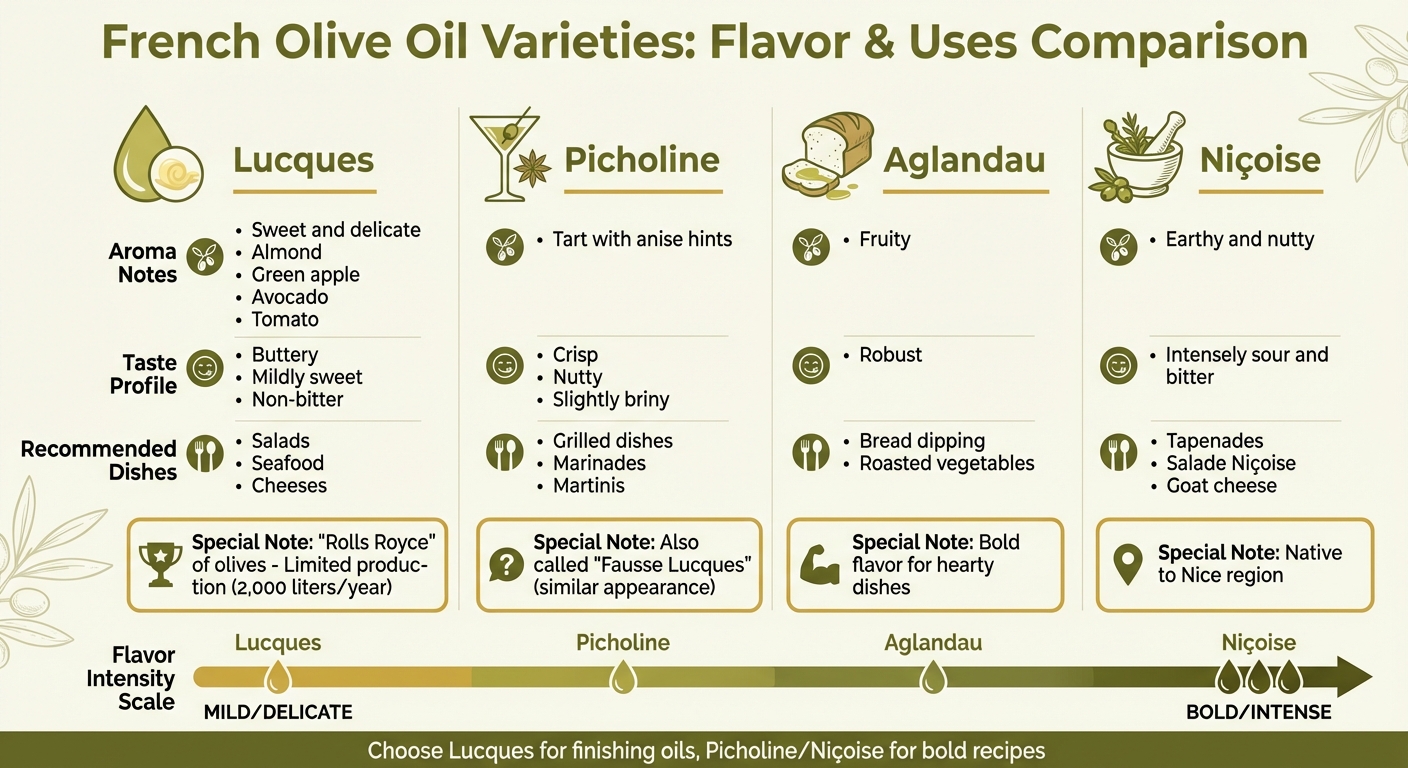
French Olive Oil Varieties Comparison: Lucques vs Picholine vs Niçoise vs Aglandau
Flavor and Intensity Differences
France is home to a variety of olives, each offering its own unique flavor profile. Among them, Lucques olive oil stands out for its sweet, buttery taste and aromatic notes of almond, green apple, avocado, and tomato. This gentle sweetness is rare among French olives, which often lean toward stronger, more bitter flavors. Let’s see how Lucques compares to other popular French varieties.
Take Picholine, for example. Sometimes called "Fausse Lucques" because of its similar appearance, it offers a completely different experience. Its tart, nutty flavor is accented by a touch of anise and a firm, crisp texture. With lemony and briny undertones, it’s perfect for martinis and complements fish dishes beautifully. On the other hand, Niçoise olives, native to the Nice region, bring earthy, nutty flavors with a bold sour and bitter edge. These qualities make them an excellent choice for tapenades or pairing with creamy goat cheese. Aglandau olives, meanwhile, produce a fruity yet robust oil, ideal for dipping bread or enhancing roasted vegetables.
The production of these olives also varies. Lucques, for instance, produces oil in much smaller quantities, adding to its rarity and exclusivity.
| Variety | Aroma Notes | Taste Profile | Recommended Dishes |
|---|---|---|---|
| Lucques | Sweet and delicate; almond, green apple, avocado, tomato | Buttery, mildly sweet, non-bitter | Salads, seafood, cheeses |
| Picholine | Tart with anise hints | Crisp, nutty, slightly briny | Grilled dishes, marinades, martinis |
| Aglandau | Fruity | Robust | Bread dipping, roasted vegetables |
| Niçoise | Earthy and nutty | Intensely sour and bitter | Tapenades, salade Niçoise, goat cheese |
When choosing between these varieties, it all comes down to the dish. Lucques shines as a finishing oil, adding a subtle elegance to light, delicate ingredients. Meanwhile, Picholine and Niçoise bring bold, assertive flavors that stand up well to heartier recipes. Each variety offers something special, ensuring there’s a perfect olive for every culinary need.
Conclusion
Lucques olive oil stands out as a rare gem, celebrated for its exceptional quality and meticulous production.
Why Choose Lucques Olive Oil
Among extra virgin olive oils, Lucques holds a special place. Its production is incredibly limited, earning it the nickname "Rolls Royce" of olives. The oil’s buttery sweetness and subtle nutty undertones elevate dishes without overpowering them.
For the best experience, use it as a finishing oil - drizzle it over fresh salads, seafood, or warm vegetables to let its unique flavors shine. As Amy Beth Wright, also known as The Olive Oil Professor, explains:
"The most expensive, nuanced olive oil should be saved for finishing, dipping, and drizzling rather than cooking, so that its flavors can really shine".
This approach ensures the delicate flavors and compounds that make Lucques olive oil so special are preserved. Its ability to complement fresh vegetables, cheeses, and meats makes it a must-have for any kitchen.
Explore Premium Olive Oils with Big Horn Olive Oil
Big Horn Olive Oil offers a carefully curated selection of Ultra Premium Extra Virgin Olive Oils that meet rigorous international standards for quality and purity. Their oils are cold-pressed within 2 hours of harvest and delivered fresh within 3 months, ensuring maximum flavor and nutritional benefits.
Whether you're interested in single-source options like Picual or Coratina Extra Virgin Olive Oil starting at $8.99, or want to try their Estate Reserve Ultra Premium EVOO, visit Big Horn Olive Oil to explore a range of oils that reflect the same commitment to excellence as Lucques.
FAQs
What makes Lucques olive oil unique compared to other French olive oils?
Lucques olive oil earns its reputation from the rare Lucques olives, often referred to as "green diamonds", grown exclusively in France's Languedoc-Roussillon region. These olives are celebrated for their large size, tender texture, and moderate oil yield. While the extraction process is more demanding, the result is a truly outstanding olive oil.
This oil boasts a rich, buttery taste with delicate hints of fresh almond and avocado. Its smooth, slightly sweet flavor is perfectly balanced, making it a standout choice. With its limited production, Lucques olive oil is a coveted option for anyone looking to experience a premium, one-of-a-kind olive oil.
What’s the best way to store Lucques olive oil to keep its flavor fresh?
To keep the vibrant, fruity, and slightly peppery flavor of Lucques olive oil intact, proper storage is key. Start by keeping it in a cool, dark place and ensure the bottle is tightly sealed. Opt for an opaque or dark glass container to shield the oil from light, and maintain a storage temperature between 57°F and 70°F. A pantry or cabinet away from heat sources, such as stoves or windows, is ideal.
Avoid putting the oil in the refrigerator, as the cold can cause it to become cloudy and may impact its antioxidants. For the best flavor experience, try to use the oil within 1–2 months of opening, especially if you’ve purchased a larger bottle. By storing it correctly, you’ll preserve the rich taste and quality of Lucques olive oil for as long as possible.
What makes Lucques olive oil a premium product?
Lucques olive oil stands out as a prized product, celebrated for its rarity and exceptional taste. This oil is crafted from Lucques olives, often dubbed the "green diamond", which are cultivated exclusively in France's Languedoc region. The olives are harvested in small quantities during a brief seasonal period, adding to the oil's exclusivity and desirability.
Renowned for its smooth, buttery flavor with delicate hints of nuttiness and fruitiness, Lucques olive oil has earned a special place in the kitchens of chefs and food lovers alike. Its rich taste and limited production make it a sought-after gem in the world of fine cooking.