

7 Ingredients for Mediterranean Clay Pot Cooking
Clay pot cooking has been a Mediterranean staple for thousands of years, offering slow, even heating that locks in moisture and enhances flavors. The key to success lies in using ingredients that complement the unique properties of clay cookware. Here are the seven must-have ingredients:
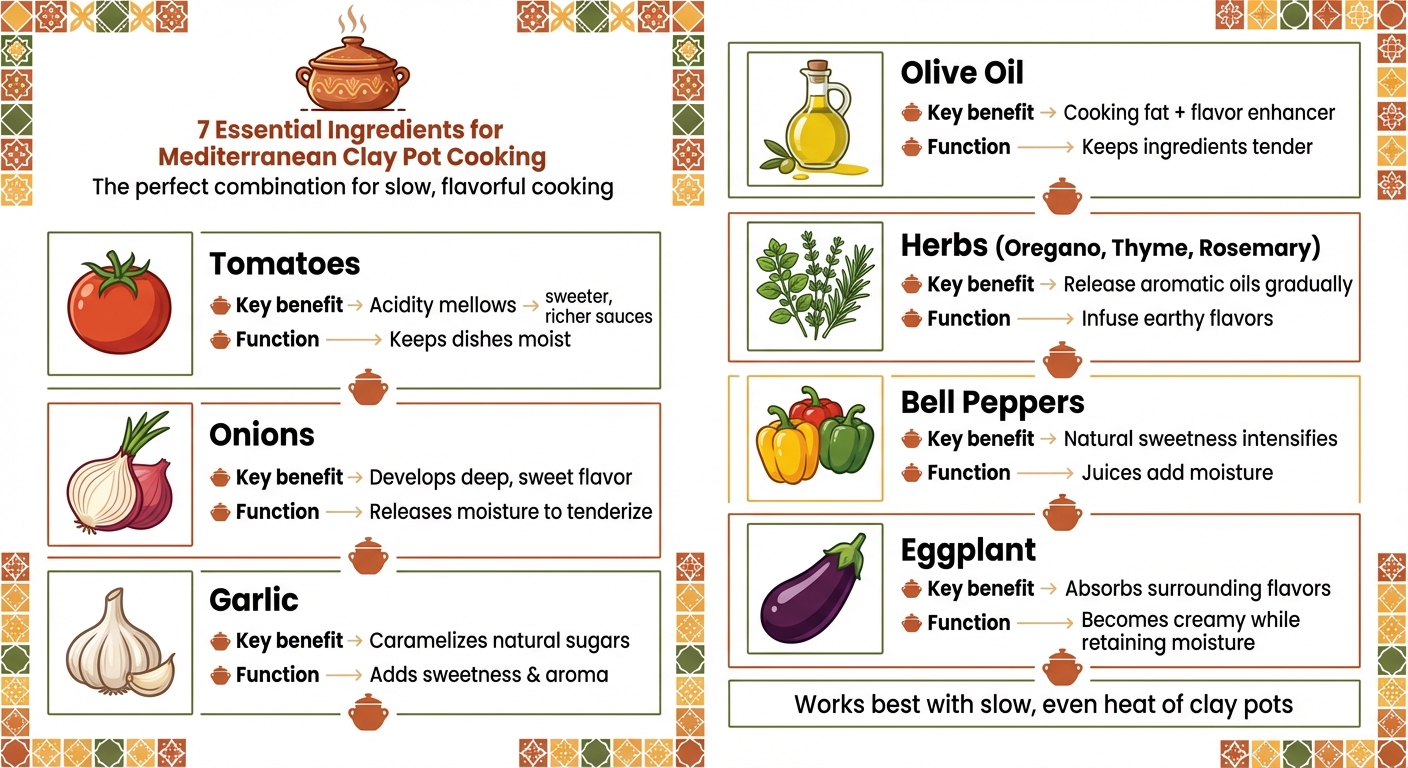
- Tomatoes: Their acidity mellows in clay, creating sweeter, richer sauces while keeping dishes moist.
- Onions: Slowly cooked onions develop a deep, sweet flavor and release moisture to tenderize dishes.
- Garlic: Roasting in clay caramelizes garlic’s natural sugars, adding sweetness and aroma.
- Olive Oil: Acts as both a cooking fat and flavor enhancer while keeping ingredients tender.
- Herbs (Oregano, Thyme, Rosemary): Release aromatic oils gradually, infusing dishes with earthy flavors.
- Bell Peppers: Their natural sweetness intensifies, and their juices add moisture to the dish.
- Eggplant: Absorbs surrounding flavors and becomes creamy while retaining moisture.
These ingredients, combined with the slow, consistent heat of clay pots, create dishes that are flavorful and tender. Whether you’re making a tomato-based stew, a vegetable medley, or a hearty braised dish, these staples bring out the best in Mediterranean cooking.
7 Essential Ingredients for Mediterranean Clay Pot Cooking
1. Tomatoes
How tomatoes add flavor
Tomatoes undergo a remarkable transformation when cooked in clay, developing into deeply rich and concentrated sauces. The alkaline nature of the clay softens their natural acidity, creating a balanced and sweetened flavor profile. As Chef Mary-Frances Heck explains, this process helps harmonize the flavors, making the tomatoes an essential component in many dishes.
Beyond their own flavor, tomatoes act as a perfect partner for ingredients like garlic, onions, and Mediterranean spices such as sumac or curry powder. They’re a cornerstone of traditional clay pot recipes in the region, appearing in everything from Moroccan fish tagines to Turkish shrimp casseroles and Greek braised dishes. This flavor evolution also supports the moisture retention that is key to successful clay pot cooking.
How tomatoes keep dishes moist
Thanks to their naturally high moisture content, tomatoes contribute to the self-basting effect that makes clay pot dishes so tender. As they cook slowly, tomatoes release their juices, creating steam that envelops and tenderizes proteins like chicken. This process ensures the dish remains juicy and flavorful. Recipe developer Peggy Trowbridge Filippone highlights this dynamic:
"The clay pot is covered when set to cook, creating an environment that allows the heat and moisture to circulate, basically steaming the food and resulting in an evenly cooked dish that is tender and juicy."
How tomatoes work in Mediterranean recipes
Tomatoes are at the heart of many Mediterranean clay pot dishes, from Turkish menemen to Greek strapatsada. Their bright acidity complements richer ingredients, creating a balanced dish. When diced and added to the pot, tomatoes break down into a sauce that locks in moisture throughout the cooking process. Their natural juices often serve as the main liquid in these recipes, showcasing the unique synergy between tomatoes and clay - a defining feature of Mediterranean culinary traditions.
2. Onions
How onions add flavor
Clay cookware, with its slow and even heating, brings out the natural sweetness of onions in a way that's hard to replicate. When cooked slowly in clay, onions take on a rich, mellow taste. Certain clays, like micaceous clay, have an alkaline quality that softens and sweetens the ingredients, toning down the sharpness of raw onions.
Starting your clay pot recipe by sweating onions in olive oil helps release their flavors, creating a savory base for the dish. For an added layer of flavor, try using a high-quality extra virgin olive oil like the one from Big Horn Olive Oil. Palestinian cookbook author Dima Sharif offers this tip:
"Sweat the onion and crushed garlic in the olive oil until translucent but not browned".
This method lays the groundwork for the signature flavor profiles of Mediterranean cuisine, whether you're making a Turkish Güveç or a Sicilian vegetable dish. This gentle cooking process not only enhances the onions' flavor but also contributes to the dish's overall moisture.
How onions keep dishes moist
Onions are naturally high in water, and this moisture plays a key role in clay pot cooking. When combined with the water-soaked clay pot, the steam generated from the onions helps keep dishes tender and prevents them from drying out during long cooking sessions.
Clay pots are excellent at retaining moisture, allowing onions to simmer gently with minimal oil. In traditional Turkish shrimp and vegetable casseroles, for example, onions cook slowly alongside garlic, tomatoes, and peppers. Their juices combine to create a flavorful, steamy environment that keeps the shrimp perfectly tender.
How onions work in Mediterranean recipes
Onions are essential in Mediterranean cooking, forming the flavor backbone of dishes like Turkish Güveç and Palestinian Makmooret Zahra. In these recipes, onions are often layered over the main ingredients, releasing their juices as they cook and tenderizing the dish in the process. For Makmooret Zahra, quartered onions are used to flavor lamb broth in a clay pot, which is traditionally sealed with dough to lock in steam and enhance the flavor.
As Chrissy Teigen, author and home cook, puts it:
"Cooking with clay feels like something people have been doing since the beginning of time, and the way a clay tagine retains heat is super comforting".
3. Garlic
How Garlic Adds Flavor
When garlic is roasted in a clay pot, its natural sugars caramelize, transforming its bold, pungent flavor into a mellow, sweet aroma. Sheryl Geerts, an editor and author, explains it best:
"When garlic is roasted, it develops an intense sweetness because its natural sugars caramelize."
This transformation becomes even more pronounced when using unglazed clay pots. As Paula Wolfert points out, food cooked in unglazed clay vessels often takes on a subtle, earthy flavor. Garlic doesn’t just bring sweetness - it also adds a touch of brightness and acidity, balancing the richness of extra virgin olive oil. Together, they create the aromatic base for countless Mediterranean soups, stews, and sauces. For the best results, start by sweating crushed garlic in high-quality olive oil, such as Big Horn Olive Oil, until it turns translucent. Be careful not to brown it, as this can introduce bitterness.
How Garlic Keeps Dishes Moist
Garlic doesn’t just enhance flavor - it also benefits from the unique properties of clay pots, which are excellent at retaining moisture during long cooking times. The porous texture and steam-regulating properties of these pots ensure that garlic stays tender and succulent, avoiding the risk of drying out or burning. To further prevent overcooking, soak a terra-cotta garlic roaster in water before use.
In Mediterranean cooking, garlic often takes center stage as a paste made by mashing it with olive oil, salt, and fresh herbs like mint or parsley. This paste is used to stuff vegetables or rubbed beneath the skin of poultry, infusing the dish with flavor as it cooks. Another popular technique involves slow-roasting whole garlic bulbs at 350°F for about an hour. This process turns the cloves into a creamy, spreadable texture that can be whisked into sauces or tossed with roasted vegetables.
How Garlic Works in Mediterranean Recipes
Garlic plays a starring role in nearly every type of Mediterranean clay pot dish, from meat-based tiellas to vegetable-forward güveçs and seafood tagines. One traditional recipe for Roman artichokes calls for five crushed garlic cloves mixed with salt, pepper, olive oil, mint, and parsley to create a paste. This mixture is stuffed into the centers of six to eight artichokes, which are then braised in an earthenware pot for 30–40 minutes. For poultry, garlic is often paired with juniper berries, oregano, and peppercorns to form a paste that’s spread under the skin, ensuring the meat stays moist and flavorful as it cooks.
This harmonious blend of garlic’s flavor, the moisture-retaining qualities of clay pots, and traditional Mediterranean techniques highlights why garlic is such a cornerstone of these dishes. It complements the vegetables, herbs, and oils that define the region’s culinary traditions.
4. Olive Oil
How Olive Oil Adds Flavor
Olive oil has the remarkable ability to transform simple ingredients into something extraordinary. As Anita Surewicz, a cookbook author, aptly states:
"Olive oil didn't become a pantry staple by accident - it makes just about everything taste better."
In clay pot cooking, olive oil does double duty: it acts as a cooking fat while adding a rich, earthy depth to vegetables, meats, and seafood. It also works wonders in balancing acidic flavors, softening the sharp edges of lemon juice, vinegar, or even raw onions. Using high-quality extra virgin olive oil, like Big Horn Olive Oil's Estate Reserve, takes this to another level. Its layered flavor profile enhances the overall taste and complements the moisture and texture benefits olive oil brings to clay pot dishes.
How Olive Oil Keeps Dishes Moist
Olive oil is more than just a flavor booster - it’s also a key to keeping dishes moist. In clay pots, it serves as a gentle medium that helps proteins stay tender with minimal use of oil. Thanks to the self-basting steam environment created by unglazed terracotta, you can use less oil than you would with metal cookware while still achieving juicy, tender results. A light coating of olive oil on meats and vegetables - both before and during cooking - not only locks in moisture but also enhances surface flavor.
How Olive Oil Works in Mediterranean Recipes
Olive oil is the backbone of many Mediterranean dishes, seamlessly tying together flavors and ingredients. Before cooking, tossing vegetables like potatoes and onions in extra virgin olive oil ensures that herbs and aromatics - like rosemary and garlic - stick evenly. In Spanish cazuelas, it mingles with aromatics to create a perfectly balanced braise. Similarly, in Moroccan tagines and Turkish güveçs, olive oil combines with tomatoes, peppers, and herbs to form a rich, flavorful braising liquid that keeps ingredients tender. The even, steady heat of clay pots allows olive oil to extract and enhance the flavors of these ingredients without the muddled taste that can sometimes result from metal pans.
5. Herbs (Oregano, Thyme, Rosemary)
How Herbs Add Flavor
Oregano, thyme, and rosemary bring a rich, earthy brightness to dishes, enhancing flavors without relying heavily on salt. Oregano, with its slightly bitter and aromatic profile, is a must-have for tomato-based sauces and works wonders with vegetables like eggplant. Thyme offers a subtle minty and herbal flavor that holds its own during long cooking times. Meanwhile, rosemary, with its pine-like, woody aroma, adds depth to marinades and roasted meats. The slow, even heat of clay pots gently draws out these herbs' flavors, avoiding scorching and ensuring a gradual, flavorful infusion. This unique cooking method allows these herbs to shine, unlocking their full aromatic potential.
How Herbs Work in Mediterranean Recipes
Oregano, thyme, and rosemary are cornerstones of Mediterranean cooking. Oregano is a key ingredient in Greek, Italian, and French cuisines, adding its distinctive flavor to pizzas, grilled meat marinades, and even olive seasonings. Thyme is celebrated for its ability to retain flavor during long cooking processes, making it ideal for slow-cooked soups and stews. Rosemary, on the other hand, is a favorite in Italian recipes, often used to flavor focaccia and roasted poultry.
In clay pot cooking, these herbs thrive. The gentle, enclosed heat of the pot, combined with the self-basting steam it generates, allows the flavors of oregano, thyme, and rosemary to circulate and deeply penetrate ingredients like proteins and vegetables. When paired with a generous drizzle of extra-virgin olive oil - about ½ cup for a large pot - they create a rich, flavorful base that captures their aromatic essence. For recipes that require extended cooking times, such as 8–10 hours, fresh sprigs of rosemary and oregano develop even deeper, more robust flavors without losing their integrity. This process ensures that every Mediterranean clay pot dish delivers a harmonious, herb-infused flavor profile.
sbb-itb-4066b8e
6. Bell Peppers
How Bell Peppers Add Flavor
When slow-cooked in clay, bell peppers develop a rich, sweet flavor and a silky texture that’s hard to beat. Red, orange, and yellow peppers are popular for their natural sweetness and vibrant appearance, while green peppers bring a slightly bitter edge to the mix.
To enhance their sweetness, toss sliced peppers with garlic, oregano, bay leaves, and a touch of extra-virgin olive oil before roasting. The slow-roasting process not only deepens their flavor but also creates crisp edges that gradually soften, adding both texture and a concentrated sweetness to your dish.
How Bell Peppers Keep Dishes Moist
Bell peppers are loaded with water, which they release as they cook, creating a light, natural sauce. This moisture keeps dishes juicy and flavorful throughout the cooking process.
"The clay seals in moisture during cooking, helping food retain its natural flavor and juices. As a result, less oil, butter and water is needed." – Beyond Toscano
Cooking in clay ensures the peppers remain tender without charring. Pairing them with tomatoes in a clay pot adds even more moisture, as the blistered tomatoes release their juices, creating a harmonious sauce that ties all the flavors together. This natural moisture doesn’t just enhance the peppers but also blends beautifully with other ingredients in Mediterranean dishes.
How Bell Peppers Work in Mediterranean Recipes
Bell peppers are a key ingredient in Mediterranean cooking, often paired with tomatoes, eggplant, and fresh herbs to create a complete flavor profile. In Turkey, green peppers are a must in menemen, a traditional breakfast dish made with scrambled eggs, tomatoes, and spices. Across the Mediterranean, peppers are always cooked until tender, never left crunchy or raw.
"Sweet and vibrant, these peppers add a pop of color and a delicate crunch that softens beautifully when cooked." – Suzy Karadsheh, Founder, The Mediterranean Dish
Cooking in clay pots helps maintain the peppers' bright colors and nutrients without any metallic interference. The semi-porous nature of clay allows oxygen to circulate, enhancing their aroma and earthy sweetness. Since clay retains heat longer than other materials, the peppers continue to soften and release their juices even after the pot is removed from the heat.
7. Eggplant
How Eggplant Adds Flavor
Eggplant's unique spongy texture makes it perfect for soaking up flavors like olive oil, garlic, onions, and spices such as oregano, cumin, and sumac. When cooked in a clay pot, it transforms from a simple vegetable into a deeply flavorful and aromatic ingredient, especially when paired with fresh tomatoes and a splash of wine.
The secret to bringing out eggplant's best flavor lies in preparation. Sprinkling eggplant slices with salt and letting them sit for 20–30 minutes before patting them dry removes any bitterness. This step also helps the eggplant absorb Mediterranean flavors more effectively. As it cooks, the texture changes from spongy to smooth and creamy, adding richness to any dish.
"Eggplant is such a versatile ingredient! It's delicious braised, fried, baked, and grilled!" – Suzy Karadsheh, Founder, The Mediterranean Dish
This flavor-packed foundation also highlights eggplant's ability to retain moisture.
How Eggplant Keeps Dishes Moist
In addition to its flavor-absorbing qualities, eggplant is excellent at holding onto moisture. Its porous structure soaks up liquids like olive oil, wine, and tomato juices, releasing them gradually during cooking. When cooked in a clay pot, the slow, even heat enhances this quality, allowing the eggplant to soften into a tender, luscious texture without drying out.
For an extra boost of flavor and moisture, try adding a splash of dry red or white wine toward the end of cooking. This not only deglazes the pot but also creates aromatic steam that enhances the dish. The clay pot's alkaline properties further soften and sweeten acidic ingredients like tomato paste, creating a balanced and flavorful result.
How Eggplant Works in Mediterranean Recipes
Eggplant's ability to absorb flavors and retain moisture makes it a star ingredient in Mediterranean cuisine. Across regions like Spain, Italy, Greece, and Turkey, it takes center stage in dishes where it's roasted, stuffed, grilled, or pureed into dips. Pairing it with chickpeas or lentils creates hearty, protein-packed meals.
In January 2021, Jennifer Angelopoulos crafted a Clay Pot Eggplant and Chickpea Ragout recipe using a 4-quart Römertopf clay pot. The dish features two large eggplants sliced into 1/4" rounds, combined with plum tomatoes, chickpeas, and Greek mountain oregano. After baking at 375°F for one hour, she adds 4 tablespoons of dry red wine for a final 15-minute bake. The result? A wholesome vegan meal where the eggplant and onions develop incredible aroma thanks to the clay pot's even heat distribution.
"The eggplant and onions are aromatic and the fresh tomatoes are brightened by the masala spices." – Jennifer Angelopoulos
Sumptuous Slow-Roasted Lamb Leg in a Clay Pot | A Delectable Easter Special Feast - Pabs Kitchen
Why These Ingredients Work Well in Clay Pots
Clay pots are known for their ability to heat evenly and retain moisture, qualities that transform the way ingredients cook. Thanks to the natural alkalinity and porous structure of clay, both flavor and texture are enhanced. For instance, when tomatoes simmer in a clay pot, their acidity is mellowed, creating a sweeter and richer flavor. The porous surface also allows moisture to evaporate gradually, concentrating sauces to perfection.
The slow, even heat distribution of clay pots is especially beneficial for delicate ingredients. Unlike metal pans that can develop hot spots, clay pots warm food gently and evenly from all sides. This gradual heating allows herbs like oregano, thyme, and rosemary to release their aromatic oils fully, enriching the dish with their essence. As food and travel writer Max Falkowitz puts it:
"Stews emerge richer and a little sweeter, as the clay's natural alkalinity tones down acidic ingredients".
This method of cooking not only draws out flavors but also helps preserve nutrients. The porous nature of clay pots creates a steam-rich environment, which allows vegetables like bell peppers, eggplant, and onions to soften beautifully while retaining up to 30–40% more nutrients compared to metal cookware [33,35]. Garlic, too, infuses the dish without the risk of burning. Carolyn Tillie, a clay pot expert, highlights this difference:
"Compared to a stew cooked in clay, a batch made in a conventional pot is just flat and one-dimensional. The flavors don't meld the same way".
Olive oil plays a crucial role in complementing the clay pot's magic. It locks in moisture and enhances flavors, staying stable under low heat. Using ultra premium extra virgin olive oil - like those from Big Horn Olive Oil (https://bhooc.com) - brings out the natural flavors of tomatoes, herbs, and vegetables even more. Combined with the clay pot's heat retention, every ingredient contributes to a deeply balanced and flavorful dish.
Conclusion
The secret to authentic Mediterranean clay pot cooking lies in the quality of the ingredients. Fresh tomatoes, fragrant herbs, and high-grade olive oil come together with the pot's unique ability to maintain steady heat and retain moisture. This combination enhances natural flavors, letting them shine without overpowering them.
Take olive oil, for example. A premium option, like the offerings from Big Horn Olive Oil, brings complexity and richness to the dish while working in harmony with the clay pot's natural properties. As Stephanie Eckelkamp from OliveOil.com puts it:
"High-quality extra virgin olive oil... won't simply blend into your dish, it will enhance it!"
The clay pot's gentle heat draws out the natural sweetness of caramelized onions, the earthy depth of eggplant, and the aromatic essence of fresh herbs. Together, these elements create what Beyond Toscano describes as a "purer, more authentic taste".
FAQs
What makes clay pot cooking ideal for Mediterranean recipes?
Clay pot cooking is a fantastic choice for Mediterranean dishes because the unglazed earthenware creates a naturally humid, sealed environment. This setup helps lock in moisture while bringing out the best in ingredients like vegetables, herbs, olives, and seafood. The slow, even heating allows steam to circulate and condense, keeping everything tender. Plus, it lets high-quality extra-virgin olive oil, like Big Horn Olive Oil, work its magic, adding delicate aromatics without needing a lot of extra fat.
Another bonus? This method helps retain nutrients and ensures food cooks evenly, avoiding those pesky hot spots. The gentle heat caramelizes vegetables beautifully and softens tougher cuts of meat, delivering the rich, rustic flavors that are the heart of Mediterranean cooking. And because the porous clay subtly absorbs and releases flavors, it adds an extra layer of depth to every dish, making meals both flavorful and nourishing.
Why is olive oil essential for Mediterranean clay pot cooking?
Olive oil plays a key role in Mediterranean clay pot cooking, elevating the flavors of every ingredient it touches. Its bold, fruity notes complement the natural taste of vegetables, herbs, and spices, creating a perfectly balanced flavor profile. Beyond taste, olive oil helps lock in moisture, ensuring dishes stay juicy while amplifying the slow-cooked aromas that make this style of cooking so mouthwatering.
Why is eggplant a great choice for Mediterranean clay pot cooking?
Eggplant is a standout ingredient in Mediterranean clay pot recipes, thanks to its spongy texture and ability to soak up the rich juices and spices during cooking. This slow, steam-based cooking method brings out the eggplant's natural flavors while keeping its nutrients intact, making every bite tender and flavorful.
Loaded with fiber, potassium, and B vitamins, eggplant isn’t just satisfying - it’s a nutritious addition that aligns perfectly with the health-focused Mediterranean diet.