

Mediterranean Diet and Olive Oil for Heart Health
The Mediterranean diet, known for promoting heart health, emphasizes whole foods, plant-based ingredients, and olive oil as its main fat source. Research shows that this diet can reduce cardiovascular risks, lower cholesterol, and support overall wellness. Key components include:
- Daily staples: Vegetables, fruits, whole grains, and 1–4 tablespoons of extra virgin olive oil.
- Weekly priorities: Fish, legumes, and raw nuts.
- Moderation: Poultry, eggs, and dairy.
- Occasional treats: Red meat and sweets.
Olive oil, especially extra virgin, is rich in monounsaturated fats and antioxidants that protect blood vessels, reduce inflammation, and improve cholesterol levels. Studies, like PREDIMED, highlight a 35% reduction in cardiovascular events for those consuming olive oil as part of this diet.
Switching to olive oil is simple: drizzle it on salads, roast vegetables, or use it in cooking. Choose high-quality extra virgin olive oil with low acidity and a fruity, peppery taste for maximum benefits. Products like Big Horn Olive Oil offer affordable, high-polyphenol options to support heart health. Start small - replace butter with olive oil and focus on balanced meals for long-term benefits.
Mediterranean Diet: Extra Virgin Olive Oil is KEY! #shorts
sbb-itb-4066b8e
Understanding the Mediterranean Diet
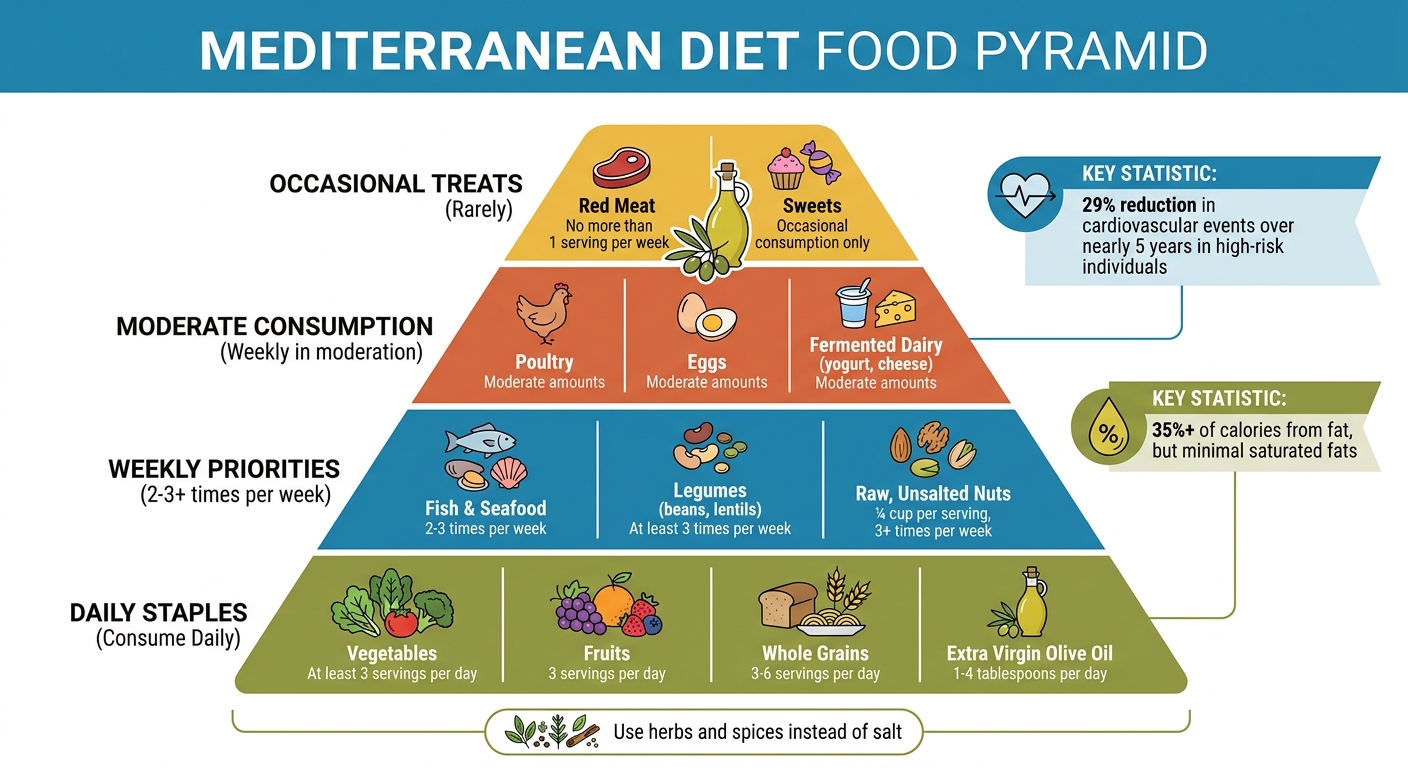
Mediterranean Diet Food Pyramid: Daily, Weekly, and Occasional Foods for Heart Health
Where the Mediterranean Diet Comes From
The Mediterranean diet gained scientific attention in 1958, thanks to Ancel Keys' groundbreaking Seven Countries Study. This research compared populations in Italy, Greece, and other Mediterranean regions to those in northern Europe and the United States. The results were eye-opening: Mediterranean populations experienced much lower rates of coronary heart disease, even though their diets included a relatively high fat intake.
The key difference? The type of fat. While more than 35% of their calories came from fat, saturated fats were minimal due to the predominant use of extra virgin olive oil instead of butter or lard. These findings laid the groundwork for identifying the core elements of the Mediterranean diet.
"Mediterranean diet is a generic term based on the traditional eating habits in the countries bordering the Mediterranean Sea. There's not one standard Mediterranean diet." - American Heart Association
Main Food Groups in the Diet
At its heart, the Mediterranean diet revolves around whole, minimally processed foods. It’s less about strict rules and more about focusing on nutrient-rich ingredients and enjoying meals in a balanced way.
Here’s a breakdown of its key components:
- Daily staples: Vegetables (at least 3 servings), fruits (3 servings), and whole grains (3–6 servings). Extra virgin olive oil - 1 to 4 tablespoons per day - is used generously to enhance flavor and aid nutrient absorption.
- Weekly priorities: Fish and seafood (2–3 times), legumes like beans and lentils (at least 3 times), and raw, unsalted nuts (around ¼ cup per serving, 3 or more times).
- Moderation: Poultry, eggs, and fermented dairy products such as yogurt and cheese are enjoyed in moderate amounts.
- Occasional treats: Red meat and sweets are limited, with red meat kept to no more than one serving per week.
Herbs and spices replace salt for seasoning, promoting better blood pressure control.
This diet has been linked to a 29% reduction in cardiovascular events over nearly five years in high-risk individuals. Its benefits come from the combination of fiber from whole grains, omega-3s from fish, antioxidants in fruits and vegetables, and heart-healthy monounsaturated fats from olive oil - all working together to support heart and blood vessel health.
Why Olive Oil Is Central to the Mediterranean Diet
What's in Olive Oil
Olive oil is made exclusively from olives, without the use of chemical solvents, ensuring that its natural compounds remain intact. This careful extraction process helps preserve components that are particularly beneficial for heart health.
Nutritionally, olive oil stands out for its high content of monounsaturated fatty acids (MUFAs). These fats are known to actively reduce total cholesterol and LDL (often called "bad" cholesterol) levels. Extra virgin olive oil is especially prized for its phenolic compounds, such as oleocanthal, oleacein, oleuropein aglycone, and ligstroside. These phenols, which are lost during the refining process, contribute to the oil's health-promoting properties.
"I call the Mediterranean diet a plant-based olive oil diet. We have no food or medicine that can do what olive oil can do." - Mary Flynn, Nutrition Researcher and Founder of the Olive Oil Health Initiative, Brown University
How Olive Oil Benefits Your Health
Thanks to its composition, olive oil provides a range of health benefits. Swapping saturated fats like butter for olive oil's unsaturated fats has been shown to significantly improve cardiovascular health.
For example, the DIVAS trial in July 2024 demonstrated that replacing 8% of saturated fat with unsaturated fats over 16 weeks led to a 0.98 standard deviation increase in a multilipid health score. A similar shift in the EPIC-Potsdam cohort was associated with a 32% reduction in cardiovascular disease risk and a 26% lower risk of type 2 diabetes.
Beyond its effects on cholesterol, the phenols in extra virgin olive oil offer anti-inflammatory, antimicrobial, and antioxidant properties. These benefits help protect cells, improve endothelial function, and lower blood pressure. Regular consumption - just 1.5 teaspoons per day - has been linked to a 50% reduction in cardiovascular mortality risk. With its ability to improve lipid profiles and overall cardiovascular health, olive oil perfectly complements the heart-friendly principles of the Mediterranean diet.
Research on Olive Oil and Heart Health
What the PREDIMED Study Found
The PREDIMED (PREvención con DIeta MEDiterránea) study stands out as a landmark investigation into how olive oil benefits heart health. Conducted between October 2005 and December 2010, it tracked 7,216 adults aged 55 to 80 who either had type 2 diabetes or at least three cardiovascular risk factors, such as high blood pressure or smoking. Over an average of 4.8 years, participants who consumed the most olive oil experienced some striking results: a 35% reduction in major cardiovascular events and a 39% decrease in overall cardiovascular risk. Even more compelling, high olive oil consumption was linked to a 48% drop in cardiovascular mortality.
The study also revealed a clear pattern: for every 10-gram increase in daily extra-virgin olive oil intake, there was a 10% lower risk of cardiovascular disease and a 7% reduction in cardiovascular mortality. When paired with a Mediterranean diet rich in extra-virgin olive oil, participants saw a roughly 30% reduction in major cardiovascular events compared to those following a low-fat diet.
How Olive Oil Protects Your Heart
The PREDIMED findings highlight how olive oil’s unique properties contribute to heart health. Its monounsaturated fats help lower total cholesterol and LDL (the "bad" cholesterol), while its polyphenols provide powerful antioxidant and anti-inflammatory effects. These compounds, along with phytosterols and vitamin E, work together to improve endothelial function and reduce oxidative stress - key factors in protecting the cardiovascular system.
Extra-virgin olive oil is especially effective because it retains these protective compounds, which are often lost during the refining process of standard olive oil. However, the greatest benefits come when olive oil is part of a broader Mediterranean diet, rather than being consumed in isolation as just another fat source.
Adding Olive Oil to Your Daily Meals
Simple Ways to Use Olive Oil
Incorporating olive oil into your meals is easier than you might think. A simple drizzle of extra virgin olive oil over salads can elevate their flavor while adding heart-friendly fats. For a quick dressing, mix a tablespoon of olive oil with vinegar or a splash of lemon juice - no cooking required. When roasting vegetables, toss them with about two tablespoons of olive oil and bake at 400°F. This not only enhances their taste but also helps retain important nutrients.
If you’re cooking proteins like chicken or fish, try marinating them in olive oil mixed with garlic and herbs for 30 minutes before grilling. It keeps the meat moist and flavorful. You can also stir a teaspoon of olive oil into a yogurt parfait or drizzle it over grilled vegetables at lunch or dinner. To align with Mediterranean dietary practices, aim for 1.5 to 3 tablespoons daily (about 20–40 grams).
Once you’ve mastered these techniques, the next step is choosing the right olive oil to ensure you’re reaping the full health benefits.
How to Choose Quality Olive Oil
Not all olive oils are created equal. High-quality extra virgin olive oil is the best choice, and there are a few key factors to look for. First, check the bottle for a harvest date - ideally, it should be within the last 18 months. Look for oils packaged in dark glass or tin containers, which protect the oil from light and help preserve its quality. A good extra virgin olive oil will have an acidity level below 0.3% and should taste fruity, slightly bitter, and peppery. That peppery sensation in your throat? It’s a sign of polyphenols, which contribute to its health benefits.
Certifications can also guide you. Labels from organizations like the California Olive Oil Council (COOC) or the International Olive Council (IOC) indicate a high standard of quality. Be cautious of oils labeled as "light" or "refined", as these lack the antioxidants your heart craves. Store your olive oil in a cool, dark place, and for the best flavor and benefits, use it within three months of opening.
Now that you know how to choose the best olive oil, let’s explore what Big Horn Olive Oil has to offer for your heart health.
Big Horn Olive Oil Products for Heart Health
Big Horn Olive Oil specializes in ultra-premium extra virgin olive oils designed to support cardiovascular health. Their Estate Reserve Ultra Premium EVOO stands out with polyphenol levels exceeding 500 mg/kg - double the 250 mg/kg benchmark linked to strong antioxidant benefits. This makes it perfect for raw uses, like drizzling over salads, to maximize its anti-inflammatory properties.
For everyday cooking or marinades, the Picual EVOO offers a bold flavor and is rich in oleocanthal, a compound recognized for its anti-inflammatory effects. Both oils are cold-pressed within two hours of harvest, ensuring they maintain the high polyphenol levels that align with Mediterranean dietary recommendations. At just $8.99 per bottle, these oils deliver both quality and freshness, making them an excellent choice for anyone looking to prioritize heart health while enjoying a balanced diet.
Conclusion
The Mediterranean diet has long been celebrated for promoting heart health, thanks to its foundation of whole foods and healthy fats. By swapping out harmful fats for unsaturated ones - like those found in olive oil - it offers a practical path to better cardiovascular health. Historical evidence further underscores its benefits.
Take extra virgin olive oil, for example. It’s known to lower LDL cholesterol and combat inflammation. Products like Big Horn Olive Oil's Estate Reserve Ultra Premium EVOO, cold-pressed within two hours of harvest and priced at just $8.99 per bottle, deliver heart-protecting antioxidants in every drop.
Consistency is key. As the Mayo Clinic Staff highlights, "Research suggests that it's key to follow the Mediterranean diet over the long term for your heart to benefit". This lifestyle thrives on small, manageable changes - like replacing butter with olive oil and focusing meals around plant-based ingredients.
Why wait? Start today: drizzle olive oil over your salad, roast your veggies with it, or make it your go-to cooking fat. Each step ensures your heart gets the nourishment it deserves.
FAQs
How much extra virgin olive oil should I have per day?
Consuming 1 to 2 tablespoons of extra virgin olive oil daily is a simple way to support heart health and lower cardiovascular risks. Adding this to your meals not only promotes overall well-being but also aligns with the health benefits often associated with the Mediterranean diet.
Can I cook with extra virgin olive oil without losing the benefits?
Yes, you can cook with extra virgin olive oil without compromising its health benefits. When heated to common cooking temperatures, like those used for frying (350°F–375°F), its monounsaturated fats and antioxidants remain intact. Just make sure to stay within this heat range to get the best results.
What should I look for on the label to buy real, high-quality EVOO?
When choosing Extra Virgin Olive Oil, pay attention to certifications like PDO (Protected Designation of Origin), PGI (Protected Geographical Indication), IOC (International Olive Council), or organic seals. These labels indicate quality and authenticity. Opt for bottles made of dark glass or metal, as they shield the oil from light, preserving its quality. Also, check for harvest or production dates to ensure the oil is fresh. These factors can help you select a product that's genuine and top-notch.