

Mediterranean Herbs for Olive Oil Grilling
Grilling with Mediterranean herbs and extra virgin olive oil (EVOO) is a simple way to elevate the flavor of your meats. EVOO acts as a carrier for fat-soluble compounds in herbs like rosemary, thyme, and oregano, infusing meats with rich, aromatic flavors. Its high smoke point (over 410°F) makes it ideal for grilling, while also locking in moisture and creating a flavorful glaze.
Here’s a quick guide to the best Mediterranean herbs and how to use them with olive oil for grilling:
- Rosemary: Bold and woody; perfect for lamb, pork, and poultry. Use sprigs as a natural basting brush or create infused oils.
- Thyme: Earthy and slightly sweet; pairs well with beef, lamb, and poultry. Best in marinades or brushed on meats.
- Oregano: Earthy and pungent; ideal for chicken, beef, and lamb. Works well in marinades or wet rubs.
- Basil: Sweet and herbaceous; shines with chicken, seafood, and pork. Use as a finishing drizzle or in quick marinades.
- Parsley: Mild and fresh; great with seafood and chicken. Add gremolata or parsley-infused oil after grilling.
- Sage: Earthy and savory; complements pork, poultry, and lamb. Use in marinades or as infused oil.
- Marjoram: Sweet and floral; pairs well with chicken and pork. Best used in herb blends or light rubs.
- Mint: Cooling and citrusy; excellent for lamb and chicken. Use as a finishing touch or in sauces.
For mixed herb blends, combine woody herbs like rosemary and thyme with tender herbs like basil and parsley. Use a 3:1 olive oil-to-acid ratio for marinades, and always reserve a portion of infused oil for post-grilling drizzles.
1. Rosemary
Flavor Profile
Rosemary brings a bold, aromatic, and woody flavor to grilled meats, making it a staple in Greek and Italian cuisine. Its distinct aroma comes from natural compounds like camphene, β-myrcene, and 1,8-cineol. When paired with extra virgin olive oil (EVOO), the oil not only enhances rosemary's fat-soluble flavors but also helps reduce oxidation during cooking.
Best Meat Pairings
This herb is a classic choice for grilled sausages, poultry, and lighter meats. However, it also pairs wonderfully with richer proteins like lamb and pork. For fatty fish such as salmon, rosemary shines in marinades made with EVOO, balsamic vinegar, and lemon juice. Its robust flavor holds its own against these bold proteins, creating a harmonious balance. Rosemary also complements garlic, thyme, and lemon, layering dishes with Mediterranean-inspired flavors. These combinations are perfect for grilling, adding depth and character to your meals.
Olive Oil Applications
A clever grilling hack is to use fresh rosemary sprigs as a basting brush. California Olive Ranch suggests:
"One great grilling trick is to tie together a bunch of fresh rosemary or thyme, then use it as a brush to baste your foods with olive oil as they grill."
You can also make rosemary-infused olive oil by simmering the herb in EVOO for 10–15 minutes. Alternatively, mix chopped rosemary with olive oil and balsamic vinegar for a quick marinade. For salmon, marinate the fish in a rosemary-balsamic mixture for at least 30 minutes before grilling to ensure the flavors are fully absorbed.
Heat Behavior and Usage Tips
Rosemary stands up well to high heat, making it ideal for grilling. High-quality extra virgin olive oil has a smoke point around 410°F, which works perfectly with grill temperatures ranging from 400°F to 500°F. Bill Briwa, a chef-instructor at the Culinary Institute of America, advises:
"When you see the first few wisps of smoke that tells you the oil is the hottest it can get before you burn it."
To prevent sticking, lightly oil the grill grate before adding rosemary-seasoned meats, but avoid over-oiling to reduce drips. Spraying EVOO on the meat during grilling helps create a flavorful glaze that locks in rosemary's aromatics. For an extra burst of flavor, drizzle rosemary-infused olive oil over the grilled meat right before serving.
2. Thyme
Flavor Profile
Thyme brings a bold and slightly sweet herbal essence that's a cornerstone of Mediterranean cooking. This herb is a fantastic tool for chefs looking to cut back on salt, sugar, or fat without sacrificing flavor. When paired with extra virgin olive oil, thyme's fat-soluble compounds are released, amplifying its taste. Beyond its flavor, thyme is a natural fit for olive oil-based marinades, making it a versatile ingredient in the kitchen.
Best Meat Pairings
Thyme's earthy, aromatic notes make it an excellent match for a variety of meats. It shines with beef, lamb, and game, making it a favorite for hearty grilled dishes. It's just as effective with poultry, pork, and fish, showcasing its adaptability across different proteins. Its robust flavor pairs especially well with lamb. A standout example is Thyme & Pomegranate Lamb Chops, where thyme-infused olive oil and pomegranate dark balsamic vinegar create a marinade that balances the richness of the meat with a touch of fruity acidity.
Olive Oil Applications
To create a flavorful marinade, mix chopped fresh thyme with garlic, salt, and pepper into extra virgin olive oil. Let the meat - be it beef, lamb, poultry, or pork - soak overnight for maximum flavor. Remember to strip the thyme leaves from their stems before chopping. If you're using dried thyme, substitute one teaspoon for every tablespoon of fresh thyme, as dried herbs are much more concentrated. For a handy grilling hack, freeze thyme-infused olive oil in ice cube trays for easy portioning and future use.
Heat Behavior and Usage Tips
Thyme handles high grilling temperatures exceptionally well. For best results, brush thyme-infused olive oil directly onto the meat instead of the grill grates to prevent sticking and better control the flavor. For a lighter touch, combine the oil with a splash of lemon juice. For a bolder profile, add smoked paprika to the mix. Since thyme is a hardy herb, it's one of the easiest varieties to dry at home, ensuring you have it on hand for long-term use.
3. Oregano
Flavor Profile
Oregano brings bold, earthy, and slightly bitter flavors to the table, making it a standout among Mediterranean herbs. Its taste is a mix of freshly cut grass, hay, and mint, with a hint of bitterness and a subtle medicinal edge. This distinct flavor comes from aromatic compounds like thymol and carvacrol, which add a warming sensation when you taste it. High-quality oregano can contain up to 4% essential oils, which amplify its intensity. When paired with extra virgin olive oil (EVOO), oregano’s robust and earthy notes blend seamlessly with the oil’s fruity richness, creating a combination that locks in meat juices while delivering a beautifully charred, flavorful crust.
Best Meat Pairings
Oregano shines brightest when paired with chicken, as the herb’s earthy flavor complements the meat’s lightness without overwhelming it. It also works wonders with beef, adding balance to marinades and rubs while enhancing the meat’s natural umami. In traditional Mediterranean grilling, oregano is a key ingredient for dishes like gyros and doner kebabs, where it elevates the flavors of lamb and pork. Even fish benefits from oregano’s touch - combine it with lemon and olive oil for a fresh, herbaceous finish.
Olive Oil Applications
For a classic Italian twist, try salmoriglio, a marinade that blends oregano with olive oil, lemon juice, and salt for a perfectly balanced flavor. If you’re short on time, whip up a wet rub by mixing dried oregano with olive oil and garlic, then apply it directly to the meat. For deeper flavor, marinate your meat in an oregano and olive oil mixture for 5–6 hours. To avoid sticking and ensure even flavor, apply the mixture directly to the food instead of the grill grates. Crumble dried oregano before mixing to release its essential oils, and remember the ratio: 1 teaspoon of dried oregano equals 2 teaspoons of fresh.
Heat Behavior and Usage Tips
Oregano is not just versatile - it’s also highly heat-tolerant, making it ideal for grilling. Extra virgin olive oil, with its smoke point of 374°F to 405°F, pairs perfectly with grilling temperatures between 350°F and 450°F. For the best results, incorporate oregano into marinades rather than placing fresh sprigs directly on the meat to avoid an overpowering flavor. While grilling, baste your meat with an oregano-infused oil mixture to build a crispy, flavorful crust. Keep in mind that dried oregano is more concentrated than fresh, making it the better option for rubs and marinades, as it distributes flavor more evenly.
4. Basil
Flavor Profile
Basil brings a sweet, aromatic, and herbaceous touch to dishes. For instance, Genovese basil is known for hints of anise, pepper, and mint, while Greek basil leans more toward a citrusy, lemon-like flavor. Its fresh, green aroma is thanks to compounds like β-pinene, ocimene, and 1,8-cineol. When combined with extra virgin olive oil, basil becomes a powerful flavor enhancer, spreading its herbal notes evenly through the meat - whether as part of a marinade or a finishing glaze. This pairing not only complements but also elevates the smoky, charred flavors of grilled meats.
Best Meat Pairings
Basil shines when paired with pork, especially when infused into olive oil for marinades. It also works wonders with chicken and fish, where its light, fresh notes blend beautifully with lemon and other herbs. In dishes like Caprese-style grilled chicken with mozzarella and tomatoes, basil adds a bright, fresh layer of flavor.
Olive Oil Applications
For a simple yet flavorful marinade, combine basil, olive oil, and lemon, and let chicken or fish soak for 5–6 hours. For the marinade, stick to a ratio of three parts olive oil to one part acid, such as balsamic vinegar or lemon juice. This helps keep the meat moist. For fish, limit marinating to 30 minutes at room temperature or up to an hour in the fridge to maintain its texture. When grilling, apply the basil-olive oil mixture directly to the meat to prevent sticking. For a fun, natural twist, tie fresh basil sprigs together and use them as a basting brush while grilling.
Heat Behavior and Usage Tips
Extra virgin olive oil holds up well to grilling temperatures, typically between 350°F and 410°F. However, basil’s delicate aromas can fade under prolonged high heat. To capture its best flavor, finish your dish with a drizzle of basil-infused olive oil after removing the meat from the grill. Basting during the last few minutes of cooking creates a flavorful glaze without burning the herbs. If you're cooking for longer periods, dried basil, with its slightly milder and sweeter profile, is a better option than fresh leaves. Mixing basil with olive oil also slows oxidation, keeping the flavors fresh and stable.
5. Parsley
Flavor Profile
Parsley brings a mild, fresh taste with a slight peppery edge. Its bright, green notes work beautifully with olive oil, especially in Mediterranean-inspired dressings and finishing oils. When grilled with olive oil, parsley adds a refreshing contrast to smoky or charred flavors, particularly in seafood and poultry dishes. If you're cooking or grilling, flat-leaf parsley (also called Italian parsley) is your best choice due to its stronger flavor. Curly parsley, on the other hand, shines as a garnish. This versatility makes parsley a go-to herb for enhancing a wide range of proteins.
Best Meat Pairings
Parsley is a team player when it comes to pairing with grilled proteins. It works wonderfully with chicken, beef, pork, and seafood. When blended with olive oil and a splash of lemon juice for marinades, it might even help reduce the formation of heterocyclic amines during high-heat grilling.
Olive Oil Applications
For a quick and flavorful basting oil, you can gently warm olive oil with crushed garlic and chopped parsley to blend the flavors. In Greek cuisine, a classic ladolemono dressing - made with extra virgin olive oil, fresh lemon juice, garlic, and parsley - is a perfect drizzle for grilled fish or chicken. Another option is gremolata, a mix of finely chopped parsley, lemon zest, garlic, and olive oil, which makes an excellent topping for grilled or roasted meats. Olive oil not only helps to extract parsley's flavor but also carries it beautifully into your dish.
Heat Behavior and Usage Tips
Parsley is a delicate herb, and its vibrant color and flavor can fade with prolonged high heat. To keep its freshness intact, add fresh parsley or parsley-infused olive oil just before serving. You can also sprinkle chopped parsley over grilled meats right after cooking - this lets the residual heat release its aroma without overcooking the leaves. Extra virgin olive oil, with a smoke point of around 410°F, is ideal for grilling at temperatures between 400°F and 500°F. Applying an olive oil and parsley mixture directly to the meat helps control flavor and minimizes flare-ups. For marinades or dry rubs that require more time, dried parsley can be a substitute, though it offers a milder, earthier taste.
6. Sage
Flavor Profile
Sage brings a bold, earthy taste with a hint of pepper, making it a standout herb in the kitchen. Its strength means you only need a little to make a big impact. Mandel Smith, MS, RD, LDN from Pennsylvania State University, describes it perfectly:
"Sage has an earthy smell and a savory, slightly peppery taste. Sage is commonly used to flavor poultry and stuffing mixes."
When combined with extra virgin olive oil, sage enhances grilled meats by sealing in their juices and delivering its rich, fat-soluble flavors.
Best Meat Pairings
Sage shines in Mediterranean cooking and pairs beautifully with poultry, like chicken and turkey, where its robust flavor enhances the meat without overpowering it. It’s equally at home with pork, sausage, and richer meats like lamb, steak, and game.
Olive Oil Applications
For a flavorful twist, try making sage-infused olive oil. Heat fresh sage in extra virgin olive oil on low for 10–15 minutes, or refrigerate it for up to a week for a more subtle infusion. To create a quick marinade, mix chopped sage with olive oil, garlic, and salt, and let it rest overnight - perfect for lamb or beef.
Another trick? Tie fresh sage leaves together or secure them to a grill brush to baste meats directly on the grill, locking in moisture and flavor. For the best results, use a high-quality extra virgin olive oil, like the options from Big Horn Olive Oil. The combination of sage and EVOO enhances the natural flavors of grilled meats, making every bite unforgettable.
Heat Behavior and Usage Tips
Sage is a hardy herb that holds its flavor even at high grilling temperatures, making it a reliable choice for various proteins. Since extra virgin olive oil has a smoke point of 410°F or higher, it’s perfect for grilling sage-seasoned meats at 400°F–500°F. McCormick Kitchens highlights that fresh sage is gentler in flavor compared to dried sage - add it early for a subtle touch or later for a stronger punch.
Keep in mind, dried sage is much more concentrated; use one teaspoon of dried sage for every tablespoon of fresh in recipes. For the best grilling results, brush meats with sage-infused olive oil - this prevents sticking, ensures even browning, and distributes flavor evenly.
sbb-itb-4066b8e
7. Marjoram
Flavor Profile
Marjoram brings a sweet, mild flavor that sets it apart from oregano. Often referred to as "sweet marjoram" for its floral undertones, this herb adds a refined touch to grilled meats without overpowering them. As chef and author Deborah Madison explains:
"Marjoram's flavor lacks the oiliness and abrasiveness of oregano. Marjoram is more delicate and floral than oregano. It is sometimes called 'sweet marjoram' and for good reason."
When combined with high-quality extra virgin olive oil, marjoram’s essential oils create a flavorful, crispy crust while sealing in the meat's natural juices. This delicate balance makes it a fantastic choice for enhancing a variety of proteins.
Best Meat Pairings
Marjoram complements poultry, pork, and beef beautifully. Its gentle flavor works well in classic Mediterranean blends like herbes de Provence and za’atar, which are often mixed with extra virgin olive oil for marinades.
Olive Oil Applications
To make the most of marjoram, mix it with extra virgin olive oil at a ratio of 1/4 to 1/2 cup per pound of meat. You can also brush marjoram-infused olive oil onto meats during the final grilling stages to create that signature Mediterranean crust. For the best results, try using Ultra Premium EVOO from Big Horn Olive Oil. This method ensures the herb’s flavors shine while keeping the meat juicy.
Heat Behavior and Usage Tips
For fresh marjoram, add it toward the end of grilling to preserve its flavor and vibrant color. If you’re using dried marjoram, remember to use about one-third the amount compared to fresh. To keep fresh marjoram at its best, wrap it in a damp paper towel and store it in an airtight container. Thanks to extra virgin olive oil’s smoke point of 374°F to 405°F, you can grill at medium-to-high heat with confidence, letting marjoram’s subtle flavor elevate your dish .
8. Mint
Flavor Profile
Mint brings a lively, cooling flavor with a touch of citrus, creating a refreshing contrast that stands out among Mediterranean herbs. Its cooling effect makes it particularly effective at cutting through rich, fatty flavors like those found in grilled meats. Pairing mint with extra virgin olive oil enhances its brightness, offering a fresh counterbalance to the smoky char of grilled dishes. To preserve its delicate oils, mint is best added after grilling, ensuring its vibrant essence remains intact.
Best Meat Pairings
Mint pairs exceptionally well with grilled lamb, especially cuts like loin or shoulder chops. Fresh Pressed Olive Oil describes lamb as:
"Lamb has a mild, tender taste that meat eaters will love, and loin or shoulder chops are perfect for the grill any day of the year".
Beyond lamb, mint also adds a refreshing note to grilled chicken. Its digestive benefits make it a favorite in Middle Eastern cuisine, often accompanying hearty grilled proteins.
Olive Oil Applications
Since mint doesn't handle direct heat well, it’s best used as a finishing ingredient. Try making a gremolata by blending 1/4 cup fresh mint with 1/4 cup parsley, garlic, lemon zest, and hazelnuts. Emulsify the mixture with 1/4 cup extra virgin olive oil. Spoon this over grilled lamb after it has rested to highlight the herb’s fresh flavors. For marinades, a combination of mint, extra virgin olive oil, and lemon juice not only infuses flavor but also provides antioxidants that reduce harmful compounds during high-heat grilling. When choosing olive oil for mint-based recipes, opt for buttery or sweet varieties like those from Big Horn Olive Oil, as they complement mint’s natural brightness better than grassy or bitter oils.
Heat Behavior and Usage Tips
Mint works best when applied after grilling to maintain its vibrant flavor. For lamb chops, coat them with extra virgin olive oil, season with salt and pepper, and grill over medium-high heat for 2 to 3 minutes per side. Once cooked, finish with a mint-based sauce or gremolata. Always prioritize fresh mint over dried for grilling applications. If fresh mint isn’t available, consider using basil, rosemary, or marjoram as substitutes.
9. Mixed Mediterranean Herb Blends
Flavor Profile
Mixed Mediterranean herb blends bring together the bold, earthy notes of woody herbs like rosemary, thyme, oregano, and sage with the fresh, vibrant flavors of tender herbs such as basil, parsley, dill, and mint. This combination creates a savory, well-rounded profile perfect for elevating grilled meats. Adding garlic and citrus - like lemon juice or zest - introduces a tangy acidity that balances the richness of proteins, making these blends incredibly versatile across various dishes.
Best Meat Pairings
These herb blends are a natural fit for a wide range of meats. For beef, lamb, and game meats, deeper combinations featuring rosemary and sage work wonders, especially when paired with darker balsamic vinegars for added depth. Chicken and pork thrive with lighter blends that include thyme, basil, and tarragon. Marinating them in olive oil for 5 to 6 hours not only locks in flavor but also ensures juicy, tender results. Fish and seafood, such as salmon and swordfish, are best complemented by delicate herb mixtures that enhance their natural flavors without overpowering them. Even Italian sausages benefit from the addition of rosemary and garlic, which bring out their savory essence.
Olive Oil Applications
To create herb-infused olive oil, mix 1.5 oz of fresh herbs with 2 cups of high-quality extra virgin olive oil (EVOO). For tender herbs like basil and parsley, blanch them in boiling water for 10–15 seconds, then immediately transfer them to an ice bath to preserve their vibrant color and flavor. Woody herbs such as rosemary and thyme can be gently heated in olive oil for about 5 minutes to release their essential oils. For the best results, use a premium EVOO, like the options from Big Horn Olive Oil, which will complement the herbal notes without overpowering them. Store your infused oils in the refrigerator for up to a week, and let them return to room temperature before use if they solidify.
Heat Behavior and Usage Tips
To avoid sticking or burning, apply these herb blends directly to the meat before cooking. For optimal flavor, marinate proteins for at least 2 hours, though 5–6 hours is ideal for chicken and pork. Cooking expert Martina Crocker highlights the benefits of grilling with EVOO:
"Grilling with extra virgin olive oil not only imbues your food with extra flavor but also provides a slew of health benefits".
When using these blends, incorporate woody herbs into marinades and save tender herbs for a finishing drizzle. For the best flavor, make sure to remove woody stems before use.
Marinated Chicken Thighs with Olive Oil & Herbs – The Secret of Flavor
Herb and Olive Oil Pairing Guide
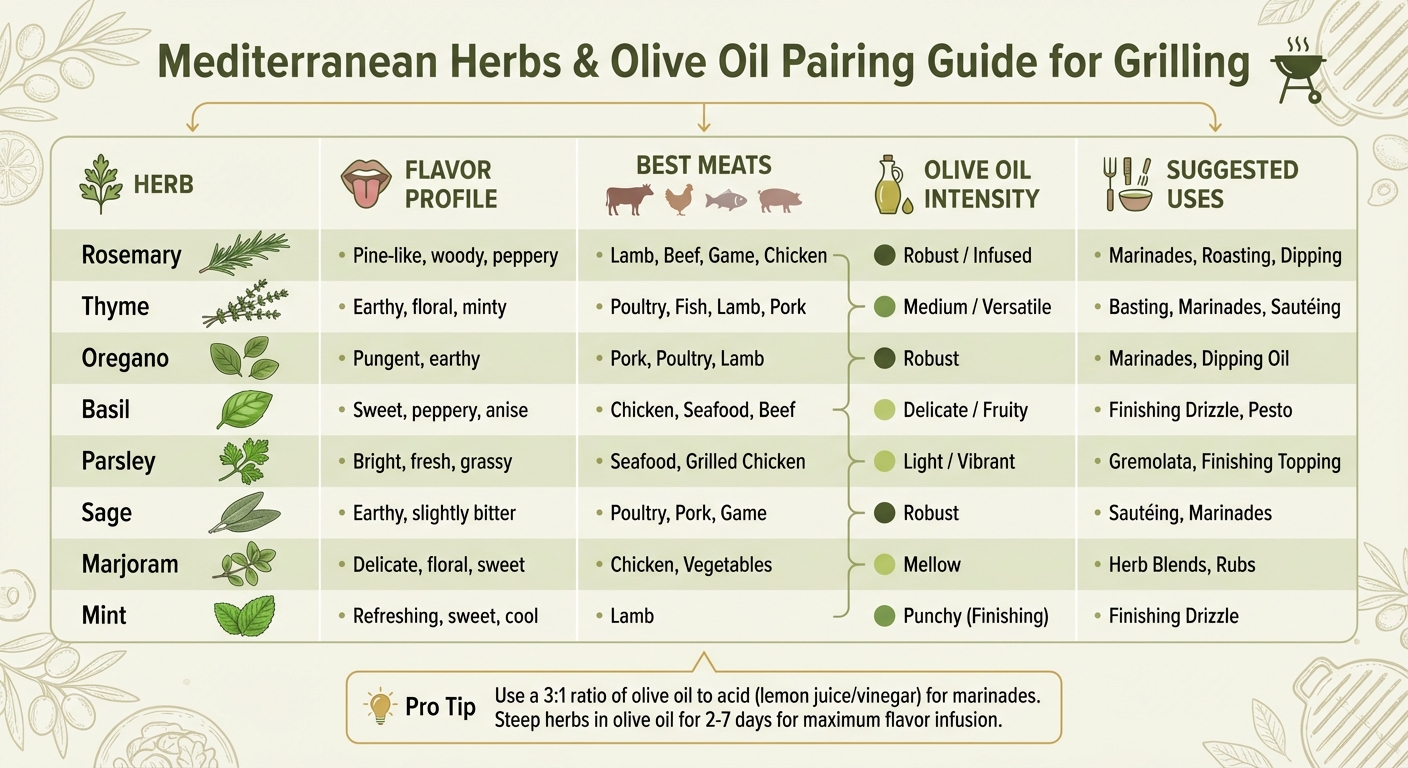
Mediterranean Herbs and Olive Oil Pairing Guide for Grilling
Building on the earlier tips for using herbs, this guide simplifies the art of matching olive oil with Mediterranean herbs for grilling. Pairing the right herb with the right olive oil can take your grilling game to the next level. For example, robust herbs like rosemary and oregano shine in marinades when combined with a bold olive oil, while lighter herbs like basil and parsley are best showcased with a delicate, fruity oil as a finishing touch. Knowing which herbs can handle the heat and which work better as a final flavor enhancer is essential for creating depth and complexity in your dishes.
When preparing marinades, stick to the classic 3:1 ratio - three parts olive oil to one part acid, like lemon juice or vinegar. This balance allows the herbs to infuse beautifully while also tenderizing the meat. For maximum flavor, steep herbs in olive oil for 2–7 days. Always use nonreactive containers, such as glass, stainless steel, or plastic, to avoid any unwanted reactions with acidic ingredients - aluminum, for example, can alter the flavor. To make things easier, here’s a quick reference table for herb and olive oil pairings:
| Herb | Flavor Profile | Recommended Meat Pairings | Olive Oil Intensity | Suggested Uses |
|---|---|---|---|---|
| Rosemary | Pine-like, woody, peppery | Lamb, Beef, Game, Chicken | Robust / Infused | Marinades, Roasting, Dipping |
| Thyme | Earthy, floral, minty | Poultry, Fish, Lamb, Pork | Medium / Versatile | Basting, Marinades, Sautéing |
| Oregano | Pungent, earthy | Pork, Poultry, Lamb | Robust | Marinades, Dipping Oil |
| Basil | Sweet, peppery, anise | Chicken, Seafood, Beef | Delicate / Fruity | Finishing Drizzle, Pesto |
| Parsley | Bright, fresh, grassy | Seafood, Grilled Chicken | Light / Vibrant | Gremolata, Finishing Topping |
| Sage | Earthy, slightly bitter | Poultry, Pork, Game | Robust | Sautéing, Marinades |
| Marjoram | Delicate, floral, sweet | Chicken, Vegetables | Mellow | Herb Blends, Rubs |
| Mint | Refreshing, sweet, cool | Lamb | Punchy (Finishing) | Finishing Drizzle |
For woody herbs like rosemary or thyme, gently bruise the leaves with your fingers before adding them to your marinade - this releases their essential oils and intensifies their flavor. If you’re making herb-infused oil, set aside a portion before it touches raw meat. This reserved oil can be used as a finishing drizzle after cooking, as marinades that have come into contact with raw meat should never be reused unless boiled first. When crafting herb-infused oils at home, opt for a buttery, sweet olive oil rather than a grassy or bitter one - this ensures the herb flavors take center stage. These pairing techniques work hand-in-hand with the grilling methods discussed earlier, helping each herb's unique flavor shine.
Conclusion
Pairing premium extra virgin olive oil (EVOO) with Mediterranean herbs can take your grilling to a whole new level. High-quality EVOO works wonders by drawing out fat-soluble flavors from herbs like rosemary, thyme, and oregano, delivering those rich, aromatic notes straight into your meat. Big Horn Olive Oil's Ultra Premium EVOOs challenge the misconception that olive oil isn’t suitable for high-heat cooking.
"A high-quality olive oil will have a high smoke point. If your olive oil is burning when you bake [or grill] with it, you're using a low grade olive oil!" - Big Horn Olive Oil
What makes Big Horn Olive Oil stand out? Their oils are loaded with antioxidant biophenols, surpassing standard EVOO quality benchmarks. Not only do they bring exceptional flavor, but they also offer added health benefits. Whether you’re drizzling Estate Reserve over a finished dish or using their Rosemary Olive Oil in a marinade, every drop enhances the taste. Plus, these oils are shipped just 1–3 months after harvest, ensuring peak freshness and flavor.
To get the most out of your grilling, use the herb-pairing tips shared here - whether for marinades or finishing touches. By combining Big Horn Olive Oil's Ultra Premium EVOOs with these techniques, you’ll be creating restaurant-quality dishes with a Mediterranean flair, right in your own backyard.
FAQs
How does extra virgin olive oil bring out the flavors of Mediterranean herbs when grilling?
Extra virgin olive oil works wonders when combined with Mediterranean herbs. It dissolves the fat-soluble aromatic compounds in the herbs, allowing their natural oils to mix beautifully with the meat. This creates a flavorful coating that not only locks in moisture but also keeps the seasoning intact while grilling.
The oil’s fruity, grassy, and mildly peppery undertones pair perfectly with the herbs, enhancing their distinct flavors and adding layers of complexity to your grilled dishes. It’s an easy way to bring bright, bold Mediterranean flavors to your outdoor cooking.
How can I use rosemary and thyme with olive oil for grilling?
Rosemary and thyme are a match made in grilling heaven, especially when paired with high-quality extra-virgin olive oil. To whip up a simple herb-infused oil, gently heat 1/2 cup (4 fl oz) of Big Horn Olive Oil with a few sprigs of fresh rosemary or thyme over low heat - keeping the temperature below 350°F. Once the aroma fills your kitchen, let it steep for 10–15 minutes, then strain out the herbs. This fragrant oil is incredibly versatile: brush it onto grill grates to prevent sticking or use it to marinate meats for extra flavor and moisture.
Want to take it up a notch? Combine the infused oil with a splash of lemon juice or balsamic vinegar and a pinch of salt for a quick, zesty marinade. Coat your choice of meat - whether it’s steak, chicken, or lamb - and let it soak up the flavors for 30 minutes to an hour before grilling. The rosemary brings citrusy, pine-like notes, while the thyme adds a subtle earthiness with a hint of mint. For a final flourish, drizzle some of the infused oil over your grilled masterpiece just before serving to amplify that Mediterranean-inspired aroma.
Can I use dried herbs instead of fresh ones when grilling meats with olive oil?
When grilling with olive oil, dried Mediterranean herbs can be a great choice. Since dried herbs are more potent than fresh ones, you’ll only need about a third of the amount. For instance, if a recipe calls for 1 tablespoon of fresh herbs, you can substitute it with approximately 1 teaspoon of dried herbs.
Dried herbs bring a concentrated, rich flavor, while fresh herbs offer a lighter, more vibrant taste. Both options are excellent - just pick based on what’s available and the flavor you’re aiming to achieve.