

Mediterranean Stewing Recipes with Olive Oil
Mediterranean stews are all about slow cooking with olive oil, fresh herbs, and wholesome ingredients like vegetables, legumes, and lean proteins. This method transforms simple components into rich, flavorful dishes. Olive oil is the key to building depth by searing, sautéing, and enhancing natural flavors while also offering health benefits like antioxidants and heart-friendly fats.
Here’s what you need to know:
- Core Ingredients: Tomatoes, eggplant, zucchini, legumes (like chickpeas or lentils), and fresh herbs like rosemary and thyme.
- Cooking Process: Start by searing meats or sautéing vegetables in olive oil, then simmer everything on low heat to let flavors meld.
- Choosing Olive Oil: Use high-quality extra virgin olive oil (EVOO) for the best taste and nutritional value.
- Classic Recipes: Greek Fasolada (bean stew), Moroccan Lamb Tagine, and Italian Ciambotta (vegetable stew).
Slow cooking at low temperatures not only enhances taste but also preserves nutrients. Premium EVOO, like Big Horn Olive Oil, ensures your stews are both flavorful and nutritious.
Core Ingredients for Mediterranean Stews
Vegetables and Legumes
Tomatoes - whether crushed, fire-roasted, or in paste form - are the foundation of many Mediterranean stews, offering a tangy, savory base. Fire-roasted tomatoes, in particular, add a touch of smoky sweetness. Beyond tomatoes, vegetables like eggplant, zucchini, bell peppers, onions, garlic, fennel, and potatoes provide layers of flavor and texture. Legumes such as chickpeas, cannellini beans, navy beans, and lentils bring heartiness to the dish. For instance, chickpeas hold their shape well, while cannellini beans soften, naturally thickening the stew. A serving of Mediterranean chickpea and kale stew can deliver around 10g of dietary fiber (37% DV) and 8g of protein. When cooking eggplant, handle it gently to maintain its tender, "melt-in-your-mouth" quality. To thicken the stew without flour, mash a few tablespoons of cooked beans with some cooking liquid and stir the paste back into the pot.
Herbs and Spices
Woody herbs like rosemary, thyme, and bay leaves are perfect for long simmering, infusing the stew with earthy undertones. Spices such as cinnamon, ground cloves, and cumin add warm, aromatic layers, while oregano provides a classic savory note, and paprika contributes a subtle smoky sweetness. Toward the end of cooking, fresh herbs like parsley, basil, and marjoram, combined with a sprinkle of lemon zest, can brighten the flavors. For a gentle kick, add a pinch of crushed red pepper flakes or cayenne powder. To deepen the aromatic profile, try lightly toasting dry seasonings in olive oil alongside aromatics before adding liquids. With fresh produce and bold aromatics in place, the addition of proteins and seafood completes the dish.
Proteins and Seafood
Firm white fish like cod, halibut, haddock, sea bass, snapper, and grouper hold their shape during cooking, making them ideal for stews. Other seafood options, such as salmon, prawns, squid, and clams, also work beautifully. Adding a few anchovy fillets can bring a savory depth without an overpowering fishy taste. These proteins benefit from the gentle heat transfer of olive oil in low-temperature stews, preserving their delicate flavors and textures. For meat-based stews, lamb and chicken are traditional choices, especially in dishes like North African tagines or Turkish güveç. To maximize flavor, brown the meat first to create a caramelized base. Fish should be added in the final 5 minutes of simmering and left to cook in the residual heat. Using a high-quality extra virgin olive oil, such as that from Big Horn Olive Oil (https://bhooc.com), can elevate the dish even further. Additionally, fish stews are a great source of omega-3 fatty acids, such as EPA and DHA, which are known to reduce inflammation and support brain health.
sbb-itb-4066b8e
Mediterranean Chickpea Stew: Ready in 30 Minutes!
Mediterranean Stewing Techniques
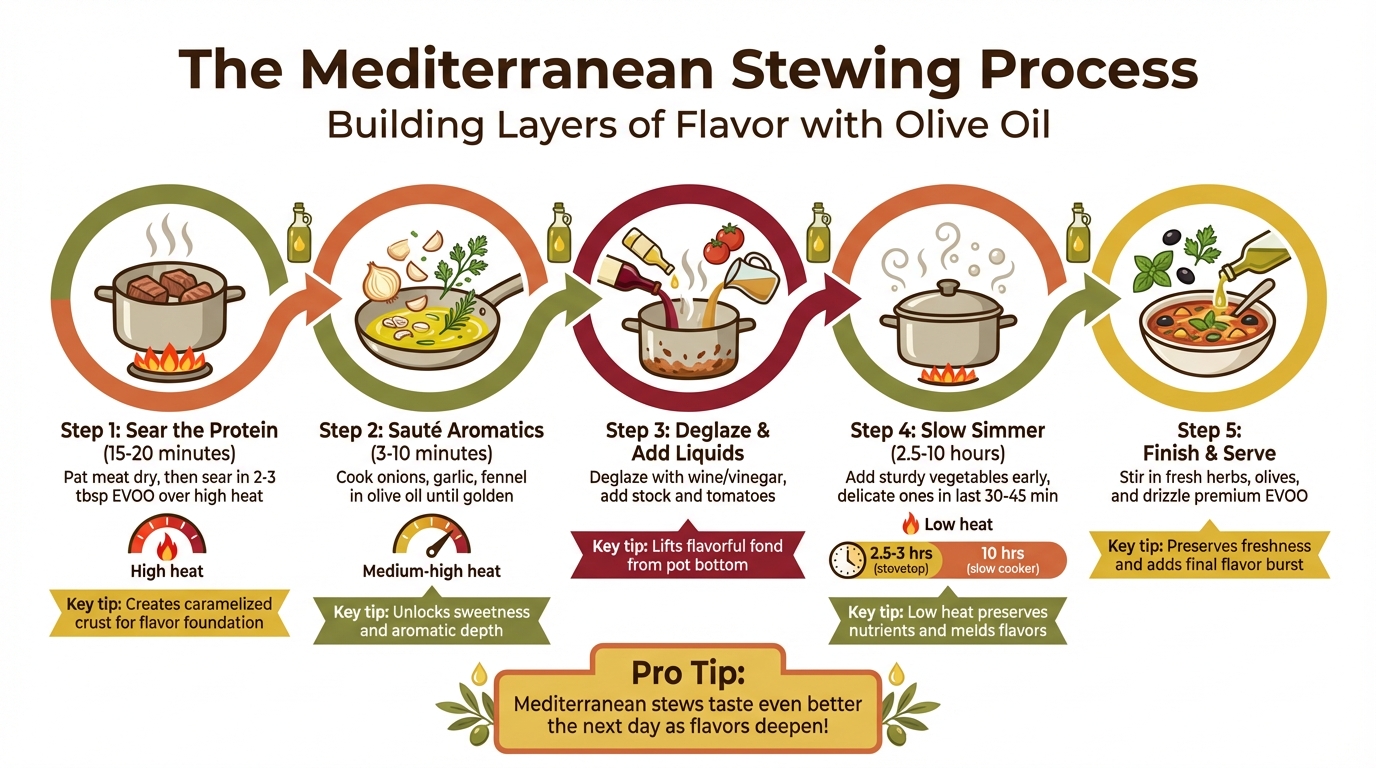
Mediterranean Stewing Process: 5 Steps to Perfect Olive Oil-Based Stews
Why Low-Temperature Cooking Works
Cooking slowly at low heat does something magical that high-temperature methods just can't achieve. As cookbook author Paula Wolfert puts it:
"With slow-cooking, food products slowly mutate, flowing from one form into another".
This transformation is especially noticeable with tougher, more affordable cuts of meat like chuck or shin. Over time, they become incredibly tender and juicy. Vegetables also benefit, taking on a silky, flavorful texture instead of turning into a mushy mess.
The science behind this method is pretty straightforward: low heat allows flavors to meld together gradually, creating a harmonious dish. For example, a classic Mediterranean beef stew typically simmers for about 2.5–3 hours, but slow cooker versions can stretch to as long as 10 hours. This slow process not only enhances taste but also preserves the nutrients in fiber-packed legumes and antioxidant-rich vegetables. The steady, gentle heat sets the stage for layering flavors effectively, which we'll dive into next.
How to Layer Flavors
Crafting a Mediterranean stew is all about timing and building flavors step by step. It starts with searing the meat in olive oil over high heat. Alexandra Cook from It's Not Complicated Recipes emphasizes that this step is non-negotiable. Searing creates a caramelized crust that forms the foundation of the dish's flavor. To get it right, pat the meat dry with paper towels before cooking - this prevents it from steaming instead of browning. This process, which takes 15–20 minutes, shouldn't be rushed.
After the meat is browned, the focus shifts to aromatics and liquids. Sauté onions, garlic, and fennel in olive oil until they turn golden, then deglaze the pot with wine or vinegar to lift the flavorful bits (fond) stuck to the bottom. Next, add liquids like stock and tomatoes, and bring everything to a gentle simmer. Sturdier vegetables, such as carrots, should go in early, while more delicate ones like zucchini or bell peppers are best added during the last 30–45 minutes of cooking. To finish, stir in fresh herbs, olives, and a drizzle of high-quality olive oil just before serving. This preserves their freshness and adds a final burst of flavor.
Cooking Tools and Tips
Once you've got the technique down, having the right tools can make all the difference. A heavy-duty Dutch oven is perfect for stews, offering excellent heat retention for both browning and slow braising. For a more traditional touch, try using earthenware pots like a North African tagine or a Turkish güveç. These clay vessels naturally trap steam, self-basting the dish and intensifying flavors without much effort.
When it comes to olive oil, start with 2–3 tablespoons to coat the bottom of your pot for searing, and add more as needed when sautéing aromatics. For vegetable-focused stews, like lathera, which rely on oil and the vegetables' own juices, you'll want to use a more generous amount. Need to thicken your stew? Skip the flour. Instead, mash a small portion of cooked beans with some of the cooking liquid, then stir it back in for a naturally creamy texture. And here's a pro tip: Mediterranean stews often taste even better the next day, as the flavors have more time to meld together.
Classic Mediterranean Stewing Recipes
These three classic Mediterranean stews demonstrate how extra virgin olive oil can elevate dishes by enhancing and unifying their flavors. Using low-temperature cooking techniques, these recipes place olive oil at the heart of each dish, showcasing its versatility.
Greek Fasolada (Bean Stew)
Greek Fasolada, often considered Greece's national dish, has been a staple since Byzantine times. As Eli K. Giannopoulos of My Greek Dish describes:
"Fasolada is with no doubt the national Greek dish! This is the authentic recipe for Greek bean soup, a trademark dish that has nourished generations!"
Start with 1 lb of dried white beans - Cannellini, Navy, or Great Northern work best. Soak them in salted water for 4–12 hours to ensure tenderness. In a large pot, sauté diced carrots, celery, onions, and garlic in 2–3 tablespoons of extra virgin olive oil until softened. Add the drained beans, 6 cups of water, tomato paste, and a bay leaf. Simmer gently for 1.5–2 hours until the beans are tender.
Toward the end, stir in 1/2 cup of extra virgin olive oil to create a creamy texture. Sarah from Curious Cuisiniere notes:
"A heavy hand with the olive oil leads to a nice and creamy soup that is rich, but still light."
If the stew feels too thin, mash a few beans against the pot to thicken it. Add a splash of red wine vinegar or lemon juice to brighten the flavors. Each serving provides around 280–340 calories, 9–16 grams of fiber, and 8–14 grams of protein. This method mirrors the slow, enriching cooking style that defines Mediterranean stews.
Moroccan Lamb Tagine
Moroccan Lamb Tagine highlights olive oil’s ability to balance bold spices and rich ingredients. While a traditional tagine pot is ideal, a Dutch oven works just as well.
Begin by searing 2 lbs of lamb shoulder (cut into 2-inch chunks) in extra virgin olive oil until browned. Remove the lamb, then sauté chopped onions and garlic in the same pot for 3–4 minutes. Toast ground cumin, cinnamon, turmeric, and ginger in the oil for about a minute to enhance their aroma.
Return the lamb to the pot, adding 2 cups of broth, diced tomatoes, and dried apricots or prunes. The olive oil bridges the savory lamb and sweet fruit, creating a harmonious flavor. Cover and simmer on low heat for 2–3 hours until the lamb is tender. For a final burst of flavor, stir in harissa - a spicy blend of chiles, garlic, spices, and olive oil. Martha Stewart describes harissa as ideal for adding depth to stews and other North African dishes. This slow-cooking approach showcases the Mediterranean preference for gentle heat and rich flavors.
Italian Ciambotta (Vegetable Stew)
Italian Ciambotta celebrates seasonal vegetables, turning them into a comforting stew. Unlike French ratatouille, Ciambotta typically includes potatoes for added heartiness.
Start by making a soffritto - sauté diced onions, celery, and carrots in 1/4 to 1/2 cup of extra virgin olive oil until lightly golden. This fragrant base sets the tone for the dish. Add vegetables in stages based on their cooking times: begin with cubed potatoes and eggplant, then add bell peppers and zucchini about 20 minutes later. This ensures each vegetable cooks evenly without becoming too soft.
For a deeper flavor, add San Marzano or fire-roasted canned tomatoes, along with a Parmesan rind to enhance the savory notes. Simmer uncovered for 45–60 minutes, stirring occasionally to meld the flavors while preserving the vegetables' texture. Stir in fresh basil at the end for a burst of aroma, and drizzle extra virgin olive oil over each serving. The stew tastes even better the next day as the flavors deepen. With approximately 165–269 calories and up to 12.9 grams of fiber per serving, it’s a satisfying and wholesome meal. Serve with crusty bread to soak up the olive-oil-rich juices.
For the best results, use high-quality extra virgin olive oil, such as those from Big Horn Olive Oil (https://bhooc.com), to bring out the full potential of these traditional stews.
Health Benefits of Olive Oil in Stewing
Antioxidants and Healthy Fats
Extra virgin olive oil stands out because it’s unprocessed - just olives pressed into oil without any chemical interference. Dr. Stephen L. Kopecky, a cardiologist at Mayo Clinic, explains:
"You take olives, and you press them and collect the oil in a bucket, and that's it. There's no processing to it".
This simple process preserves essential compounds like polyphenols and anti-inflammatory agents. Stewing with olive oil at low temperatures offers an extra nutritional edge. When vegetables simmer in a mix of water and oil, phenolic compounds such as hydroxytyrosol and tyrosol migrate from the oil into the broth. In experimental settings, tyrosol levels in the cooking liquid surged by 1,350% during this process. These antioxidants are known to promote heart health by improving blood vessel function, increasing nitric oxide levels for artery dilation, and reducing blood pressure. Additionally, the Mediterranean diet - rich in olive oil - has been associated with lower risks of conditions like Alzheimer's disease, arthritis, and atrial fibrillation. Beyond health, olive oil enhances flavor while keeping calorie counts in check.
Adding Flavor Without Excess Calories
Olive oil doesn’t just bring health benefits - it’s also a flavor powerhouse. It enriches stews without relying on saturated fats like butter or cream. By choosing olive oil over animal fats, you can reduce your intake of ultra-processed ingredients, which are often linked to chronic diseases. Research involving 121,119 participants even found that olive oil consumption is associated with less weight gain over time.
Moderation is key, though. Experts suggest sticking to about 30 grams per serving (roughly 2 tablespoons) to balance its flavor benefits with its calorie content. Instead of using large amounts, add olive oil directly to stews with ingredients like tomatoes, onions, and garlic. Michelin-star chef Paolo Cappuccio highlights its versatility:
"When used as a final touch to a hot soup, it releases its polyphenols".
A finishing drizzle not only enhances richness and depth but also helps retain antioxidants that might otherwise break down under high heat.
Freshness of Premium Olive Oil
The quality and freshness of olive oil play a big role in its health benefits. Fresh, high-grade olive oil boosts the absorption of nutrients from vegetables. For example, when you stew tomatoes, onions, and garlic in extra virgin olive oil, polyphenols like naringenin, ferulic acid, and quercetin transfer into the oil, making these compounds easier for your body to absorb compared to cooking the vegetables on their own.
However, older or improperly stored oils lose their antioxidant power due to oxidation. To get the most out of your oil, buy from specialty suppliers who work directly with producers. For instance, Big Horn Olive Oil (https://bhooc.com) offers Ultra Premium Extra Virgin Olive Oils that are cold-pressed within 2 hours of harvest and delivered fresh within 3 months, ensuring peak antioxidant levels for your stews.
Don’t toss the cooking liquid, as it contains valuable polyphenols and antioxidants. By incorporating freshly pressed extra virgin olive oil into your recipes, you can preserve nutrients while embracing the Mediterranean tradition of slow, flavorful cooking.
Conclusion
Mediterranean stewing brings together healthy fats, bold flavors, and time-honored methods to turn simple ingredients into deeply satisfying meals. With olive oil at the heart of every dish, you can build layers of flavor by searing and caramelizing aromatics, then letting everything simmer slowly to meld into something extraordinary. This approach works beautifully whether you're crafting a Moroccan tagine, an Italian ciambotta brimming with vegetables, or a hearty Greek fasolada packed with protein.
For the best results, opt for high-quality extra virgin olive oil - it makes all the difference in both taste and health benefits. Consider Big Horn Olive Oil, which offers Ultra Premium Extra Virgin Olive Oil, cold-pressed within just 2 hours of harvest and delivered fresh within 3 months. This ensures your stews are not only flavorful but also packed with nutrients.
Mastering Mediterranean stewing involves a few key techniques: sear proteins for depth, caramelize aromatics for 3–10 minutes to unlock sweetness, and rely on low-and-slow cooking to develop rich, layered flavors. Finish with a splash of lemon zest, a handful of fresh herbs, or a drizzle of premium olive oil for a vibrant touch.
The beauty of Mediterranean stews lies in their versatility. They adapt effortlessly to seasonal vegetables, legumes, or proteins, with olive oil acting as the perfect binder to bring it all together. And remember, many stews taste even better after resting, as the flavors deepen over time. Dive into these methods, and you'll see why these slow-cooked dishes have been cherished for generations.
FAQs
How do I keep vegetables from turning mushy in a stew?
To keep vegetables in your stew from turning mushy, make sure to cook them just until tender and keep a close eye on their texture. Stick to moderate heat, and cut the vegetables into evenly sized pieces for consistent cooking. After sautéing, let them simmer for about 10–15 minutes. Once they reach the perfect tenderness, take them off the heat right away to preserve their shape and texture.
When should I add fish or seafood so it doesn’t overcook?
When preparing dishes like Mediterranean stews, timing is everything when it comes to fish and seafood. To keep them tender and moist, add them toward the end of the cooking process. For example, gently place the fish into the hot stew and let it cook for just 5-10 minutes. This method ensures the seafood retains its delicate texture and flavor. Always save seafood for the final stages of cooking to get the best results.
How can I thicken a Mediterranean stew without flour?
To give a Mediterranean stew a thicker texture without using flour, try simmering it uncovered. This allows the liquid to reduce, concentrating the flavors while naturally thickening the sauce. Another option is to mix in mashed vegetables or pureed cooked beans. These additions not only help achieve a richer consistency but also maintain the stew's original taste. Both approaches provide a wholesome and flavorful way to thicken the dish.