

Melon Salad with EVOO and Balsamic: Recipe Guide
For a quick, flavorful dish, this melon salad pairs sweet melon with rich extra virgin olive oil (EVOO) and tangy balsamic vinegar. The key? High-quality ingredients. Use ripe cantaloupe, honeydew, or watermelon for sweetness, premium aged balsamic for depth, and fresh EVOO for balance. Add herbs like mint or basil, and optional extras like feta, prosciutto, or mozzarella for variety.
Quick Steps:
- Prep the Melon: Wash, cut, and chill cantaloupe, honeydew, or watermelon.
- Make Dressing: Whisk 3 tbsp EVOO, 1 tbsp balsamic, ½ tsp Dijon mustard, salt, and pepper.
- Assemble: Toss melon with dressing, garnish with herbs or proteins, and serve cold.
Tips:
- Use aged balsamic for a syrupy texture.
- Pair watermelon with feta and basil, or cantaloupe with prosciutto and mozzarella.
- Store components separately to avoid sogginess.
This salad is quick to prepare, perfect for summer meals, and easy to customize with your favorite ingredients.
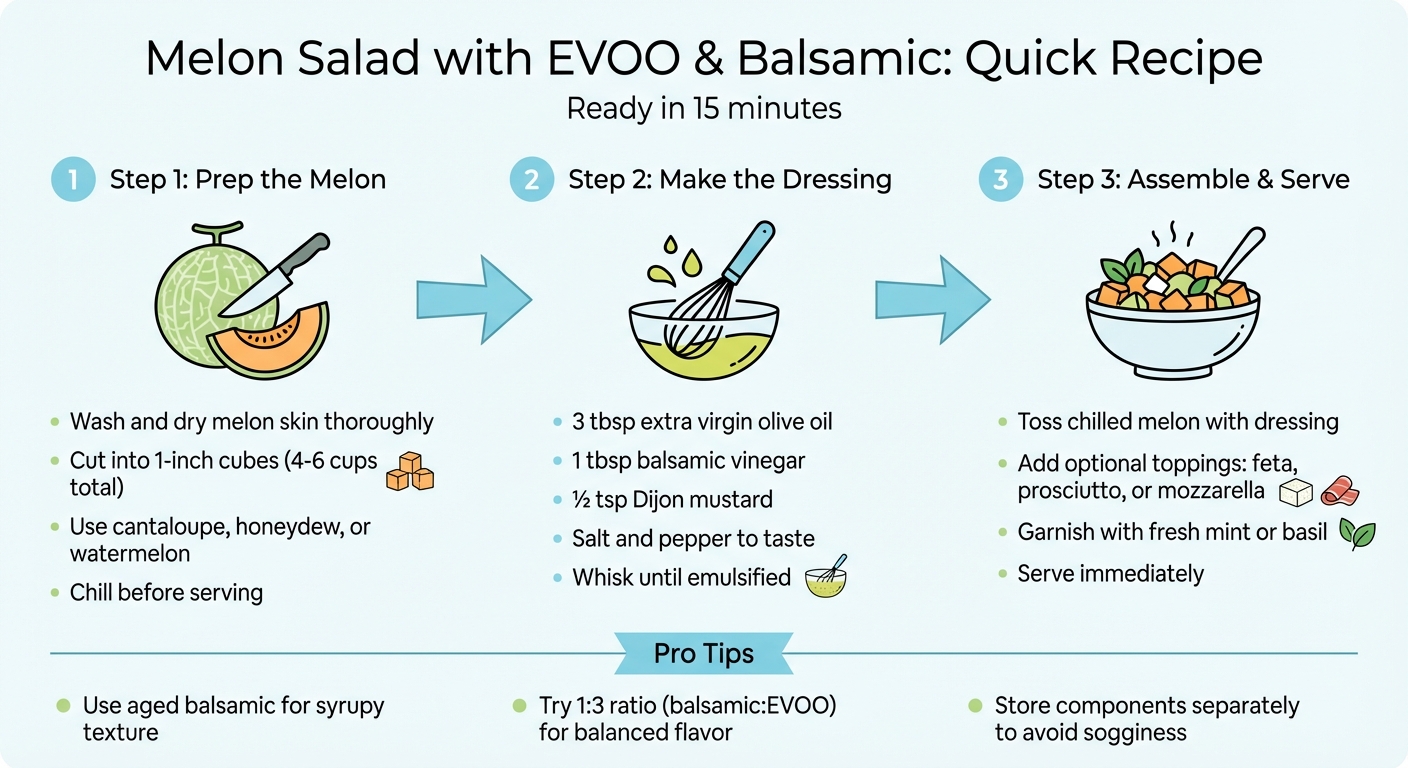
How to Make Melon Salad with Balsamic and EVOO in 3 Steps
Sandra Lee - Balsamic Melon Salad
sbb-itb-4066b8e
Why Melon, EVOO and Balsamic Pair Well
This trio works because it covers multiple taste profiles: the natural sweetness of melon, the tangy lift from balsamic vinegar, and the savory depth of extra virgin olive oil (EVOO). Together, they create a flavor balance that highlights the melon’s natural juiciness while adding depth and contrast. This combination also opens the door to experimenting with complementary flavors and high-quality ingredients to take your salad to the next level.
How Sweet and Savory Flavors Complement Each Other
Sweet and savory flavors are a classic pairing. When you combine sweet melon with tangy balsamic and rich EVOO, you get a dish where each element enhances the others without overpowering them. The vinegar’s acidity cuts through the oil’s richness, while the oil’s fruity notes soften the sharpness of the vinegar. Adding savory extras - like fresh herbs (think mint, basil, or fennel fronds) or salty proteins like prosciutto or feta - balances the sweetness without making the dish overly sugary.
For the perfect dressing, try a 1:3 ratio of balsamic to EVOO. Want more tang? Go for a 1:2 ratio and whisk in ½ teaspoon of Dijon mustard to emulsify the mix.
Selecting the Right Melon
The best melons for this dish are ripe summer varieties like cantaloupe, honeydew, or seedless watermelon. Cantaloupe and honeydew are especially great because their firmer texture holds up in salads. If you're pairing melon with greens, slightly underripe fruit works better - it stays crisp and avoids turning mushy. As Lynne Rossetto Kasper and Sally Swift from The Splendid Table explain:
"The melon should be slightly underripe so it's almost crisp."
Don’t forget food safety: wash and dry the melon’s skin before cutting to avoid transferring contaminants from the surface to the flesh. For an extra-refreshing salad, chill the whole melon before slicing, or store cut pieces in the fridge and dress them right before serving.
Why EVOO and Balsamic Quality Matters
The quality of your EVOO and balsamic vinegar can make or break this dish. A good extra virgin olive oil adds richness without making the salad greasy, while premium balsamic vinegar brings depth and complexity. Nagi from RecipeTin Eats puts it best:
"The better the quality of the balsamic vinegar and olive oil, the better the dressing."
Aged balsamic vinegars, especially those aged 25 years, develop a syrupy texture and layered flavor that clings beautifully to the melon. For a lighter, brighter twist, white balsamic vinegar preserves the fruit’s vibrant colors, while dark balsamic offers a more robust, intense flavor.
For a standout salad, consider options like Big Horn Olive Oil’s Traditional 18-Year Aged Dark Balsamic Vinegar for deep, complex notes or their Molto Denissimo 25-Year Aged Dark Balsamic Vinegar for a richer, syrupy finish. Pair these with their Estate Reserve Ultra Premium EVOO or single-source oils like Picual or Coratina. These choices ensure your salad showcases the best qualities of each ingredient.
Basic Melon Salad Recipe
This recipe offers a refreshing mix of sweet melon, tangy balsamic, and rich olive oil. It takes just 15 minutes to prepare, making it a go-to option for summer meals or casual entertaining.
Ingredients and Preparation
To get started, gather 4 to 6 cups of ripe melon - cantaloupe, honeydew, or seedless watermelon are ideal. Before cutting, scrub the melon’s exterior under running water to avoid contamination. Remove the seeds, then cut the flesh into uniform, bite-sized cubes (about 1-inch pieces) or use a melon baller for a more decorative touch. While melon balls are visually appealing, Lindsay Landis from Love & Olive Oil points out:
"Melon balls are one of the least efficient ways to consume melon. So feel free to chunk it up instead here".
For the vinaigrette, you’ll need 3 tablespoons of high-quality extra virgin olive oil, 1 tablespoon of balsamic vinegar (dark or white), ½ teaspoon of Dijon mustard, and a pinch of sea salt and freshly ground black pepper. Optional extras include 1 tablespoon of honey or sugar for added sweetness and 2 tablespoons of fresh herbs like mint or basil, chopped. To make the salad more filling, consider adding 4 ounces of fresh mozzarella balls, crumbled feta, or thinly sliced prosciutto.
Making the Balsamic Vinaigrette
Once the melon is prepped, it’s time to make the dressing. The key to a silky vinaigrette is proper emulsification. Start by whisking the vinegar and Dijon mustard together, then slowly drizzle in the olive oil while whisking continuously until the mixture comes together. For the best flavor, use high-quality products like Big Horn Olive Oil's Estate Reserve Ultra Premium EVOO and their Traditional 18-Year Aged Dark Balsamic Vinegar. Adding the olive oil gradually - about 1 tablespoon at a time - helps ensure a smooth texture.
If you’re short on time, you can combine all the dressing ingredients in a jar with a tight-fitting lid and shake it vigorously for about 30 seconds. This method is quick and effective. The vinaigrette can be made in advance and stored in the fridge for several months. Taste and adjust with salt, pepper, and honey if needed before using.
Assembling the Salad
When both the melon and dressing are ready, place the chilled melon pieces in a large serving bowl. Drizzle the vinaigrette over the melon just before serving and toss gently to coat. If you’re including mozzarella, feta, or prosciutto, layer these on top after the dressing. Finish with torn mint or basil leaves for a pop of color and added aroma. For the best results, serve the salad immediately while cold. Alternatively, you can prepare the components ahead of time and assemble everything within 10 minutes of serving to maintain the perfect texture.
How to Customize Your Melon Salad
Flavor Combinations by Melon Type
The type of melon you choose sets the tone for your salad's flavor profile. Watermelon shines when paired with salty feta, fresh basil, and mint. To deepen its savory side, try adding red onions and a handful of arugula for a peppery kick. Cantaloupe, on the other hand, complements salty proteins like prosciutto or smoked fish. Pair it with creamy mozzarella (such as bocconcini), cherry tomatoes, and a sprinkle of oregano for a Mediterranean vibe. Honeydew pairs beautifully with light dressings made from white balsamic vinegar, crisp fennel fronds, tangy goat cheese, or crunchy almonds. Once you've chosen your melon, build on its natural sweetness with the right combination of proteins and greens.
Adding Proteins and Greens
Proteins and greens can take your melon salad to the next level. Arugula is a fantastic choice - it adds a peppery bite that contrasts nicely with the sweetness of watermelon or cantaloupe. For a gentler flavor, consider tender greens like maché or pea shoots. Add savory elements like prosciutto, feta, fresh mozzarella, or goat cheese to balance the sweetness of the melon while introducing healthy fats and protein. To avoid a soggy salad, make sure to drain juicy melons like watermelon for about 15 minutes after cutting. For the best presentation, toss the greens lightly in dressing first, then layer the melon and protein on top. Using high-quality ingredients, like premium extra virgin olive oil, ensures the flavors stay balanced and vibrant.
Using Infused Oils and Vinegars
A great dressing can elevate even the simplest melon salad. White balsamic vinegar is a standout choice - it’s light, bright, and won’t discolor the fruit like dark balsamic. Infused oils and vinegars can add exciting layers of flavor. For example, citrus-infused vinegars bring a tangy brightness, while herb-infused oils with basil or oregano provide a savory depth. If you’re looking for a bold contrast, try a honey-lime jalapeño vinaigrette for a spicy twist. Honey-infused balsamic is another excellent option - it balances the vinegar’s tartness and pairs perfectly with the melon’s natural sweetness. If you find the dressing too sharp, adding a touch of honey or maple syrup can create a more complex and mellow flavor.
Serving and Storing Your Salad
How to Serve
How you present your melon salad can make a big difference. For a polished look, try using a melon baller to create uniform spheres. Or, mix it up with a variety of shapes - think watermelon squares, cantaloupe balls, and 2-inch honeydew chunks - for a colorful and textured display. Instead of tossing everything in a bowl, arrange the pieces neatly on a large serving platter or individual plates. This not only keeps the fruit intact but also showcases its vibrant colors.
Want to add a touch of flair? Serve the salad in martini glasses or use a hollowed-out watermelon rind as a striking centerpiece - perfect for larger gatherings. For the finishing touch, sprinkle on some flake sea salt, cracked black pepper, crumbled feta, and garnish with fresh basil, mint, or fennel fronds.
Keep the salad chilled for maximum freshness. If you want to bring out the natural sweetness of the melon, let it sit at room temperature for about 30 minutes before serving. Just make sure it stays stored at 41°F (5°C) or lower until you're ready to plate. Once you've nailed the presentation, proper storage will keep your leftovers tasting great.
Storage and Make-Ahead Tips
To maintain the best flavors and textures, store your ingredients separately. Use premium extra virgin olive oil (EVOO) and aged balsamic, but keep them apart from the fruit until you're ready to serve. Cut melon, dressing, and toppings should all go into their own airtight containers to avoid sogginess. Since watermelon is about 92% water, draining or patting it dry can help manage excess moisture.
If you're prepping ahead, you can save time without sacrificing quality. Cut your melons up to two days in advance and store them in airtight containers. The balsamic dressing can be made up to three days ahead - just store it in a sealed jar and shake well before using to re-emulsify the oil and vinegar. Add fresh herbs like mint or basil right before serving to keep them crisp and vibrant. While the assembled salad can last in the fridge for one to five days, it's best enjoyed the day it's made. Freezing isn’t a good idea, as the high water content in the fruit will make it mushy when thawed.
Conclusion
The right ingredients can turn a simple melon salad into something unforgettable. When working with such a straightforward recipe, using premium extra virgin olive oil and aged balsamic vinegar - like those offered by Big Horn Olive Oil - makes all the difference. Their Ultra Premium EVOO, cold-pressed within just two hours of harvest and fresh within three months, delivers a rich flavor that shines in every bite. However, keep in mind that its peak taste begins to fade about four weeks after opening. Prioritizing top-tier ingredients like these sets the stage for endless flavor possibilities.
The magic lies in how high-quality balsamic vinegar and EVOO balance sweetness and acidity. For a twist, consider Big Horn Olive Oil's infused options, such as Blood Orange Olive Oil or Lemongrass Mint Balsamic, to bring a more complex flavor to the table.
Now it's your chance to experiment! Try different types of melon, tweak the vinegar-to-oil ratio to 1:2 for a bolder tang, or toss in your favorite proteins and greens. The combination of sweet melon, tangy balsamic, and rich olive oil creates a versatile base that invites endless creativity. Whether it's a casual lunch or an elegant dinner, this salad captures the essence of summer every time.
FAQs
How do I pick a ripe melon for salad?
To pick a ripe melon, start by checking its firmness - make sure it feels solid without any cracks or deep scars. It should also feel heavy for its size. Look for a dark, matte green color rather than a shiny one, as this often signals ripeness. Give it a gentle tap; a ripe melon will have a deep, slightly hollow sound. Lastly, check for a yellowish patch where it sat on the ground - this is another clue that it's ready to eat.
What can I use instead of Dijon mustard in the dressing?
You can swap out Dijon mustard for options like honey mustard, whole grain mustard, or another similar type, depending on your flavor preference. These substitutes offer a slightly different twist while still working well with the salad dressing.
How can I keep the salad from getting watery or soggy?
To prevent your melon salad from turning watery, try macerating and draining the fruit first. Simply toss the cubed melon with a little sugar - about 1 teaspoon for every 4 cups. Then, place the melon in a colander set over a bowl and refrigerate it for 30 minutes. This helps draw out excess moisture. For the best texture and flavor, serve the salad right after adding the dressing.