

Olive Oil Cooperatives: A Path to Growth
Olive oil cooperatives offer small-scale farmers a way to thrive by pooling resources for processing, marketing, and distribution. This model ensures stable incomes, better pricing, and access to premium markets. Farmers focus on growing olives while cooperatives handle the rest, reducing risks from weather and fluctuating harvests. In South Africa, Willow Creek Olive Estate’s cooperative model boosted production from 550,000 to 990,000 pounds of olive oil in just two years, supporting rural communities through jobs and economic growth.
In the U.S., California leads olive oil production, meeting growing demand for quality and transparency. However, challenges like competition from imports and price volatility remain. Efforts like the California Olive Oil Council’s certification programs and Big Horn Olive Oil’s focus on quality and clarity aim to address these issues, offering consumers trusted options while supporting farmers.
Key Points:
- Cooperatives stabilize incomes and improve efficiency for small farmers.
- Quality-focused production leads to premium pricing in competitive markets.
- U.S. production, led by California, accounts for just 5-7% of national consumption.
- Transparency and certifications help build consumer trust.
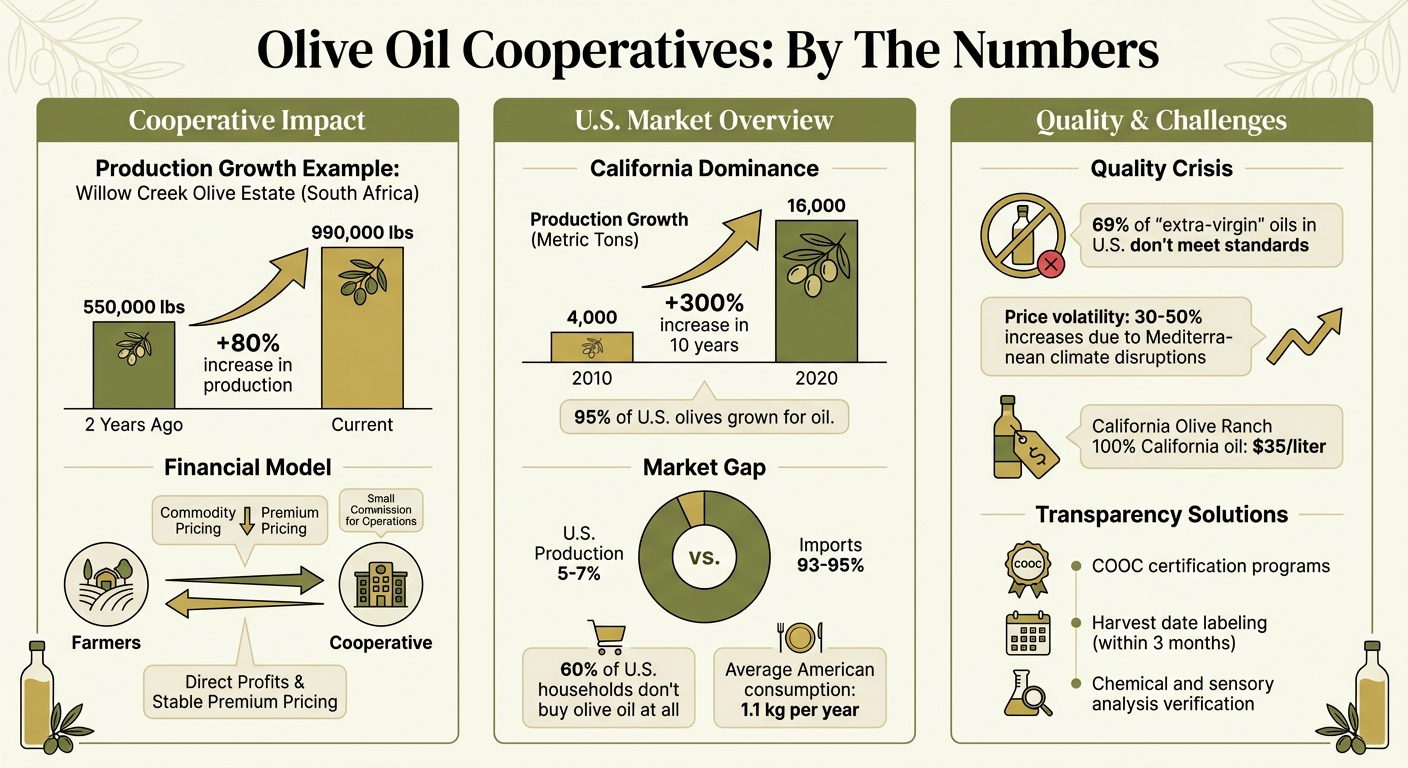
Olive Oil Cooperatives Impact: Key Statistics and Growth Metrics
How Cooperatives Drive Economic Growth
Supporting Local Farmers
Cooperatives provide small-scale farmers with shared resources for processing, bottling, and marketing, which helps reduce production costs and allows them to achieve better pricing for their products. Instead of being tied to low bulk commodity prices, often dictated by Spanish bulk rates, farmers can tap into models that reward high-quality products with premium pricing.
The financial structure of cooperatives ensures that profits go directly to the farmers. Eleanor Stoker, CEO of Willow Creek Olive Estate, highlights this benefit:
"Our farmers operate as if they hold a stake in Willow Creek. The financial benefits flow back to them, while we take a small commission for managing operations".
This setup lets farmers move away from fluctuating "import parity" pricing and adopt more stable, value-driven pricing models. In turn, this approach not only supports individual farmers but also contributes to the overall development of their communities.
Creating Jobs and Building Communities
Cooperatives play a key role in boosting employment in rural areas. They hire specialized workers such as technical advisors, processing staff, quality control experts, and marketing professionals. This creates year-round income opportunities, moving beyond the typical seasonal work tied to harvest periods. By providing steady jobs, cooperatives help strengthen rural economies and foster more resilient communities.
In addition to creating jobs, cooperatives prioritize maintaining high production standards, which is essential for their long-term success and growth.
Quality and Long-Term Production Practices
Producing premium-quality goods is vital for economic success. Cooperatives ensure this by deploying technical teams to member farms throughout the year. These experts provide guidance on irrigation, pest management, and fruit development to ensure each harvest meets rigorous quality criteria.
The cooperative model also promotes long-term planning that individual farmers might struggle to achieve on their own. By pooling resources and sharing risks - whether from unpredictable weather or the natural alternate bearing cycles of crops like olive trees - cooperatives offer financial stability. This stability enables farmers to make sustainable investments and consistently produce high-quality products, which helps them secure better prices in competitive retail markets.
sbb-itb-4066b8e
Olive Oil Cooperatives in the United States
Meeting American Consumer Preferences
In recent years, health-conscious choices and transparency have become top priorities for American olive oil buyers. This shift has opened up new possibilities for U.S.-based cooperatives, particularly in California, which accounts for a staggering 95% of all olives grown for oil in the country. To put this growth into perspective, olive oil production in California has skyrocketed from 4,000 metric tons in 2010 to 16,000 metric tons by 2020.
Organizations like the California Olive Oil Council (COOC) are stepping up to meet these demands. They’ve introduced strict certification programs to assure quality and authenticity. Jacqueline Nakashian, RD, Director of Programs at COOC, highlights the importance of their seal:
"The seal also provides consumers with peace of mind. They can trust they're purchasing an oil that passes chemical and sensory analyses to verify it is, in fact, extra virgin-grade olive oil".
Such efforts are crucial, especially in light of concerns about mislabeling and fraud, as seen in the 2018 Bertolli settlement.
Despite these advancements, California’s olive oil production still represents only 5% to 7% of the extra virgin olive oil consumed in the U.S.. According to Chris Zanobini, President/CEO at Ag Association Management Services Inc., "all of California's production is consumed in the U.S.". This leaves plenty of room for growth, particularly given that about 60% of U.S. households don’t buy olive oil at all.
Still, even with growing consumer interest, U.S. cooperatives face a series of hurdles in the market.
Challenges in the U.S. Market
While the emphasis on quality and transparency has helped cooperatives gain traction, they face stiff competition from imported olive oils. Market fragmentation and a lack of widespread consumer education continue to pose significant obstacles. For context, the average American consumes just 1.1 kilograms of olive oil per year, a far cry from consumption levels in Mediterranean countries.
Another major issue is price volatility. Climate disruptions in the Mediterranean have driven up olive oil prices by 30% to 50%. For example, a liter of California Olive Ranch 100% California Olive Oil can cost around $35. Meanwhile, some "California" branded oils are actually blends, with 90% of the product sourced from places like Argentina or North Africa to keep costs down. Addressing these pricing and sourcing challenges is critical for cooperatives to remain competitive and support rural economies.
To tackle these issues, the North American Olive Oil Association (NAOOA) is collaborating with the USDA to form a national olive oil promotion cooperative. Joseph R. Profaci, Executive Director of NAOOA, shared his optimism:
"The government has been working and reviewing our proposal, even during the period of closure. I consider that to be a very positive thing".
This initiative aims to bring together domestic producers and importers to raise consumer awareness and improve market conditions.
Big Horn Olive Oil's Commitment to Quality
Ultra Premium Extra Virgin Olive Oils
Big Horn Olive Oil prioritizes quality by focusing on transparency, freshness, and authenticity, ensuring each bottle delivers exceptional flavor and nutrients. Their Ultra Premium Extra Virgin Olive Oils are cold-pressed within just 2 hours of harvest, a process that preserves key polyphenols and antioxidants. This swift production is essential, as the freshness of the oil directly affects both its taste and nutritional properties.
Every bottle comes with a harvest date from the last 3 months, addressing a common issue in the industry. As Katerina Mountanos, Founder & CEO of Kosterina, notes, "69% of olive oils marketed as 'extra-virgin' in the United States actually did not meet the sensory or chemical criteria for extra-virgin olive oil". By focusing on clear harvest dates instead of vague expiration labels, Big Horn Olive Oil gives consumers confidence in their purchase. This dedication underscores the company’s meticulous approach to sourcing and production.
Working with High-Quality Producers
Big Horn Olive Oil partners with single-origin producers who adhere to strict international standards, ensuring the purity of their oils. By working closely with trusted growers and using opaque bottles to protect the oil from light exposure, the company ensures that every product maintains its quality from harvest to your kitchen.
Their offerings include varietals like Picual and Coratina, each with unique flavors and health benefits. These choices reflect the same high standards upheld by top producers globally, such as Spain's Almazaras de la Subbetica S.L., whose "Rincon de la Subbetica" was ranked the best olive oil in the world for 2021/2022.
Health and Culinary Benefits of Premium Olive Oil
Premium olive oil offers more than great taste - it’s packed with health benefits. The peppery sensation or slight "burn" you might feel at the back of your throat when tasting Big Horn Olive Oil’s products is not a flaw but a hallmark of high polyphenol content. These antioxidants are known for their cardiovascular and anti-inflammatory properties, setting premium oils apart from mass-market versions.
In the kitchen, these oils can transform dishes. Whether drizzled over salads, used as a finishing touch on grilled vegetables, or added to pasta, the fresh, grassy notes enhance flavors beautifully. Starting at $8.99 for their Estate Reserve Ultra Premium EVOO, Big Horn Olive Oil combines quality with affordability, supporting the larger push for transparency and excellence in the olive oil market. This dedication not only elevates culinary experiences but also supports regional communities through sustainable practices and economic impact.
The Future of Olive Oil Cooperatives
Key Takeaways
Olive oil cooperatives are reshaping rural economies by moving away from low-cost, commodity-grade production toward premium, high-value products. As global demand for extra virgin olive oil continues to grow, these cooperatives are pooling resources to cover processing, bottling, and marketing costs. They also use risk-sharing models to provide more stable incomes for their members.
The benefits of cooperatives go far beyond individual farms. Take, for example, Willow Creek Olive Estate's "Guild of Groves." This initiative has successfully scaled production while securing shelf space in major retail chains. CEO Eleanor Stoker explained:
"The initiative was created to stimulate the industry, grow employment, and strengthen communities. Olives are just the means we're using to achieve those goals."
Cooperatives also ensure members meet high-quality standards by offering ongoing technical support. Retailers are increasingly drawn to these products, not just for their quality but also for the positive social and economic impact they represent. This dynamic creates a ripple effect, empowering rural communities through consumer choices.
How Consumers Can Support Cooperatives
Consumers have a powerful role to play in supporting olive oil cooperatives. Start by choosing brands that prioritize transparency and community impact. Look for labels with clear harvest dates - ideally no older than three months - and certifications that signify Ultra Premium quality, as these directly benefit farmers.
Brands like Big Horn Olive Oil set an example with their commitment to freshness and sustainability. Their Estate Reserve Ultra Premium EVOO, priced at $8.99, offers both exceptional quality and ethical practices. To keep your olive oil fresh and nutrient-rich, buy sizes you can finish within a few months of opening. By making informed decisions, you're doing more than purchasing a product - you’re actively supporting rural jobs, sustainable farming, and stronger communities.
🫒 Our First Olive Harvest in Portugal 🇵🇹 | From Tree to Olive Oil
FAQs
How does an olive oil cooperative actually pay farmers?
Cooperatives that produce olive oil create a system where farmers are paid fairly by setting stable prices through direct agreements. They often guarantee minimum wages and use payment models based on the quality of olives, which motivates farmers to focus on growing better crops. This method not only promotes financial stability but also helps farming communities thrive over time.
What should I look for on a label to know an olive oil is fresh and authentic?
To identify fresh and genuine olive oil, pay attention to certification seals such as PDO, PGI, USDA Organic, or COOC. Check for harvest or bottling dates, aiming for oils dated within the last 9 to 24 months. Also, ensure the label specifies that the oil is cold-pressed and has low acidity (≤0.8%).
Why is U.S. olive oil so expensive compared to imports?
U.S. olive oil often comes with a higher price tag compared to imported options. This is largely due to challenges like climate-related production issues, higher labor expenses, and the lack of substantial subsidies. These factors combine to make domestic olive oil production less competitive, ultimately pushing prices upward.