

Why Olive Oil is Key in Spanish Cuisine
Olive oil is the cornerstone of Spanish cuisine, shaping the flavors and textures of iconic dishes like paella, gazpacho, and sofrito. Spain produces nearly 45% of the world's olive oil, with Andalusia leading the charge, thanks to its vast olive groves and centuries-old traditions. The diversity of Spain's olives - over 200 varieties - offers a wide range of flavors, from the bold Picual to the mild Arbequina.
Here’s what makes olive oil indispensable in Spanish cooking:
- Historical Significance: Introduced by the Phoenicians and refined by the Romans and Moors, olive oil has been a staple for thousands of years.
- Health Benefits: Rich in monounsaturated fats, antioxidants, and polyphenols, it supports heart health, reduces inflammation, and may lower risks of diseases like cancer and Alzheimer's.
- Culinary Role: Olive oil enhances the taste and texture of Spanish dishes, from the base of a sofrito to finishing touches on gazpacho or pintxos.
- Modern Craftsmanship: Small producers now focus on high-quality, early-harvest oils, emphasizing flavor and regional identity.
Whether sautéing vegetables for a sofrito or drizzling over a dish for a finishing touch, olive oil is the essence of Spain's culinary heritage.
The History and Culture of Olive Oil in Spain
How Olive Trees Came to Spain
The story of olive trees in Spain begins thousands of years ago, tracing back to the Eastern Mediterranean - places like Syria, Palestine, and Crete - where the trees were first cultivated. The Phoenicians and Greeks introduced olive trees to the Iberian Peninsula, but it was the Romans who truly established Spain as a major player in olive oil production.
As the Roman Empire expanded, they brought advanced farming techniques and infrastructure that allowed for large-scale olive oil production. Spain's Mediterranean climate, with its dry and warm conditions, turned out to be perfect for growing olives. Andalusia, in particular, became a hub for this flourishing industry.
"Hispania, modern-day Spain and Portugal, became a major supplier of olive oil to Rome. Amphorae marked with Spanish origins have been found across Roman ruins in Europe."
- OilWell
The scale of this trade is evident in places like Monte Testaccio in Rome - a 115-foot mound made entirely of broken amphorae, many of which once carried Spanish olive oil. Later, the Moors refined olive oil production techniques, some of which are still in use today. Over time, Spanish farmers carefully selected olive varieties best suited to their land, resulting in celebrated types like the bold Picual and the mild Arbequina.
This rich history has cemented olive oil's importance in Spain, both culturally and economically.
Olive Oil in Spanish Culture and Daily Life
Today, olive oil is more than just a cooking ingredient in Spain; it’s a cornerstone of daily life and a symbol of tradition. In Andalusia, for example, around 68% of people start their day with tostada - toast topped with olive oil, tomato, and jamón. On Día de Andalucía, children celebrate by eating bread sprinkled with olive oil and sugar.
Historically, olive oil was a key source of nourishment for agricultural workers, who used it to soften and preserve stale bread during long days in the fields. Now, it plays a central role in Spanish social gatherings, often appearing in tapas dishes shared among friends.
The province of Jaén, often referred to as the "olive oil capital of the world", is so densely packed with olive groves that it’s said to have more trees than people. Across Spain, there are approximately 2.5 million olive trees dedicated to oil production, with over 260 varieties grown in different regions. For Spaniards, olive oil represents not just a staple of their cuisine but also a source of regional pride and a key part of their national identity.
sbb-itb-4066b8e
Health Benefits and Nutritional Value of Olive Oil
What's in Olive Oil: Nutrients and Compounds
Extra Virgin Olive Oil (EVOO) packs a punch when it comes to nutrients. At its core is oleic acid, a monounsaturated fat that makes up about 73% of the oil. This healthy fat is not only heat-resistant but also linked to reducing inflammation and improving cholesterol levels.
Beyond fats, EVOO is loaded with antioxidants and vitamins. It contains over 20 specific phenolic compounds, including oleocanthal and hydroxytyrosol, both of which are known for their antioxidant properties. However, refining the oil can strip away up to 90% of these beneficial polyphenols.
"Antioxidants are almost like a shield around your cells, like a blanket around them to protect them from oxidative damage."
- Julia Zumpano, Registered Dietitian, Cleveland Clinic
EVOO also delivers Vitamin E, Vitamin K, and squalene - found in concentrations 200–700 times higher than in other oils - which contribute to its antioxidant and skin-supporting properties.
One standout compound, oleocanthal, works similarly to ibuprofen by inhibiting COX-1 and COX-2 enzymes, offering natural anti-inflammatory effects. Interestingly, the peppery sensation you feel in your throat when tasting high-quality olive oil is due to oleocanthal. A stronger "peppery kick" usually signals a higher concentration of this compound.
Research on Olive Oil's Health Effects
The nutrients and compounds in EVOO translate into some impressive health benefits. For example, the PREDIMED trial demonstrated that a Mediterranean diet rich in EVOO reduced major cardiovascular events by 30%. Even a small amount - just half a tablespoon daily - is associated with a reduced risk of heart disease, and each tablespoon consumed daily can lower cardiovascular disease risk by 14%.
EVOO's heart-protective effects are multifaceted. It reduces LDL ("bad") cholesterol while preserving HDL ("good") cholesterol. It also enhances endothelial function, improving blood vessel dilation and blood pressure regulation. In fact, trials have shown that high-polyphenol olive oil can lower systolic blood pressure to the extent that nearly 48% of participants reduced their reliance on blood pressure medication.
The benefits don’t stop at heart health. A 2022 meta-analysis found that people with the highest olive oil intake had a 31% lower risk of cancer. For brain health, consuming more than half a tablespoon daily is linked to a 28–29% lower risk of dementia-related death. Polyphenols in EVOO may even help prevent the buildup of brain plaques tied to Alzheimer's.
EVOO also plays a role in metabolic health, improving insulin sensitivity and reducing the risk of Type 2 diabetes. Its prebiotic properties promote the growth of beneficial gut bacteria like Bifidobacterium and Lactobacillus, while suppressing harmful strains such as H. pylori.
For the best results, aim to consume 1.5 to 4 tablespoons of Extra Virgin Olive Oil daily. Store it in a cool, dark place to protect its delicate antioxidants. The health benefits of EVOO make it far more than just a staple in Spanish cooking - it’s a powerhouse for overall well-being.
Olive Oil in Tapas from Andalucía | Made in Spain with Chef José Andrés | Full Episode
How Olive Oil Shapes Classic Spanish Dishes
Extra Virgin Olive Oil (EVOO) is more than just an ingredient in Spanish cooking - it's the heart and soul of the cuisine. This "liquid gold", produced using mechanical methods without heat, preserves the natural flavors and aromas of olives, creating a rich base for countless dishes. Whether it's adding depth to a simple sofrito or transforming a classic paella, EVOO is what gives Spanish food its distinctive character.
Paella: The Role of Olive Oil in Spain's Signature Dish
Paella wouldn't be paella without olive oil. It forms the foundation of the dish, used to sauté the base ingredients and toast the rice, ensuring that saffron's subtle flavors infuse every grain. The Picual olive oil, Spain's most widely grown variety, is a popular choice for this dish. Its bold, intense flavor - with hints of tomato, fig, and almond - pairs beautifully with the seafood and meats that define paella. High-quality EVOO doesn't just add flavor; it enhances the dish's overall complexity, making each bite unforgettable.
Sofrito: The Aromatic Base of Spanish Cuisine
Sofrito is the unsung hero of Spanish cooking. This slow-cooked blend of garlic, onions, and tomatoes is the starting point for many iconic dishes, from stews to rice dishes. Olive oil is the medium that brings sofrito to life, extracting and amplifying the natural flavors of the vegetables as they cook. The choice of EVOO matters here - varieties like Hojiblanca, known for its balanced bitterness and spiciness, are perfect for sofrito. They enhance the vegetables' flavors without overpowering them, creating a harmonious base for any dish.
Regional Dishes: Andalusian Gazpacho and Basque Pintxos
Spain's regional dishes also showcase the versatility of olive oil. In Andalusian Gazpacho, EVOO is a key ingredient that brings the dish together. It balances the acidity of the tomatoes, adds richness, and gives the cold soup a smooth, velvety texture. For finishing touches, the Arbequina variety, with its mild sweetness and hints of apple and banana, is often used to complement the fresh vegetables without overpowering them.
In the Basque Country, pintxos - small, flavorful bites - highlight olive oil's adaptability. It's used for frying, dressing, and even preparing "pan con tomate", a simple yet iconic dish. The Cornicabra variety, with its balanced profile and light almond finish, is a favorite for these creations. Its subtlety enhances the flavors of ingredients like Iberian ham and fish without overshadowing them. Plus, the oil's rich antioxidants and healthy fats add a boost of nutrition to these bite-sized delights.
Using Ultra Premium EVOO in Spanish Cooking
The right EVOO can completely transform Spanish cooking. When preparing traditional Spanish dishes, using high-quality extra virgin olive oil brings authentic flavors to life while also offering superior nutritional benefits.
What Defines Ultra Premium EVOO
Ultra Premium EVOO isn’t just another olive oil - it’s held to some of the highest production standards. It’s cold-extracted at temperatures below 80°F (27°C), which helps preserve its natural antioxidants, vitamins, and complex flavors. One key quality marker is its acidity level. While standard extra virgin olive oil can have acidity up to 0.8%, top-tier Spanish EVOOs often boast levels below 0.2%. This lower acidity not only enhances flavor but also allows the oil to handle higher cooking temperatures - up to 356°F (180°C) or even 392°F (200°C) in some cases.
Another factor that sets ultra premium EVOO apart is the timing of the harvest. Early-harvest oils, made from olives picked in October or November when they’re still green or partially ripe, offer more intense, herbaceous flavors and greater nutrient density compared to late-harvest oils. These oils are rich in polyphenols, which not only stabilize the oil at high temperatures but also provide anti-inflammatory benefits. To give you an idea of the effort involved, producing just one liter of premium early-harvest oil can require around 10 kg of olives.
"We harvest by hand, and our olives never touch the ground. We're very careful that they come to the mill in the right condition, and we start pressing within a couple hours of harvest."
- Soraya Aguilar, Co-founder, Seasons Olive Oil & Vinegar
These meticulous practices ensure that ultra premium EVOOs stand out for their exceptional quality and flavor.
Big Horn Olive Oil for Spanish Recipes
EVOO plays a central role in Spanish cooking, and ultra premium options elevate the experience even further. Big Horn Olive Oil offers ultra premium EVOOs that are perfect for Spanish recipes.
Their Picual Extra Virgin Olive Oil is bold and robust, making it ideal for dishes like paella and sofrito. Its high polyphenol content ensures it performs well under high heat. For recipes that require a gentler touch, the Estate Reserve Ultra Premium EVOO provides versatility across a variety of Spanish dishes. Both options are priced at $8.99.
Big Horn Olive Oil cold-presses its olives within two hours of harvest to ensure peak freshness and flavor. Additionally, their products are guaranteed to be produced within three months of harvest, so you’ll experience vibrant, complex flavors every time.
For the best results, always check the harvest date. Fresh, high-quality EVOO will enhance the flavors of gazpacho, elevate pintxos, and bring out the heart of a perfect paella.
Matching Big Horn Olive Oil Products with Spanish Dishes
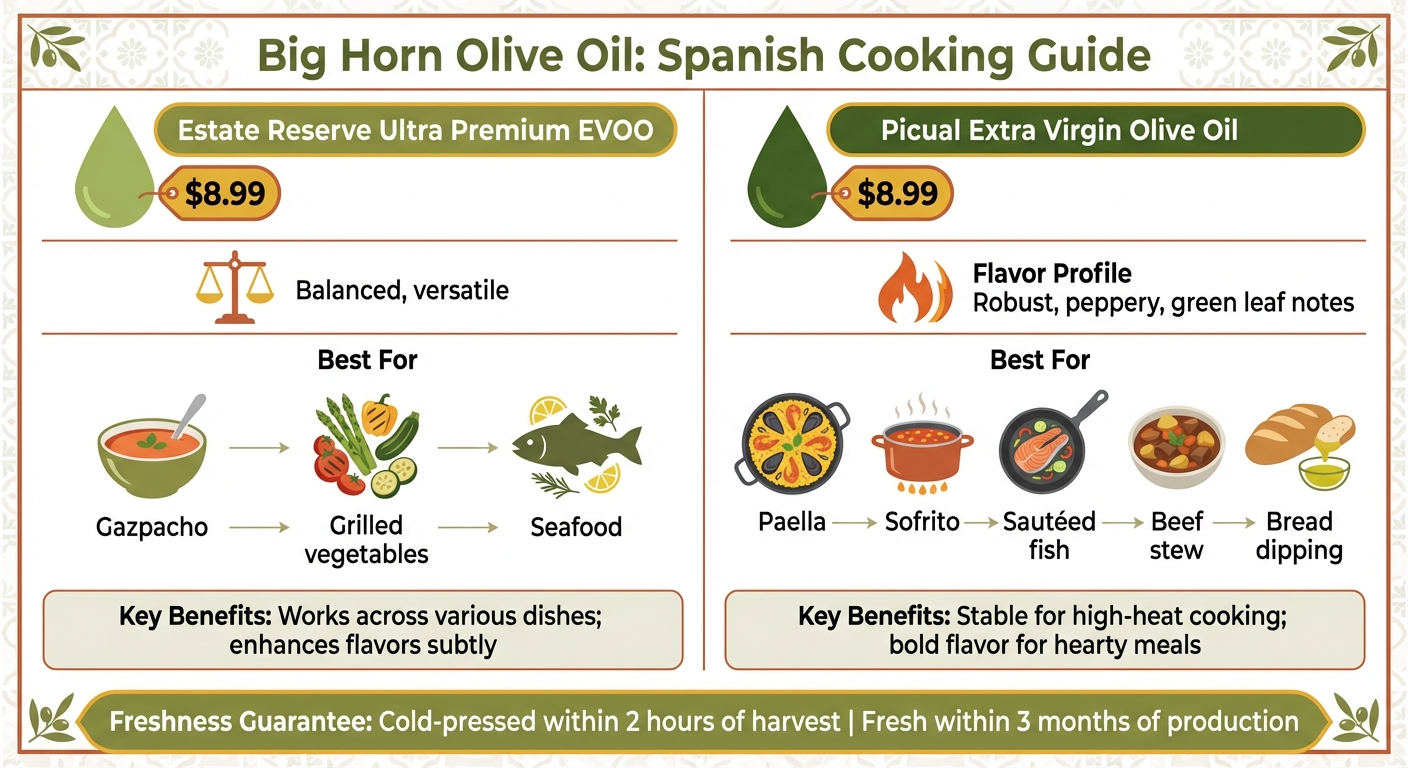
Spanish Olive Oil Varieties and Their Culinary Uses Guide
Big Horn Olive Oil products are crafted to bring out the best in traditional Spanish dishes, enhancing flavors and complementing each recipe's unique characteristics.
When choosing olive oil, consider the dish's flavor profile and cooking method. Lighter oils are perfect for delicate preparations, while bolder, more robust options are better suited for heartier, flavor-packed recipes.
Take the Estate Reserve Ultra Premium EVOO, for instance. Its balanced flavor makes it a versatile choice, pairing beautifully with dishes like grilled vegetables, gazpacho, or seafood paella. On the other hand, the Picual Extra Virgin Olive Oil offers a robust, peppery finish with green leaf notes, making it ideal for high-heat dishes like sofrito, sautéed fish, or even a hearty beef stew. Both oils are priced at $8.99 and are cold-pressed within two hours of harvest, ensuring peak freshness.
When preparing an authentic paella, a robust and spicy olive oil is key to enhancing the saffron and seafood elements. The Picual Extra Virgin Olive Oil delivers the intensity needed for such bold flavors. Meanwhile, lighter dishes like gazpacho or grilled fish shine when paired with more subtle oils that preserve their delicate nuances.
"Spanish extra virgin olive oil is like liquid gold, so fresh and fruity that we have it as a simple traditional breakfast with bread." - José Andrés
The careful pairing of olive oil with specific dishes underscores its essential role in Spanish cuisine, enhancing not just flavor profiles but also the overall culinary experience. The table below highlights how each Big Horn Olive Oil variety aligns with popular Spanish recipes.
Big Horn Olive Oil Product Comparison
| Product | Flavor Profile | Recommended Spanish Dishes | Main Benefits |
|---|---|---|---|
| Estate Reserve Ultra Premium EVOO ($8.99) | Balanced, versatile | Gazpacho, grilled vegetables, seafood | Works across various dishes; enhances flavors subtly |
| Picual Extra Virgin Olive Oil ($8.99) | Robust, peppery, green leaf notes | Paella, sofrito, sautéed fish, beef stew, bread dipping | Stable for high-heat cooking; bold flavor for hearty meals |
Both oils are guaranteed fresh within three months of production, ensuring they deliver the vibrant, authentic flavors that are so integral to Spanish cooking.
Conclusion
Olive oil has been at the heart of Spanish cuisine for over two thousand years, evolving from a Roman staple to a cornerstone of today’s culinary traditions. Spain's olive oil heritage reflects a deep-rooted passion for quality and craftsmanship. The shift from mass exports to carefully crafted, single-varietal oils has revolutionized how we experience Spanish flavors, bringing the unique essence of regions like Andalusia and Castellón straight to our kitchens. This journey of refinement and dedication has culminated in the exquisite, artisanal oils that define Spanish cooking today.
These modern oils have reimagined traditional recipes, allowing home cooks to enjoy the same exceptional quality found in authentic Spanish restaurants. Dishes like gazpacho and paella owe their signature taste to the bold, fruity notes and peppery finish of premium olive oil, proving that the right oil can transform even the simplest ingredients into culinary masterpieces.
Incorporating Ultra Premium EVOO into your Spanish dishes isn’t just about following a trend - it’s about celebrating a legacy while embracing the highest standards of quality. Big Horn Olive Oil’s dedication to cold-pressing olives within two hours of harvest and ensuring freshness within three months captures the vibrant, authentic flavors essential to Spanish cooking. Whether you’re preparing a sofrito or drizzling oil over grilled vegetables, every drop brings heritage and flavor to life.
With options like the Estate Reserve Ultra Premium EVOO or the bold Picual Extra Virgin Olive Oil, both priced at $8.99, Big Horn Olive Oil offers an easy way to bring the essence of Spanish olive culture into your home. Elevate your meals with the authentic taste of Spain, where tradition and craftsmanship meet to create unforgettable flavors.
FAQs
Which Spanish olive oil variety should I use for each dish?
When working with dishes that have bold, peppery flavors, Spanish olive oils like Picual or Hojiblanca are excellent choices. These oils are celebrated for their strong, robust profiles, which can stand up to and complement intense flavors.
On the other hand, for more delicate dishes, consider using Arbequina olive oil. Its milder taste works beautifully to enhance subtle flavors without overpowering them.
By selecting the right type of olive oil, you can elevate your meals while honoring the essence of traditional Spanish cuisine.
Can extra virgin olive oil handle high-heat cooking like paella?
Yes, extra virgin olive oil works well for high-heat cooking, including dishes like paella. Thanks to its relatively high smoke point, it’s a great option for sautéing and frying - both essential steps in making paella.
Just remember: avoid overheating it to maintain its rich flavor and nutritional qualities.
How do I choose and store ultra premium EVOO for freshness?
To keep ultra-premium extra virgin olive oil (EVOO) fresh, choose oils that are cold-pressed and minimally processed. This helps retain their polyphenols and antioxidants. Store your EVOO in a cool, dark spot, far from heat, light, and air exposure. Opt for a dark glass bottle or an opaque container to shield it from harmful elements. For peak freshness and to enjoy its health benefits, aim to use it within 12–18 months after opening.