

Souss-Massa Olive Oil in Moroccan Cuisine
Souss-Massa olive oil is a cornerstone of Moroccan cooking, celebrated for its rich flavor and health benefits. This cold-pressed extra virgin olive oil, produced in the fertile Souss Valley since 1948, enhances dishes like tagines, couscous, and Zaalouk with its fruity and bold taste. It’s also packed with antioxidants and nutrients, making it a healthier alternative to standard vegetable oils.
Here’s how Souss-Massa olive oil compares to other oils commonly used in Moroccan cuisine:
- Souss-Massa Olive Oil: Fruity, bold flavor; best for slow cooking, roasting, and finishing dishes. Costs around $24.99 per liter.
- Argan Oil: Nutty flavor; ideal as a finishing oil or in raw dishes like amlou. Rich in vitamin E but not suitable for high-heat cooking.
- Vegetable Oils: Neutral flavor; affordable and good for high-heat frying but lacks the depth and health benefits of olive or argan oil.
- Big Horn Olive Oil: Premium extra virgin olive oil with robust flavors; versatile for Moroccan recipes. Priced at $8.99 per bottle.
Quick Tip: Use Souss-Massa olive oil for flavor-focused dishes, argan oil as a finishing touch, and vegetable oils for frying. For premium quality, Big Horn olive oil offers a reliable option for Moroccan-inspired cooking.
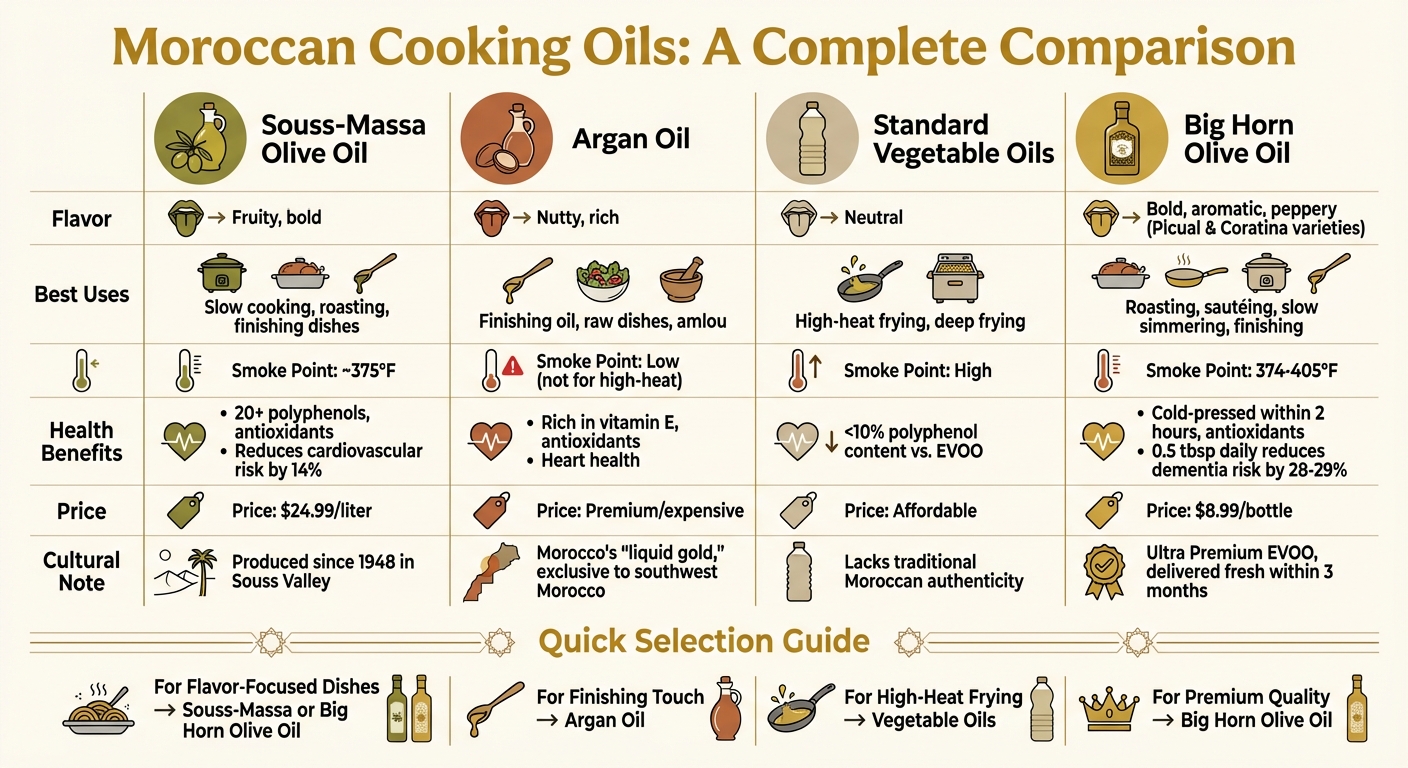
Comparison of Cooking Oils Used in Moroccan Cuisine
1. Souss-Massa Olive Oil
Flavor Profile
Souss-Massa olive oil is known for its aromatic richness and fruity undertones, making it a versatile ingredient in Moroccan cooking. It pairs beautifully with savory dishes like tagines and even desserts such as olive oil cake or ice cream. Its ability to enhance and balance flavors makes it a staple in traditional recipes.
Health Benefits
As a cold-pressed extra virgin olive oil, Souss-Massa retains essential nutrients and antioxidants. To preserve these benefits, it’s best used without exposing it to high heat. Drizzle it over grilled meats or roasted vegetables as a finishing touch to maintain its nutritional value.
Cultural Authenticity
Souss-Massa olive oil is deeply rooted in Moroccan culinary traditions. According to argancountry.ma:
One of the most iconic Moroccan dishes, the tagine, is unthinkable without a generous splash of olive oil.
Beyond tagines, it’s a key ingredient in steaming couscous, preparing Zaalouk (a flavorful eggplant and tomato salad), and baking traditional Moroccan bread. Its role in these dishes highlights its importance in both everyday meals and special occasions.
Cooking Suitability
While Souss-Massa olive oil can handle high temperatures, it’s often reserved for applications that showcase its delicate flavor. It’s perfect for marinating meats and vegetables or as part of modern sous-vide techniques to enhance tenderness and flavor. For everyday use, it shines in salad dressings, as a drizzle over roasted vegetables, or as a base for traditional Moroccan flavor profiles. This blend of traditional and modern uses makes Souss-Massa olive oil a standout choice in any kitchen.
sbb-itb-4066b8e
2. Argan Oil
Argan oil stands out as a bold, nutty alternative to the fruity complexity of Souss-Massa olive oil, offering its own unique culinary perks.
Flavor Profile
Argan oil brings a rich, nutty flavor to Moroccan cuisine, setting it apart from the fruity tones of Souss-Massa olive oil. Extracted through roasting, this golden oil has a deep, full-bodied taste that works beautifully as a finishing touch for dishes like tagines and couscous. Its flavor isn’t just delicious - it also complements its well-known health properties.
Health Benefits
Packed with vitamin E, antioxidants, and unsaturated fatty acids, argan oil supports heart health and helps reduce cholesterol levels. However, to retain these benefits, it’s best enjoyed raw or as a finishing oil.
Cultural Authenticity
Known as Morocco’s “liquid gold,” argan oil is deeply rooted in the country’s culinary traditions. The argan tree grows exclusively in southwest Morocco, particularly in the Souss-Massa region. Here, Berber women have long been involved in the labor-intensive process of extracting the oil. It’s also a key ingredient in amlou, a beloved spread made with almonds, honey, and argan oil, which perfectly showcases the flavors of southern Morocco.
Cooking Suitability
Argan oil shines as a dip for bread, a drizzle over couscous or tagines, or even as the base for a Moroccan-style vinaigrette when mixed with lemon juice, salt, and pepper. For the best experience, opt for certified organic products to ensure you’re getting the real deal.
3. Standard Vegetable Oils
Standard vegetable oils - like canola, sunflower, and corn oil - are widely used in Moroccan kitchens. However, they lack the distinctive taste and heritage that make Souss-Massa olive oil so special.
Flavor Profile
Vegetable oils are neutral and contribute no real flavor to dishes. In contrast, Moroccan extra virgin olive oil (EVOO) boasts a rich, layered flavor profile - fruity, peppery, and grassy - that transforms traditional dishes. This complexity is especially important in tagines, where the oil acts as a "silent hero", tying together the flavors of spices, meats, and vegetables seamlessly. Experts agree that this complexity enhances a variety of dishes, making Moroccan EVOO indispensable in authentic cooking.
Health Benefits
Refined vegetable oils lose many of the healthful compounds found in cold-pressed extra virgin olive oil. Moroccan EVOO is packed with polyphenols, antioxidants, and monounsaturated fats that help reduce LDL cholesterol and improve vitamin absorption. Thanks to Morocco's hot, dry climate, olive trees produce even higher levels of polyphenols, giving the oil an edge that standard vegetable oils simply can't replicate. These health benefits are yet another reason why Souss-Massa olive oil remains a cornerstone of Moroccan cuisine.
Cultural Authenticity
Beyond taste and nutrition, Souss-Massa olive oil carries a deep cultural significance. Unlike mass-produced vegetable oils, it reflects the terroir and traditions of Morocco. Known as the "desert miracle", this olive oil is a testament to the resilience of olive trees thriving under extreme conditions. Its characteristic bitterness and pungency have been cherished by Moroccan cooks for generations. In iconic dishes like Zaalouk or couscous, where the oil's flavor is meant to shine, vegetable oils simply fall short.
Cooking Suitability
Vegetable oils are better suited for cooking at very high temperatures, but Souss-Massa olive oil excels in traditional Moroccan techniques like roasting, sautéing, and slow simmering. These methods bring out its nuanced flavors, making it the ideal choice for tagines, couscous, and traditional salads. Vegetable oils, on the other hand, lack the ability to infuse these dishes with the depth and richness they deserve.
4. Big Horn Olive Oil
Big Horn Olive Oil specializes in Ultra Premium Extra Virgin Olive Oils, offering flavors that align beautifully with the essence of traditional Souss-Massa oils. These oils are cold-pressed within 2 hours of harvesting and delivered fresh within 3 months, ensuring they retain their peak flavor and nutritional properties. This meticulous process guarantees oils that bring an authentic touch to Moroccan cooking.
Flavor Profile
Big Horn's premium EVOOs are known for their bold and aromatic flavors, which are a perfect match for Moroccan cuisine. Their Picual and Coratina varieties stand out with their peppery and robust notes, enhancing the spices in dishes like chicken tagine with preserved lemons. Their depth of flavor can elevate even the simplest ingredients into memorable meals.
Health Benefits
Packed with antioxidants and healthy fats, Big Horn's cold-pressed oils preserve the polyphenols and monounsaturated fats that promote heart health. Research highlights that consuming just 0.5 tablespoons daily can lower the risk of dementia-related deaths by 28-29%, and about 1 tablespoon per day can reduce the risk of diabetes by 13%. A daily intake of 1.5-3 tablespoons, as a substitute for butter or other saturated fats, aligns perfectly with the health-conscious approach of Moroccan cuisine.
Cooking Suitability
With a smoke point of 374-405°F, Big Horn's EVOOs are ideal for various cooking techniques, from roasting and sautéing to slow simmering. Whether you're preparing a hearty meat tagine with cardoons or finishing a dish of couscous with a drizzle of oil, these EVOOs hold up beautifully under heat. Their versatility ensures they can be used confidently in all traditional Moroccan recipes without sacrificing flavor or nutritional value.
Advantages and Disadvantages
Each type of oil brings its own strengths and challenges to Moroccan cooking, adding layers of flavor and functionality to traditional dishes.
Moroccan olive oil stands out for its bright, grassy flavor that enhances complex dishes like tagines and couscous. Beyond taste, it’s packed with over 20 polyphenols, including oleocanthal and hydroxytyrosol, which may reduce cardiovascular risk by up to 14% when consumed daily. Its moderate smoke point, around 374°F, makes it a versatile choice for roasting and sautéing. However, olive oils exposed to Scirocco winds - capable of raising temperatures by 36°F - can develop an overly bitter and pungent taste, which might overpower more delicate dishes. Despite this, its balance of flavor and health benefits sets a high standard for comparison.
Argan oil, on the other hand, offers a nutty flavor that’s perfect as a finishing touch in Moroccan recipes. It pairs beautifully with couscous and salads, adding depth to these dishes. However, its lower smoke point restricts its use to raw or low-heat applications. Additionally, the artisanal production methods and limited availability often make argan oil a pricier option.
Standard vegetable oils provide a neutral base, allowing spices to take center stage in heavily seasoned dishes. They’re particularly useful for high-heat cooking, such as deep frying, thanks to their higher smoke points. However, they fall short in terms of nutritional value, retaining less than 10% of the polyphenol content found in extra virgin olive oils. They also lack the peppery finish that signals anti-inflammatory properties and may release harmful compounds when heated.
Big Horn Olive Oil offers a premium alternative, combining health benefits with reliability. Their Ultra Premium Extra Virgin Olive Oils are cold-pressed within two hours of harvesting and delivered within three months, ensuring freshness. Varieties like Picual and Coratina provide robust, balanced flavors without the excessive bitterness that can occur in oils from stressed trees. At $8.99 per bottle, they deliver consistent, high-quality results that suit a variety of Moroccan cooking methods, from raw drizzles over salads to slow-cooked tagines.
These oils highlight the importance of thoughtful selection in Moroccan cuisine, where each choice impacts both flavor and functionality.
Conclusion
Souss-Massa olive oil offers a well-rounded flavor profile that works beautifully for roasting, sautéing, and finishing Moroccan dishes. With a moderate smoke point of about 375°F, its fruity and slightly peppery notes pair seamlessly with Moroccan spice blends, adding depth to every bite.
Argan oil, on the other hand, shines as a finishing oil. Whether drizzled over a tagine, blended into amlou, or used in desserts like gazelle horns, it enhances dishes with its distinct nutty flavor. According to Argane-oil.ma:
It's best to consume argan oil raw or gently heated to preserve its nutritional profile. Using it as a seasoning or to finish your dishes maximizes its flavor without compromising its chemical structure.
For high-heat cooking, refined vegetable oils are the practical choice, handling deep frying and high-temperature searing with ease. Meanwhile, for those who want a bold, fruity flavor in their roasted or slow-simmered dishes, Big Horn Olive Oil offers premium quality that complements traditional Moroccan recipes.
To stay true to Moroccan culinary traditions, use extra virgin olive oil as your go-to cooking fat, save argan oil for finishing touches, and rely on refined vegetable oils for high-heat frying. This thoughtful approach ensures the flavors and authenticity of Moroccan cuisine remain intact.
FAQs
How do I know if an olive oil is truly extra virgin and fresh?
To make sure your olive oil is genuinely extra virgin and fresh, pay attention to quality seals and certifications. Check for a harvest or bottling date - extra virgin olive oil (EVOO) is at its peak within 12 to 18 months of harvest. Fresh EVOO typically has a vibrant green or golden hue, a fruity or peppery scent, and should never smell musty or rancid. Stick to trusted suppliers that prioritize quality and freshness.
When should I cook with olive oil vs. use it as a finishing oil in Moroccan dishes?
When you're frying, sautéing, or roasting, olive oil is a solid choice because it holds up well under high heat. Want to take things up a notch? Drizzle it over your dishes after cooking to boost flavor, aroma, and even presentation. For Moroccan favorites like tagines or salads, high-quality extra virgin olive oil works perfectly as a garnish, keeping those subtle flavors intact while adding a rich, aromatic finish.
What are easy Moroccan recipes where the olive oil flavor really stands out?
Moroccan cuisine is known for its bold flavors, and olive oil plays a starring role in many dishes. Two simple recipes that bring out the best in high-quality extra virgin olive oil are roasted potatoes with Moroccan spices and Moroccan-style chicken with olives and couscous.
In the roasted potatoes, the olive oil helps the spices coat each piece evenly, enhancing the dish's rich, warm flavors. For the chicken, olive oil adds depth and ties the savory, spiced chicken and briny olives together with the fluffy couscous. These recipes show how olive oil isn't just an ingredient - it's essential for achieving an authentic Moroccan taste.