

Olive Oil Polyphenols and Gut Microbiome Health
Here’s the short answer: high-polyphenol extra virgin olive oil may help your gut microbiome, but the effect is small, uneven, and depends a lot on the oil and the person.
From what I see in the research, the clearest points are:
- EVOO matters more than refined olive oil because refining removes most phenolic compounds.
- Olive polyphenols like hydroxytyrosol, oleuropein, oleocanthal, and oleacein can make it to the colon, where gut bacteria keep breaking them down.
- Studies suggest these compounds may shift gut microbes toward more SCFA-related activity, better barrier support, and lower inflammatory signaling.
- Human results are mixed. Some trials found more Bifidobacterium or gut-linked metabolites. Others found little to no microbiome change.
- Animal and lab studies show a clearer pattern, including lower Desulfovibrionaceae, more Lachnospiraceae and Bacteroides, and less activity in NF-κB, COX-2, and iNOS pathways.
- Oil quality changes the picture a lot: virgin olive oil polyphenols can range from about 40 to 1,000 mg/kg, and one survey found only 4.6% to 23.1% of EVOO samples met the EU 250 mg/kg polyphenol claim level.
If you want the plain-English takeaway, it’s this: polyphenol-rich EVOO looks more promising for gut health than refined olive oil, but human proof is still limited and short-term.
To make the article easier to scan, I’d boil it down to four questions:
- What reaches the colon? Part of olive oil’s phenolics survive digestion.
- What do gut microbes do with them? They turn them into smaller compounds like hydroxytyrosol and phenolic acids.
- What might change? Microbes, SCFAs, gut barrier markers, and inflammation-related signals.
- How sure are we? More sure in mice and lab models, less sure in humans.
That’s the lens I’d use for the rest of the article: good early data, uneven human results, and a big role for oil quality.
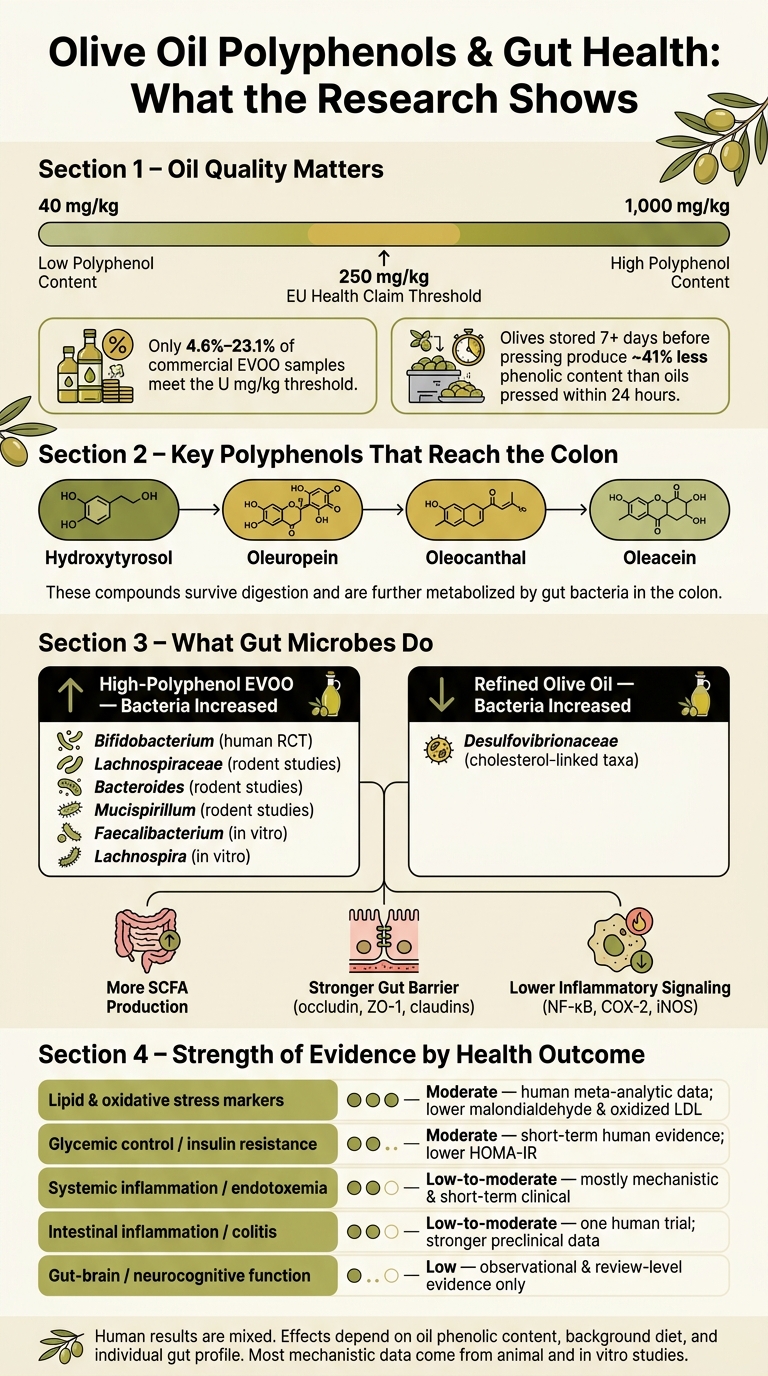
Olive Oil Polyphenols & Gut Health: What the Research Shows
Olive Oil Variety Affects Brain Function and Gut Health: Study
sbb-itb-4066b8e
What Studies Show About Microbiome Changes After Polyphenol-Rich EVOO
Once olive phenolics reach the colon, they can change which microbes do well there and which byproducts those microbes make. Right now, the research points in one general direction: polyphenol-rich EVOO may push the gut microbiome toward a prebiotic-like pattern. But it’s not a clean, one-size-fits-all effect. Dose, study length, and the oil’s makeup all seem to matter. Human trials give the best picture of what happens in daily life, while animal and fermentation studies help explain why results don’t always line up.
Human Trials on Beneficial Bacteria and Microbial Diversity
Human studies show a mixed but interesting pattern. In one 3-week crossover trial, only the olive-thyme blend increased Bifidobacterium and fecal protocatechuic acid compared with low-phenolic oil. The olive-only oil increased hydroxytyrosol and dihydroxyphenylacetic acids, but it did not increase Bifidobacterium. That’s a useful clue. It suggests the matrix matters, not just the total phenolic dose.
At the same time, not every human trial shows a clear microbiome effect. Another study in overweight women who consumed extra virgin olive oil as part of an energy-restricted diet found no major change in overall microbial diversity or in the main bacterial groups. Put side by side, these findings suggest that EVOO’s effects in humans may depend on:
- phenolic content
- background diet
- the person’s starting gut profile
Animal and In Vitro Research on Firmicutes, Bacteroidota, and Intestinal Integrity
Animal and in vitro work helps fill in the gaps. In a 12-week mouse study that compared high-fat diets based on EVOO, refined olive oil (ROO), or butter, mice fed EVOO had lower Desulfovibrionaceae than the ROO group and higher Erysipelotrichaceae and Sutterellaceae than mice on a standard diet. The refined-oil group had more Desulfovibrionaceae and other cholesterol-linked taxa, which points to an effect tied to phenolics.
A separate 10-week study in C57BL/6J mice fed an EVOO-based high-fat diet found higher alpha-diversity and more Mucispirillum, Lachnospiraceae, and Bacteroides than diets based on lard or flaxseed oil. That lines up with a more diverse, carbohydrate-fermenting microbial community.
Fermentation studies add another piece. In vitro fecal fermentation research shows that oleuropein and hydroxytyrosol are heavily metabolized by colonic microbes, producing smaller phenolic acids and other secondary metabolites. One hydroxytyrosol fermentation study connected this metabolism with Bacteroides, Faecalibacterium, Klebsiella, and Lachnospira, along with metabolites such as indole-3-acetic acid. Other oleuropein fermentation work also found shifts in Coriobacteriaceae and Collinsella.
Table: Olive Oil Polyphenols and Reported Microbial Responses
The clearest way to compare the findings is side by side.
| Polyphenol/Olive Matrix | Study Type | Taxa Increased | Taxa Decreased | Main Finding |
|---|---|---|---|---|
| FVOOT (olive + thyme, ~500 mg/kg) | Human RCT, 3 weeks | Bifidobacterium | - | Significant Bifidobacteria increase vs. low-phenolic VOO; elevated fecal protocatechuic acid |
| FVOO (olive phenolics, ~500 mg/kg) | Human RCT, 3 weeks | - | - | Increased fecal hydroxytyrosol and dihydroxyphenylacetic acids; no significant Bifidobacterium shift |
| EVOO (high-fat diet) | Rodent, 12 weeks | Erysipelotrichaceae, Sutterellaceae | Desulfovibrionaceae | Lower Desulfovibrionaceae vs. ROO; higher Erysipelotrichaceae and Sutterellaceae |
| EVOO (high-fat diet) | Rodent, 10 weeks | Mucispirillum, Lachnospiraceae, Bacteroides | - | Higher microbial diversity vs. lard- or flaxseed-based HF diets |
| Hydroxytyrosol & oleuropein | In vitro fecal fermentation | Bacteroides, Faecalibacterium, Lachnospira | - | Produced secondary phenolic metabolites; oleuropein fermentation also shifted Coriobacteriaceae and Collinsella |
How Olive Oil Polyphenols May Support Gut Function and Reduce Inflammation
Microbial Metabolism, Short-Chain Fatty Acids, and Barrier Support
Olive polyphenols may do more than shift which microbes live in the gut. They may also change what those microbes do and how the gut responds to inflammation.
Gut bacteria break down hydroxytyrosol and oleuropein into smaller metabolites, and some of those metabolites may be more active than the original compounds. Hydroxytyrosol is only partly absorbed in the upper GI tract, which means more of it can reach the colon. There, microbes can convert it into AhR-active metabolites that may help support barrier function.
Microbial metabolism may also help with short-chain fatty acid, or SCFA, production. EVOO phenolics are linked with more SCFA-producing taxa, including Lachnospiraceae, Muribaculaceae, and Roseburia. That matters because butyrate is a key fuel source for colon cells and helps support the mucosal lining. That said, most direct SCFA data still come from animal and fermentation work, while human data are still limited.
Olive phenolics may also help strengthen the gut barrier itself. SCFAs and olive phenolics may increase tight junction proteins such as occludin, claudins, and ZO-1. If that barrier gets stronger, less LPS may leak through, which could lower inflammatory stress. This helps make sense of why colitis models often show clear shifts in inflammatory signaling.
Inflammatory Pathways Studied in Colitis and Metabolic Models
The clearest mechanistic data come from preclinical colitis models. In DSS colitis mice, hydroxytyrosol lowered DAI, MPO, IL-6, IL-1β, and TNF-α. It also downregulated COX-2 and iNOS expression and blocked NF-κB p65 translocation in colon tissue.
Oleuropein showed much the same pattern. In DSS colitis mice, oral administration reduced neutrophil infiltration and lowered NO, IL-1β, IL-6, and TNF-α. It also reduced expression of iNOS, COX-2, and MMP-9, and inhibited NF-κB p65 translocation.
An EVOO phenolic extract, or EVOO-PE, added another piece to the picture. It reduced MCP-1, TNF-α, COX-2, and iNOS, downregulated JNK phosphorylation, prevented IκBα degradation, and promoted PPARγ upregulation. Put simply, these studies suggest olive phenolics may act directly on inflammatory signaling, not just through microbiome shifts. That includes effects on pathways such as TLR4/NF-κB and NLRP3 inflammasome activation.
Table: Proposed Mechanisms by Polyphenol or Olive Matrix
| Polyphenol/Matrix | Study Model | SCFA Effect | Barrier/Inflammation Marker | Main Mechanistic Outcome |
|---|---|---|---|---|
| Hydroxytyrosol | DSS colitis mouse | Not directly measured | MPO, IL-6, IL-1β, TNF-α, COX-2, iNOS, NF-κB p65 | Reduced DAI and histological damage; blocked NF-κB p65 translocation |
| Oleuropein | DSS colitis mouse | Not directly measured | NO, IL-1β, IL-6, TNF-α, iNOS, COX-2, MMP-9, NF-κB p65 | Attenuated colitis severity; reduced neutrophil infiltration and inflammatory mediators |
| EVOO phenolic extract (EVOO-PE) | Chronic DSS colitis mouse | Not directly measured | MCP-1, TNF-α, COX-2, iNOS, JNK, IκBα, PPARγ | Inhibited NF-κB and MAPK signaling; promoted PPARγ upregulation |
| EVOO (whole matrix) | Rodent metabolic model | Associated with SCFA-producing taxa such as Lachnospiraceae, Muribaculaceae, and Roseburia | Tight junction proteins (occludin, ZO-1) | Supported mucosal integrity through microbial SCFA-related shifts and barrier protein upregulation |
Isolated phenolics and whole EVOO don't always behave the same way. The full oil also contains fatty acids and minor compounds, and those can change the response.
What These Microbiome Effects Could Mean for Long-Term Health
These microbiome shifts may lead to broader health effects, but the strength of the evidence depends on the outcome and the kind of study behind it. The key point is simple: microbial changes are interesting, but human health outcomes matter more.
Cardiometabolic and Weight-Related Findings
The strongest human data so far are on blood lipids and oxidative stress markers. A 2025 meta-analysis found that high-polyphenol EVOO, compared with low-polyphenol olive oil, significantly reduced malondialdehyde by 0.07 µmol/L and oxidized LDL (SMD -0.44), while also slightly improving total cholesterol and HDL cholesterol. These are still biomarker shifts, not hard clinical endpoints, but they all point in the same general direction.
A similar pattern shows up in blood sugar and weight data, although the evidence base is thinner. A 2025 study on phenolic-rich olive oil reported lower HOMA-IR and modest drops in body weight and BMI, even though lipid profiles and blood pressure did not change much in either group. One possible explanation is the rise in Roseburia and other butyrate-producing bacteria, which tend to be linked with better insulin sensitivity. Even so, long-term randomized trials that isolate EVOO polyphenols are still uncommon. Weight loss, at this stage, is still unproven.
Intestinal and Gut-Brain Outcomes Still Under Investigation
The gut findings are interesting, but they need more human data. One randomized ulcerative colitis trial found lower hs-CRP and better symptom scores after EVOO replaced canola oil. Mechanistic and animal studies are stronger in this area, especially colitis models that showed lower inflammatory mediators and better barrier-related outcomes. That makes the intestinal signal promising, but not strong enough yet for broad claims.
The same caution applies to gut-brain outcomes. Reviews suggest that EVOO bioactives may affect the microbiota-gut-brain axis, and cohort data link higher virgin olive oil intake to more diverse gut microbiota and better cognitive performance over two years. Still, the samples are small, much of the evidence is observational, and long-term randomized trials that measure both microbiome and neurocognitive endpoints are rare.
Table: Health Outcomes by Study Type
| Health Domain | Olive Oil/Phenolic Status | Microbiome Finding | Outcome Measured | Strength of Evidence |
|---|---|---|---|---|
| Lipids / cardiovascular risk | High-polyphenol EVOO vs. low-polyphenol olive oil | Likely microbiome-linked changes in metabolism and oxidation pathways | Lower malondialdehyde, lower oxidized LDL, modest cholesterol changes | Moderate - human meta-analytic biomarker data |
| Glycemic control / insulin resistance | Phenolic-rich olive oil | Microbiome-linked metabolic effects proposed | Lower HOMA-IR; modest reductions in weight and BMI | Moderate - short-term human evidence |
| Endotoxemia / systemic inflammation | EVOO-rich diet | Barrier support and lower LPS exposure proposed | Lower hs-CRP and other inflammatory markers | Low-to-moderate - mostly mechanistic and short-term clinical |
| Intestinal inflammation / colitis | Hydroxytyrosol; EVOO substitution | Lower inflammatory microbes, higher SCFA-producing bacteria | Improved symptom scores; reduced inflammatory markers | Low-to-moderate - one human trial; stronger preclinical data |
| Gut-brain / neurocognitive function | Olive bioactives including polyphenols | Microbiota shifts may affect gut-brain signaling | Cognitive performance associations in cohort data | Low - observational and review-level evidence |
What makes this tricky is that polyphenol dose, oil quality, and study design can change the picture quite a bit. That’s why some results look encouraging, while the confidence behind them still varies from one outcome to another.
Research Limits, Olive Oil Quality, and Key Takeaways
Why Polyphenol Content and Study Design Affect Results
Those mixed microbiome findings don't happen by accident. A big part of the issue comes down to oil quality and how the studies were run.
Polyphenol content in virgin olive oil can range from about 40 to 1,000 mg/kg, depending on cultivar, harvest timing, processing, and storage. That is a huge spread. So even when two studies both say they used EVOO, the oils may not be delivering anything close to the same phenolic dose.
That gap shows up in the market too. One large commercial survey found that only 4.6% to 23.1% of EVOO samples met the EU's 250 mg/kg threshold for a polyphenol health claim. Put simply, two EVOO bottles can look similar on the shelf and still provide very different amounts of phenolics.
Processing and storage make this even messier. Refined olive oils lose much of their polyphenol content during neutralization, bleaching, and deodorization, which makes them far less comparable to EVOO in studies on gut microbiome effects. Storage before pressing matters too: olives stored for more than 7 days before pressing produced oils with about 41% less phenolic content than oils pressed within 24 hours.
Study design adds another layer. Many human trials are short, often lasting just 2 to 8 weeks, with daily doses around 25 mL/day. Even at the same serving size, the phenolic dose can still swing a lot. For example, a trial using oil with about 80 mg/kg of phenolic compounds versus one using 500 mg/kg creates a several-fold difference in polyphenol intake, despite the same daily volume.
The testing method matters as well. 16S rRNA sequencing can show broad taxonomic shifts, while shotgun metagenomics gives more detail on function, including how microbes handle phenolic compounds.
For day-to-day use, it makes sense to choose fresh EVOO with documented phenolic content and proper storage. Even premium bottles are worth checking with independent lab verification when that information is available.
These limits help explain why the evidence looks promising but still falls short of a firm answer.
Conclusion: What the Current Research Supports
The research points in the same direction: polyphenol-rich EVOO interacts with gut bacteria and affects microbial composition and metabolite output.
At the same time, there are still gaps. Researchers do not yet have clear thresholds for dose, population, or oil quality. Most of the mechanistic detail still comes from animal and in vitro work, and solid clinical endpoints in humans are still sparse.
The main takeaway is simple: oil quality shapes study results. Fresher, higher-phenolic EVOO is more likely to deliver the compounds that gut microbes respond to.
FAQs
How can I tell if an EVOO is high in polyphenols?
Check the label for polyphenol content listed in mg/kg. A bitter taste or that delayed peppery sting in the throat can point to antioxidants like oleocanthal, but those clues aren't exact.
If you want a closer look, ask for a certificate of analysis based on HPLC. It also helps to pick oils harvested within the last 12 months and sold in dark glass bottles, because polyphenols drop over time and when oil sits in the light.
How much EVOO should I use for gut benefits?
Experts generally suggest at least 1 tablespoon a day for gut health and antioxidant support. Some findings point to added upside at 3 to 4 tablespoons per day. That said, a common daily goal is 1.5 to 2 tablespoons - about 20 to 25 mL.
For the best results, pick a high-quality, high-phenolic EVOO and use it raw. Think salad dressings, dips, or a drizzle over food right before serving.
Who is most likely to benefit from olive oil polyphenols?
Olive oil polyphenols can help people who want to support long-term health. They may be especially useful for those focused on heart health, since they can help regulate cholesterol, support circulation, and protect blood lipids from oxidative stress.
They may also support cognitive wellness and gut health. In the gut, they can help nourish helpful bacteria, support gut barrier integrity, and ease inflammation.