

Ultimate Guide to Olive Oil Shelf Life
Olive oil doesn’t last forever. Its quality declines over time due to exposure to light, heat, oxygen, and age. Here’s what you need to know:
- Unopened Bottles: Extra virgin olive oil (EVOO) lasts 12–18 months from the harvest date under ideal storage conditions. High-polyphenol oils last longer.
- Opened Bottles: Use within 1–3 months for best flavor and health benefits. Oxidation begins immediately after opening.
- Storage Tips: Store in a cool (59°F–68°F), dark place. Use dark glass, ceramic, or stainless steel containers to protect from light and air.
- Signs of Spoilage: Rancid oil smells like crayons or stale nuts and tastes flat or greasy. Always rely on your senses to check freshness.
Proper storage and quick usage ensure your olive oil retains its flavor and nutritional value.
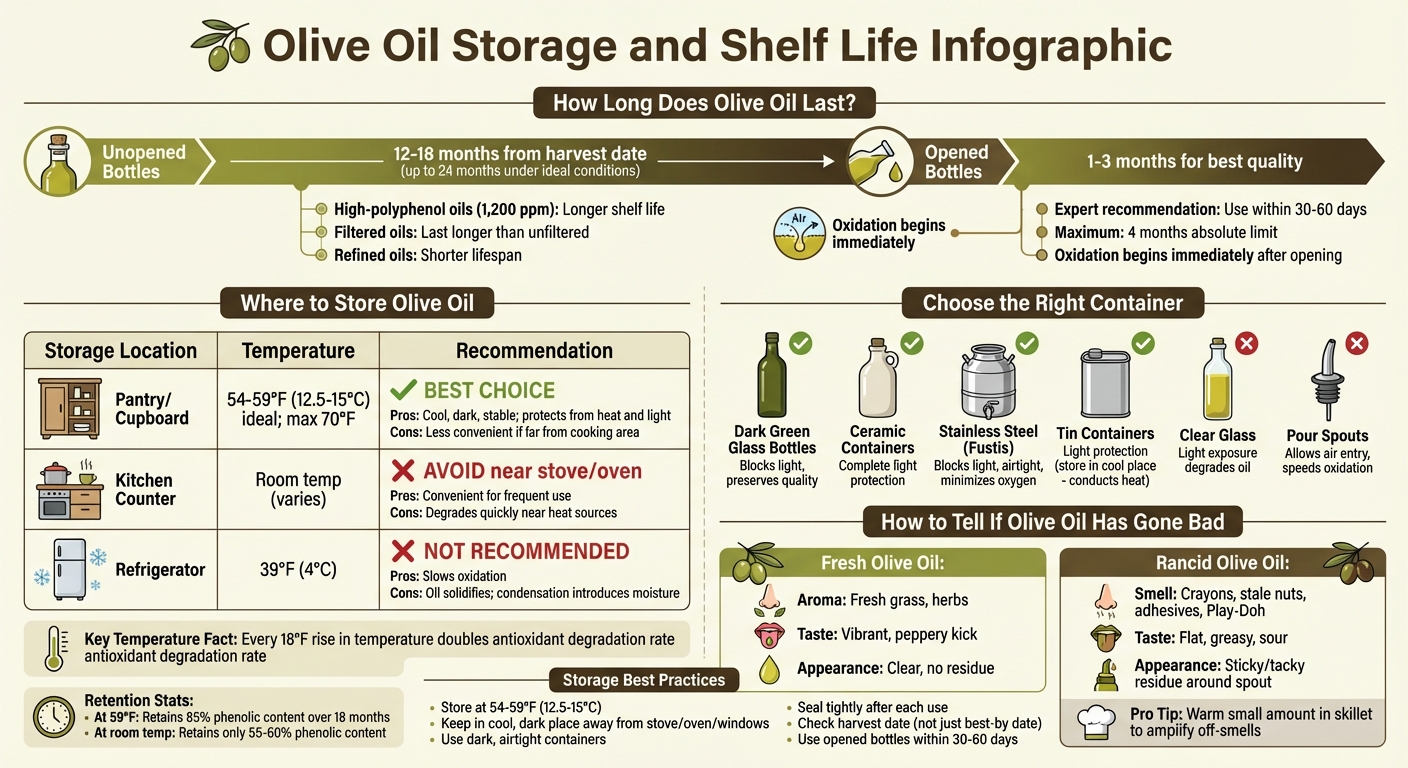
Olive Oil Storage Guide: Shelf Life, Temperature, and Container Comparison
How Long Unopened Olive Oil Lasts
Expected Shelf Life for Unopened Bottles
Unopened bottles of extra virgin olive oil (EVOO) typically retain their best flavor and health benefits for about 12–18 months from the harvest date. Under ideal storage conditions, they may last up to 24 months from the packaging date.
The oil's polyphenol content plays a big role in its shelf life. Oils with high antioxidant levels (around 1,200 ppm) tend to last longer. On the other hand, refined olive oils have a shorter lifespan since the refining process removes many of these protective antioxidants. Filtered olive oils also generally outlast unfiltered ones - like Olio Nuovo - because the particles in unfiltered oils can speed up degradation.
To keep unopened olive oil at its best, it’s crucial to store it properly. A cool, dark place with a temperature between 59°F and 68°F (15°C–20°C) is ideal. Light exposure can cause the oil to deteriorate quickly, potentially losing its extra virgin quality in just a few weeks. Research also suggests that cooler storage, such as at 39°F (4°C), helps preserve the oil’s chemical properties, but the sweet spot remains the 59°F–68°F range.
Understanding these factors helps set the stage for how opened bottles perform, which is covered in the next section.
What Harvest and Best Before Dates Mean
The dates printed on olive oil labels provide important clues about its quality. The harvest date marks when the olives were picked, signaling the starting point of the oil's natural degradation. Meanwhile, the best before date is the producer’s estimate of when the oil will still deliver peak flavor. As Paolo DeAndreis puts it:
"The best indicator of extra virgin olive oil freshness is the harvest date, when the clock begins ticking for the degradation of the olives and hence the oil."
Typically, the best before date is set around 18 months after bottling. However, since bottling often happens months after harvest, this date can sometimes give a misleading impression of freshness.
For premium or single-estate oils, it’s wise to focus on the harvest date when choosing a bottle. Supermarket blends, which often mix olives from various regions, tend to rely on the best before date as a more practical gauge of flavor and quality. To ensure you’re getting the freshest oil with the most health benefits, look for bottles with a harvest date within the past 12 to 18 months.
How Long Opened Olive Oil Lasts
When to Use Opened Olive Oil
Once you open a bottle of olive oil, aim to use it within 1 to 2 months. The North American Olive Oil Association suggests stretching that to 3 months, while some experts say 4 months is the absolute limit. Beyond that, the quality starts to drop noticeably.
The trick is to match the bottle size to how much olive oil you actually use. If you only use it occasionally - say, as a drizzle over salads - buying a large bottle isn’t the best idea. It’ll sit around, exposed to air, and lose its quality over time. Smaller bottles are a better choice if you can finish them within 30 to 60 days. This is especially true for extra virgin olive oil, where the fresh, herbaceous flavors and peppery kick fade fast once the bottle is opened. This quick decline happens because of oxidation, which we’ll dive into next.
How Oxidation Affects Opened Olive Oil
Even with proper storage, oxidation begins the moment you open the bottle, and there’s no stopping it. Oxygen triggers a chemical reaction that breaks down the oil’s fat molecules, eating away at the antioxidants that protect its quality. Over time, this process strips the oil of its fresh taste and aroma.
Oxidation speeds up when the oil is exposed to oxygen, light, or heat. Each time you open the bottle, more oxygen gets in, accelerating the breakdown. As this happens, the oil’s flavor turns unpleasant, developing off-notes that weren’t there before.
But it’s not just about taste. The antioxidants in olive oil, which are known for reducing inflammation and supporting heart health, also degrade during oxidation. While rancid olive oil won’t harm you, it won’t provide the nutritional benefits you’re expecting either.
How Long Should Keep Olive For Once It Is Open? Olive Oil 101 part 1
sbb-itb-4066b8e
How to Store Olive Oil Properly
Storing olive oil the right way is essential to preserve its flavor and nutritional value. This builds on the earlier discussion about managing temperature and oxidation.
Best Temperature and Storage Location
To keep olive oil at its best, aim for a storage temperature between 54°F and 59°F (12.5°C to 15°C). If this isn’t practical, a consistently cool environment - ideally no warmer than 70°F - will still help maintain its quality.
"Consider olive oil as requiring moderate conditions to prevent premature degradation."
- Susan Stillson, Senior Culinary Development Chef, Whole Foods Market
A pantry or kitchen cupboard is ideal, as long as it's kept away from heat sources like stoves, ovens, or windows. Heat accelerates the breakdown of antioxidants in olive oil. For example, every 18°F rise in temperature roughly doubles the rate of antioxidant degradation. Oils stored at 59°F can retain up to 85% of their phenolic content over 18 months, compared to just 55-60% when kept at room temperature. Avoid leaving olive oil on the counter near a range, as the heat can quickly lead to rancidity.
Once you’ve sorted out the temperature, the next step is selecting the right container to protect the oil from light and oxygen.
Best Containers for Olive Oil
The container you use plays a big role in preserving olive oil. Dark green glass bottles, tins, or ceramic containers are the best options. Light exposure - whether from sunlight or indoor lighting - can degrade olive oil over time, stripping away its fresh flavor and aroma.
For larger quantities, stainless steel containers (commonly known as fustis) with airtight spigots are excellent. These containers completely block light and minimize oxygen exposure. However, if you’re using a tin, remember that metal conducts heat quickly, so always store it in a cool spot.
Keep the container tightly sealed to limit air exposure. Pour spouts are not ideal for long-term storage, as they allow air to enter, speeding up oxidation. If you prefer to transfer oil into a smaller cruet for daily use, ensure it’s opaque and plan to use it up quickly.
Pantry vs. Counter vs. Refrigerator Storage
| Location | Pros | Cons | Recommendation |
|---|---|---|---|
| Pantry / Cupboard | Cool, dark, and stable; protects from heat and light. | May be less convenient if far from the cooking area. | Preferred: Best for long-term storage. |
| Kitchen Counter | Convenient for frequent use. | Degrades quickly if near heat sources or in clear containers. | Avoid near heat sources. |
| Refrigerator | Slows oxidation. | Causes oil to thicken, introduces moisture, and can affect quality. | Not Recommended: Avoid refrigeration. |
Most experts advise against storing olive oil in the refrigerator. While the cold slows oxidation, it also causes the oil to solidify, and condensation can form inside the bottle when it’s removed from the fridge. This introduces moisture and oxygen, both of which can degrade the oil.
"Each time the bottle is removed from the cold, condensation can form on the inside of the lid and drop into the oil, introducing oxygen."
- Fran Gage, Olive Oil Expert
The pantry is the best choice. It offers a dark, stable environment that keeps olive oil in top condition without the inconvenience of waiting for it to liquefy. Pair this with the right containers, and you’ll extend the life of your olive oil while maintaining its quality.
How to Tell If Olive Oil Has Gone Bad
Yes, olive oil can spoil. Knowing how to spot rancidity is key to avoiding oil that could ruin your meals or lose its nutritional value. Using your senses is one of the best ways to catch signs of degradation early.
What Rancid Olive Oil Smells and Tastes Like
Fresh olive oil has a vibrant aroma, often reminiscent of fresh grass or herbs, with a peppery kick at the end. In contrast, rancid olive oil gives off unpleasant smells like crayons, stale nuts, or even adhesives. Its taste? Flat, greasy, or sour - definitely not what you want in your cooking.
"Rancid oil will smell and taste like crayons, Play-Doh, Band-Aids, or stale nuts. This is surprisingly much easier for people to recognize than they think."
– Mary Mori, Vice President of Quality and Product, California Olive Ranch
To confirm your suspicions, try warming a small amount in a skillet. Heat can amplify any off-putting smells, making them easier to identify. Another clue? A sticky or tacky residue around the bottle’s spout - a sign the oil has oxidized. These sensory checks are simple yet effective ways to assess freshness.
Why Smell and Taste Tests Matter
Your senses are more reliable than the printed best-by date on the bottle. While that date offers a general guideline, factors like heat, light, or air exposure can spoil olive oil much sooner. On the flip side, properly stored oil might remain fresh well beyond the date.
When you open a new bottle, take a moment to taste and smell it. This helps you establish a baseline for what fresh olive oil should be like. Over time, you’ll notice if something changes. While rancid oil isn’t harmful to consume, it can ruin the flavor of your dishes and strip away its healthy antioxidants. Regular sensory checks ensure your olive oil stays fresh, flavorful, and ready to enhance your meals.
Conclusion
Olive oil begins to lose its quality as soon as it's extracted. Factors like light, heat, and air accelerate this process, diminishing both its flavor and nutritional benefits. To keep your olive oil at its best, store it in a cool, dark pantry with a temperature between 57°F and 63°F. Always seal the bottle tightly and aim to use opened bottles within 30 to 60 days. Following these steps helps you enjoy the full flavor and health perks of your olive oil, especially when you've opted for a premium product.
You can also rely on your senses to gauge freshness. High-quality extra virgin olive oil often has a grassy aroma and a peppery finish, while unpleasant or stale odors may signal oxidation. Instead of focusing solely on a best-by date, look for a harvest date to ensure you're getting the freshest product.
For example, premium oils like Big Horn Olive Oil are cold-pressed within just two hours of harvest to lock in high levels of polyphenols and antioxidants. Delivered fresh within three months of harvest, these oils offer incredible flavor and longevity right from the start.
FAQs
How do I know if my olive oil has gone bad?
To determine if your olive oil has gone bad, start by giving it a sniff. Spoiled olive oil often carries an off-putting smell, like something rancid, waxy, or sour. If the scent raises any red flags, take a small taste. A bitter, stale, or generally unpleasant flavor is another clear sign that it’s no longer good. In contrast, fresh olive oil should have a smooth, lively taste with a hint of pepperiness.
Storing olive oil the right way can help it last longer. Keep it in a cool, dark spot, away from heat and direct sunlight. Also, make sure the bottle is tightly sealed to maintain its quality for as long as possible.
How should I store olive oil to keep it fresh for longer?
To preserve the freshness of olive oil and make it last longer, keep it in a cool, dark spot, away from heat, light, and air. Opt for storage in a dark glass bottle or a stainless steel container to shield it from light and oxygen exposure. The ideal temperature for storage is between 60°F and 72°F. For optimal flavor and quality, aim to use the olive oil within one to two months after opening.
Does the type of container impact how long olive oil stays fresh?
Dark glass bottles or stainless steel containers are the best options for keeping olive oil fresh. These materials protect the oil from light and air, both of which can speed up deterioration. A tightly sealed container is also essential to limit oxygen exposure, which helps maintain the oil's flavor and quality over time. To ensure it stays at its best, store olive oil in a cool, dark spot, away from heat sources.