

Olive Oil vs. Butter in Italian Meat Dishes
When it comes to Italian meat dishes, the choice between olive oil and butter boils down to flavor, cooking performance, and health considerations. Olive oil, especially extra virgin, is prized for its bold, fruity flavor and heart-healthy benefits, making it ideal for high-heat cooking and tomato-based sauces. Butter, on the other hand, offers a creamy richness and nutty undertones, perfect for finishing sauces or creating velvety textures in Northern Italian recipes. Many cooks combine both fats - olive oil for the base and butter for a smooth finish.
Key Points:
- Flavor: Olive oil is bold and aromatic; butter is rich and smooth.
- Cooking Performance: Olive oil handles high heat better; butter excels in finishing touches.
- Health: Olive oil has more monounsaturated fats and no cholesterol, while butter is higher in saturated fats and Vitamin A.
- Regional Use: Olive oil dominates in Southern Italy; butter is common in the north.
Quick Comparison:
| Feature | Olive Oil (EVOO) | Butter |
|---|---|---|
| Flavor Profile | Fruity, herbaceous, peppery | Creamy, nutty, sweet |
| Best Uses | Searing, tomato-based sauces | Finishing sauces, creamy dishes |
| Smoke Point | ~300–350°F | ~302°F (milk solids brown) |
| Health Benefits | Heart-friendly, high in antioxidants | Higher in saturated fat, Vitamin A |
| Regional Preference | Southern & Central Italy | Northern Italy |
For bold, tomato-heavy dishes or light meats, olive oil is the go-to. For creamy sauces or rich textures, butter shines. Blend both for the best of both worlds.
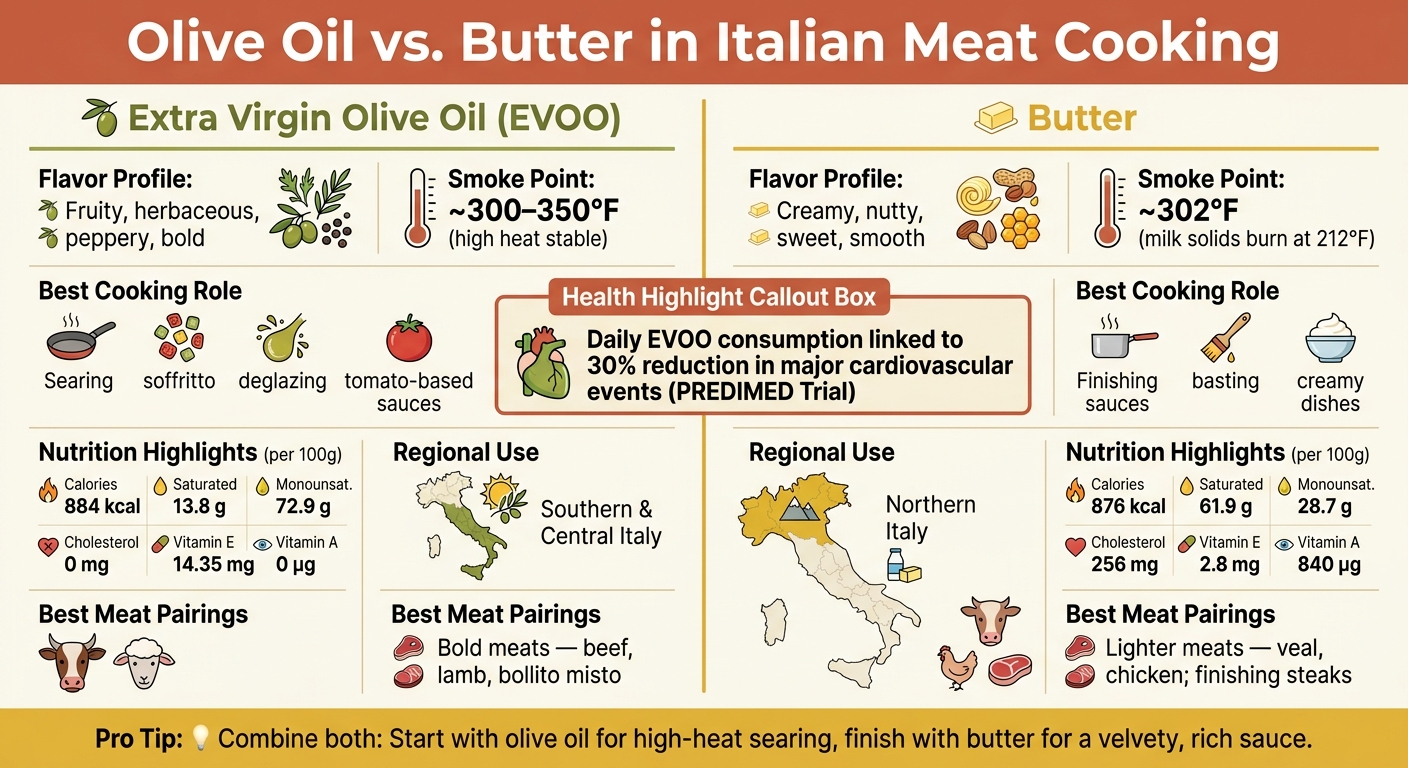
Olive Oil vs. Butter in Italian Cooking: Nutrition, Flavor & Performance
Olive Oil vs. Butter: 3 Pros and Cons
sbb-itb-4066b8e
Fats in Italian Meat Cooking: A Background
Fats play a central role in Italian meat dishes. As Carlotta Panza aptly describes:
"Two fats are the elementary components of Italian cuisine: I dare you to find a traditional recipe that doesn't include one or the other... they have the power of transforming any dish into a feast by amplifying textures and flavours."
In Italian cooking, olive oil and butter are essential at two critical stages of preparation. First, they anchor the soffritto - the aromatic base of onion, celery, and carrot that starts countless recipes. Then, they often reappear at the end, enriching sauces with a final touch that enhances both texture and flavor. These practices offer a glimpse into how these fats shape Italian cuisine and set the stage for deeper discussions about their distinct qualities.
The use of fats in Italy isn’t just a simple north-south story. It reflects the geography and local resources of each region. Central and Southern Italy, with its sunny and dry climate, has long embraced olive oil, thanks to the abundance of olive trees. Meanwhile, Northern Italy, with its cooler climate ideal for dairy farming, leans heavily on butter. However, there are exceptions. Liguria, though in the north, relies on olive oil due to its coastal and hilly terrain. On the other hand, Piemonte uses both fats, showcasing how a region’s landscape can support a variety of culinary traditions.
How Olive Oil and Butter Are Used in Italian Meat Dishes
These regional tendencies come to life in classic recipes. For example, Ossobuco alla milanese, a hallmark of Northern Italy, uses butter to create its rich and velvety sauce. In contrast, Neapolitan ragù, from the south, starts with olive oil, reflecting the region’s reliance on this ingredient. In Piemonte, diversity shines through. Olive oil is the key to preparing bagnet verd, a vibrant green herb sauce served with bollito misto (mixed boiled meats), while butter is used in other regional dishes.
What This Comparison Covers
This article explores how olive oil and butter differ across four key areas: flavor and aroma, health and nutrition, cooking performance (such as behavior at high heat), and regional and cultural significance. Each factor plays a role in deciding which fat to use and when it’s best to reach for it in your kitchen.
Flavor and Aroma: Olive Oil vs. Butter
Fats are more than just cooking essentials - they define the flavor and aroma of Italian meat dishes. Olive oil and butter, staples in Italian cuisine, each bring their own personality to the table. Knowing how these two fats influence taste can help you make better decisions when crafting your next dish.
Extra Virgin Olive Oil: Fruity, Bold, and Aromatic
Extra virgin olive oil (EVOO) is all about making a statement. Its fruity, herbaceous, and peppery notes boldly enhance dishes. Rachel Gurjar, Associate Food Editor at Bon Appétit, puts it plainly:
"When you use something like olive oil, the fat itself is going to taste so strong."
This strength makes EVOO a natural partner for slow-cooked Italian meat dishes, especially those with bold, tomato-heavy bases. It complements herbs and spices beautifully, adding depth to every bite.
For recipes that rely on a strong, peppery kick, the quality of your olive oil is crucial. Options like Big Horn Olive Oil's Ultra Premium EVOO, cold-pressed within hours of harvest, ensure the aromatic compounds remain intact, delivering that signature punch.
Butter: Rich, Nutty, and Smooth
Butter takes a different approach, offering a soft, creamy sweetness that enriches without overpowering. When browned, it develops toasty, nutty notes perfect for adding complexity to dishes like Northern Italy’s Ossobuco alla Milanese. However, butter-based sauces can firm up as they cool, so timing is key when serving or reheating.
Flavor Pairing Guide
Choosing between olive oil and butter often depends on the dish’s ingredients. The table below highlights which fat works best with certain sauces and meats:
| Fat | Best Sauce Base | Best Meat Pairing |
|---|---|---|
| Extra Virgin Olive Oil | Tomato, anchovy, herb-heavy | Bold meats (beef, lamb), bollito misto |
| Butter | Cream, sage, garlic-butter | Lighter meats (veal, chicken), finishing steaks |
For a balanced approach, consider combining both fats. Start with olive oil to build a flavorful base, then finish with a pat of butter for a smooth, rich finish. As Andy Baraghani, Senior Food Editor at Bon Appétit, explains:
"When I'm finishing a pasta that I've built with oil, the butter and the pasta water I add at the end helps the sauce cling onto the pasta as well, so that they come together and aren't two separate entities."
This same technique works wonders in meat sauces - olive oil carries the flavors during cooking, while butter adds a velvety touch right before serving.
Health Benefits and Nutrition: Olive Oil vs. Butter
Cooking fats do more than influence flavor - they play a big role in your overall health. Olive oil and butter bring very different nutritional benefits to the table, and understanding these differences can help you make smarter choices in the kitchen.
Olive Oil: A Heart-Friendly Option
Extra virgin olive oil (EVOO) stands out with its 73% monounsaturated fat content, a type of fat linked to better heart health. It’s also free of cholesterol and packed with polyphenols and Vitamin E, which are antioxidants known to support cardiovascular wellness. Studies suggest that consuming just over half a tablespoon of olive oil daily can reduce the risk of death from heart disease by 19%.
The Yale School of Medicine highlights its benefits:
"Olive oil is high in monounsaturated fatty acids and polyphenols, which have been shown to have anti-inflammatory and antioxidant properties. It can also improve cholesterol and blood sugar control."
When preparing slow-cooked dishes, where fats remain active throughout the cooking process, high-quality EVOO - like Big Horn Olive Oil's Ultra Premium EVOO - can provide maximum health benefits.
Butter: A Different Nutritional Profile
Butter, while often viewed as less healthy, has its own set of attributes. It contains about 62% saturated fat and 256 mg of cholesterol per 100g, compared to olive oil’s zero cholesterol. According to Dr. Cheng-Han Chen, MD, an interventional cardiologist:
"Butter is high in saturated fat and calories... It is this saturated fat that increases someone's risk of developing heart disease, particularly through increasing 'bad' cholesterol levels."
Still, butter isn’t without its benefits. It’s a rich source of Vitamin A (840 µg per 100g) and contains butyrate, a short-chain fatty acid that supports gut health. For those who enjoy butter, choosing grass-fed varieties can be a better option. Grass-fed butter provides higher levels of omega-3 fatty acids, conjugated linoleic acid (CLA), and Vitamin K2, which are beneficial for overall health. The key is moderation - use butter sparingly, perhaps as a finishing touch, to enjoy its flavor without overloading on saturated fat.
Nutrition Comparison Table
Here’s a side-by-side look at the nutritional differences between olive oil and butter:
| Nutrient (per 100g) | Olive Oil (EVOO) | Butter (Standard) | Health Impact |
|---|---|---|---|
| Calories | 884 kcal | 876 kcal | Comparable energy content |
| Saturated Fat | 13.8 g | 61.9 g | Butter can increase LDL cholesterol |
| Monounsaturated Fat | 72.9 g | 28.7 g | Olive oil promotes heart health |
| Cholesterol | 0 mg | 256 mg | Olive oil is cholesterol-free |
| Vitamin E | 14.35 mg | 2.8 mg | Olive oil offers more antioxidant support |
| Vitamin K | 60.2 µg | 8.6 µg | Olive oil aids bone and blood health |
| Vitamin A | 0 µg | 840 µg | Butter supports vision and immunity |
| Polyphenols | High | Low | Olive oil helps reduce inflammation |
The comparison makes it clear: olive oil is a better choice for daily cooking, thanks to its heart-healthy fats and antioxidants. Butter, on the other hand, works best as an occasional indulgence, adding richness without becoming the star of your dish.
Cooking Techniques: Olive Oil vs. Butter
When preparing Italian meat dishes, the choice between olive oil and butter isn't just about flavor - it’s also about how each fat behaves under heat. Knowing when to use each one can make a big difference in the final result.
Cooking with Olive Oil in Meat Dishes
Olive oil is a staple in Italian kitchens, prized for its versatility and ability to handle high heat. With a smoke point of 300–350°F, it’s perfect for searing meat at the start of a braise or stew, creating a flavorful crust without burning. It also plays a key role in building a soffritto - a mix of sautéed onion, carrot, and celery that serves as the flavor backbone for many Italian dishes. For example, high-quality extra virgin olive oil (EVOO), like Big Horn Olive Oil's Ultra Premium EVOO, brings a fruity, peppery depth to the dish right from the start.
Beyond its role in searing, olive oil excels at deglazing. After browning meat, it helps lift those delicious browned bits from the pan, enhancing the base of your sauce. As Carlotta Panza explains, "olive oil in Italy is used to fry vegetables and meat in other areas and to preserve fresh produce everywhere". This highlights olive oil’s importance as more than just a cooking fat - it’s an essential building block of flavor.
While olive oil sets the stage, butter often takes the spotlight later in the cooking process.
Cooking with Butter in Meat Dishes
Butter, with its lower smoke point of around 212°F (before the milk solids begin to brown), is better suited for finishing rather than high-heat cooking. Its strength lies in its ability to enrich and add depth to a dish.
For instance, stirring in a cold pat of butter at the end of cooking creates a smooth, glossy sauce that clings beautifully to the meat. Butter is also ideal for basting roasts, helping to develop a caramelized crust. In acidic dishes, like those with tomatoes or wine, butter softens sharp flavors, rounding out the dish for a more balanced taste.
"In reality, many Italian cooks use both at different stages: a drizzle of olive oil to start the dish, a pat of butter at the end for that velvety finish." - Real Italian Restaurants
This combination of fats - olive oil for the robust start and butter for the luxurious finish - ensures a dish that’s both flavorful and texturally satisfying.
Cooking Performance Comparison Table
Here’s a quick look at how olive oil and butter perform in different cooking roles:
| Feature | Extra Virgin Olive Oil | Butter |
|---|---|---|
| Smoke Point | ~300–350°F | ~302°F (after water evaporates at 212°F) |
| Heat Stability | High; ideal for searing and braising | Low; milk solids burn easily |
| Primary Role | Searing, soffritto, deglazing | Basting, finishing sauces, balancing acidity |
| Slow Cooking Suitability | Excellent for long simmering | Best added at the end to avoid congealing |
| Texture Impact | Clean, light finish that enhances natural flavors | Adds richness and a velvety texture |
How to Choose and Combine Fats in Italian Meat Recipes
When to Use Olive Oil or Butter
The choice between olive oil and butter often depends on the region, cooking method, and sauce style. For dishes like a Southern Italian lamb stew or a Sicilian-style pork ragu with tomato-based sauces, extra virgin olive oil is ideal. Its fruity and slightly peppery flavor complements these recipes perfectly. On the other hand, for creamier, richer dishes - think Milanese veal or Northern-style braised short ribs - butter is the more traditional option, enhancing the dish's luxurious texture.
The type of meat you're working with matters too. Lean cuts tend to pair better with olive oil's lighter texture, while fattier cuts benefit from the depth and richness that butter provides.
Blending Olive Oil and Butter
Combining olive oil and butter can give you the best of both fats. Rachel Gurjar, Associate Food Editor at Bon Appétit, shares her approach:
"I use both butter and oil from the start to capture the toasty notes of browned butter while avoiding burning."
For instance, you can start with olive oil to sear meat at high heat, as it has a higher smoke point. Then, finish with butter to add richness and depth to the dish. One thing to keep in mind: butter-heavy sauces tend to thicken and congeal after 20–25 minutes off the heat. To avoid this, add butter just before serving or plating for a smoother finish. If you're blending fats, make sure the olive oil you choose is of high quality to complement the dish.
How to Pick the Right Olive Oil
For the best results, select an Ultra Premium Extra Virgin Olive Oil that is cold-pressed and fresh. Always check for a clearly marked harvest date - freshness is crucial to capturing the vibrant, peppery, and aromatic qualities that enhance dishes like soffritto or braises. A good olive oil not only improves the flavor but also ensures your dish performs well during cooking.
As Chris Morocco, Test Kitchen Director at Bon Appétit, puts it:
"Regardless of what kind of dish I'm cooking, I'm always looking to maximize flavor from every ingredient. It's not about having an oily end product, but more about the different aromas and flavors each fat brings to the table."
For single-source options, brands like Big Horn Olive Oil offer varieties such as Coratina or Picual Extra Virgin Olive Oil, priced at $8.99, each with its own distinct flavor profile. A carefully chosen olive oil can truly elevate your Italian meat recipes.
Conclusion: Key Takeaways
When it comes to choosing between olive oil and butter, there’s no clear winner - each has its own strengths depending on the dish and cooking style. Extra Virgin Olive Oil (EVOO) shines in high-heat searing (with a smoke point of 300–350°F), tomato-based Southern Italian dishes, and recipes that benefit from its bold, peppery flavor. On the other hand, butter is a staple in Northern Italian cooking, creamy pan sauces, and dishes where a rich, silky finish is essential.
Nutritional factors also play a role in the decision. EVOO stands out for its zero cholesterol and lower saturated fat content, while butter contains higher amounts of both. Research like the PREDIMED trial has even shown that regular EVOO consumption can lead to a 30% reduction in major cardiovascular events.
However, the quality of the fat you choose matters more than the type. A subpar olive oil won’t provide the polyphenols, aroma, or heat stability that make EVOO so desirable. To enjoy the full spectrum of flavor and health benefits, opt for a high-quality, cold-pressed, harvest-dated Ultra Premium EVOO. Options like Big Horn Olive Oil's Coratina or Picual varieties, priced at $8.99, are excellent choices for enhancing your Italian meat dishes.
FAQs
Can I swap olive oil and butter 1:1 in Italian meat recipes?
When it comes to Italian meat recipes, swapping olive oil for butter in a 1:1 ratio doesn't always work out. These two ingredients have distinct flavors and purposes. Olive oil, particularly extra virgin, brings a fruity, bold flavor and is great for sautéing or browning. On the other hand, butter delivers a creamy richness, making it ideal for sauces or stews.
Their differences go beyond taste. Variations in smoke points and textures can significantly impact the outcome of your dish. To get the best results, stick to the ingredient specified in the recipe.
How do I keep butter from burning when cooking meat?
To keep butter from burning while cooking, begin by searing your meat in a hot pan using oil. Oil can handle higher temperatures without smoking or burning. Once the meat is nicely browned, lower the heat and add butter. This way, the butter can boost the flavor without reaching its smoke point. Gently basting the meat with the melted butter over moderate or low heat will not only keep it moist but also add a rich, savory touch without risking burnt butter.
What’s the best way to use olive oil and butter together in a braise?
When preparing a braise, start by heating olive oil to sauté vegetables or brown your ingredients. Its high smoke point and bold flavor make it perfect for this initial step. Then, introduce butter toward the end of the cooking process. This adds a creamy richness and a smooth, velvety texture to the dish. Using this method not only prevents the butter from burning but also layers the flavors beautifully - perfect for slow-cooked Italian meat dishes.