

Omega-6 in Olive Oil: Balance Explained
Olive oil is a healthier alternative to seed oils, with lower omega-6 content and a better fatty acid balance. Omega-6 fats are essential for health, but too much - especially compared to omega-3s - can lead to chronic inflammation. The modern Western diet often has an omega-6 to omega-3 ratio of 15:1 or higher, far from the recommended 1:1 to 4:1.
Key points:
- Omega-6 in Olive Oil: Extra virgin olive oil contains about 3.5%–21% omega-6, much lower than seed oils like sunflower (60%–70%) or corn (58%).
- Better Ratios: Olive oil’s omega-6 to omega-3 ratio is about 9:1, compared to 40:1 in sunflower oil and 83:1 in corn oil.
- Healthier Fats: Most of olive oil’s fats are monounsaturated omega-9, which supports heart health and reduces inflammation risks.
Switching to olive oil and increasing omega-3 intake (e.g., fatty fish, flaxseeds) can help restore balance, reduce inflammation, and improve overall health.
Balancing Omegas: How to Fix Your Omega-6 to Omega-3 Ratio ⚖️
sbb-itb-4066b8e
What Are Omega-6 Fatty Acids?
Omega-6 fatty acids are a type of polyunsaturated fat that your body needs but cannot produce on its own. This means they have to come from your diet. These fats play a key role in maintaining health by being an essential part of cell membranes, helping regulate cellular signals and metabolic processes. They also act as building blocks for molecules that influence inflammation. For example, linoleic acid contributes to keeping the skin barrier intact and flexible.
Main Types of Omega-6
The most common omega-6 fatty acids are linoleic acid (LA) and arachidonic acid (AA):
- Linoleic acid (LA): Found in many plant-based oils, this is the primary form of omega-6 in most diets.
- Arachidonic acid (AA): This can be derived from LA or consumed directly through animal products like eggs and meat. AA is a precursor for molecules that often promote inflammation.
- Gamma-linolenic acid (GLA): Found in sources like evening primrose oil, GLA is notable for its potential anti-inflammatory effects when converted to dihomo-gamma-linolenic acid (DGLA).
These different forms of omega-6 show how varied their roles can be, from supporting skin health to influencing inflammatory responses. However, this variety also highlights the need to balance them with omega-3 fatty acids.
Why Balance Matters
Omega-6 and omega-3 fatty acids share the same enzymatic pathways in the body, which means they essentially "compete" with each other. If omega-6 intake far outweighs omega-3, the body is more likely to produce pro-inflammatory molecules. Unfortunately, the modern American diet tends to favor omega-6, with ratios ranging from 15:1 to 20:1. This imbalance has been linked to chronic, low-grade inflammation, which contributes to conditions like heart disease, metabolic syndrome, and autoimmune disorders.
Striking the right balance between these fats is crucial for maintaining overall health and reducing inflammation-related risks.
Omega-6 Content in Olive Oil
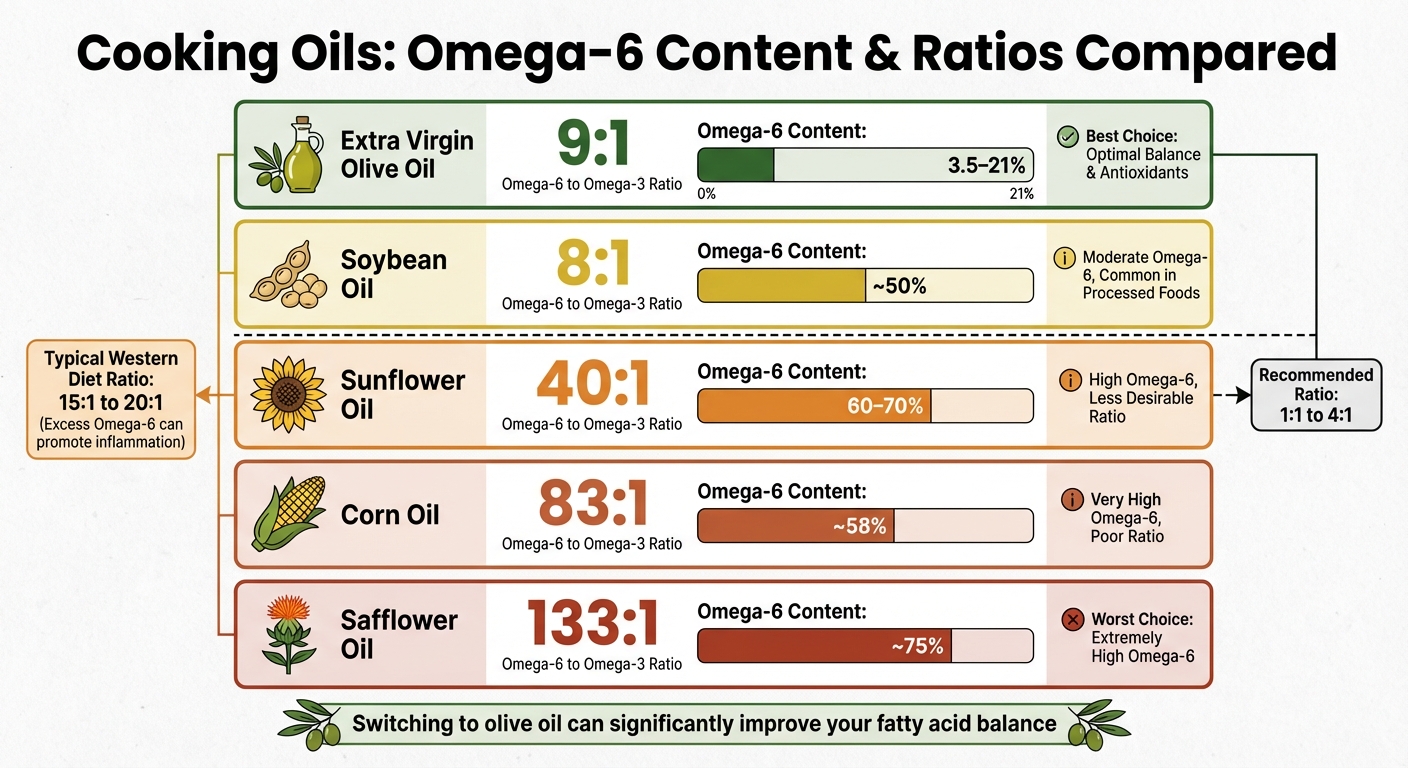
Omega-6 Content and Ratios in Cooking Oils Comparison
Grasping the omega-6 content in olive oil helps in understanding its role in maintaining a balanced fatty acid profile. This balance is key to supporting overall health, particularly when managing omega-6 intake.
How Much Omega-6 Is in Olive Oil?
Olive oil contains between 3.5% and 21% linoleic acid, which is the most common omega-6 fatty acid. The exact amount varies depending on factors like the type of olives, growing conditions, and how the oil is processed. Extra virgin olive oil typically has a lower percentage of omega-6, making it a better choice for those aiming to limit their intake.
What really sets olive oil apart is its high monounsaturated fat content, mainly omega-9, which makes up 55%–83% of its fats. This composition supports heart health and makes the oil more stable. Additionally, extra virgin olive oil has an omega-6 to omega-3 ratio of about 9:1, which is far healthier compared to the typical American diet, where the ratio often ranges between 15:1 and 17:1. Comparing olive oil to other cooking oils highlights its benefits even further.
Olive Oil vs. Other Cooking Oils
When you look at other widely used cooking oils, the differences in omega-6 content and ratios are clear. For instance, sunflower oil contains 60%–70% omega-6 with an omega-6 to omega-3 ratio of about 40:1. Corn oil, another common choice, has around 58% omega-6 and an even higher ratio of 83:1. Soybean oil, while slightly better, still contains about 50% omega-6 with a ratio of 8:1.
| Cooking Oil | Omega-6 Content | Omega-6 to Omega-3 Ratio |
|---|---|---|
| Extra Virgin Olive Oil | 3.5–21% | 9:1 |
| Soybean Oil | ~50% | 8:1 |
| Sunflower Oil | 60–70% | 40:1 |
| Corn Oil | ~58% | 83:1 |
| Safflower Oil | ~75% | 133:1 |
Switching from seed oils high in omega-6 to olive oil can significantly help in achieving a healthier fatty acid balance. Research even suggests that consuming as little as ½ tablespoon of olive oil daily may reduce the risk of cardiovascular disease.
Why the Omega-6 to Omega-3 Ratio Matters
The balance between omega-6 and omega-3 fatty acids in your diet plays a big role in managing inflammation. Both types of fatty acids rely on the same enzymes, delta-5 and delta-6 desaturase, to convert into active compounds. When omega-6 dominates, it leads to the production of pro-inflammatory molecules, while omega-3s generate anti-inflammatory agents like resolvins and protectins. Omega-6 fatty acids are converted into arachidonic acid, which is a precursor to compounds that heighten pain and inflammation. Without enough omega-3, chronic, low-grade inflammation can persist.
"The dramatic shift from a balanced ancestral ratio of roughly 1:1 to the modern Western ratio of 15:1 or higher has created a metabolic environment that favors chronic, low-grade inflammation."
– Artemis Simopoulos, M.D., Center for Genetics, Nutrition and Health
Historically, humans consumed omega-6 and omega-3 in roughly equal amounts, around a 1:1 ratio. Our bodies are designed for this balance, but the modern diet - loaded with refined seed oils - has disrupted it. These oils, unlike olive oil, have shifted the fatty acid ratio in ways that affect everything from cellular health to brain function. This imbalance highlights the importance of sticking to recommended ratios for better health.
Recommended Omega-6 to Omega-3 Ratios
Experts suggest keeping the ratio between 1:1 and 4:1 for the best health outcomes. Research shows that a 4:1 ratio can cut cardiovascular disease mortality by 70%. In certain cases, even lower ratios might help. For example, a 2.5:1 ratio has been associated with reduced rectal cell growth in colorectal cancer patients, while a 2:1 to 3:1 ratio may ease inflammation in rheumatoid arthritis.
Unfortunately, the typical Western diet is far from these recommendations, with ratios ranging from 15:1 to 20:1. This imbalance is largely due to the widespread use of industrial seed oils. In fact, soybean oil consumption in the U.S. skyrocketed in the 20th century, now making up about 7% to 7.4% of total caloric intake. Another factor is the shift from pasture-raised to grain-fed livestock, which has raised omega-6 levels in meat, eggs, and dairy.
| Diet Type | Omega-6 to Omega-3 Ratio | Health Impact |
|---|---|---|
| Evolutionary/Ancestral | ~1:1 | Balanced; aligned with human genetics |
| Recommended (Optimal) | 1:1 to 4:1 | Lower inflammation and chronic disease risk |
| Typical Western Diet | 15:1 to 20:1 | Promotes chronic inflammation and heart disease |
| Cardiovascular Benefit | 4:1 | 70% reduced cardiovascular mortality |
| Rheumatoid Arthritis Relief | 2:1 to 3:1 | Reduced inflammation |
Health Risks of Imbalanced Ratios
When omega-6 intake far outweighs omega-3, the body struggles to resolve inflammation effectively. This imbalance has been linked to several chronic conditions, including coronary artery disease, hypertension, stroke, type 2 diabetes, Alzheimer's disease, depression, and autoimmune disorders. Additionally, high omega-6 levels in cell membranes can increase heart disease risk by encouraging free radical damage.
The brain, which is nearly 60% fat, is particularly affected by an imbalanced fatty acid profile. Fatty acids directly impact cell membrane health and neuron communication. Without enough omega-3, inflammation can linger, leading to tissue damage and interfering with the body’s natural healing processes.
"Chronic inflammation may be one of the leading drivers of the most serious modern diseases, including heart disease, metabolic syndrome, diabetes, arthritis, Alzheimer's and many types of cancer."
– Kris Gunnars, BSc
To help restore balance, replacing high-omega-6 seed oils with options like extra virgin olive oil can make a difference. Although olive oil has an omega-6 to omega-3 ratio of about 13:1, its high levels of monounsaturated oleic acid and polyphenols offer anti-inflammatory benefits. Pairing olive oil with omega-3-rich foods like fatty fish or supplements can further help bring your overall ratio closer to the ideal range.
How to Balance Your Fatty Acid Intake
Improving your omega-6 to omega-3 ratio - ideally aiming for somewhere between 1:1 and 4:1 - doesn’t mean you need to completely overhaul your diet. Instead, by making small, intentional changes to your cooking oils, protein choices, and daily eating habits, you can start to restore balance. These adjustments not only help reduce excessive omega-6 intake but also increase omega-3 consumption through smarter, whole-food choices.
Choose Smarter Cooking Oils
One of the easiest ways to improve your fatty acid intake is by swapping out processed seed oils for healthier options. For medium-heat cooking, go with extra virgin olive oil. For high-heat cooking, avocado oil is a great choice. When it comes to salad dressings or drizzling over food, flaxseed oil offers a direct omega-3 boost, but remember - it should never be heated, as it can oxidize and potentially cause inflammation.
Many processed seed oils, like corn, safflower, and sunflower, have sky-high omega-6 to omega-3 ratios, ranging from 46:1 to 77:1. These oils are commonly found in packaged products and restaurant meals, making them a significant contributor to omega-6 overload. Even soybean oil, with a more moderate ratio of about 7.5:1, is widely used and adds considerably to overall omega-6 levels. By contrast, extra virgin olive oil is mostly made up of monounsaturated fats, which helps keep polyunsaturated fats in check. And flaxseed oil, with its favorable 1:4 ratio, can give your omega-3 intake a direct boost.
"Extra-virgin olive oil has strong evidence for cardiovascular health, while coconut oil, when used appropriately, supports gut health. The problem is not traditional fats, but how much we use and how we process them."
– Ishi Khosla, Nutritionist
Add Omega-3–Rich Foods to Your Diet
Another effective way to balance your fatty acid intake is by incorporating more foods rich in omega-3s. Eating fatty fish twice a week - like wild salmon, sardines, mackerel, or anchovies - can provide your body with EPA and DHA, two forms of omega-3 that are ready for immediate use. A single serving of these fish offers around 3,000 to 4,000 mg of omega-3s.
If seafood isn’t a regular part of your diet, consider taking a high-quality fish oil, cod liver oil, or algae-based supplement (1,000 to 2,000 mg daily) to fill the gap. Plant-based sources like chia seeds, ground flaxseeds, and walnuts also contribute omega-3s, though the body converts only a small percentage of their ALA (alpha-linolenic acid) into EPA and DHA. Simple additions, like sprinkling flaxseed into yogurt or tossing walnuts into a salad, can help increase your ALA intake. If you eat beef, opting for grass-fed varieties can also make a difference, as they contain up to five times more omega-3s than conventionally grain-fed beef.
Reduce Processed and Fried Foods
Processed and fried foods are often loaded with omega-6-heavy seed oils, especially in restaurant kitchens. Packaged snacks and fast food frequently contain soybean or vegetable oils, with soybean oil alone accounting for about 20% of the average American’s calorie intake. To cut back, read ingredient labels carefully and prioritize home-cooked meals made with healthier fats. When dining out, swap fried dishes for grilled options to help reduce your omega-6 intake. Additionally, choosing pasture-raised or omega-3-enriched eggs can give you better control over your fatty acid balance.
Health Benefits of Olive Oil
Olive oil combines monounsaturated fats, antioxidants, and bioactive compounds that help reduce inflammation, promote heart health, and may lower the risk of chronic diseases.
High in Monounsaturated Fats
Extra virgin olive oil is packed with oleic acid (a type of omega-9, making up 55–83% of its composition). This healthy fat is known to reduce inflammation, improve insulin sensitivity, and support heart health - especially when it replaces saturated fats in your diet.
Antioxidants and Other Compounds
Extra virgin olive oil is also a rich source of polyphenols, which are linked to protecting against cardiovascular disease and reducing the risks of conditions like Alzheimer's, cancer, and diabetes. Additionally, its natural antimicrobial properties can help combat harmful bacteria.
"High-phenolic olive oils are exceptionally rich in the active ingredients that are believed by scientists and nutritionists to offer protection against many serious health conditions such as cancer, Alzheimer's disease, heart disease, and diabetes." – kyoord
Big Horn Olive Oil: Quality You Can Trust
The benefits of olive oil are tied directly to its quality and freshness. Big Horn Olive Oil ensures top-tier standards by offering Ultra Premium Extra Virgin Olive Oils that are cold-pressed within just two hours of harvest. These oils are delivered fresh within three months, preserving their high antioxidant levels and protective compounds.
Their selection includes Estate Reserve EVOO, single-source varieties, and infused flavors. When paired with omega-3–rich foods like salmon or walnuts, these oils support heart health and help maintain a balanced intake of healthy fats, making them a great addition to a well-rounded diet.
Conclusion
Instead of cutting out omega-6 or omega-3 fats entirely, aim to restore a healthier balance between the two. Many Western diets far exceed the recommended omega-6 to omega-3 ratio, often contributing to chronic, low-level inflammation. Historically, humans maintained a 1:1 ratio, but modern eating habits have shifted significantly from this balance.
Using extra virgin olive oil - which is rich in anti-inflammatory oleic acid - can help reduce omega-6 intake. In contrast, common cooking oils like soybean, corn, and sunflower oil can contain as much as 50% to 75% omega-6. By making olive oil your go-to cooking fat and incorporating omega-3-rich foods like fatty fish, walnuts, or chia seeds into your meals, you can take meaningful steps toward improving your fatty acid ratio.
To further adjust this balance, swap high-omega-6 seed oils for extra virgin olive oil, enjoy fatty fish at least twice a week, and cut back on processed snacks made with oils like soybean or cottonseed. Research suggests that achieving a 4:1 omega-6 to omega-3 ratio can lower cardiovascular mortality by 70%, while a ratio closer to 2:1 or 3:1 may help reduce inflammation. These simple dietary changes can help you build a healthier fat profile and support overall well-being.
FAQs
Does cooking with extra virgin olive oil change its omega-6 content?
Cooking with extra virgin olive oil at normal cooking temperatures doesn’t cause a major change in its omega-6 content. Studies confirm that omega-6 fatty acids stay stable under typical cooking conditions, maintaining their nutritional value.
How can I estimate my omega-6 to omega-3 ratio from daily foods?
To get a sense of your omega-6 to omega-3 ratio, start by keeping track of the foods you eat that are high in these fats. Record your portions of omega-3-rich options like salmon, flaxseeds, and walnuts, along with omega-6 sources such as vegetable oils and processed foods. Use nutrition labels or reliable food databases to calculate the grams of each type of fat you’re consuming. Then, work toward a better balance - ideally somewhere around 1:1 to 4:1 - by tweaking your diet to include more omega-3s and fewer omega-6-heavy items.
What’s the simplest way to add more omega-3s if I don’t eat fish?
If fish isn't part of your diet, you can still get your omega-3s from plant-based sources. Try adding foods like chia seeds, flaxseed, walnuts, and canola oil to your meals. These are packed with omega-3s and can be easily included in dishes like smoothies, salads, or even baked goods.