

How to Pair Balsamic Vinegar with Mango
Yes, balsamic and mango go well together - if you keep the vinegar light and match the style to the dish. I’d use dark aged balsamic for drizzles and cooked glazes, and white balsamic for salads where I want a brighter look and lighter taste.
Here’s the short version:
- Use dark balsamic on sliced mango, grilled mango, yogurt, or ice cream
- Use white balsamic in dressings with greens, herbs, nuts, and cheese
- Cut the mango by use: cubes for salads, slices for desserts, purée for marinades
- Watch ripeness: firm-ripe for clean pieces, softer mango for sauces and glazes
- Keep the ratio in check: about 2:1 oil to balsamic for dressings
- Marinate by protein: shrimp for 15–30 minutes, chicken for 1–4 hours
- Fix balance fast: if too sharp, add 1/4 tsp honey per 2 tbsp mixture; if too sweet, add 1/2 tsp lime or lemon juice
That’s the whole idea: match the balsamic, match the mango cut, then adjust sweetness and acid at the end. In most cases, teaspoons work better than tablespoons when you drizzle, because mango already brings plenty of sugar and aroma on its own.
Quick comparison
| Use | Best balsamic | Best mango prep | Simple tip |
|---|---|---|---|
| Salads | White balsamic | 1/2-inch cubes | Add mango near the end so it holds shape |
| Desserts | Dark aged balsamic | Slices | Drizzle lightly, or reduce and cool first |
| Marinades/glazes | Dark balsamic or blended mix | Purée | Use about 2–3 parts mango to 1 part balsamic |
One more point: temperature changes the result. I’d serve salads chilled at 38–45°F, desserts with cold fruit and room-temp drizzle, and savory dishes with a warm glaze so it clings better.
If you want the pairing to work every time, think ripe fruit, light vinegar use, and small final tweaks.
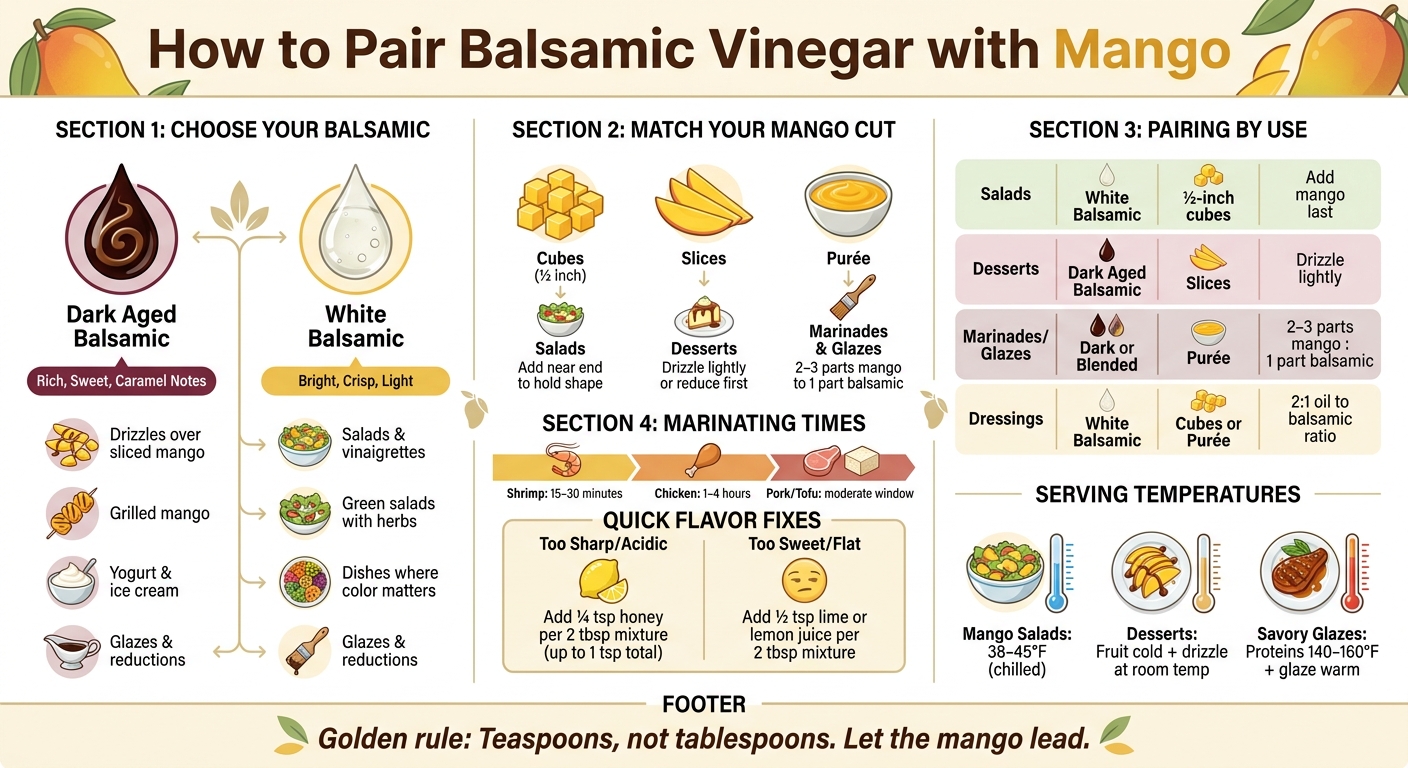
Balsamic Vinegar & Mango Pairing Guide: Dark vs. White Balsamic
Step 1: Choose the Right Balsamic for Mango
The balsamic you choose shapes the dish’s flavor, color, and texture. For mango, there are two main options: aged dark balsamic and white balsamic. Each fits a different use, so picking the right one early makes the rest much simpler.
Use Aged Dark Balsamic for Drizzles and Reductions
Aged dark balsamic is thick, glossy, and naturally sweet, with notes of dried fruit, caramel, and wood. That deeper flavor, paired with softer acidity, works very well with ripe mango.
Use it as a drizzle over sliced mango, spoon it onto grilled fruit, or add a little to yogurt or vanilla ice cream topped with mango. You can also simmer it over low heat until it thickens slightly, then brush or spoon it on as a glaze. Big Horn Olive Oil offers aged dark balsamic from Modena for mango drizzles and dessert finishes.
Use White Balsamic for Lighter Dressings
White balsamic is made from white grape must and cooked at a lower temperature, so it stays pale and tastes bright and crisp. That matters in salads, because it won’t darken the mango or the greens. The fruit keeps its bright yellow-orange color instead of turning muddy.
For mango vinaigrettes and green salads with herbs, white balsamic is the better fit. It cuts through mango’s sweetness without changing the look of the dish. A good starting mix is:
- 2–3 tablespoons white balsamic
- 5–6 tablespoons olive oil
- 1 tablespoon puréed ripe mango
- Salt and black pepper
Once you’ve picked the balsamic, match your mango prep to the dish you’re making.
sbb-itb-4066b8e
Step 2: Prepare the Mango
Mango ripeness shapes two things: how much balsamic it can take and how well it keeps its form. A ripe mango should give a little when you press it gently, much like a peach or avocado. Don’t lean too hard on color, though. Different varieties ripen to different shades, so color isn’t a good test.
Match the Cut to the Dish
Once the mango is ready, cut it based on where it’s going.
- Cubes (½ inch): Best for salads. Toss diced mango in right before serving so it stays firm and doesn’t leak too much juice.
- Slices: Best for plated desserts. Drizzle balsamic or a reduction over each piece so you can control the flavor.
- Purée: Best for marinades and glazes. Use about 2 to 3 parts mango purée to 1 part balsamic for a thick, balanced sauce.
Check Ripeness Before Adding Vinegar
A firm-ripe mango smells fragrant, feels slightly soft, and still holds up well as cubes or slices. That makes it a good fit for salads and composed desserts.
A very ripe mango is sweeter and softer. It works best in purées, marinades, and glazes. Its natural sugars also help the mixture thicken and caramelize during cooking.
If the mango is underripe, balsamic can come across as harsh. Smooth it out with a little honey or maple syrup plus a fruity extra virgin olive oils before tossing.
If the mango is overripe, don’t force it into neat pieces. Blend it into a purée for glazes or condiments.
With the mango cut and the ripeness dialed in, it’s ready for salads, desserts, or marinades.
Step 3: Use the Pairing in Salads, Desserts, and Marinades
Match the pairing to the dish: salad, dessert, or marinade. Each one needs its own balance.
Build Salads with Greens, Herbs, Nuts, and Cheese
Start with firm-ripe mango cubes as the fruit base. Then add arugula or fresh spinach. Arugula brings a peppery edge, while spinach keeps the salad softer and more mellow.
From there, build in a few layers:
- Fresh herbs like basil or mint
- Toasted pecans, peanuts, or cashews for crunch
- Mild cheese such as goat cheese or feta for creaminess and salt
For the dressing, keep it light: white balsamic, olive oil, lime, and a touch of honey. Toss the greens first so they get a thin coating, then add the mango near the end and fold it in gently. That small step helps the fruit hold its shape instead of getting bruised.
If you want one extra touch, save a little balsamic and drizzle it over the top right before serving.
Finish Desserts with a Drizzle or Reduction
Use sliced ripe mango as the base. Balsamic works best here as a finishing drizzle over fresh mango slices, mango sorbet, yogurt, or whipped mascarpone. It brings acidity and depth, but it shouldn’t drown out the fruit.
Want a thicker finish? Simmer balsamic vinegar over low heat and stir now and then until it coats a spoon. Let it cool before using, since it thickens more as it sits. Then use a small amount over sliced mango with whipped mascarpone and a few fresh mint leaves.
The goal is simple: let the mango stay front and center.
Make Marinades and Glazes for Savory Dishes
Blend mango purée, balsamic, olive oil, salt, and, if you like a little heat, red pepper flakes or jalapeño. The mango brings sweetness and body. The balsamic adds acidity and helps the mixture stick.
This combo works well with:
- Chicken
- Pork
- Shrimp
- Tofu
Timing matters. Shrimp only need 15 to 30 minutes because the acid can soften them fast. Chicken can sit for 1 to 4 hours without trouble. Pork and tofu can use similar moderate marinating windows.
For a glaze, brush on a reserved portion during the last few minutes of cooking to build a glossy coating with lots of flavor. Just use a separate portion that hasn’t touched raw meat.
Next, fine-tune sweetness, acidity, and serving temperature.
Step 4: Adjust Flavor, Texture, and Serving Temperature
Once Step 3 is done, give the dish one last taste and make small tweaks before it hits the table. This is the point where a good dish turns into a polished one.
Balance Sweetness and Acidity Before Serving
Start by tasting each part on its own: the mango, the dark balsamic, and then a bite of both together. That quick check tells you what's missing.
If the balsamic still feels too sharp, whisk in 1/4 teaspoon honey per 2 tablespoons of balsamic mixture and taste again. Add a bit more only if you need it, up to 1 teaspoon total. Honey tones down the acid and pairs nicely with mango's natural sweetness.
If the dish tastes flat or too sweet, which can happen with a very ripe mango, add 1/2 teaspoon fresh lime or lemon juice per 2 tablespoons of mixture, then taste again. Citrus brings back brightness without taking over the fruit.
Texture matters too, but keep the fix simple:
- If the reduction feels sticky, thin it with 1–2 teaspoons water
- If you want a richer finish, whisk in an EVOO and balsamic bundle oil
- Use a mild EVOO for a smoother finish
- Use a robust EVOO if you want more savory depth
Serve Cold, at Room Temperature, or Warm Based on the Dish
Temperature changes how the dish comes across. Cold mutes aroma a bit, while warmth makes sweetness and acidity stand out more. So the best move is to match the serving temperature to the dish.
| Dish type | Ideal serving temperature |
|---|---|
| Mango salads | 38–45°F, chilled |
| Desserts (sliced mango, ice cream) | Fruit cold, drizzle at room temperature |
| Savory glazes (chicken, shrimp, grilled mango) | Proteins at 140–160°F, glaze warm |
For salads, let the dressing sit out for a few minutes before tossing so it isn't fridge-cold. For desserts, keep the mango and dairy cold, then add the balsamic drizzle at room temperature. For savory dishes, brush on the warm glaze right after cooking so it clings well and caramelizes.
Conclusion: Keep the Pairing Simple and Balanced
Once you’ve picked the balsamic, cut the mango, and paired it with the dish, the last part is pretty simple. This pairing comes down to four things: the balsamic style, a ripe mango, the right cut, and a light hand with the vinegar.
Use dark balsamic for drizzles and glazes. Use white balsamic for lighter dressings. Either way, let the mango stay front and center. Think teaspoons, not tablespoons for drizzles, and stick with a 2:1 oil-to-balsamic ratio for dressings.
From there, taste and adjust. Treat balsamic like a seasoning, adding a little at a time until the balance feels right.
If you want a solid starting point for both balsamic and olive oil, Big Horn Olive Oil offers balsamics and Ultra Premium EVOOs for making this pairing at home.
Keep it light, balanced, and fruit-first.
FAQs
Can I use regular balsamic instead of aged or white?
Yes. You can use regular balsamic instead of aged or white balsamic, but it won’t taste the same.
Aged balsamic is thicker, sweeter, and more layered, which makes it a better pick for finishing dishes and desserts. Regular balsamic is lighter and more acidic, so it fits better in marinades or salad dressings.
What foods pair best with mango and balsamic?
Mango and balsamic work especially well in fresh salads or spooned over Greek yogurt. A tropical-infused balsamic can bring out mango’s natural sweetness without overpowering it.
If you want a bit more depth, pair mango with other tropical flavors. You can also add a teaspoon of freshly grated ginger to tropical fruit compotes to give the fruit a brighter, livelier taste.
How do I keep balsamic from overpowering the mango?
Use balsamic vinegar with a light hand. Add just a little at a time - about 1/4 teaspoon works well - so it supports the mango’s delicate flavor instead of covering it up. A high-quality, premium balsamic can help keep the taste in check, too.
If the dish tastes too sharp, stir in a small amount of honey or maple syrup. Then let it rest for a bit and taste again, since the flavors can keep developing as the fruit cools.