

Preserving Olives: Sun-Drying Techniques Explained
Sun-drying olives is a natural way to preserve their flavor and extend their shelf life without relying on additives or electricity. This method uses sunlight and airflow to remove moisture, making olives less prone to spoilage. However, success depends on factors like weather, temperature, and humidity. Here’s a quick breakdown:
- Ideal Conditions: Temperatures above 85°F (optimal at 98°F+) and humidity below 60%.
- Challenges: Mold, uneven drying, pests, and oxidation are common issues.
- Key Steps: Use food-safe screens, arrange olives in a single layer, turn daily, and bring trays indoors at night to avoid condensation.
- Storage Tips: Use airtight containers, refrigerate or freeze for long-term storage, or submerge in olive oil for added protection.
Sun-drying is cost-effective but requires patience and consistent monitoring to ensure quality results.
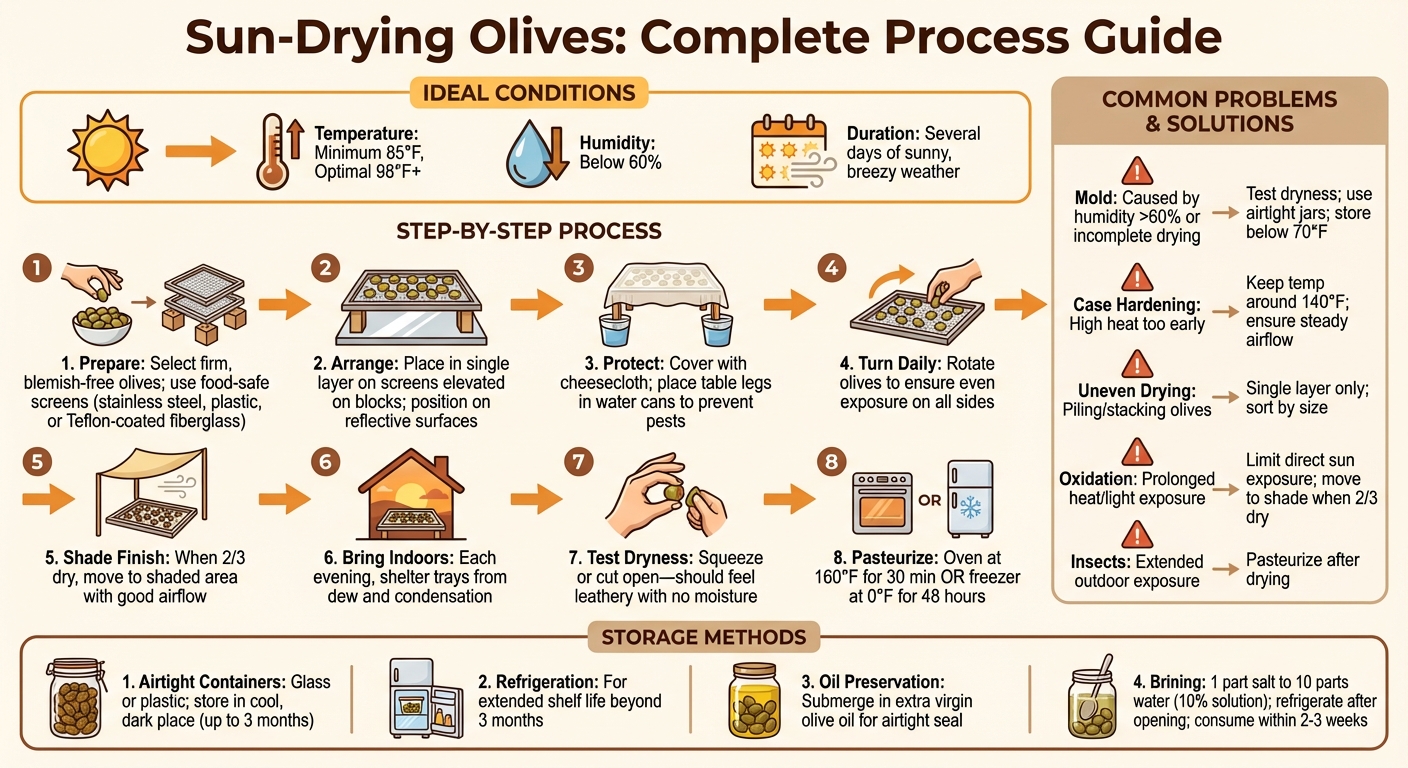
Complete Guide to Sun-Drying Olives: Steps, Conditions, and Storage
Sun dried black olives vid 2/3, chef Andros.
sbb-itb-4066b8e
Common Problems When Sun-Drying Olives
Even with perfect weather conditions, sun-drying olives comes with its own set of challenges. These issues can affect the quality of your entire batch, so knowing what to watch out for can help you take steps to avoid spoilage.
Moisture and Spoilage Issues
One of the biggest hurdles in sun-drying olives is humidity. When humidity levels exceed 60%, water evaporates more slowly, creating the ideal environment for mold and fungal growth. At night, cooler air can cause condensation to form on the olives, essentially rehydrating them and increasing the risk of spoilage. To combat this, it's essential to bring drying racks indoors each evening or adjust your drying schedule during humid periods.
High heat at the start of the drying process can also lead to case hardening, where the outer layer of the olive dries too quickly, trapping moisture inside. This hidden moisture can lead to internal mold, even before any outward signs appear. Additionally, olives are rich in oil, and prolonged exposure to heat and oxygen can cause the oil to go rancid, resulting in a waxy, flat flavor.
Uneven Drying Results
Another common issue is uneven drying, often caused by improper arrangement of the olives. Piling them together or stacking them in layers restricts airflow, leaving some olives damp while others dry out completely. Using solid trays can also trap moisture at the bottom, leading to rot. Size differences among the olives add another layer of complexity, as larger fruits take longer to dry than smaller ones. This mismatch can leave some olives perfectly dried while others remain too moist and prone to mold.
Daily turning of the olives is crucial. Without it, one side may receive too much sun while the other stays damp, leading to "flat spots" or areas of localized rot that can spread quickly. The choice of screen material also matters. Galvanized hardware cloth may release harmful residues like cadmium or zinc, while copper screens can degrade vitamin C and speed up oxidation.
Heat and Oxidation Damage
Excessive heat during the drying process poses additional risks. Direct sunlight can scorch the olives, causing "sunburn" that affects their texture and appearance. Prolonged exposure to intense heat and light can also break down beneficial compounds, reducing antioxidants and overall nutritional value. Because of their high oil content, olives are particularly prone to oxidation, which can strip away their peppery, bitter notes and replace them with stale, waxy flavors.
Maintaining a consistent drying temperature is key. Ideally, the temperature should stay around 140°F - hot enough to remove moisture efficiently but not so high that it "cooks" the fruit. Going beyond this temperature accelerates flavor and quality loss. Additionally, insects and birds can become a problem during the extended drying process, introducing bacteria or laying eggs in the fruit.
| Problem | Cause | Prevention |
|---|---|---|
| Mold on Food | Incomplete drying or improper storage | Test for dryness; use airtight jars; store below 70°F |
| Case Hardening | Excessively high drying temperatures | Keep temperature around 140°F; ensure steady airflow |
| Insects in Jars | No post-drying treatment | Pasteurize in freezer (48 hrs) or oven (160°F for 30 mins) |
| Brown Spots | Over-drying or too-high temperatures | Monitor temperature; aim for a leathery texture rather than complete dryness |
How to Sun-Dry Olives Properly
Sun-drying olives requires the right setup, consistent monitoring, and favorable weather conditions to achieve the best results.
Step-by-Step Drying Process
To avoid problems like moisture retention, uneven drying, or oxidation, start by carefully preparing your setup. Choose firm, blemish-free olives and arrange them in a single layer on food-safe screens made of stainless steel, plastic, or Teflon-coated fiberglass. Avoid using galvanized metal or copper, as these materials can leave harmful residues or compromise the olives' nutrients. Place the screens on blocks to allow proper air circulation.
Position the racks on reflective surfaces - such as concrete driveways or aluminum sheets - to increase drying temperatures. To keep pests at bay, cover the trays with cheesecloth or a second screen, and place the table legs in cans of water to prevent crawling insects from reaching the olives.
Turn the olives daily to ensure all sides are exposed evenly. After several days of direct sunlight, when the olives are about two-thirds dry, move the trays to a shaded area with good airflow to complete the drying process. This step helps prevent case hardening, where the outer layer dries too quickly and traps moisture inside. Each evening, bring the trays indoors or under shelter to protect them from dew, which can reintroduce moisture.
For consistent results, follow these spacing and pre-treatment tips.
Tips for Even Drying
Avoid piling or stacking olives, as this restricts airflow and creates damp spots that can lead to spoilage. Sorting olives by size ensures they dry uniformly. To preserve their color and reduce browning, consider pre-treating the olives by soaking them in lemon juice or red wine vinegar for five minutes before drying.
Air circulation below as well as above fruit will speed up drying time. - Utah State University Extension
Regularly check the olives by squeezing or cutting one open. They're ready when they feel leathery or pliable, with no visible moisture or condensation inside. Once fully dried, pasteurize the olives to eliminate any insect eggs. This can be done by heating them at 160°F for 30 minutes or freezing them at 0°F for 48 hours.
Temperature and Timing Guidelines
Sun-drying works best when outdoor temperatures reach at least 85°F, and temperatures above 98°F yield optimal results. Keep humidity below 60% throughout the process to ensure moisture evaporates efficiently. The drying process usually takes several days of sunny, breezy weather.
Be cautious not to expose the olives to excessive heat early in the process, as this can cause case hardening. Plan your drying during a stretch of hot, dry, and rain-free days for the best outcome.
| Parameter | Recommended Guideline |
|---|---|
| Minimum Temperature | 85°F |
| Optimal Temperature | Above 98°F |
| Maximum Humidity | Below 60% |
| Drying Duration | Several days |
| Pasteurization (Oven) | 160°F for 30 minutes |
| Pasteurization (Freezer) | 0°F for 48 hours |
Storing Dried Olives
Once you've successfully sun-dried your olives, storing them properly is crucial to maintain their quality. With olives being rich in fats, they are prone to spoilage if exposed to air, moisture, or fluctuating temperatures. The goal is to shield them from these elements.
Best Storage Practices
To keep dried olives fresh, use airtight containers made of either glass or plastic. These containers help prevent bacterial contamination and maintain the right moisture levels. After sealing, monitor the container daily for the first week. If you notice any condensation inside, it’s a sign the olives need further drying.
For an added layer of protection - and a flavor boost - consider submerging the olives in high-quality extra virgin olive oil. A premium option, like Big Horn Olive Oil's Estate Reserve Ultra Premium EVOO, creates an airtight seal that blocks air and bacteria while enhancing the taste.
"Generally, olives should be kept in an airtight container and refrigerated to slow down spoilage. This not only preserves their taste but also ensures they remain safe to eat." – The Kitchen Community
You can store the containers in a cool, dark place for short-term use or refrigerate them to extend their shelf life. For even longer storage, freezing is an option. A pantry is fine for up to three months, but for extended preservation, opt for the freezer. Always use clean utensils when handling olives to avoid contamination.
Brining for Extended Shelf Life
Brining is another effective way to prolong the shelf life of dried olives while enriching their flavor. To create a brine, mix one part salt with ten parts water to achieve a 10% salt solution. Fully submerge the olives in this brine, ensuring no pieces float above the liquid, and store them in an airtight container.
The brine not only preserves the olives but also enhances their taste. Once opened, brined olives should be refrigerated and consumed within 2–3 weeks. Regularly inspect the brine for signs of spoilage, such as mold, sour smells, or cloudiness. If any of these appear, discard the entire batch immediately to stay safe.
Sun-Drying vs. Other Preservation Methods
Sun-drying is a straightforward and natural way to preserve olives, but it’s worth knowing how it stacks up against other methods. For instance, water-based curing involves soaking olives in water, which must be changed daily for 3 to 5 weeks to remove oleuropein, the compound responsible for olives' bitterness. In contrast, sun-drying relies on heat and airflow to remove moisture, making it less demanding in terms of effort, though it depends heavily on favorable weather conditions.
The results of these methods differ significantly in texture and flavor. Sun-drying creates dense olives with a more concentrated flavor due to the loss of moisture. On the other hand, water curing maintains the olives' plumpness and produces a milder taste by effectively reducing bitterness. As olive grower Petar Dz. explains:
"Water curing reduces bitterness by removing oleuropein, creating a milder taste".
Sun-drying is also the most budget-friendly method, well-suited for large batches and requiring no electricity. However, it’s highly dependent on consistent warm and dry weather. Water curing, by contrast, can be done indoors throughout the year using glass or ceramic containers, making it less reliant on outdoor conditions. This contrast underscores the trade-offs between achieving rich, natural flavors and having more control over the process.
Method Comparison Table
| Feature | Sun-Drying | Water-Based Curing |
|---|---|---|
| Moisture Reduction | High; results in dense, flavorful olives | Low; olives stay plump and hydrated |
| Equipment Needs | Drying racks and screens | Glass or ceramic containers, fresh water |
| Flavor Retention | Intense, concentrated flavor | Mild taste; bitterness removed |
| Risk of Spoilage | High; weather and pests can be issues | Risk of bacterial growth in stagnant water |
| Process Duration | Several days, weather permitting | 3 to 5 weeks with daily water changes |
Each method also has specific steps for long-term preservation. For water-cured olives, finishing in a brine is essential - mix 1 gallon of water with 1.5 cups of pickling salt and 2 cups of white wine vinegar for every 10 pounds of olives. Sun-dried olives, on the other hand, need to be pasteurized: freeze at 0°F for 48 hours or heat to 160°F for 30 minutes.
Conclusion
Refining the art of sun-drying can turn bitter olives into rich, flavorful treasures. This time-honored method gradually reduces oleuropein, the compound responsible for bitterness, while enhancing the olives' natural taste and aroma. Unlike industrial processes that rely on harsh chemicals, sun-drying retains the olives' nutritional value and aromatic complexity. While chemical methods can de-bitter olives in just two hours, natural drying takes dedication, requiring 8 to 10 months to achieve deeper flavors and added health benefits. As Majid Mahjoub from Les Moulins Mahjoub puts it:
The goal is to achieve - through a controlled, slow and calm process - a good level of oleuropein in the olive.
Once the olives have matured to perfection, proper storage becomes key to preserving their quality. Submerging dried olives in premium extra virgin olive oil not only maintains their texture but also extends their shelf life. For this, Big Horn Olive Oil's Ultra Premium EVOO, cold-pressed within two hours of harvest, is an excellent choice to complement the olives' intensified flavors.
FAQs
How can I tell if sun-dried olives are dry enough to store?
You can determine if sun-dried olives are ready for storage by examining their texture and appearance. They should feel leathery, firm, and pliable, rather than sticky or soft. Check that the olives are evenly dried, with no signs of moisture or mold. A uniform texture is a good indicator that the olives are properly dehydrated and safe to store.
What should I do if the weather turns humid while my olives are drying?
If the weather turns humid, relocate your olives to a shaded, well-ventilated spot to prevent mold and spoilage. Humidity levels above 80% can create problems, so try to maintain a drying environment with humidity between 40% and 65%. If the humidity persists, it’s best to move the olives indoors or to a controlled space to ensure they dry properly and stay uncontaminated.
Do sun-dried olives still need curing to reduce bitterness?
Yes, even sun-dried olives need to be cured to eliminate their natural bitterness. This bitterness comes from a compound called oleuropein. To make the olives enjoyable to eat and bring out their flavor, they undergo curing methods like brining or salt curing. These processes are crucial for making them taste their best.