

Preserving Vegetables with Olive Oil
Preserving vegetables in olive oil is a simple way to extend the shelf life of seasonal produce while adding rich flavors. This method involves cooking vegetables, acidifying them with vinegar, and storing them in high-quality extra virgin olive oil. Following proper safety guidelines is essential to prevent spoilage and foodborne illnesses like botulism. Here's what you need to know:
- Best Vegetables: Bell peppers, eggplant, zucchini, carrots, beets, tomatoes, and green beans are ideal for preservation.
- Key Ingredients: Use premium extra virgin olive oil and vinegar in a 2:1 ratio to ensure safety and flavor.
- Cooking Methods: Always cook vegetables (roasting, grilling, or blanching) before preservation.
- Storage: Keep jars refrigerated at or below 41°F and consume within recommended timelines (4–7 days for fresh herbs/garlic, 1–2 months for acidified vegetables).
How to Preserve Tomatoes in Olive Oil | Oil Packing Tomatoes
sbb-itb-4066b8e
What You'll Need
Make sure you have all the necessary ingredients and tools ready to keep the preservation process smooth and safe.
Best Vegetables for Preservation
Certain vegetables are better suited for preservation, especially those that absorb flavors well. Mediterranean vegetables like bell peppers, eggplant, and zucchini are excellent options for their ability to soak up marinades. Root vegetables such as beets and carrots also hold up well, especially after they've been roasted to a tender texture.
For other great choices, consider mushrooms and green beans, which meet USDA guidelines for oil preservation. Additional options include tomatoes, summer squash, onions, Brussels sprouts, broccoli, and artichoke hearts. When selecting eggplant, opt for dark, firm, and either long or oval varieties to ensure they maintain a good texture after processing.
With your vegetable selection sorted, the next step is choosing the right oil and vinegar.
Selecting Your Olive Oil and Vinegar
The oil and vinegar you use play a crucial role in both taste and safety. For oil, high-quality extra virgin olive oil with a high antioxidant content is essential. A great example is Big Horn Olive Oil's Estate Reserve EVOO.
Vinegar is just as important since it provides the acidity needed to prevent bacterial growth, particularly from Clostridium botulinum, which can produce harmful toxins in oil-preserved foods if not properly acidified. A reliable choice is Big Horn Olive Oil's Traditional 18-Year Aged Dark Balsamic. The recommended ratio for safety and flavor is 2 parts olive oil to 1 part vinegar.
Once you’ve selected your oil and vinegar, it’s time to gather the tools you’ll need.
Required Equipment
Having the right equipment is key to successful preservation. Start with sterile glass jars with tight-fitting lids, ideally in quart or pint sizes. For roasting, a 9x13-inch baking dish or roasting pan is ideal, while a large pot is necessary if you’re blanching vegetables.
Other essentials include clean kitchen towels and a heavy weight or press for removing excess moisture from vegetables like eggplant. Keep a butter knife, chopstick, or skewer on hand to release air bubbles after jarring.
To sterilize your jars, heat them in an oven at 300°F for 30–40 minutes or boil them in water for 10 minutes. Proper sterilization and equipment are critical for ensuring both safety and flavor throughout the process.
How to Preserve Vegetables with Olive Oil
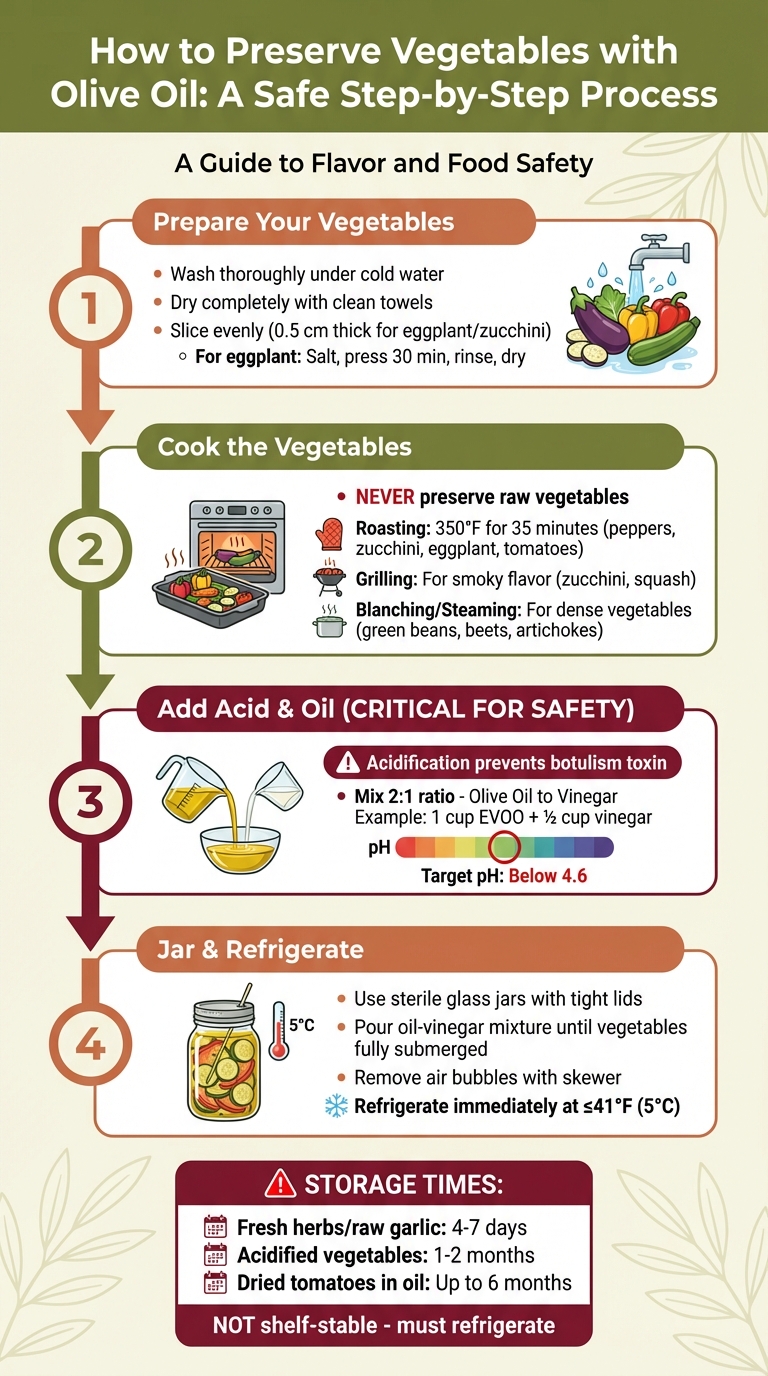
Step-by-Step Guide to Preserving Vegetables in Olive Oil Safely
If you're ready to start preserving vegetables with olive oil, here’s how to do it step by step to ensure both safety and great taste.
Preparing Your Vegetables
Start by thoroughly washing your vegetables under cold running water. Then, dry them with clean kitchen towels to remove any moisture that could interfere with preservation. Slice eggplant and zucchini into even pieces about 0.5 cm thick, and cut bell peppers into wide strips for even cooking. For eggplant, sprinkle the slices with salt, place them under a heavy weight for 30 minutes, then rinse and dry again. This process helps draw out excess moisture and reduces bitterness. Once your vegetables are prepped and dried, you’re ready for the next step: cooking.
Cooking Methods
Raw vegetables should never be preserved in oil - it’s essential to cook them first to minimize the risk of bacteria. The cooking method you choose depends on the type of vegetable and the flavor you want. Roasting at 350°F is a great option for Mediterranean vegetables like peppers, zucchini, eggplant, and tomatoes. It usually takes about 35 minutes for them to become tender. Grilling is another excellent choice, adding a smoky flavor to vegetables like zucchini and squash. For denser vegetables such as green beans, beets, or artichoke hearts, blanching or steaming works well to maintain a tender but firm texture. Once cooked to your liking, you're ready to move on to the preservation process.
Adding Acid and Oil
This is the most important step for safety. According to Penn State Extension:
"Oil may prevent oxidation and discoloration from exposure to the air, however, it will not safely preserve the food and it will provide favorable conditions for the development of the botulism toxin."
To create a safe marinade, mix olive oil and vinegar in a 2:1 ratio. For example, combine 1 cup of Big Horn Olive Oil's Estate Reserve EVOO with 1/2 cup of Big Horn Olive Oil's Traditional 18-Year Aged Dark Balsamic. Place your cooked vegetables into sterile jars and pour the oil-vinegar mixture over them until they are fully submerged. To remove air bubbles, use a skewer before sealing the jars. Keep in mind that these preserves are not shelf-stable and must be refrigerated immediately to ensure safety.
Flavor Combinations and Serving Ideas
With your preserved vegetables ready, it’s time to experiment with pairing them with complementary flavors to create delicious dishes.
Classic Pairings
Preserved vegetables shine when paired with Mediterranean-inspired ingredients. For instance, roasted bell peppers come alive with garlic, basil, thyme, and rosemary. Roasted beets, with their natural sweetness, pair wonderfully with garlic and rosemary. Zucchini and summer squash feel light and fresh when combined with garlic and basil. For green beans, consider adding blanched garlic, chili flakes, and lemon zest to create a bright, tangy kick. Tomatoes, being incredibly versatile, can be paired with chili for some heat, basil for a touch of freshness, or garlic for added depth.
These preserved vegetables can be served in countless ways. Add them to antipasto platters, layer them into pesto sandwiches, or toss them into pasta or grain salads. They also make fantastic toppings for crostini, bruschetta, or even a simple grilled cheese sandwich. As Karon Grieve from Larder Love notes:
This richly flavored oil is just perfect for salad dressings. You can also use it to drizzle over veggies before roasting.
Infused oils are another great way to enhance the flavors of your preserves, making them even more versatile.
Using Infused Oils
Infused oils offer a quick and easy way to elevate preserved vegetables with bold, concentrated flavors. For example, Big Horn Olive Oil's Tuscan Herb infused EVOO adds a rich Italian seasoning profile to zucchini preserves. Tomatoes take on a whole new dimension when paired with chili-infused oil and Sicilian Lemon White Balsamic, creating a tangy preserve with a spicy edge. Garlic-infused oils are perfect for enhancing the flavors of bell peppers and green beans, eliminating the need to roast garlic separately.
The key is to match the infused oil to the natural flavor of the vegetable. Eggplant pairs beautifully with chili-infused oil, red peppers, and fennel for a bold Calabrian-style twist. Beets, on the other hand, are elevated by rosemary-infused oil, which complements their earthy tones. If you notice your infused oil solidifying in the refrigerator, don’t worry - just let the jar sit at room temperature for about 15 minutes. This is normal and even indicates high-quality extra virgin olive oil.
Storage and Safety Guidelines
When preserving vegetables in olive oil, following proper storage and safety measures is essential to avoid foodborne illnesses like botulism.
How to Store Preserved Vegetables
Always keep your preserved vegetables refrigerated at or below 41°F (5°C). Unlike commercially processed options, home-preserved vegetables in oil are not shelf-stable and require cold storage to prevent bacterial growth. Use clean, sterilized glass jars with tight-fitting lids, and make sure the vegetables are fully submerged in the oil and vinegar mixture. This creates a barrier against air, reducing the chances of oxidation, discoloration, and mold.
If you notice the oil becoming cloudy or solidifying in the refrigerator, simply let the jar sit at room temperature for about 15 minutes to return it to a liquid state. Additionally, if you plan to store your preserves for more than a week, remove any fresh herb sprigs or raw garlic cloves, as these can increase the risk of spoilage. Following these steps helps maintain both the flavor and safety of your preserves.
Food Safety Rules
To prevent botulism, ensure the vegetables are acidified to a pH below 4.6 before adding oil. For extra precaution, soak chopped garlic or fresh herbs in a 3% citric acid solution (mix 1 tablespoon of citric acid with 2 cups of water) for 24 hours before incorporating them into the oil mixture.
These safety measures help you preserve with confidence while minimizing health risks.
How Long They Last
Preserves containing fresh herbs or raw garlic should be consumed within 4–7 days, while acidified vegetables can last 1–2 months if properly refrigerated. Dried tomatoes stored in oil can remain safe for up to 6 months under refrigeration. For extended storage, freezing your preserved vegetables is a great option, significantly increasing their shelf life.
Label each jar with the preparation and use-by dates, and discard any jars showing signs of leakage, bulging, or unusual odors. Keep in mind that botulism toxins are odorless and invisible, so when in doubt, it’s better to be cautious. If garlic in the acidified mixture turns blue or green, don’t worry - this harmless color change is a natural reaction between amino acids and the acid, not an indication of spoilage.
Conclusion
To wrap things up, making delicious and safe preserves comes down to preparation, high-quality ingredients, and following strict safety measures. Key practices like acidifying vegetables, fully submerging them in oil, and keeping them refrigerated at or below 40°F (4°C) are essential. These steps are crucial for preventing botulism and ensuring your homemade preserves are safe to enjoy.
Using high-quality extra virgin olive oil not only boosts flavor but also plays an important role in safety. Unlike seed oils, which can quickly turn rancid, premium extra virgin olive oils are rich in monounsaturated fats and antioxidants that resist oxidation. For example, Big Horn Olive Oil's Ultra Premium Extra Virgin Olive Oils provide excellent oxidative resistance and thermal stability, making them ideal for preserving vegetables while maintaining great taste and integrity.
Feel free to get creative with your combinations, but always stick to the safety guidelines. Consider pairing roasted bell peppers with Tuscan Herb olive oil or eggplant with Blood Orange olive oil for a flavorful twist on your preserves.
FAQs
Can I water-bath can vegetables stored in olive oil?
No, it’s not safe to use the water-bath canning method for vegetables stored in olive oil. The presence of oil can block proper heat penetration, compromise the seal, and create conditions that encourage bacterial growth, including the risk of botulism. A safer option is to refrigerate or freeze vegetables preserved in olive oil and consume them within a few days.
How do I test pH at home to prevent botulism?
To test pH at home, the most reliable tool is a calibrated pH meter. It delivers precise readings, ensuring accuracy. For consistent results, test 2–3 samples of your food. It's important to note that a pH of 4.60 or lower is essential to prevent the growth of Clostridium botulinum.
If a pH meter isn't available, high-quality pH test strips can serve as an alternative, though they are less precise. Regular calibration of your pH meter and consistent testing are especially important when preserving foods, like vegetables in olive oil, to ensure safety.
What are the spoilage warning signs in oil-packed veggies?
Spoiled oil-packed vegetables often give themselves away through a few telltale signs. Look out for a foul or rancid odor, noticeable changes in color or texture, or the appearance of mold or bubbles in the container. These indicators usually point to bacterial growth or spoilage. To stay safe, always check your preserved vegetables thoroughly before eating.