

Preventing Botulism in Herb Oil Infusions
Herb oil can turn dangerous fast if you use wet, low-acid ingredients and store the oil the wrong way. If I make infused oil at home, the safest path is simple: use dried herbs and spices, refrigerate any oil made with raw herbs or garlic, and follow strict time limits.
Here’s the short version:
- Botulism toxin has no smell, taste, or visible warning.
- Oil creates a low-oxygen space where C. botulinum can grow.
- Garlic-in-oil should be kept at 40°F or below and used within 4 days.
- Other raw herb oils should be used within 1 week.
- Even refrigerated herb or vegetable oils are often discarded after about 3 weeks if they are not made with a tested acid step.
- For longer storage, the mix must be brought to a pH below 4.6 using a tested recipe.
- A better extra virgin olive oil does not make the infusion safe.
If you want the lowest-risk option, I’d stick with fully dried ingredients, dry containers, and cool storage. If you want to use raw garlic or herbs, treat the oil like a perishable food from day one.
This article walks through the main risks, the storage mistakes that lead to trouble, and the safest home methods to follow.
Safely Infuse Oils at Home
sbb-itb-4066b8e
Common Mistakes That Raise Botulism Risk
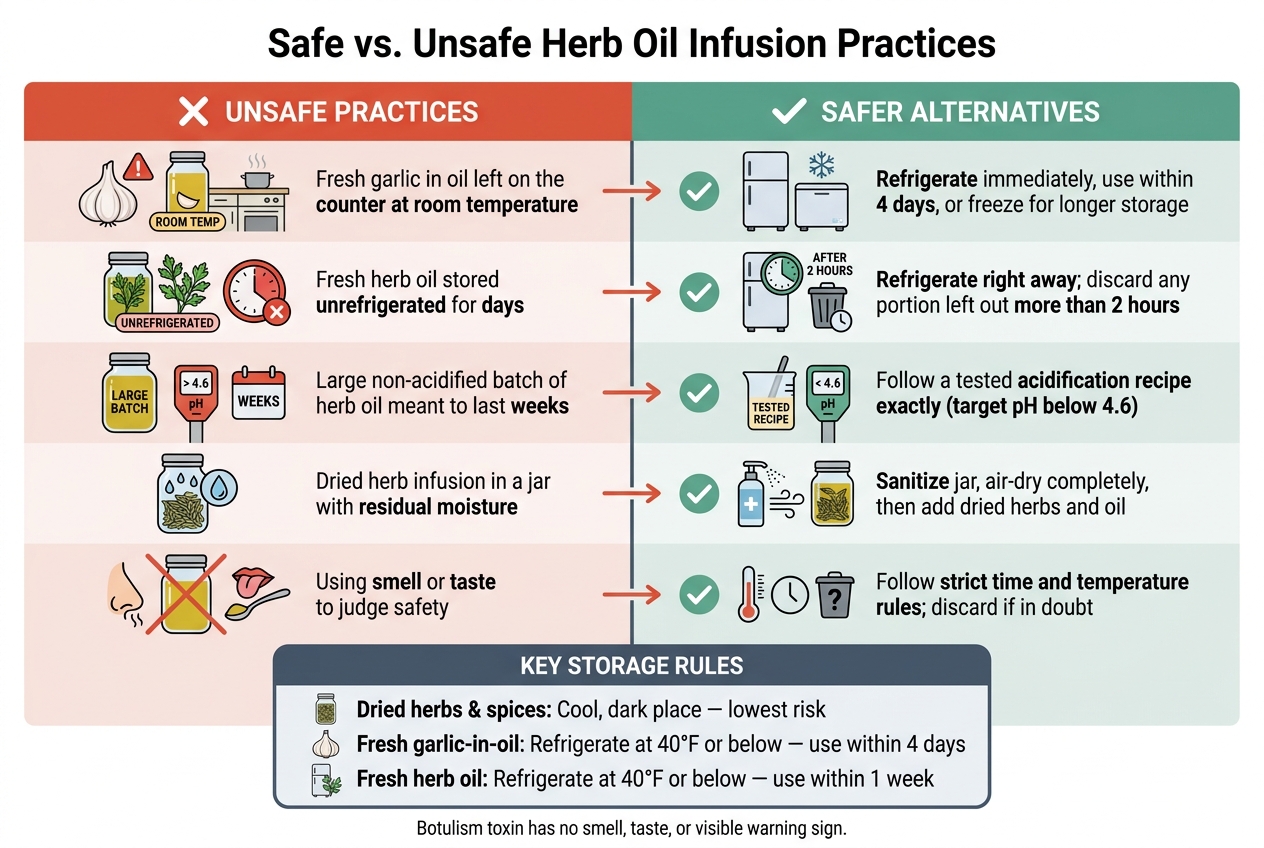
Safe vs. Unsafe Herb Oil Infusion Practices at Home
The biggest problems usually come down to three things: room-temperature storage, weak labeling, and reusing containers without cleaning them well.
Leaving Fresh Herb or Garlic Oils at Room Temperature
Fresh herb or garlic oil should not sit at room temperature. When fresh ingredients are stored in oil without oxygen, Clostridium botulinum can grow and produce toxin. Garlic-in-oil mixtures have also been tied to botulism outbreaks in North America.
The National Center for Home Food Preservation says fresh garlic-in-oil should be kept refrigerated at 40 °F or below and used within 4 days. If it sits at room temperature, the botulism risk goes up.
Using Fresh Ingredients Without Acidification or Time Limits
Putting fresh herbs, garlic, or vegetables into oil without acidification or a clear storage limit is unsafe. These fresh ingredients may carry spores, and they usually are not acidic enough on their own to stop botulism growth. Without a safety control in place, the infusion should be treated as highly perishable.
Don’t top off older bottles. Don’t reuse containers unless you wash and dry them first. Each batch should be treated as new, labeled with the date it was made, and thrown out if the storage time is unknown. Even when refrigerated, herb and vegetable oils should be discarded after about 3 weeks.
Once those storage limits are set, the next step is picking a safer way to make the infusion.
Assuming a Premium Oil Makes the Infusion Safe
A premium extra virgin olive oil may taste better, but it does not make an infusion safe. Safety comes from acidity, temperature, and time, not from the price or grade of the oil.
Safe home infusions depend on dried ingredients, refrigeration, or tested acidification methods.
Safe Ways to Make Herb Oil Infusions at Home
Use Dried Herbs and Spices for the Lowest-Risk Infusions
The safest move at home is simple: skip fresh ingredients. Fully dried herbs and spices - rosemary, thyme, chili flakes, peppercorns, dried garlic - add very little moisture, which makes them the lowest-risk option for home infusions.
Start with clean, fully dry glass bottles. Wash them in hot, soapy water, rinse them well, and let them air-dry all the way before you add anything. Then add your dried ingredients, pour in the oil, seal the bottle tightly, and store it in a cool, dark place away from the stove.
Keep Fresh Herb or Garlic Oils Refrigerated and Use Them Quickly
Fresh herbs and garlic need more care. Wash them under cool running water, then dry them completely with paper towels or a clean towel. Even a little moisture left on the surface can increase risk.
Once your ingredients are ready, fill a clean glass jar, seal it, and refrigerate it right away at 40°F or below. Label each jar with the date you made it and the date it needs to be thrown out. Use garlic-in-oil within 4 days. Use other fresh herb oils within 1 week. Store the jar on a middle shelf, not in the door, since the temperature there stays more even.
If you want to keep it longer, you need a tested acidification method.
Use Tested Acidification Methods for Longer Storage
For longer storage, the mixture has to be acidified to a pH below 4.6, which is the point that stops toxin production. That means using a tested recipe from a reputable U.S. Extension source that tells you the acid to use, how much to add, and how long to soak the herbs or garlic.
A quick splash of vinegar or squeeze of lemon juice won’t do the job. Acid can spread unevenly or fall short, leaving small areas around herb stems or garlic cloves where spores may still grow. Heat doesn’t solve this at home either. Destroying C. botulinum spores takes temperatures far above 212°F, and the oil would break down long before the spores were gone.
So the rule of thumb is pretty plain:
- Use dried ingredients for the safest home infusions.
- If you use fresh herbs or garlic, keep the oil refrigerated and use it fast.
- For longer storage, follow a tested acidification recipe exactly.
Use the checklist below to verify your ingredients, containers, and storage.
A Safety Checklist for Preparation and Storage
Use this checklist before bottling any herb oil.
Ingredients, Containers, and Storage Conditions
For the lowest-risk infusions, stick with dried herbs and dried garlic. If you want to use fresh herbs or whole garlic, use them only in acidified oil and keep that oil refrigerated.
If you want the oil to last longer, follow a tested recipe from an extension service or university exactly. Don’t wing it with lemon juice or vinegar.
Wash jars, lids, funnels, and utensils in hot, soapy water. Rinse them well, then sanitize them by boiling or running them through a dishwasher sanitizing cycle. Once that’s done, let everything air-dry fully. There should be no visible moisture left before you add the fresh harvest olive oil and herbs. Handle sanitized jars with clean tongs or gloves.
Fresh herb or garlic oil should go into the refrigerator right away at 41°F (5°C) or below. Store it in the coldest part of the fridge, throw it out if it sits out for more than 2 hours, and never taste it to decide whether it’s safe.
Unsafe Practices vs. Safer Alternatives
This side-by-side view makes the risks a lot easier to spot.
| Unsafe Practice | Why It's Risky | Safer Alternative |
|---|---|---|
| Fresh garlic in oil left on the counter | Fresh garlic in oil left at room temperature is high-risk. | Make a small batch, refrigerate immediately, and use within a few days to 1 week, or freeze for longer storage. |
| Fresh herb oil stored unrefrigerated for days | It can look fine while still containing toxin. | Refrigerate right away, keep it in the coldest part of the fridge, and discard any portion left out for more than about 2 hours. |
| Large non-acidified batch of herb oil meant to last weeks | Bacterial numbers can become a safety concern over time, even in the refrigerator. | Follow a tested acidification recipe exactly. |
| Dried herb infusion in a jar with residual moisture | Residual moisture can support microbial growth. | Sanitize the jar, let it air-dry completely, then add dried herbs and oil. |
| Using smell or taste to judge safety | Botulinum toxin cannot be reliably detected by the senses. | Follow strict time and temperature rules and discard the oil if there is any doubt. |
Conclusion: Put Safety First, Then Focus on Flavor
Safe herb oil infusions come down to three things: moisture, acidity, and storage time. The risk of botulism goes up when moist, low-acid ingredients sit in oil without refrigeration.
That’s why the safest move for home infusions is pretty simple: use dried herbs and spices.
Fresh ingredients are a different story. If you use fresh herbs or garlic, refrigeration isn't optional. Fresh herb or garlic oils need to stay refrigerated and should be used fast.
If you want oil to last longer, there’s only one safe path: tested acidification. And that means following a tested acidification recipe exactly, not roughly, not “close enough.”
One more thing that trips people up: oil quality doesn’t make infused oil safe. Great oil can taste better, sure. But taste and safety are not the same thing.
If ease matters more than doing it yourself, a store-bought product made under controlled conditions can be the better pick. For ready-made infused oils and balsamic vinegars, Big Horn Olive Oil offers commercially prepared options.
FAQs
Can I freeze herb-infused oil?
Yes - you can freeze herb-infused oil. It’s a safe way to make it last longer, and it works whether the oil was made with fresh herbs, dried herbs, or acidified ingredients.
For the best result, freeze the oil in small portions. That makes it easier to thaw only what you need. When it’s time to use it, let it thaw at room temperature before serving.
How do I know if my herbs are dry enough?
Herbs for oil infusions must be completely dry. A simple test: if they crumble easily when you touch them, they’re ready.
If you’re drying herbs at home, air-dry them in a well-ventilated spot away from direct sunlight for 1 to 2 weeks. You can also use a dehydrator set to 95°F to 115°F.
Before you start the infusion, give the herbs a close look and smell. Check for:
- Mold
- Musty odors
- Any sign of dampness
Even a little moisture can cause problems in infused oils.
Do I need a pH meter for acidified oil?
Yes. If you're acidifying oil for longer storage, use a pH meter to make sure it reaches 4.6 or below.
This is a critical safety step because it checks the pH with accuracy and helps reduce the risk of botulism.