

Can You Sauté with Extra Virgin Olive Oil?
Yes, you can sauté with extra virgin olive oil (EVOO) safely, and it adds rich flavor to your dishes. Despite common myths, high-quality EVOO withstands medium heat (250°F–340°F) without burning or losing all its nutrients. Its smoke point ranges from 347°F to 464°F, making it suitable for sautéing. While heating may reduce some polyphenols, studies show that a significant portion remains intact, retaining both flavor and health benefits.
Key Points:
- Safety: EVOO is stable at sautéing temperatures, thanks to its high smoke point and antioxidant content.
- Flavor: Adds depth with fruity, buttery, or peppery notes.
- Nutrients: Retains about 40% of polyphenols when heated at 248°F for 10 minutes.
- Quality Matters: Opt for freshly pressed, high-phenolic oils like Picual or Coratina for better heat resistance and flavor.
To avoid overheating, stick to medium heat, and lower the temperature if the oil starts to smoke. Using EVOO for both cooking and finishing enhances the taste of your dishes while preserving its nutritional value.
The Truth About Heating Extra Virgin Olive Oil
Common Myths About Cooking with EVOO
There’s a lingering myth that extra virgin olive oil (EVOO) burns instantly in hot pans. Another claim is that heating it destroys all its nutrients, making it pointless for cooking. Some even believe EVOO should only be used as a finishing touch on dishes, never for cooking.
These ideas don’t hold up. High-quality EVOO has a smoke point ranging from 347°F to 464°F, which is well above the typical sautéing temperatures of 248°F to 320°F. As for nutrient loss, studies show that sautéing EVOO at 248°F for 10 minutes retains about 40% of its polyphenols. So, while heating does reduce some nutrients, a significant portion remains intact.
Dispelling these myths opens the door to appreciating why EVOO is an excellent choice for cooking.
Why These Myths Stick Around
A lot of the confusion can be traced back to misinterpretations of a UC Davis study. The research highlighted labeling fraud in imported olive oils, but many misunderstood it as questioning the safety of cooking with olive oil. Lower-quality oils, which often have higher acidity and impurities, do have lower smoke points. This has unfairly cast doubt on EVOO’s ability to handle heat.
"The myth that EVOO cannot handle heat comes from lower-quality oils that degrade at lower temperatures due to higher free acidity and impurities." - Gianfranco Cosmano, Producer, Deliba Olive Oil
Marketing campaigns for refined seed oils have also played a role. For years, these oils were promoted as the “neutral” and “safe” choice for cooking, sidelining EVOO despite research showing its effectiveness and health benefits.
The Real Risk: Overheating EVOO
The real issue isn’t whether EVOO can handle heat - it’s overheating it. When EVOO’s smoke point is exceeded, harmful compounds like acrolein and aldehydes can form, which not only affect your health but also ruin the oil’s flavor. Fortunately, this is easy to avoid. Stick to medium heat, and if the oil starts smoking, lower the temperature or replace it.
One way to minimize this risk is by choosing high-quality, freshly pressed EVOO. As Pedro Borges, Co-Founder of Olivy, explains:
"High-quality, freshly pressed EVOO from a single estate can reach 210°C [410°F]. This is another reason why quality matters beyond just flavour - it is also a safety consideration if cooking at higher temperatures."
Using a premium oil gives you more flexibility when cooking, reducing the chance of overheating. This highlights why investing in good EVOO is about more than just taste - it’s also about ensuring safety and preserving the oil’s integrity during cooking.
sbb-itb-4066b8e
Why High-Quality EVOO Works Well for Sautéing
How EVOO Holds Up to Heat
Extra virgin olive oil (EVOO) stands out for sautéing because its monounsaturated fats are resistant to oxidation, and its high polyphenol content helps protect it from heat degradation. As Gianfranco Cosmano, producer at Deliba Olive Oil, explains:
"A 629 mg/kg oil that loses half its polyphenols during cooking still delivers more than most oils had to begin with."
This "starting high" advantage highlights why the quality of your oil matters even before it hits the pan. Its stability under heat dispels common misconceptions about EVOO overheating easily, making it a reliable choice for cooking.
How EVOO Builds Flavor in the Pan
Beyond its heat stability, premium EVOO enhances the flavor of your dishes. It acts as a flavor carrier, amplifying the taste of ingredients and aiding in browning. This process helps vegetables and proteins develop a rich, savory depth that makes sautéed dishes so delicious. For lighter dishes, mild EVOOs can blend effortlessly at sautéing temperatures without overpowering the flavors.
What Makes Big Horn Olive Oil's Ultra Premium EVOO Good for Sautéing
Big Horn Olive Oil takes EVOO quality to the next level. Their Ultra Premium EVOOs are cold-pressed within two hours of harvest and shipped fresh - usually within 1–3 months of the crush date. This ensures you're cooking with oil that's as fresh and nutrient-packed as possible. According to Big Horn Olive Oil, "Olive oil that's pressed from unripened olives maintains healthy antioxidants. Olive oil for cooking should be fresh and full of nutrition."
Their oils boast a high phenolic content - typically between 180 and 400+ mg/kg - and a smoke point of 410°F or higher, which easily exceeds standard sautéing temperatures.
Another key factor is their low free acidity, meaning the oils contain fewer impurities. This makes them less likely to break down during cooking. Varieties like Picual and Coratina single-source EVOOs are excellent choices for anyone looking to elevate their cooking with a truly high-quality oil.
How to Sauté with EVOO: Practical Tips
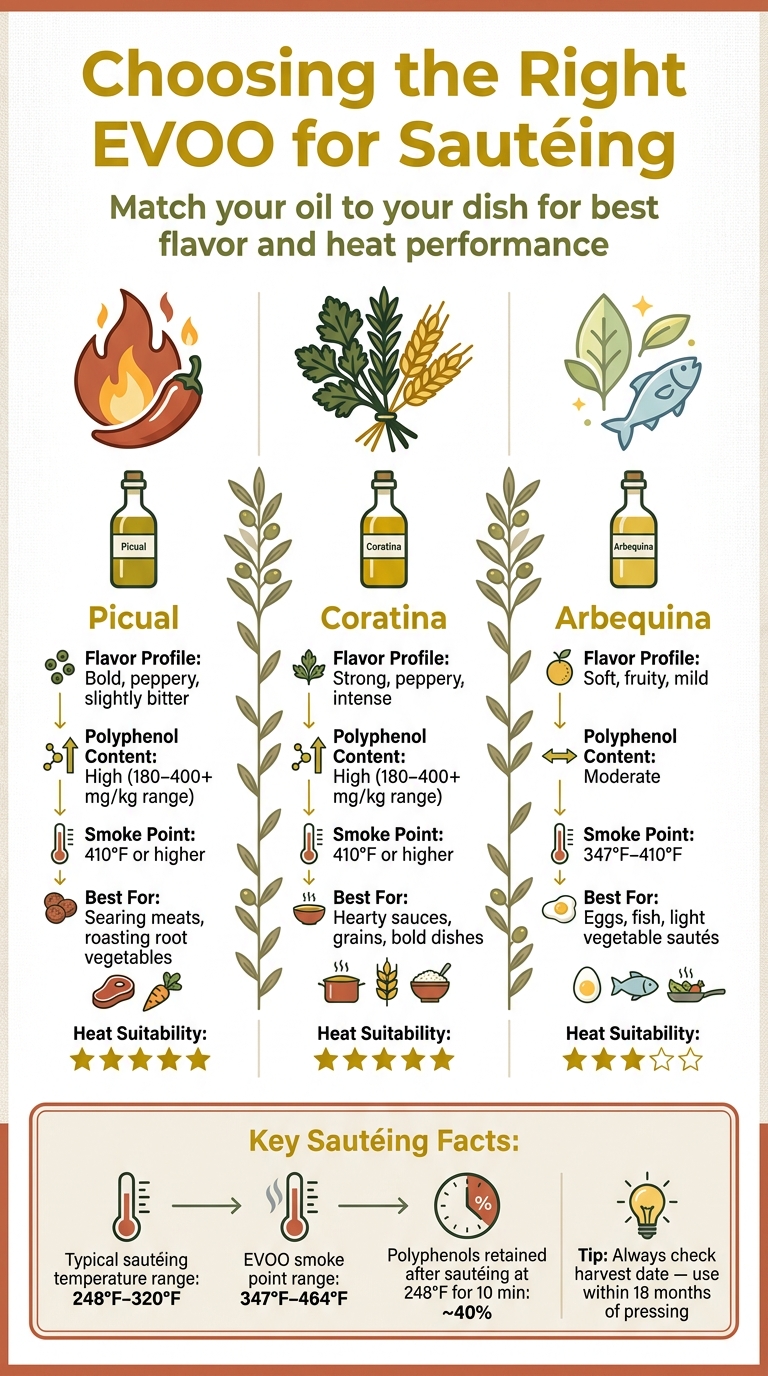
EVOO Varieties for Sautéing: Flavor, Heat & Best Uses
Picking the Right EVOO for Your Dish
Using EVOO (extra virgin olive oil) not only enhances flavor but also provides stability during cooking. The type of EVOO you choose can influence the final taste of your dish, so matching the oil to your ingredients is key.
| EVOO Variety | Flavor Profile | Best For |
|---|---|---|
| Picual | Bold, peppery, slightly bitter | Searing meats, roasting root vegetables |
| Coratina | Strong, peppery, intense | Hearty sauces, grains, and bold dishes |
| Arbequina | Soft, fruity, mild | Eggs, fish, and light vegetable sautés |
For sautéing, Picual and Coratina varieties from brands like Big Horn Olive Oil, starting at $8.99, are excellent choices due to their high polyphenol content, which enhances both flavor and stability. On the other hand, for delicate dishes like shrimp or eggs, a gentler oil like Arbequina ensures the flavors of your ingredients shine without being overpowered.
When shopping, always check for the harvest date rather than just the "best by" date. EVOO is at its peak flavor and nutritional value when used within 18 months of pressing.
Once you've picked the right oil, managing your cooking temperature is the next step.
Controlling Heat While Sautéing
One of the most common mistakes in sautéing is turning the heat too high. For most dishes, medium to medium-high heat works best. This keeps the oil well below its smoke point and prevents burning.
Start by preheating your pan for about 60 seconds. Add the EVOO, and once it begins to shimmer, it’s ready for your ingredients. If you notice smoke, lower the heat immediately to avoid compromising the oil's flavor and nutritional benefits.
Paul Adams, Science Editor at America's Test Kitchen, explains:
"The family of unpleasant flavors that arise in hot oil, like the fishy, rancid notes that show up in canola, come from breakdown of fatty acids; interestingly enough, EVOO is less susceptible to that than refined oils, because it naturally contains antioxidants that prevent that breakdown."
This natural resistance to overheating makes EVOO a reliable choice, but maintaining the right temperature ensures you preserve its flavor and quality.
Once your heat is in check, you can focus on layering flavors for a more dynamic dish.
Building Layers of Flavor Step by Step
Start with 1–2 tablespoons of EVOO in your skillet. Begin by adding aromatics - like garlic, shallots, or onions - and let them soften slowly. This step creates a flavorful base that sets the tone for the dish.
As your ingredients cook and brown, they leave behind a fond, the caramelized bits stuck to the pan. These bits are packed with flavor. Deglazing the pan with a splash of broth, wine, or even water lifts the fond, allowing it to blend back into the dish and add richness.
For an extra burst of flavor, drizzle a small amount of fresh EVOO over the dish just before serving. This two-step approach - using EVOO for both cooking and finishing - brings out its full range of flavors. You get the depth from the sautéed base and the brightness from the raw oil's fresh, aromatic qualities.
Conclusion: Better Flavor and Health with EVOO
Extra virgin olive oil (EVOO) isn’t just a safe option for cooking - it’s a fantastic way to enhance your dishes while boosting their nutritional value. Thanks to its heat stability and ability to retain antioxidants, EVOO brings both flavor and health benefits to the table. As Dr. Simon Poole, a Physician and Olive Oil Expert, puts it:
"This research provides unequivocal and definitive evidence that should finally dispel this myth. It shows that extra virgin olive oil is safe for cooking and superior in flavor and nutrition."
The key lies in choosing EVOO rich in polyphenols. Unlike refined oils, which lose their antioxidants, high-quality EVOO holds onto a significant amount of these beneficial compounds even when heated. When paired with proper heat management, it not only elevates the taste of your food but also maximizes its nutritional value.
Take, for example, Big Horn Olive Oil's Ultra Premium EVOOs. These oils boast phenolic content ranging from 180 to over 400 mg/kg, along with a reliable smoke point, making them a go-to for both flavor and health. Whether you prefer the bold, peppery notes of Picual and Coratina (starting at $8.99) or the creamy, herbaceous profile of Cobrançosa ($23.99), these options deliver exceptional taste and nutrition. It’s clear that EVOO is the ultimate choice for anyone aiming to bring out the best in their cooking while prioritizing health.
FAQs
How can I tell if my pan is too hot for EVOO?
If you see wisps of smoke or the oil starts smoking, your pan is too hot for extra virgin olive oil (EVOO). This indicates the oil has hit its smoke point, which can alter its taste and degrade its quality. To prevent this, heat the pan gradually and keep an eye on the oil while cooking.
Does sautéing with EVOO make food taste bitter or peppery?
Sautéing with extra virgin olive oil (EVOO) doesn’t overpower dishes with bitterness or an overly sharp peppery flavor. Instead, it brings out the best in your ingredients, adding depth while preserving its signature herbaceous and slightly grassy profile. That peppery kick you might notice in the throat? It’s actually a sign of EVOO's high antioxidant levels, which not only contribute to its distinctive taste but also to its health-boosting properties.
What should I look for on the label to pick a good EVOO for sautéing?
When picking an extra virgin olive oil (EVOO), check for a harvest date within the past year - this ensures it's fresh. Make sure the label clearly states "extra virgin", and choose oils packaged in dark glass bottles or tins. These materials help preserve the oil's flavor and quality by protecting it from light and heat.