

5 Spice-Infused Olive Oil Recipes
Spice-infused olive oils are a simple way to add rich, bold flavors to your cooking. Whether you're looking for a touch of heat, a smoky kick, or herbal depth, these oils can elevate dishes like pasta, meats, or salads. You can make them at home using two methods: a slower "cold" steep for 1–2 weeks or a quicker "heat" method that takes just minutes. Homemade versions are cost-effective, customizable, and free from the lower-grade oils often found in store-bought options.
Here’s a quick look at five recipes to try:
- Chile and Spice: Adds a bold, spicy kick to pizza, soups, or grilled meats.
- Paprika: Smoky and slightly sweet, perfect for soups and roasted veggies.
- Garlic: Smooth and savory, ideal for pasta, breads, or sautéed dishes.
- Rosemary: Herbal and earthy, pairs well with roasted potatoes or meats.
- Toasted Saffron and Pink Peppercorn: Aromatic and refined, great for seafood or desserts.
Each recipe is easy to make, requires minimal ingredients, and can be stored safely for weeks with proper handling. Start with high-quality extra virgin olive oil for the best results, and enjoy these flavorful infusions in your everyday cooking.
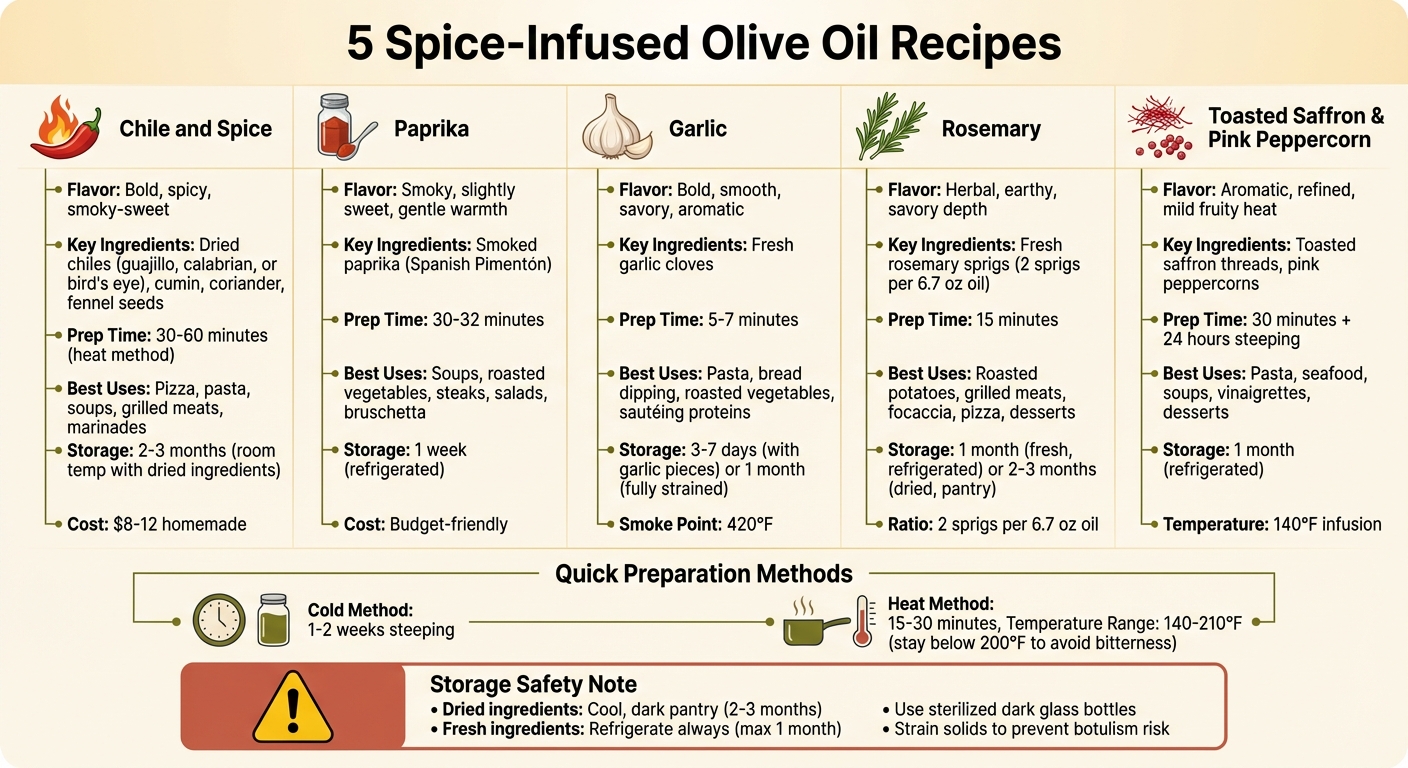
5 Spice-Infused Olive Oil Recipes: Flavor Profiles and Uses Comparison Chart
1. Chile and Spice Infused Olive Oil
Flavor Profile and Complexity
Chile and spice-infused olive oil delivers a bold and layered taste. It combines vibrant heat with smoky sweetness and earthy undertones, thanks to the extra virgin olive oil, which carries the flavors of toasted chiles and spices like cumin, coriander, and fennel seeds. The oil acts as a perfect medium for capsaicin - the compound responsible for the heat - spreading warmth evenly across your palate.
Different types of chiles bring their own unique twists. Guajillo chiles offer a smoky, fruity flavor with mild heat, while Calabrian chiles add a sweet, fruity intensity. If you're craving something fiery, Bird's Eye chiles pack a sharp, potent punch. These diverse flavor profiles make this oil both versatile and exciting to use.
Ease of Preparation
Making chile-infused olive oil at home is surprisingly simple and budget-friendly. A homemade bottle costs about $8–$12, much cheaper than the $15–$25 you'd spend on store-bought options. All you need are three basic ingredients: high-quality extra virgin olive oil, dried chiles, and optional whole spices.
Start by toasting the dried chiles and spices in a dry skillet for 30–60 seconds to bring out their aroma. For the infusion, gently heat the olive oil to 160–180°F - keeping it below 200°F to avoid any bitterness - then steep the toasted ingredients in the warm oil for 15–30 minutes. For best results, use about 1 tablespoon of crushed dried chiles per cup of oil. Once infused, strain the oil through a fine-mesh strainer and coffee filter for a smooth finish.
Primary Culinary Applications
This infused oil is incredibly versatile and adds a kick to a variety of dishes. Drizzle it over pizza, pasta, tomato-based soups, or egg dishes for an instant flavor boost. Chef Dawn Thomas, Founder of Rouxbe, highlights its versatility:
This oil adds great flavor when cooking or grilling meats. It also makes for a delicious and unique dipping sauce to serve alongside the meat.
Its ability to penetrate meat fibers makes it an excellent choice for marinades, especially for chicken, pork, or fish. For vegetables, brush it on zucchini, eggplant, or bell peppers before grilling, or toss it with roasted potatoes for a flavorful twist.
Storage and Shelf Life
Proper storage is key to maintaining the oil's flavor and safety. When prepared with dried ingredients, chile-infused olive oil can last 2–3 months at room temperature if stored in a cool, dark place, or up to 6 months if refrigerated. Avoid using fresh garlic or chiles for room-temperature storage, as they can lead to botulism. If you use fresh ingredients, refrigerate the oil and consume it within one week.
For long-lasting quality, store the oil in dark glass bottles and keep it away from heat and light. This ensures the flavors remain vibrant and the oil stays fresh.
sbb-itb-4066b8e
2. Paprika Infused Olive Oil
Flavor Profile and Complexity
Paprika-infused olive oil brings a smoky, slightly sweet taste with just a touch of spice. Its bold red color adds visual appeal, while Spanish Pimentón contributes warmth without overpowering heat. The result is a well-balanced blend of earthy sweetness and gentle smokiness, offering depth without the intensity of chile oils.
Ease of Preparation
Making paprika-infused olive oil at home is simple, quick, and budget-friendly - it takes just 30 to 32 minutes from start to finish. Start by warming extra virgin olive oil over low heat for 2–3 minutes. Once warmed, remove the oil from the heat and stir in smoked paprika (use about 1½ teaspoons per ¼ cup of oil). Let the mixture steep for 30–40 minutes, then strain it through a coffee filter to remove any solids.
For the best results, choose a high-quality olive oil with a neutral or buttery flavor. Premium options, like ultra-premium extra virgin olive oils from Big Horn Olive Oil (https://bhooc.com), can enhance the infusion process and allow the paprika's flavor to shine.
Annemarie from Just a Little Bit of Bacon highlights how easy it is to make infused oils at home:
"It turns out that making infused oils is easy, quick, and cheap. Instead of paying extra for packaging and labels, you can use your favorite olive oil, get it nice and warm, mix it with the spice you want... and DONE."
To avoid issues, keep the oil’s temperature below 150°F. Heating it too much can cause the oil to cook or turn rancid. With just a little effort, you’ll have a flavorful oil ready to elevate your dishes.
Primary Culinary Applications
This paprika-infused oil is incredibly versatile and can transform many dishes. Drizzle it over creamy Spanish garbanzo bean soup, steaks, or fresh salads for added flavor. It’s also excellent for brushing onto vegetables, roasted chicken, or fish before grilling. Use it as a base for sautéing, stir-frying, or even as a spread for bruschetta and panini sandwiches. Its smoky profile pairs beautifully with mild legumes, ricotta, goat cheese, and roasted Mediterranean vegetables.
Storage and Shelf Life
Proper storage is essential to ensure safety, as ground paprika can pose a risk of botulism if the oil isn’t handled correctly. Annemarie advises:
"Oil + plant matter (ground paprika in this case) equals risk of botulism so to be safe it's best not to store for too long."
To stay safe, refrigerate the oil and use it within one week. Once strained, transfer the oil to a clean, airtight container and keep it chilled until you’re ready to enjoy it.
3. Garlic-Infused Olive Oil
Flavor Profile and Complexity
Garlic-infused olive oil offers a bold yet smooth flavor, capturing the aromatic essence of garlic without the sharpness of its raw form. Depending on the preparation, the flavor can range from mildly sweet and buttery to a more vibrant, spicy profile. This oil not only enhances dishes with savory depth but also boasts polyphenol levels between 455 mg/kg and 600 mg/kg, with a smoke point around 420°F.
Ease of Preparation
Crafting garlic-infused olive oil at home is quick and straightforward, requiring just 5–7 minutes of active cooking. Start with high-quality extra virgin olive oil - like the options from Big Horn Olive Oil (https://bhooc.com) - and cold garlic. Heat the mixture gently to about 200°F, allowing the garlic to flavor the oil as it warms. The garlic will turn a light golden brown, becoming crispy and aromatic. Food Editor Rhoda Boone emphasizes:
"The key is to start the oil cold, which lets the garlic infuse the oil as it gently heats up. That way, the finely chopped garlic becomes crispy and golden instead of burning."
Once infused, the oil is ready to enhance a variety of dishes.
Primary Culinary Applications
This infused oil is a simple way to elevate everyday meals. Use it as a dip for fresh sourdough or focaccia, or drizzle it over roasted vegetables like potatoes or mushrooms. It’s a natural choice for pasta dishes like aglio e olio, works beautifully for sautéing proteins such as steak or fish, and adds richness to grains like farro, lentils, or wild rice. It can even brighten breakfast favorites or serve as the base for vinaigrettes and marinades.
Storage and Shelf Life
Proper storage is crucial to ensure safety and maintain quality. Fresh garlic in oil can create a low-oxygen environment that encourages botulism bacteria growth if left at room temperature. To avoid this, strain out all garlic solids immediately and refrigerate the oil. Use within 3–7 days if any garlic pieces remain, or up to one month if fully strained. Keep the oil in a dark, airtight container away from heat and light to preserve its flavor and polyphenols. Don’t toss the softened garlic cloves - they can be mashed into a spread for toasted bread or other dishes.
4. Rosemary Infused Olive Oil
Flavor Profile and Complexity
Rosemary-infused olive oil offers a rich, herbal aroma paired with a savory, earthy depth. It enhances dishes without overpowering them. As Claudia Rinaldi from Gourmet Project explains, Italian cuisine is all about highlighting, not hiding, natural flavors. This oil pairs wonderfully with starchy vegetables, mushrooms, and even desserts. Yes, desserts! Picture it drizzled over chocolate treats or gelato for a surprising twist. For the perfect infusion, use 2 sprigs of rosemary per 6.7 oz of high-quality extra-virgin olive oil.
Ease of Preparation
Making rosemary-infused olive oil is straightforward and takes just 15 minutes. You can opt for the cold method, where the rosemary steeps in the oil for 1–2 weeks, or the heat method, which involves warming the oil to 210°F for about 7 minutes. The heat method not only releases the rosemary's essential oils faster but also reduces the risk of bacteria. Start by washing, drying, and lightly bruising the rosemary to help release its natural oils. Remember, the quality of the olive oil matters - extra-virgin olive oil is ideal, but note that its flavor begins to decline after about a year.
Primary Culinary Applications
Rosemary-infused olive oil is incredibly versatile, enhancing both savory dishes and unexpected sweet creations. Drizzle it over roasted potatoes, Brussels sprouts, or mashed potatoes for a bold flavor boost. Use it as a marinade for chicken, a finishing touch for grilled steak or braised beef, or to complement oily fish like tuna. Bread lovers can mix it into focaccia dough, drizzle it over pizza, or simply enjoy it as a dipping oil with fresh bread. It also adds a unique twist to salad dressings, vinaigrettes, and even chocolate-based desserts.
Storage and Shelf Life
For proper storage, keep your rosemary-infused oil in a sterilized dark glass bottle in a cool, dark place. If you use fresh rosemary, refrigerate the oil and consume it within one month to minimize bacterial risks. Oils made with dried rosemary can last 2–3 months when stored in the pantry. If refrigerated, the oil may solidify - just let it return to room temperature before using. Always discard the oil if it develops an off smell or shows signs of spoilage.
5. Toasted Saffron and Pink Peppercorn Infused Olive Oil
Flavor Profile and Complexity
Toasted saffron and pink peppercorn infused olive oil brings an elegant touch to everyday dishes with its aromatic and visual appeal. The saffron adds a warm, golden hue and a rich, inviting scent. As chef and author Lidia Matticchio Bastianich explains:
Just a small amount of saffron can imbue extra-virgin olive oil with the spice's captivating perfume and distinctive flavor.
Pink peppercorns contribute a mild, fruity heat that perfectly complements delicate dishes, allowing their subtle flavors to shine. This infusion combines these elements to create a versatile and refined oil you can easily make at home.
Ease of Preparation
Crafting this infused oil is simple. Start by toasting saffron threads to enhance their flavor, then grind them into a fine powder with a mortar and pestle or spice grinder. Lightly crack the pink peppercorns to release their essential oils. Heat your extra-virgin olive oil to 140°F - just enough to extract the flavors without introducing bitterness. Use a candy or deep-fry thermometer to ensure accuracy, as recommended by America's Test Kitchen. For maximum flavor, rinse the mortar with a tablespoon of hot water after grinding the saffron and mix it into the oil.
Opt for a high-quality oil like Big Horn Olive Oil's Ultra Premium Extra Virgin Olive Oil (https://bhooc.com) to elevate the infusion. Let the mixture sit at room temperature for at least 30 minutes to meld the flavors, though allowing the pink peppercorns to steep for 24 hours will provide a deeper aroma and taste.
Primary Culinary Applications
This infused oil works best as a finishing touch. Drizzle it over pasta - such as maccheroni alla chitarra topped with pecorino or Parmigiano-Reggiano - or use it to enhance soups, crusty bread, or a sophisticated vinaigrette. Its golden color and delicate aroma also pair beautifully with seafood dishes or even desserts like chocolate ice cream, adding a subtle yet luxurious flavor.
Storage and Shelf Life
To keep your saffron and pink peppercorn infused olive oil fresh, store it in a sterilized, airtight glass container in the refrigerator. This prevents rancidity and ensures food safety, especially for spice-infused oils. Properly stored, the oil will maintain its quality for up to one month. For a clearer appearance and longer shelf life, strain out any solids using a fine-mesh strainer or cheesecloth. Always discard the oil if it becomes cloudy or develops an off smell.
Infused Olive Oils
How to Store Spice-Infused Olive Oils
Storing your homemade spice-infused olive oils the right way is key to keeping them safe and flavorful. Start by using sterilized dark glass bottles or tins with tight-fitting lids. These materials shield the oil from light and oxygen, which can lead to rancidity. Steer clear of plastic containers - they can release unwanted chemicals into your oil. Before filling, sterilize all glass containers by boiling them for at least 10 minutes. This step helps eliminate Clostridium botulinum spores.
Temperature plays a crucial role. If you're working with dried spices, store the oil in a cool, dark pantry between 50°F and 68°F for up to three months. But if you’ve used fresh ingredients - even if they’ve been acidified - refrigeration is a must. Jason Bolton, Assistant Extension Professor and Food Safety Specialist at the University of Maine Cooperative Extension, advises: "The safest way for home cooks to prepare flavored or infused oils is to use properly dried herbs, garlic, or vegetables". Fresh ingredient infusions pose a botulism risk and should always be refrigerated and consumed within one month at most.
| Infusion Type | Storage Location | Maximum Shelf Life |
|---|---|---|
| Dried Spices/Herbs | Cool, dark pantry | 2–3 months |
| Fresh Acidified Ingredients | Refrigerator | 1 month |
| Fresh (Non-Acidified) | Refrigerator | 2–4 days |
Label each bottle clearly with the infusion date and a list of ingredients to keep track of freshness. For extended storage, strain out all solid ingredients after the infusion period to reduce the risk of bacterial growth. If refrigerated, don’t worry if your oil solidifies or turns cloudy - just let it sit at room temperature for 10 to 15 minutes before using. Dispose of any oil that develops an unusual smell, mold, or cloudiness.
Conclusion
Making your own spice-infused olive oils is a simple way to enjoy better quality and flavor without overspending. As Chef Tariq points out, crafting your own olive oil guarantees you’re working with top-tier ingredients without the hefty price tag. Plus, you can skip the lower-grade oils that some manufacturers sneak into store-bought options.
These oils can transform your cooking. Drizzle them over grilled vegetables, whip up a quick salad dressing, finish off a soup or pasta dish, sauté proteins, or even create flavorful marinades. The best part? They enhance your ingredients’ natural flavors instead of overpowering them. Recipe developer Aimee Mars sums it up perfectly:
These oils add a flavor burst to just about any recipe and are great when preparing simple meals that just need a small boost in taste.
The recipes shared here are easy to make with ingredients you probably already have on hand. Whether it’s a bold chile oil for roasted veggies or a delicate saffron infusion for rice, these recipes take just minutes to prepare and provide weeks of elevated flavor. They’re quick, versatile, and a great way to elevate everyday meals.
Pick a recipe that fits your cooking style and give it a try. Homemade infusions offer freshness and flexibility that store-bought options can’t match. For the best results, start with a premium extra virgin olive oil - like those from Big Horn Olive Oil (https://bhooc.com) - and take your cooking to the next level.
FAQs
Which method is better: cold steep or heat?
When deciding between methods, it comes down to flavor, shelf life, and safety. Cold steeping takes anywhere from 2 to 6 weeks, maintaining vibrant, fresh flavors while extending shelf life. On the other hand, heat infusion is much quicker - typically under an hour - but often results in subtler flavors. From a safety perspective, heat infusion lowers microbial risks, while cold steeping requires dry, high-quality ingredients to avoid spoilage. If you're after rich flavors and durability, go with cold steeping. Need something fast? Heat infusion is the way to go.
How do I avoid botulism in infused oils?
To reduce the risk of botulism in infused oils, opt for dried ingredients rather than fresh ones, as moisture can encourage bacterial growth. Make sure to sanitize your containers by boiling them for at least 10 minutes. Acidifying ingredients like garlic and herbs before infusion, along with refrigerating the oils, adds an extra layer of safety. It's best to use infused oils within a few days, as leaving them at room temperature can create conditions for bacteria to thrive.
Can I cook with these oils or only finish dishes?
Yes, you can absolutely cook with these spice-infused olive oils. They’re incredibly versatile, making them a great choice for both cooking and finishing dishes. Whether you’re sautéing vegetables, grilling meats, or drizzling them over a finished plate, they add a burst of flavor at any stage of meal preparation.