

Spicy Balsamic Dip: Questions And Answers
I start spicy balsamic dip with 2 parts olive oil to 1 part balsamic vinegar, then add garlic, herbs, and a pinch of chili. My rule: taste with your bread or vegetables before adding more heat.
- Balance the flavor: Choose balsamic you like, add chili slowly, and stir before serving - oil and vinegar naturally separate.
- Tame the heat: I add a chili-free oil-and-balsamic mixture; honey or plain yogurt can also soften the burn.
- Serve and store safely: Pair with sturdy bread or firm vegetables. I refrigerate leftovers at 40°F or below, use them within 4 days, and discard dip left out more than 2 hours - or 1 hour above 90°F.
<u>Vinegar does not make raw garlic in oil safe to store at room temperature.</u>
Ingredients for Spicy Balsamic Dip
Choosing Balsamic Vinegar and Olive Oil
Choose a dark balsamic with a balanced sweet-tart flavor. A sweeter, thicker vinegar makes a mellower dip, while a thinner, sharper vinegar adds more tang. Age alone doesn’t guarantee sweetness or thickness, so check the consistency and taste.
Pair it with a mild, fruity extra virgin olive oil. For more intensity, use a peppery oil instead.
A Simple Starting Recipe
Start with 2 tablespoons dark balsamic vinegar, 1 small finely minced garlic clove, 1/2 teaspoon dried Italian herbs, 1/8 teaspoon crushed red pepper, salt and black pepper to taste, and 1/4 cup extra virgin olive oil. That gives you a 2:1 oil-to-vinegar ratio, within the classic vinaigrette range.
Whisk the balsamic, garlic, herbs, red pepper, salt, and black pepper in a bowl. Then slowly whisk in the olive oil.
Let the dip stand for 5–10 minutes, then taste it with whatever you plan to dip. Adjust the heat and texture to your liking. For mild heat, start with just a pinch of crushed red pepper rather than the full amount. Chili strength varies, and peppery olive oil adds heat, too.
Adjusting Thickness and Separation
Use the ratio to balance the flavor. A little more oil softens acidity; more balsamic adds tang. Re-whisk before serving, and use a shallow bowl so each bite gets both oil and vinegar.
If the dip tastes too hot, the next step is to soften the heat without losing the balsamic flavor.
sbb-itb-4066b8e
Making the Dip Less Spicy
Start with a chili-free oil-and-balsamic base. Whisk together 2 tablespoons of extra-virgin olive oil and 1 tablespoon of balsamic vinegar. Stir about 1 tablespoon of this mixture into each cup of dip.
Mix thoroughly, then wait 2–5 minutes before tasting with the bread or vegetables you’ll serve. Add more in small amounts as needed. The options below let you make smaller or larger adjustments.
Ways to Reduce Heat
Each addition changes the dip’s flavor or texture along with its heat.
| Adjustment | Effect | Tradeoff |
|---|---|---|
| Chili-free oil-and-balsamic base | Dilutes the chili while keeping the original flavor profile. | Makes more dip and may call for seasoning adjustments. |
| Extra olive oil | Dilutes the chili and softens sharpness. | Can mute the balsamic flavor, feel heavier in the mouth, or separate slightly. |
| A little honey | Uses sweetness to soften the heat. | May make the dip too sweet for savory foods. |
| Plain yogurt | Adds dairy, which can ease the burning sensation. | Makes the dip creamy and changes its storage and allergen needs. |
For small adjustments, add olive oil 1 teaspoon at a time. If sweetness works with the dip, start with 1/4 teaspoon of honey per cup. For a creamier version, stir in plain, unsweetened yogurt 1 tablespoon at a time. Greek yogurt keeps the dip thicker. Refrigerate any yogurt-based dip promptly.
These additions dilute or mask the heat; they don’t remove capsaicin. Skip the water - it thins the dip without easing the heat.
Foods to Serve With the Dip
Choose sturdy bread and firm vegetables that can catch the oil and white balsamic vinegar. Serve the dip in small bowls with the bread and vegetables alongside.
Bread for Dipping
Baguette, ciabatta, sourdough, and focaccia hold their shape while soaking up the dip. Serve them slightly warm or lightly toasted, cut into 1- to 2-inch pieces. Skip very thin slices and very soft sandwich bread, which can tear or turn soggy quickly.
Stir just before portioning so every bowl gets oil, traditional balsamic vinegar, chili, and seasonings. Shallow bowls let guests sweep their bread through both liquids. Stir again before refilling.
Vegetables and Other Pairings
Set out cucumber spears, bell pepper strips, carrot sticks, celery sticks, and whole cherry tomatoes. The thin dip coats vegetables lightly, so dip just before eating and provide small plates to catch drips.
Other pairings include grilled zucchini, eggplant, mushrooms, roasted potatoes, or fresh mozzarella. Drizzle cooked vegetables lightly to keep them crisp rather than greasy. Fresh mozzarella or another mild cheese adds a creamy contrast to the balsamic’s acidity and chili heat.
Refrigerate any leftover dip right away.
Storing Leftover Dip Safely
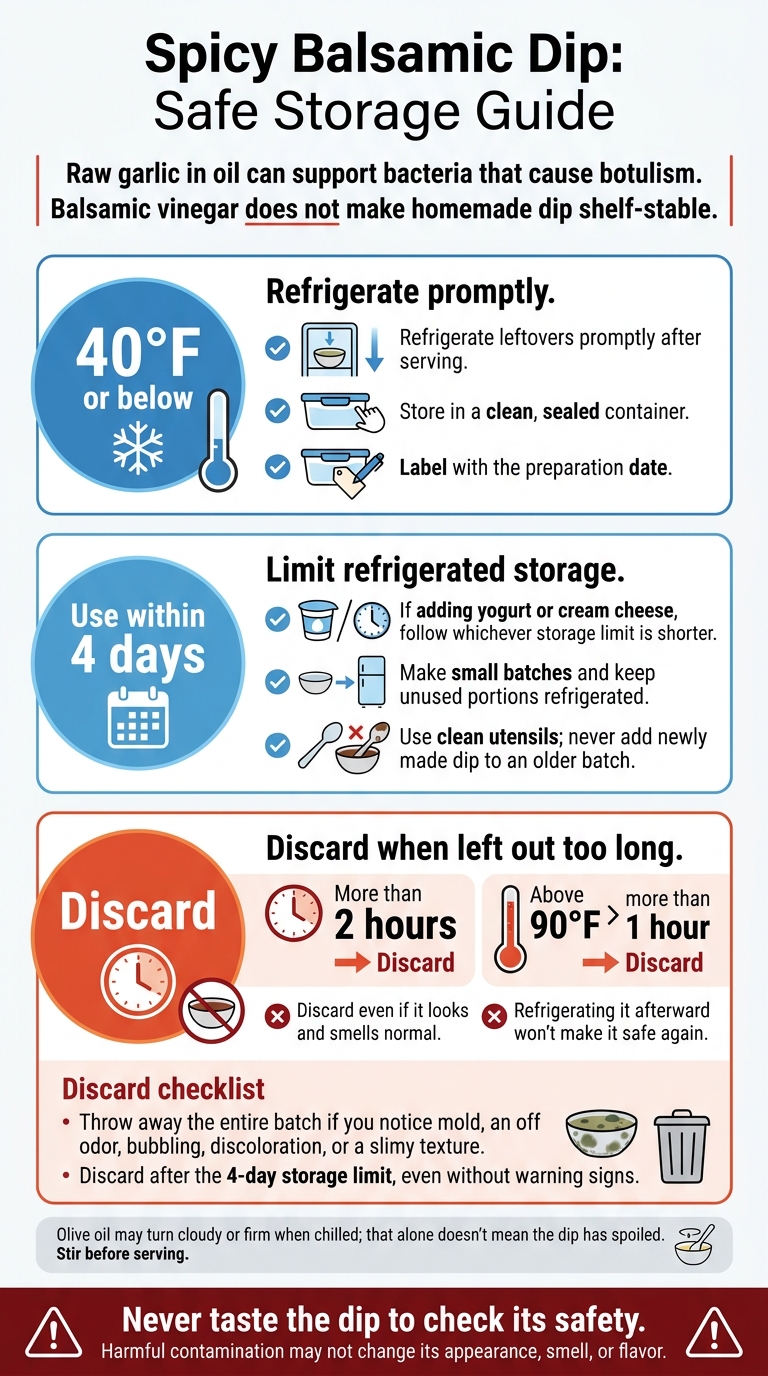
Spicy Balsamic Dip: Safe Storage Guide
Refrigerate leftovers promptly after serving. Raw garlic in oil can support bacteria that cause botulism. Balsamic vinegar adds acidity, but it does not make homemade dip shelf-stable.
Refrigeration and Storage Time
Keep the dip in a clean, sealed container at 40°F or below. Label it with the preparation date and use it within 4 days. If you add yogurt or cream cheese, follow whichever storage limit is shorter.
Make small batches and keep unused portions refrigerated. Use clean utensils, and never add newly made dip to an older batch. Stir before serving. Olive oil may turn cloudy or firm when chilled; that alone doesn’t mean the dip has spoiled.
When to Discard the Dip
Discard dip left out for more than 2 hours, or more than 1 hour when temperatures exceed 90°F, even if it looks and smells normal. Refrigerating it afterward won’t make it safe again.
Throw away the entire batch if you notice mold, an off odor, bubbling, discoloration, or a slimy texture. Discard it after the 4-day storage limit, too, even if there are no warning signs. Never taste the dip to check its safety - harmful contamination may not change its appearance, smell, or flavor.
Tips for Your Next Batch
Make small adjustments to your next batch before serving.
For a milder batch, use 1/8 teaspoon of crushed red pepper flakes for every 1/4 cup each of oil and balsamic. Whisk, let it rest for 1 minute, then taste it with the bread or vegetables you plan to serve.