

Strawberry Balsamic Sauce Recipe
Strawberry balsamic sauce is a sweet and tangy addition to both desserts and savory dishes. Made by combining strawberries, balsamic vinegar, and a sweetener, this sauce delivers a bold flavor that works equally well over ice cream, cheesecake, grilled meats, or even salads. Here's what you'll need to know:
- Ingredients: Fresh strawberries, aged balsamic vinegar, and a sweetener like dark brown sugar.
-
Preparation Methods:
- Cooked Syrup: Simmer strawberries with reduced balsamic vinegar and sugar for a thick, glossy sauce.
- Reduction: Focus on reducing the balsamic for a concentrated flavor before mixing with strawberries.
- Fresh Method: Combine raw strawberries with sugar and balsamic for a lighter, uncooked topping.
-
Tips:
- Use peak-season strawberries for the best flavor.
- Opt for high-quality aged balsamic vinegar for natural sweetness and depth.
- Adjust thickness by simmering longer or adding a cornstarch slurry.
- Storage: Refrigerate in an airtight container for up to 2–3 weeks or freeze for up to 6 months.
- Serving Ideas: Drizzle over desserts, use as a glaze for meats, mix into yogurt, or create a vinaigrette for salads.
This sauce is easy to make and can elevate a variety of dishes. Whether you're looking for a dessert topping or a savory glaze, strawberry balsamic sauce is a simple way to add bold flavor to your meals.
Ingredients for Strawberry Balsamic Sauce
The secret to a great strawberry balsamic sauce lies in using top-notch ingredients. Fresh strawberries bring bold, fruity flavors, aged balsamic vinegar adds depth, and the right sweetener ties it all together. These choices can elevate your sauce, whether you're pairing it with desserts or savory dishes.
Choosing the Best Strawberries
When it comes to strawberries, timing is everything. Peak-season strawberries, typically available in early summer, are smaller but deliver a concentrated sweetness and vibrant flavor. On the other hand, off-season strawberries tend to be larger but often lack the rich taste needed for a standout sauce.
For the best results, look for plump, juicy berries. Before using, rinse them thoroughly and remove the stems. Cut regular-sized berries into quarters, and if you're working with larger strawberries, slice them into sixths for even cooking.
Selecting the Right Balsamic Vinegar
Aged balsamic vinegar can take your sauce to the next level. Look for options like Big Horn Olive Oil's Traditional 18-Year Aged Dark Balsamic Vinegar ($8.99) or Molto Denissimo 25-Year Aged Dark Balsamic Vinegar ($12.99) from Modena, Italy. These premium vinegars are naturally thick and syrupy, with rich notes of plum and honey that complement the strawberries beautifully.
Since aged balsamic vinegars contain about 12 grams of sugar per tablespoon, they can naturally sweeten your sauce. If you're using a less-sweet vinegar, you may need to adjust the amount of added sweetener.
"Reducing the balsamic vinegar before adding the strawberries tames its acidity, allowing the fruit to shine." - Joshua Bousel, Recipe Developer, Serious Eats
Sweeteners and Flavor Enhancers
For cooked sauces, dark brown sugar is an excellent choice - it adds a rich, molasses-like depth. If you're making a no-cook version, white sugar works better because it dissolves more quickly.
Adding a pinch of lemon zest can brighten the sauce without the sharp tartness that lemon juice might introduce. A small amount of kosher salt balances the sweetness, and freshly ground black pepper creates a savory contrast that enhances the natural flavor of the strawberries.
Once you've gathered these ingredients, you're ready to start crafting your strawberry balsamic sauce. Each element plays a role in creating a balanced and flavorful result.
sbb-itb-4066b8e
How to Make Strawberry Balsamic Sauce
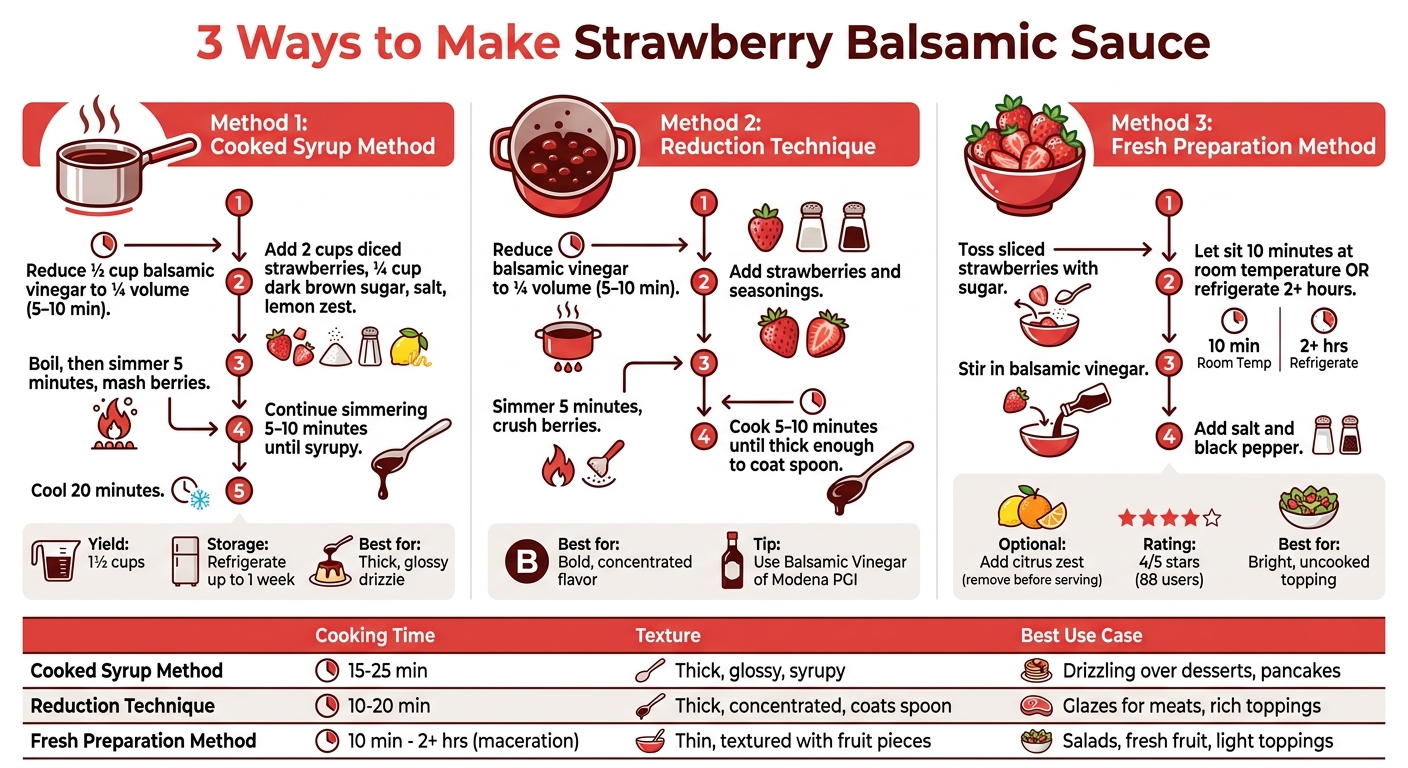
Three Methods to Make Strawberry Balsamic Sauce
Strawberry balsamic sauce can be tailored to your preferences, whether you want a thick, glossy drizzle, a bold and concentrated flavor, or a fresh and effortless topping. Below, you'll find three distinct methods to achieve the perfect sauce.
Cooked Syrup Method
Start by reducing ½ cup of balsamic vinegar over medium heat until it shrinks to ¼ of its original volume - this takes about 5–10 minutes and balances the vinegar's acidity with a sweeter, mellowed flavor.
Next, add 2 cups of diced strawberries, ¼ cup of dark brown sugar (for its rich molasses undertones), a pinch of salt, and some lemon zest. Bring the mixture to a boil, then lower the heat to a gentle simmer. Let it cook for about 5 minutes, softening the strawberries. Use a wooden spoon to lightly mash the berries against the pan, releasing their juices to thicken the sauce.
Continue simmering for another 5–10 minutes until the mixture becomes syrupy. Remove from heat and allow it to cool at room temperature for about 20 minutes - the sauce will thicken further as it cools. This method yields about 1 ½ cups of sauce, which can be refrigerated in an airtight container for up to a week.
If you’re looking for an even deeper flavor, the reduction method might be your next step.
Reduction Technique
For a sauce with bold, concentrated flavors, try the reduction method. Begin by simmering balsamic vinegar alone over medium heat, reducing it to about ¼ of its original volume in approximately 5–10 minutes.
"A balsamic reduction - made by simply simmering balsamic vinegar until thick and syrupy - both intensifies the sharp flavor of the vinegar, while sweetening it up a bit as well." – Joshua Bousel, Recipe Developer, Serious Eats
Once reduced, incorporate strawberries and seasonings into the pan. Simmer for about 5 minutes until the berries soften, then gently crush them to release their juices. Continue cooking for an additional 5–10 minutes, or until the sauce is thick enough to coat a spoon. For optimal results, stick with a balanced Balsamic Vinegar of Modena PGI and avoid pre-made glazes, as they often contain thickeners that won’t reduce properly. For a high-quality option, consider balsamic vinegar from Big Horn Olive Oil.
Fresh Preparation Method
If you prefer a bright, uncooked sauce, the fresh preparation method is the way to go. Toss sliced strawberries with sugar and let them sit at room temperature for about 10 minutes. This process draws out the strawberries' natural juices, creating a light syrup. For a richer consistency, refrigerate the mixture for at least 2 hours.
After the maceration process, stir in balsamic vinegar. Adding it at this stage ensures the vinegar's acidity doesn’t interfere with sugar’s ability to extract the juices. Enhance the flavor with a pinch of salt and freshly ground black pepper. For a citrusy twist, add strips of orange or lemon zest, but remember to remove them before serving to avoid bitterness. This no-cook method has been well-received, earning a 4/5 rating from 88 users on NYT Cooking.
Adjusting Texture and Consistency
Once you've settled on a preparation method, it’s time to tweak the sauce's texture to complement your dish. A sauce that's too thin will slip right off your dessert, while one that's too thick can turn sticky or even taffy-like. Here's how to handle both issues.
Thickening the Sauce
If your sauce turns out too thin, simmer it for an additional 5–10 minutes over low heat while gently crushing the berries with the back of a wooden spoon. This helps release their natural pectin, which thickens the mixture. Another option is to mix 1 teaspoon of cornstarch with 2 tablespoons of water to create a slurry. Stir it into the sauce and cook for 1–2 minutes.
To check if your sauce has reached the right consistency, try the tilted plate test. Amy Trage, a Former Employee-Owner at King Arthur Baking, suggests:
"The best way to tell if you have a good syrupy consistency is to spoon some onto a tilted plate and run your finger through the center. If the line is undisturbed by flowing vinegar, then you're in good shape!"
You can also use a thermometer - aim for around 225°F for the perfect viscosity. Keep an eye on the bubbles as well; when they grow to the size of pencil erasers (approximately 216°F), you're almost there.
Fixing Overly Thick Sauce
If your sauce has reduced too much and turned sticky, don’t panic. Over-reduction can happen quickly. Amy Trage cautions:
"If you reduce the vinegar too much, it will become taffy when it hits the shocking chill of the ice cream"
To fix this, add water or a bit more balsamic vinegar - start with 1 tablespoon at a time - and gently warm the sauce while stirring until it reaches a smoother, more pourable consistency.
For sauces that thicken up after refrigeration, microwave them in 10-second increments until they flow smoothly again. If you prefer an ultra-smooth, seedless finish, strain the sauce through a fine-mesh sieve. However, many recipes leave the crushed fruit intact for added texture and visual appeal. These simple adjustments will help you achieve a sauce that's versatile and ready to enhance a variety of dishes.
Serving Suggestions and Pairings
Once your sauce reaches the perfect consistency, it’s time to let it shine. This versatile condiment effortlessly transitions from desserts to savory dishes and even brunch favorites.
Desserts and Sweet Treats
Drizzle it over vanilla ice cream for a delightful mix of creamy sweetness and tangy fruit. As Chef John from Allrecipes puts it, "This fresh strawberry sauce is an excellent sauce for pies and cakes - especially cheesecakes!" For New York-Style cheesecake, the acidity of the balsamic beautifully offsets the richness of the cream cheese. It also pairs wonderfully with warm pound cake, where the syrupy sauce seeps into the dense crumb, creating a flavorful dessert experience.
Savory Dishes and Glazes
This sauce isn’t just for sweets - it can elevate savory recipes too. Use it as a glaze for pan-fried pork chops or grilled chicken. A simple seasoning of salt and pepper allows the strawberry and balsamic notes to shine. David Leite, founder of Leite's Culinaria, shares, "Pork chops with strawberry balsamic glaze are a perfect pairing. Juicy and flavorful, just a handful of ingredients come together to make an uncomplicated but irresistible dinner." Recipe tester Chiyo Ueyama adds, "The berry-balsamic sauce had a slight sweetness and briny tang, and it was so good with the pork chops."
For salads, whisk the sauce with extra virgin olive oil to create a fruity vinaigrette, or drizzle it over grilled vegetables like broccoli. It also pairs beautifully with aged Parmigiano Reggiano, ricotta toast, or goat cheese, offering a sweet-sour contrast that’s hard to resist. For an extra layer of flavor, try using Ultra Premium Extra Virgin Olive Oil from Big Horn Olive Oil.
Breakfast and Brunch Ideas
Start your day with a twist by swapping traditional syrups for this sauce on French toast, waffles, or pancakes. Stir it into Greek yogurt or oatmeal for added flavor, or top toasted sourdough with lemon-zested ricotta, fresh basil, and a drizzle of sauce for a sophisticated breakfast. Feeling adventurous? Mix it directly into muffin batter before baking. Serve it warm as a cozy topping or let it cool for a thicker, spreadable consistency that works perfectly as a jam substitute.
Storage and Shelf Life
Before storing your strawberry balsamic sauce, let it cool completely. This step helps prevent condensation, which could affect its consistency.
Refrigeration Guidelines
Use airtight containers like glass jars or squeeze bottles to store your sauce. These minimize oxidation and help retain its flavor. Since this is a homemade sauce without preservatives, refrigeration is essential to keep it fresh. When stored correctly, it will last for about 2–3 weeks.
"I have a batch sitting in the fridge, which will extend the joy of prime summer strawberry season for me for at least another week or two".
- Joshua Bousel, Recipe Developer at Serious Eats
Place the container in a stable, cool spot in your fridge - steer clear of the door, where temperature changes are more frequent. Always ensure the lid is tightly closed after use to limit air exposure. For hygiene and to avoid contamination, pour out only the amount you need into a separate dish instead of dipping into the storage container. Be sure to check for any signs of spoilage before using.
If you'd like to keep your sauce for a longer period, freezing is an excellent option.
Freezing and Reheating Options
To freeze, transfer the sauce to a freezer-safe container, leaving room for expansion. Properly stored, the sauce can last in the freezer for up to 6 months. When you're ready to use it, thaw the sauce in the refrigerator for 24 hours. Keep in mind that refreezing is not recommended once it has thawed.
If the sauce becomes too thick after freezing, you can gently reheat it. Use low heat on the stovetop or short, 10-second intervals in the microwave until it returns to a pourable consistency.
Conclusion
Making strawberry balsamic sauce at home is both easy and satisfying. By reducing the balsamic vinegar before adding the strawberries, you mellow its sharpness and let the fruit's natural sweetness take center stage.
The type of balsamic vinegar you use can make a big difference. High-quality options, like strawberry dark balsamic vinegar from Big Horn Olive Oil, often contain a higher percentage of reduced grape must, creating a sauce that's naturally thicker and more balanced. As American Olive Farmer describes it, traditional balsamic vinegar is "plummy, honeyed, luscious, and exceptional."
This sauce is incredibly versatile, so don’t hesitate to get creative. Whisk it with olive oil for a fruity vinaigrette, stir it into yogurt for a flavorful breakfast, add a pinch of lemon zest for a bright kick, or sprinkle in some black pepper for a savory edge.
Once you’ve perfected your sauce, storing it properly will keep it tasting fresh. Whether you go for the stovetop method for a deep, caramelized flavor or the no-cook option for chunkier fruit, you’ll end up with something special. Keep it in an airtight container in the fridge for up to a week, or freeze it to enjoy the taste of summer strawberries months later.
FAQs
Can I use frozen strawberries?
Frozen strawberries are a great choice for making strawberry balsamic sauce. You can roughly dice them before cooking. While frozen berries tend to get mushy once thawed, their juices can be cooked down with balsamic vinegar and sugar to form a flavorful sauce. This makes them a convenient and practical option for this recipe.
What balsamic vinegar works best?
When making strawberry balsamic sauce, the choice of balsamic vinegar can make all the difference. For the best flavor, go with a traditional, high-quality balsamic vinegar, preferably one from Modena, Italy. These vinegars are celebrated for their deep, layered taste. Selecting a premium option ensures the sauce achieves a perfect harmony of gentle tartness and natural sweetness. Look for a vinegar with a bold, balanced flavor to elevate your recipe.
How can I thicken it without overcooking?
To get your strawberry balsamic sauce to the perfect thickness without overcooking, simmer it gently for about 5–10 minutes until it reaches the right consistency. Another option is to combine a small amount of cornstarch with water, then whisk this mixture into the sauce during the final 1–2 minutes of cooking. Keep stirring continuously to avoid burning or over-reducing, helping the sauce thicken evenly while keeping that bright, fresh strawberry taste intact.