

Symbolism of Olive Oil in Christian Sacraments
Olive oil holds a deep spiritual significance in Christian sacraments like baptism, confirmation, and anointing of the sick. Its use dates back to biblical times, symbolizing the Holy Spirit, divine blessings, healing, and consecration. From anointing kings and priests in the Old Testament to its role in modern ceremonies, olive oil connects believers to centuries of faith and tradition.
Key Points:
- Biblical Roots: Olive oil was used for anointing priests, kings, and sacred objects, signifying divine selection and empowerment.
- Sacraments: In baptism, confirmation, and healing rituals, olive oil represents spiritual transformation, protection, and comfort.
- Symbolism: It reflects the Holy Spirit's work - providing light, nourishment, and healing.
- Modern Practices: Churches use blessed olive oil for rituals, ensuring purity and quality for its sacred purpose.
This article explores olive oil's enduring role in faith, its historical roots, and its continued relevance in Christian worship.
Decoding Symbolism - Anointing Oil
Biblical Origins of Olive Oil as a Sacred Symbol
The sacred use of olive oil has its roots in the earliest Scriptures, where God instructed Moses to create a holy anointing oil. This oil, made from pure, cold-pressed olives mixed with myrrh, cinnamon, aromatic cane, and cassia, was used to consecrate the Tabernacle, its furnishings, priests, and kings (Exodus 30:22-25). Priests like Aaron (Exodus 29:7; Leviticus 8:12) and kings such as Saul and David (1 Samuel 10:1; 16:13) were anointed with it, signifying their divine selection and empowerment for leadership. Olive oil became a physical representation of consecration and divine authority, a tradition that shaped its enduring sacred symbolism in religious practices.
In the Old Testament, olive oil symbolized joy, divine favor, and blessing. Psalm 23:5 reflects this sentiment: "You anoint my head with oil", a poetic image of God's abundant care. The tribe of Asher received a unique blessing in Deuteronomy 33:24, where olive oil symbolized overflowing prosperity. Similarly, Jeremiah 31:12 foretold God's blessings as including "the grain, the wine, and the oil", connecting olive oil with provision and abundance. Beyond the oil itself, the olive tree carried deep significance. Known for its longevity, it became a symbol of eternal life. In Zechariah 4:2-3, two olive trees stand beside a candlestick, representing spiritual sustenance and enduring vitality.
Olive Oil in the Old Testament
The Old Testament firmly established olive oil as the cornerstone of sacred anointing practices, setting a precedent that influenced Christian traditions for centuries. For example, when Samuel anointed David, Scripture notes that "the Spirit of the Lord rushed upon David from that day forward" (1 Samuel 16:13). This act linked the physical anointing with spiritual empowerment and a divine calling. Priests, kings, and prophets were all consecrated with olive oil, signifying their roles as set apart for God's purposes.
The recipe for the holy anointing oil was precise and sacred, underscoring that purity and reverence were essential. This attention to detail reflected the oil's role as a tangible sign of God's holiness touching human life. Olive trees, thriving in Israel's Mediterranean climate, made olive oil both a practical daily staple and a precious sacred element. These early examples laid the foundation for olive oil's continued role as a symbol of divine empowerment and blessing.
Olive Oil in the New Testament and Early Christianity
The New Testament built upon the Old Testament's use of olive oil, imbuing it with even deeper meaning. Jesus, referred to as the Anointed One, fulfilled the roles of King, Prophet, and Priest (Luke 1:33; Luke 4:18; Hebrews 7:17). He was anointed with "the oil of gladness" (Hebrews 1:9), embodying the ultimate expression of consecration. His disciples also used olive oil in their ministry, as Mark 6:13 recounts: "They anointed with oil many who were sick and healed them." James 5:14-15 formalized this practice, instructing church elders to anoint the sick with oil in the Lord's name, connecting physical healing with spiritual restoration.
What Olive Oil Symbolizes in Christian Sacraments
In Christian sacraments, olive oil represents the Holy Spirit, consecration, and healing. These meanings, deeply rooted in Scripture and the practical uses of oil in ancient times, shape its ongoing role in sacred rituals.
Olive Oil as a Symbol of the Holy Spirit
Olive oil mirrors the work of the Holy Spirit by providing nourishment, light, and comfort. In biblical times, olive oil was a source of sustenance, fueled lamps to dispel darkness, and served as a balm for wounds. These everyday uses became rich metaphors for the Spirit's role in the lives of believers. Aphrahat referred to olive oil as the "Light-giving Olive", symbolizing how it perfects Christians, priests, kings, and prophets through anointing. Similarly, Ephrem of Syria saw the olive as a representation of Christ, offering milk for infants, water for youth, and oil for the sick - paralleling the Spirit's gifts at different stages of life.
At a Vatican gathering of scholars, Cardinal Giovanni Battista Re described olive oil as "a symbol of the Holy Spirit", while Bishop Marcelo Sánchez Sorondo highlighted its significance as a "symbol of hope and justice." This connection between olive oil and spiritual nourishment underscores its role in marking believers with a sacred identity.
Olive Oil as a Symbol of Consecration and Identity
Olive oil also signifies consecration, setting believers apart as God's chosen people. Anointing with olive oil connects individuals to Christ's identity as the Messiah, the "anointed one."
In fourth-century Jerusalem, Cyril explained that after baptism, new believers were anointed with olive oil to symbolize the Holy Spirit's anointing of Christ, Aaron, and Solomon. The oil was applied to the forehead, ears, nostrils, and chest, marking the initiates as "Christians" before they received the Eucharist. This act visibly affirmed their membership in Christ's anointed community.
Churches also use olive oil–based chrism to consecrate altars, buildings, and sacred vessels, reinforcing the idea that anything devoted to God's purposes can be set apart as holy.
Olive Oil as a Symbol of Healing and Comfort
In the Sacrament of the Anointing of the Sick, olive oil embodies both physical healing and spiritual renewal. This practice dates back to the disciples, who "anointed with oil many who were sick and healed them" (Mark 6:13), and to James's guidance for church elders to anoint the sick in the Lord's name (James 5:14-15).
The imagery of Psalm 23:5, where God anoints with oil, reflects divine care and provision, echoed in Jeremiah 31:12. When a priest anoints someone who is suffering, the oil becomes a tangible sign of God's comfort and healing presence. This also recalls Jesus' anointing with "the oil of gladness" (Hebrews 1:9), affirming His roles as King, Prophet, and Priest.
Churches use olive-based sacred oils, blessed annually by bishops during Holy Week, to emphasize their purity and purpose in this sacrament. While the oil does not promise physical healing, it provides spiritual comfort and reassures believers of God's presence during moments of weakness and vulnerability.
sbb-itb-4066b8e
How Olive Oil Is Used in Specific Christian Sacraments
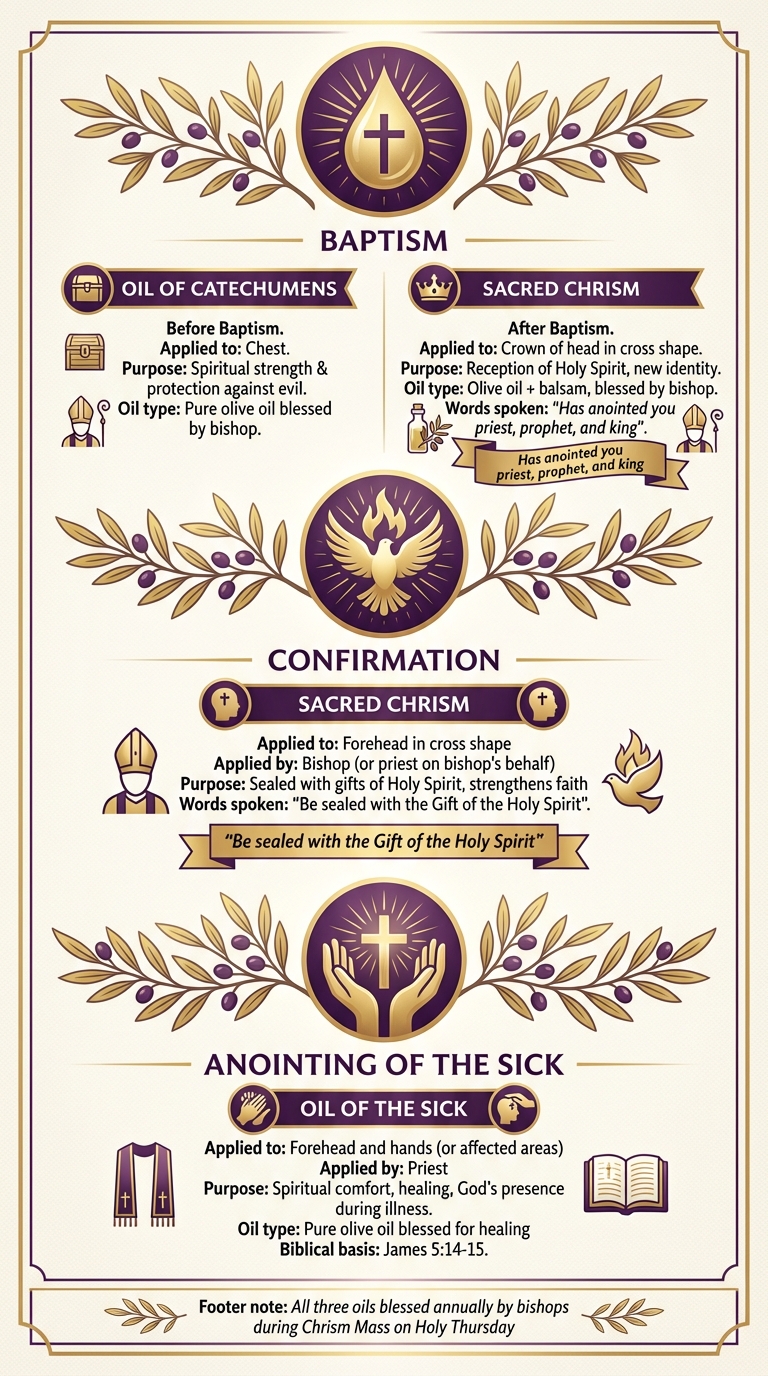
Three Sacred Oils Used in Christian Sacraments: Baptism, Confirmation, and Anointing of the Sick
Olive oil plays a vital role in three major Christian sacraments, transitioning from a symbol of spiritual meaning to an essential element in sacred rituals. In each sacrament, blessed olive oil is used to signify a profound spiritual transformation.
Baptism: Anointing for New Life
Baptism incorporates two distinct types of olive oil at key moments in the ceremony. Before the baptism itself, the priest applies the oil of catechumens - a pure olive oil blessed by the bishop - on the chest of the individual being baptized. This initial anointing is meant to provide spiritual strength and protection, symbolizing the power to resist evil as the person prepares to enter the faith.
Following the baptism, the priest uses sacred chrism, a blend of olive oil and balsam also blessed by the bishop. This oil is applied to the crown of the head in the shape of a cross, accompanied by the words, "The almighty God... has anointed you priest, prophet, and king. May he bring you to eternal life." This second anointing marks the reception of the Holy Spirit and signifies the individual's new identity within the Christian community. These practices have deep roots in early Christian traditions, where anointing symbolized being chosen and set apart. Together, these rites prepare the individual for the next sacrament, Confirmation, where the Holy Spirit's presence is sealed.
Confirmation: Sealed with the Spirit
Confirmation builds upon the anointing received in Baptism, focusing on the deepening of the Holy Spirit's presence. In this sacrament, sacred chrism is the central element. The bishop - or a priest acting on the bishop's behalf - anoints the recipient's forehead with chrism in the shape of a cross, saying, "Be sealed with the Gift of the Holy Spirit." This act strengthens the individual with the gifts of the Holy Spirit and reinforces their connection to Christ's roles as priest, prophet, and king.
In the Eastern Orthodox Church, this process, called chrismation, often occurs immediately after baptism with multiple anointings. In contrast, Roman Catholic tradition typically celebrates Confirmation as a separate sacrament later in life, emphasizing the individual's conscious commitment to their faith.
Anointing of the Sick: Healing and Hope
During times of illness or suffering, olive oil takes on a deeply comforting role. The oil of the sick, a pure olive oil blessed specifically for this purpose, is used by priests when ministering to those who are unwell. The priest anoints the forehead and hands - or other affected areas - while making the sign of the cross and offering prayers for healing, forgiveness, and unity with Christ. This sacramental act reflects the guidance found in James 5:14-15, which encourages the faithful to seek anointing and prayer during illness.
While the oil does not promise physical healing, it provides spiritual solace and reassures the recipient of God's presence and care during moments of vulnerability. All three sacred oils - oil of catechumens, sacred chrism, and oil of the sick - are blessed by bishops during the Chrism Mass on Holy Thursday each year, ensuring their sanctity and readiness for use in these sacraments.
Why Quality Matters in Olive Oil for Christian Traditions
Purity and Quality in Sacred Use
The Bible emphasizes the use of pure, specially prepared anointing oil for consecrating priests and sacred objects - a tradition that underscores the importance of offering only the best in representing God's blessings. Even today, churches maintain this principle by ensuring that holy oils remain untainted, preserving their sacred purpose.
Characteristics like aroma, clarity, and texture play a key role in the oil's significance during anointing, symbolizing the presence of the Holy Spirit. Bishop Marcelo Sánchez Sorondo highlighted the deep connection between olive oil and Christian symbolism, noting that the Messiah ("Christ", meaning "Anointed One") is intrinsically tied to sacred oil. If the oil becomes rancid or diluted, it not only diminishes the sacrament's dignity but also fails to reflect the purity it is meant to embody.
To uphold this integrity, many dioceses carefully bottle and label holy oils during the Chrism Mass, discarding outdated stock to ensure freshness and quality. Proper storage - such as keeping oils in dark containers away from heat - helps maintain their sacred purity and aligns with longstanding traditions.
This commitment to quality extends beyond sacred rituals, influencing daily life in meaningful ways.
Health and Dietary Benefits of Olive Oil
Extra Virgin Olive Oil (EVOO) is celebrated for its health benefits, being rich in monounsaturated fats and polyphenols that support heart health and reduce inflammation. This aligns with the Christian belief in treating the body as a temple, encouraging practices that promote well-being and vitality.
Producers like Big Horn Olive Oil demonstrate the craftsmanship behind premium EVOO. By selecting the top 5% of olives and bottling the oil within 1–3 months of harvest, they ensure freshness and high antioxidant content. Their Ultra Premium EVOO meets rigorous quality standards, including a smoke point of at least 410°F, making it ideal for cooking and enhancing flavor. According to UC Davis guidelines, consuming olive oil within nine months of crushing maximizes its taste and health benefits.
For American Christians, incorporating high-quality EVOO into daily meals - whether in dressings, sautéing, or as a dipping oil - serves as a practical way to honor the biblical symbolism of oil. It becomes a tangible expression of life, joy, and healing, bridging spiritual traditions with physical nourishment. Choosing quality olive oil, therefore, not only sustains sacred customs but also nurtures the body, reflecting the profound significance of oil in Christian life.
Conclusion: Olive Oil as a Timeless Symbol of Faith and Blessing
Olive oil has long held a sacred place in religious traditions, used to anoint kings, priests, and in sacraments such as baptism, confirmation, and healing. It serves as a powerful symbol of the Holy Spirit, consecration, and divine blessing. The very title "Christ", meaning "Anointed One", underscores this deep spiritual connection, celebrated across Christian practices and teachings.
The olive tree itself carries profound meaning. Its incredible longevity represents eternal life, while its practical uses - as food, salve, and lamp oil - mirror the spiritual nourishment, healing, and light it brings to believers. Early Church Fathers even referred to olive oil as the "Light-giving Olive", a phrase that resonates with its enduring role in both sacred rituals and everyday life. Bishop Marcelo Sánchez Sorondo captured this beautifully when he said, "It is difficult to find a more timely symbol of hope and justice."
This rich symbolism enriches both ceremonial acts and ordinary moments, offering a constant reminder of God's presence and blessings. As the Psalmist proclaims, "You anoint my head with oil; my cup overflows", olive oil stands as a timeless testament to the abundance of divine grace.
For those looking to weave this sacred heritage into their daily routines, using premium extra virgin olive oil - like Big Horn Olive Oil - is a meaningful way to honor tradition while embracing the sustaining grace of the Holy Spirit.
FAQs
What does olive oil represent in Christian sacraments?
Olive oil carries profound symbolic importance in Christian sacraments, embodying the Holy Spirit, healing, and spiritual cleansing. It is central to sacred rituals like baptism, confirmation, and the anointing of the sick.
This tradition has deep biblical origins, where olive oil was linked to blessings, consecration, and the presence of God. Even today, it remains a meaningful representation of faith and divine grace in religious ceremonies.
What does olive oil represent in Christian sacraments?
In Christian sacraments, olive oil holds deep spiritual significance, symbolizing the Holy Spirit and acting as a sign of God's presence, blessings, and grace. It plays a key role in rituals such as baptism, confirmation, and anointing, representing spiritual purification, healing, and the empowerment of believers.
This tradition traces back to the Bible, where olive oil was used to anoint kings, prophets, and priests, marking their divine calling and connection to God. Even today, it reflects the Spirit’s guidance and sanctification in the lives of the faithful.
Why does the quality of olive oil matter in Christian sacraments?
The quality of olive oil holds deep importance in Christian sacraments, symbolizing purity, spiritual renewal, and divine blessings. Opting for high-quality extra virgin olive oil ensures that it remains fresh, stable, and free from impurities - qualities that align perfectly with its sacred role in religious rituals.
Beyond its purity, premium olive oil carries added symbolic weight. Its natural antioxidants and biophenols are linked to health, vitality, and spiritual cleansing, further enriching its meaning. This emphasis on quality reflects the deep reverence and care devoted to these sacred traditions.